GW 501516
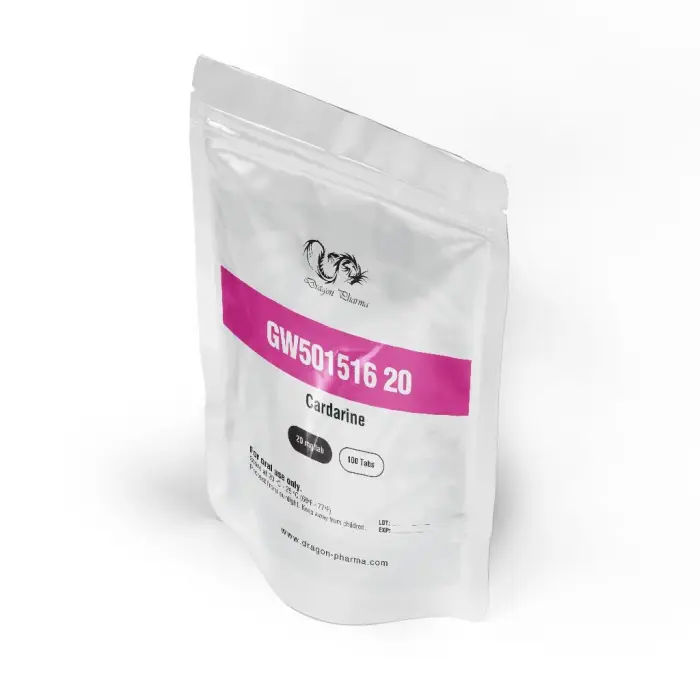
GW 501516 Dragon Pharma 20 mg — Overview
GW 501516 Dragon Pharma delivers 20 mg of GW501516 (Cardarine) per tablet — a peroxisome proliferator-activated receptor delta (PPARδ) agonist developed by GlaxoSmithKline and Ligand Pharmaceuticals in the 1990s for metabolic and cardiovascular disease research. GW501516 is not a SARM and has no androgenic activity: it does not bind the androgen receptor, does not suppress the HPG axis, and requires no post-cycle therapy. Its mechanism is entirely metabolic — PPARδ activation in skeletal muscle upregulates fatty acid oxidation, shifts muscle fiber composition toward oxidative type I, and remodels the lipid profile toward higher HDL and lower triglycerides.
At Steroid Warehouse, GW 501516 Dragon Pharma is used primarily in cutting cycles for fat oxidation without muscle catabolism, in endurance-focused protocols where aerobic capacity is a primary goal, and as a metabolic support layer in body recomposition stacks. This page covers the PPARδ mechanism, effects, dose protocols, stack combinations, side effects including the known carcinogenicity signal from animal research, and bloodwork guidance.
About the Compound: GW501516 (Cardarine)
GW501516 is a synthetic ligand for PPARδ (peroxisome proliferator-activated receptor delta), a nuclear receptor expressed predominantly in skeletal muscle, heart, liver, and adipose tissue. PPARδ activation regulates transcription of genes involved in fatty acid β-oxidation, mitochondrial biogenesis, glucose utilization, and muscle fiber type composition. GW501516 selectively binds and activates PPARδ with high potency, producing metabolic effects that do not involve hormonal signaling — making it mechanistically distinct from anabolic steroids, SARMs, GH secretagogues, or thyroid hormones.
The compound was initially investigated by GSK for metabolic syndrome, dyslipidemia, and type 2 diabetes. Phase I studies demonstrated favorable lipid effects — notably HDL elevation and triglyceride reduction — at low doses. Development was halted internally before completion of efficacy trials after preclinical carcinogenicity studies in rodents at high doses and extended duration showed accelerated tumor growth in multiple organ systems. Human carcinogenicity data does not exist. The compound subsequently became widely used in performance contexts, where cycles are substantially shorter and doses lower than the preclinical carcinogenicity studies. This risk context is covered in the Side Effects section.
GW501516 is an oral compound with an elimination half-life of approximately 16–24 hours, supporting once-daily dosing. At 20 mg/day (one tablet), the Dragon Pharma formulation aligns with the upper end of the performance dose range. A half-dose of 10 mg/day (half tablet) is appropriate for first cycles or for users primarily targeting lipid remodeling and moderate endurance gains without the intensity of a full 20 mg run.
What GW501516 Does
GW501516 produces its effects through transcriptional activation of PPARδ target genes in skeletal muscle and metabolic tissue — not through hormonal or receptor-mediated anabolic pathways:
- Fat oxidation without catabolism — PPARδ activation upregulates the complete fatty acid β-oxidation gene program (CPT1, PDHK4, FABP3, UCP3) in skeletal muscle, shifting energy substrate utilization toward fat during both rest and exercise; unlike thyroid hormones or caloric restriction, this occurs without triggering catabolic signaling or muscle protein breakdown — lean mass is preserved while fat is preferentially oxidized.
- Endurance and aerobic capacity — GW501516 promotes a shift in skeletal muscle fiber composition toward oxidative type I fibers through PPARδ-driven upregulation of slow-twitch contractile proteins and mitochondrial biogenesis; the practical result is a significant increase in aerobic endurance — distance, sustained output capacity, and time to fatigue — independent of cardiovascular training adaptations.
- HDL elevation and lipid remodeling — in clinical phase I studies, GW501516 produced dose-dependent HDL increases (up to 79% at higher doses) alongside triglyceride reduction; in performance contexts at 10–20 mg/day, HDL elevation is the most consistently reported lipid effect; LDL effects are variable and should be monitored.
- Insulin sensitivity and glucose metabolism — PPARδ activation improves skeletal muscle glucose uptake and fatty acid utilization, reducing insulin resistance markers; this effect has implications for body composition during caloric surplus protocols and for metabolic health on AAS cycles where insulin sensitivity is chronically impaired.
- Vascularity and body composition — as subcutaneous fat oxidation increases and water retention is absent (no estrogenic or aldosterone activity), users report improved vascularity and a harder, leaner appearance, particularly in the final weeks of a cutting cycle.
Who It Is For
- What differentiates GW501516 from fat-loss alternatives: unlike Clenbuterol Dragon Pharma (a beta-2 agonist that is thermogenic but stimulant-heavy and cardiovascular-stressful) or T3 Dragon Pharma (a thyroid hormone that elevates metabolic rate but carries muscle-catabolic risk), GW501516 drives fat oxidation through a pathway that does not increase heart rate, does not require cycling in 2-week windows, and does not catabolize lean tissue. It is the only oral fat-loss compound in this class that simultaneously improves aerobic performance — making it the right choice whenever endurance output is a training goal alongside body composition.
- The specific scenario where GW501516 is the better choice: cutting cycles where lean mass preservation is a priority alongside fat loss; AAS cycles where improved cardiovascular conditioning is desired alongside androgenic effects; recomposition protocols stacked with SARMs; athletes in endurance-adjacent sports where aerobic output, sustained pace, and recovery between bouts are being trained; users whose lipid profile shows chronically suppressed HDL from prior AAS use.
- When to choose something else: users who need maximum acute thermogenic fat loss in a short window (2–4 weeks) where Clenbuterol's beta-2-driven thermogenesis is more time-efficient; users focused purely on muscle gain and recovery without a fat-loss component, where MK-677 Dragon Pharma or a structured AAS cycle is more appropriate; users unable to cycle for 8–12 weeks continuously.
GW501516 vs Alternatives
| Compound | Key Differences | Choose GW501516 When | Choose Alternative When |
|---|---|---|---|
| Clenbuterol — Dragon Pharma | Beta-2 adrenergic agonist; thermogenic fat loss via increased core temperature and metabolic rate; significant cardiovascular stimulation (HR elevation, BP rise); must cycle 2 weeks on / 2 weeks off due to receptor desensitization; no endurance improvement via aerobic oxidation | Endurance is a secondary goal alongside fat loss; lean mass preservation is critical; no stimulant tolerance issues; 8–12 week continuous run is feasible; lipid profile improvement is a concurrent target | Maximum acute thermogenic fat loss in 2–4 weeks is the goal; the user tolerates stimulant-class compounds well; the cycle window is too short for an 8-week GW run |
| T3 (Liothyronine) — Dragon Pharma | Synthetic thyroid hormone; elevates whole-body metabolic rate by increasing basal oxygen consumption; powerful fat loss but muscle-catabolic at doses above 25–50 mcg/day; suppresses endogenous thyroid function; requires post-cycle thyroid recovery planning | Primary goal is fat oxidation with endurance support and lean mass preservation; no thyroid suppression risk; no need to manage post-cycle thyroid recovery; sustained aerobic improvement is a concurrent benefit | Severe caloric resistance where thyroid-driven metabolic rate acceleration is necessary; advanced competition prep where T3 is stacked with AAS for maximum fat loss in a defined window |
| MK-677 (Ibutamoren) — Dragon Pharma | GH secretagogue; elevates GH/IGF-1 via ghrelin receptor; primary effects are muscle gain, sleep quality, joint recovery, and lean body composition over a long run; fat loss is secondary and slower; no direct PPARδ-driven fat oxidation or aerobic benefit | Cut or recomp where endurance and fat oxidation are the primary goals; the two compounds stack cleanly and address different axes — GW501516 can be added to an MK-677 base for simultaneous endurance and body composition work | Off-season bulk or muscle gain phase where MK-677's GH/IGF-1 anabolic environment is the primary driver; GW501516 is additive but not necessary in a pure mass-gain protocol |
Combinations and Stacks
| Goal | Stack | Protocol Notes |
|---|---|---|
| Fat loss / cutting recomp | GW501516 + MK-2866 Ostarine Dragon Pharma | GW501516 20 mg/day + Ostarine 15–25 mg/day, both oral, once daily. GW501516 drives fat oxidation and endurance; Ostarine preserves and modestly adds lean mass during a caloric deficit. The most common SARM-based recomp stack. Run 8–10 weeks. No PCT required for GW501516; LH/FSH check post-cycle recommended for the Ostarine component. |
| Lean bulk with endurance maintenance | GW501516 + LGD-4033 Dragon Pharma | GW501516 10–20 mg/day + LGD-4033 5–10 mg/day, both oral, once daily. LGD-4033 drives muscle gain through selective androgen receptor activation; GW501516 offsets fat accumulation during a caloric surplus and maintains aerobic conditioning. Run 8–10 weeks. LGD-4033 is moderately suppressive — run Clomid Dragon Pharma + Nolvadex Dragon Pharma PCT for 4 weeks post-cycle. |
| AAS cycle endurance and lipid support | GW501516 + AAS base (testosterone, Primobolan, Masteron) | GW501516 10–20 mg/day oral throughout the AAS cycle. PPARδ-driven fat oxidation and aerobic conditioning run in parallel with the anabolic effect; HDL support partially counteracts the lipid suppression typical of AAS cycles. No hormonal interaction with any AAS compound. Can be continued into early PCT — no conflict with Clomid DP, Nolvadex DP, or AIs. |
| Aggressive cut (dual fat-loss mechanism) | GW501516 + Clenbuterol Dragon Pharma | GW501516 20 mg/day continuous + Clenbuterol 40–120 mcg/day in standard 2-week on/2-week off rotation. GW501516 drives PPARδ fat oxidation continuously; Clenbuterol adds acute thermogenic beta-2 output during its on-periods. Monitor blood pressure and HR — Clenbuterol's cardiovascular stimulation is the limiting factor; GW501516 does not compound it. Stack Ecosprin (Aspirin) 75 mg/day for CV support. |
Side Effects and How to Manage Them
GW501516 is well-tolerated at standard performance doses (10–20 mg/day, 8–12 weeks). The absence of hormonal activity means no androgenic, estrogenic, or progestogenic sides. The carcinogenicity signal from animal research is addressed as a separate row below — it is not a manageable side effect but a compound-level risk that governs cycle limits.
| What May Occur | Background | How to Handle It |
|---|---|---|
| Lipid profile changes (LDL shift) | GW501516 consistently raises HDL and reduces triglycerides. LDL effects are variable — some users report modest LDL reduction, others show no change or mild increase at 20 mg/day. When stacked with AAS (which suppress HDL significantly), GW501516's benefit is partially attenuated but still measurable. | Lipid panel at baseline and week 6. If LDL rises above baseline: Rosulip (Rosuvastatin) 5–10 mg/day or Atorvastatin Dragon Pharma 10–20 mg/day. Omega-3 supplementation (2–4 g/day EPA+DHA) as a first-line adjunct. Recheck lipids 4 weeks after intervention. |
| GI discomfort (nausea, loose stool) | Occasional GI discomfort reported at 20 mg/day, particularly in the first 1–2 weeks or when taken on an empty stomach. Not a sign of hepatotoxicity — GW501516 is not a 17-alpha alkylated compound and does not produce liver stress at therapeutic doses. | Take the tablet with a meal. If nausea persists: Motilium (Domperidone) 10 mg before dosing or Prilosec (Omeprazole) 20 mg in the morning. GI symptoms typically self-resolve within 1–2 weeks. |
| Headache / mild fatigue (initial) | Occasionally reported in the first week of a new cycle. Likely related to the metabolic substrate shift — increased reliance on fatty acid oxidation over glycolysis — rather than a direct adverse effect. Resolves spontaneously. | Ensure adequate carbohydrate intake around training sessions during the first week. Nurofen (Ibuprofen) 400 mg for headache if needed. Typically self-resolving within 7–10 days of consistent dosing. |
| Carcinogenicity signal (long-term / high-dose context) | GlaxoSmithKline halted GW501516 clinical development after preclinical studies showed accelerated tumor formation in multiple organ systems in rodents at supraphysiological doses over extended periods. The proposed mechanism involves excessive PPARδ-driven cell proliferation signaling when sustained beyond a threshold. Human carcinogenicity data at performance doses (10–20 mg/day, 8–12 weeks) does not exist — extrapolation from high-dose rodent studies is uncertain, but the signal cannot be dismissed. This risk is inherent to the compound and present regardless of source or formulation quality. | Risk-reduction is structural, not supplemental: dose limit (10–20 mg/day), cycle length limit (maximum 12 weeks), full off-cycle break of equal duration between runs. Multi-year continuous use is the highest-risk pattern and should be avoided. There is no pharmacy product or bloodwork panel that mitigates this risk — it must be weighed against goals before starting any GW501516 protocol. |
Bloodwork Monitoring
GW501516 does not affect testosterone, LH, FSH, or estradiol. Monitoring is focused on lipid panel, insulin sensitivity markers, liver enzymes as standard hygiene, and blood pressure when co-administered compounds (Clenbuterol, AAS) add cardiovascular burden.
| Lab | When to Test | Target & Action Threshold |
|---|---|---|
| Lipid panel (HDL, LDL, TG) | Baseline; week 6; post-cycle at 4 weeks | HDL should increase from baseline on GW501516 monotherapy — a decline warrants dose review. LDL: maintain below 130 mg/dL; above this threshold with concurrent AAS use, add statin. TG: expect reduction or stable. When stacking with AAS, lipid suppression from AAS dominates; monitor accordingly. |
| Liver enzymes (AST / ALT) | Baseline; week 6 | GW501516 is not hepatotoxic. Baseline check is standard protocol hygiene and establishes reference values for any co-administered oral compounds. AST/ALT above 3× upper limit of normal warrants investigation of the full stack — elevation is unlikely to be attributable to GW501516 alone. |
| Fasting glucose / insulin (HOMA-IR) | Baseline; post-cycle at 4 weeks | PPARδ activation improves insulin sensitivity — fasting glucose may decrease modestly over a cycle. Baseline check is particularly relevant for users with pre-existing metabolic syndrome, elevated fasting glucose, or concurrent AAS use (which impairs insulin sensitivity). Target fasting glucose: 70–100 mg/dL. |
| Blood pressure | Baseline; monthly | GW501516 alone does not elevate blood pressure. Critical when stacking with Clenbuterol (raises BP significantly) or high-dose testosterone/nandrolone blends. Target: <130/80 mmHg. If elevated from co-administered compounds: Amlip (Amlodipine) 5 mg/day or Sartel (Telmisartan) 40 mg/day. |
Protocol and Cycling
GW501516 does not suppress the HPG axis and requires no post-cycle therapy. Cycling in defined blocks is recommended to limit continuous PPARδ activation — which is also the basis of the carcinogenicity risk-reduction protocol.
| Protocol Context | Dose | Duration & Tablet Yield |
|---|---|---|
| First cycle / lipid + endurance focus | 10 mg/day (half tablet) | 8 weeks on, 8 weeks off. Starting at 10 mg establishes response and tolerability. At 10 mg/day: meaningful HDL and TG improvement, moderate endurance gain, mild fat oxidation effect. 8-week run = 28 tablets at 10 mg/day (half of 56 full-dose tabs). No PCT. Lipid panel at baseline and week 6. |
| Performance cutting / recomp | 20 mg/day (one tablet) | 8–12 weeks on, 8–12 weeks off. Full-dose run for maximum fat oxidation, endurance output, and HDL benefit. 8-week run = 56 tablets; 12-week run = 84 tablets. Take with food, once daily at consistent timing. No PCT required. Lipid panel at baseline and week 6. |
| AAS cycle adjunct | 10–20 mg/day oral | Run for the duration of the AAS cycle (typically 8–16 weeks). No hormonal interaction with testosterone, nandrolone, or any AAS compound. Can be continued into early PCT — no conflict with Clomid DP, Nolvadex DP, or AIs. Monitor lipids at standard AAS cycle intervals. |
| SARM stack (Ostarine or LGD-4033) | 10–20 mg/day oral | Match the SARM cycle duration (8–10 weeks). GW501516 requires no PCT; if the SARM component (LGD-4033, S23) requires PCT, run the SERM protocol independently. GW501516 can be continued briefly into PCT if endurance maintenance is a priority. LH/FSH check post-cycle regardless of GW501516. |
Practical Summary
Key rules for using GW 501516 on protocol:
- Not a SARM — no hormonal suppression, no PCT — GW501516 is a PPARδ agonist with no androgen receptor activity; it does not affect testosterone, LH, FSH, or estradiol; no post-cycle therapy is required regardless of dose or cycle length.
- Tablet math is straightforward — 20 mg/day = 1 tablet/day; 8-week cycle = 56 tablets; 12-week cycle = 84 tablets; first-cycle users running 10 mg/day (half tablet) use 28 tablets for 8 weeks; once-daily dosing is sufficient given the 16–24 hour half-life.
- The carcinogenicity signal governs cycle limits, not a supplement stack — dose limit (10–20 mg/day), maximum 12-week cycle, equal-duration off-cycle break between runs; there is no bloodwork panel or pharmacy product that mitigates this risk; multi-year continuous use is the highest-risk pattern.
- Stacks cleanly with SARMs, AAS, Clenbuterol, and PCT compounds — no pharmacological interaction with androgen receptor-binding compounds, thyroid hormones, beta-2 agonists, SERMs, or AIs; stack cycling rules are determined by the co-administered compounds.
- Monitor lipids — especially on AAS stacks — GW501516 raises HDL and reduces TG, but does not fully offset AAS-driven HDL suppression; lipid panel at week 6 determines whether statin support is warranted for the combined protocol.
- Endurance gains appear early and are consistent — most users report meaningful aerobic output improvement within 2–3 weeks of 20 mg/day; this is the fastest and most consistent effect of the compound across all use contexts.
GW 501516 Dragon Pharma 20 mg occupies a unique position in the performance compound landscape: it delivers genuine fat oxidation, endurance improvement, and lipid remodeling without hormonal activity, androgenic sides, or post-cycle recovery requirements. For athletes at Steroid Warehouse running cutting cycles, recomposition stacks, or AAS cycles where cardiovascular conditioning and lipid management are concurrent priorities, GW501516 provides a metabolic layer that no SARM or anabolic compound replicates. The risk profile requires informed use within defined cycle limits — within those limits, it remains one of the most practically useful oral compounds available for body composition and performance work.
References
| Source | Relevance | Link |
|---|---|---|
| Proceedings of the National Academy of Sciences / PubMed | Oliver WR et al. 2001 — foundational study identifying GW501516 as a potent and selective PPARδ agonist; demonstrates effects on reverse cholesterol transport, HDL elevation, triglyceride reduction, insulin markers, and metabolic syndrome-related lipid remodeling | Oliver WR, et al. (2001) ↗ |
| Proceedings of the National Academy of Sciences / PubMed | Tanaka T et al. 2003 — demonstrates that PPARδ activation induces fatty acid β-oxidation in skeletal muscle and attenuates metabolic syndrome features; key mechanistic support for PPARδ-driven lipid metabolism and fat oxidation | Tanaka T, et al. (2003) ↗ |
| PLoS Biology / PubMed | Wang YX et al. 2004 — shows that PPARδ signaling regulates skeletal muscle fiber type, promotes an oxidative type I fiber gene-expression profile, and supports increased running endurance; foundational mechanistic context for endurance-related claims around PPARδ activation | Wang YX, et al. (2004) ↗ |
| Arteriosclerosis, Thrombosis, and Vascular Biology / PubMed | Sprecher DL et al. 2007 — small human study of GW501516 in healthy volunteers documenting effects on HDL cholesterol, triglycerides, fatty acid oxidation, and serum fat clearance; important human evidence for GW501516 lipid-profile effects | Sprecher DL, et al. (2007) ↗ |
| Molecular Endocrinology / PubMed | Dressel U et al. 2003 — characterizes GW501516 effects in skeletal muscle cells, showing regulation of genes involved in lipid catabolism, cholesterol efflux, β-oxidation, and energy uncoupling; supports the cellular mechanism behind PPARδ-driven metabolic effects | Dressel U, et al. (2003) ↗ |
What is Cardarine?
Cardarine (GW 501516) is a PPAR agonist for endurance and fat loss; see What is Cardarine. It enhances performance—consult professionals for safe use.
How to use GW 501516?
Take 10-20 mg daily, morning or pre-workout; see How to Use. Use with diet and cardio—consult for tailored plans.
What are the side effects of GW 501516?
Side effects include mild headaches or fatigue; see Side Effects. Manage with monitoring—consult professionals for safety.
How long does GW 501516 stay in your system?
With a 16-24 hour half-life, it's detectable for 2-3 weeks; see Mechanism of Action. Plan cycles—consult professionals.
How does GW501516 work?
GW501516 works by activating the PPAR-delta pathway, which is involved in:
- Fat metabolism
- Energy utilization
- Endurance-related cellular activity
Research discussions focus on its potential role in improving stamina and metabolic efficiency.
How is GW501516 typically taken?
GW501516 is commonly:
- Taken orally in capsule or liquid form
- Used in structured cutting or endurance-focused protocols
- Discussed in short-to-moderate length cycles
Usage approaches vary depending on goals and user experience.
How does GW-501516 work?
GW-501516 works by activating PPARδ receptors, which are involved in regulating fatty acid metabolism and energy utilization, influencing how the body uses fuel during activity.
What are the main benefits of GW-501516?
Commonly discussed benefits include improved endurance, increased stamina, enhanced fat utilization, and better overall training performance.
Related Products
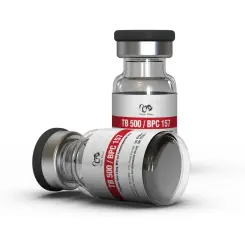
- Accelerates muscle and tendon repair for quick recovery.
- Reduces inflammation systemically and locally.
- Enhances joint and tissue resilience for intense training.
- Supports comprehensive healing for uninterrupted performance.