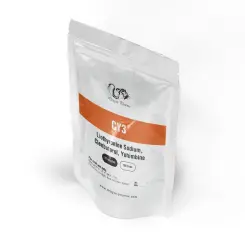
T3 (Liothyronine Sodium)
T3 Dragon Pharma — Overview
T3 Dragon Pharma is liothyronine sodium — triiodothyronine, the biologically active form of thyroid hormone — at 25 mcg per tablet, supplied in packs of 100 tabs. Unlike thyroxine (T4), which must be converted to T3 by peripheral deiodinases before becoming active, liothyronine binds thyroid hormone receptors directly and produces measurable metabolic effects within 48–72 hours of the first dose. This makes it the compound of choice when a fast, controllable, and titrable boost to basal metabolic rate is the goal.
In the context of performance and physique sport, T3 is used during aggressive cutting phases to raise the metabolic rate beyond what caloric restriction and training alone can achieve. At supraphysiologic doses it is catabolic to muscle tissue as well as fat, which is why every practical T3 protocol pairs it with an anabolic steroid base. steroidwarehouse.com carries Dragon Pharma's 25 mcg tablet format alongside the full stack support needed to run it correctly in a cutting cycle.
About the Compound: Liothyronine (T3)
The thyroid gland produces two iodinated hormones: thyroxine (T4) and triiodothyronine (T3). T4 is the storage and transport form — it circulates at higher concentration but has minimal direct receptor activity. Peripheral tissues convert T4 to T3 via type I and type II iodothyronine deiodinases (D1, D2), which remove one iodine atom from the outer ring. T3 binds thyroid hormone receptors (THRα and THRβ) with approximately four times higher affinity than T4, making it the metabolically active molecule responsible for nearly all thyroid hormone effects at the cellular level. Exogenous liothyronine bypasses the T4→T3 conversion step entirely and acts directly on receptors within hours.
- Direct THRα/THRβ agonism — T3 binds nuclear thyroid hormone receptors and drives transcription of genes governing mitochondrial biogenesis, uncoupling protein expression, and metabolic enzyme activity; the result is increased basal metabolic rate (BMR) — the body burns more calories at rest; the effect is dose-dependent and measurable within 48–72 hours of the first dose of exogenous T3
- Faster onset and shorter half-life than T4 — liothyronine has a plasma half-life of ~2.5 days vs ~7 days for thyroxine; this means dose adjustments take effect quickly, but also that missing doses or stopping abruptly produces a rapid drop in circulating T3 levels; both the speed of onset and the fast offset are pharmacokinetic features that set T3 apart from T4 in clinical and performance use
- Endogenous thyroid axis suppression — exogenous T3 provides negative feedback to the hypothalamic-pituitary-thyroid (HPT) axis, suppressing TSH secretion; reduced TSH leads to decreased endogenous T4 and T3 production from the thyroid gland; this suppression is reversible but requires a proper taper when the exogenous T3 course ends, to avoid rebound hypothyroidism during the recovery window
- Dose-dependent shift from fat loss to catabolism — at physiologic-to-mildly supraphysiologic doses (25–50 mcg/day), T3 preferentially accelerates fat oxidation; as dose increases toward 75–100 mcg/day, the catabolic effect on skeletal muscle protein becomes significant; this is the central risk of T3 use in performance contexts and the reason an anabolic steroid base is not optional when running T3 above 50 mcg/day
- Rapid titration via 25 mcg increments — the 25 mcg tablet format allows precise dose escalation from a conservative starting point; most users begin at 25 mcg/day and increase by 25 mcg every 3–5 days based on thermogenic response and resting heart rate; this gradual approach minimizes side effects and allows individual response calibration before reaching higher doses
What T3 Does
Thyroid hormone regulates the speed of almost every cellular metabolic process. T3 increases oxygen consumption in nearly all tissues except the brain, testis, and spleen; it upregulates mitochondrial uncoupling proteins (UCPs) that release stored energy as heat rather than ATP; and it drives transcription of lipid oxidation enzymes that accelerate fatty acid mobilization and oxidation. In a caloric deficit with an adequate anabolic steroid base, these mechanisms translate into accelerated fat loss without disproportionate lean tissue loss.
- Elevated basal metabolic rate — T3 upregulates mitochondrial activity and increases the number and size of mitochondria in metabolically active tissue; resting caloric expenditure increases measurably within days of reaching an effective dose; the thermogenic effect is sustainable across the 4–8 week cycle duration without receptor downregulation, which distinguishes T3 from catecholamine-based thermogenics like clenbuterol that lose potency through beta-2 receptor desensitization
- Accelerated fat oxidation — T3 increases transcription of fatty acid oxidation enzymes and sensitizes adipocytes to lipolytic signals; in a caloric deficit this produces a measurable shift toward fat as the primary fuel source; users consistently report faster fat loss at the same caloric intake when T3 is added vs diet-and-cardio alone, particularly for loss of stubborn subcutaneous body fat in the lower abdominal and hip regions
- Increased glucose and macronutrient turnover — T3 accelerates both glucose oxidation and gluconeogenesis; dietary carbohydrates are metabolized faster, which supports energy levels in a caloric deficit but also means glycogen stores replenish and deplete more rapidly; some users find their capacity for high-intensity training improves during T3 cycles due to faster substrate availability between sessions
- Protein turnover acceleration (dose-dependent risk) — at supraphysiologic doses T3 increases the rate of both protein synthesis and protein degradation; net protein balance tips toward catabolism if anabolic signaling from androgens is insufficient to counter the catabolic drive; this is why T3 is not used as a standalone fat loss tool: without an AAS base maintaining muscle protein synthesis, lean mass losses during aggressive T3 cuts are significant and can offset the physique goal entirely
- Cardiovascular output increase — T3 increases heart rate, cardiac contractility, and cardiac output via THRα-mediated gene expression in cardiomyocytes; at therapeutic doses this is a physiologic response; at supraphysiologic doses (particularly above 75 mcg/day) persistent tachycardia and increased myocardial oxygen demand can become a meaningful cardiovascular stress, especially when combined with stimulant-based compounds like clenbuterol
Who It's For
- What sets T3 apart: among the fat loss compounds available at Steroid Warehouse, T3 operates through an entirely different mechanism than beta-2 agonists (Clenbuterol, Helios) or adrenergic/lipolytic blends. Clenbuterol desensitizes its receptors within 2 weeks and requires ketotifen cycling to sustain its effect. T3 works through nuclear receptor transcription and does not downregulate over a standard 4–8 week cycle. The metabolic rate increase from T3 is sustained throughout the cycle duration and is additive rather than synergistic when combined with clenbuterol — each compound operates through an independent pathway.
- Best scenario: competitive bodybuilders in the final 6–10 weeks of contest prep who need to accelerate fat loss beyond what caloric restriction and cardio alone can achieve; athletes who have already maximized their diet and training but need additional metabolic output to reach stage-ready conditioning; intermediate to advanced users running a cutting AAS stack who can protect muscle mass with adequate androgen levels; users who have plateaued on clenbuterol and want to add a mechanistically distinct thermogenic agent
- Choose something else instead: beginners and first-time steroid users should not add T3 without an established AAS base — the catabolic risk at effective T3 doses is too high without adequate androgen protection; anyone not running an AAS base during a cut should start with a non-catabolic option like Clenbuterol Dragon Pharma, which supports fat loss without significant protein catabolism risk; users who are not prepared to taper the compound correctly and monitor thyroid markers post-cycle should not use T3, as improper discontinuation causes a rebound hypothyroid state that can impair recovery for weeks
T3 vs Alternatives
| Compound | Key Differences | Choose T3 When | Choose Alternative When |
|---|---|---|---|
| T4 Dragon Pharma Levothyroxine (T4) |
T4 is the inactive storage form; requires peripheral deiodinase conversion to T3 before becoming active; slower onset (~1–2 weeks to full effect); longer half-life (~7 days); gentler metabolic acceleration; less catabolism risk; easier to dose once daily without trough-related symptoms; preferred in thyroid replacement therapy contexts | You need direct, fast, titrable metabolic acceleration in a defined prep window of 4–8 weeks; the faster onset and shorter half-life allow more responsive dose adjustments week-to-week | Faster onset and stronger direct effect are not needed; you want a milder, more forgiving thyroid hormone with a longer half-life and less cardiovascular stress; T4 is the lower-risk option for users who are thyroid-sensitive or new to thyroid hormone use |
| Clenbuterol Dragon Pharma Beta-2 Adrenergic Agonist |
Different mechanism (beta-2 receptor agonism); produces thermogenesis via sympathomimetic pathway; receptor desensitization within 2 weeks requires on/off cycling or ketotifen co-administration; anti-catabolic effect (mild); no thyroid axis suppression; no taper required; stronger acute stimulant effects (jitteriness, insomnia, palpitations) but not sustained beyond the receptor desensitization window | A sustained non-downregulating metabolic accelerator is needed over 4–8 weeks; or you want to combine both mechanisms in the same prep cycle for additive fat loss output | You are new to cutting agents; you are not on an AAS base; or you want to avoid thyroid axis suppression and the mandatory post-cycle taper; Clenbuterol can be used as a standalone fat loss agent without an AAS base more safely than T3 |
| Helios Dragon Pharma Clenbuterol + Yohimbine injectable blend |
Injectable blend targeting subcutaneous fat directly at the injection site; yohimbine blocks α2-adrenergic receptors in stubborn fat deposits; clenbuterol provides systemic thermogenesis; localized effect on subcutaneous fat where α2 receptors are concentrated; injectable format; no thyroid axis involvement | Systemic metabolic rate acceleration via a sustained nuclear receptor mechanism is the priority; T3 raises total energy expenditure uniformly rather than targeting specific subcutaneous depot sites | The primary goal is targeting stubborn localized fat deposits (lower abdominal, flank, hip) that resist caloric restriction; Helios's local alpha-2 blockade mechanism is more targeted to specific depot fat than systemic T3-mediated BMR elevation |
Combinations
| Goal | Stack | Notes |
|---|---|---|
| Contest prep fat loss (standard) | T3 25–75 mcg/day + Enantat 250 300–400 mg/wk + Clenbuterol DP 80–120 mcg/day (2 weeks on / 2 weeks off) | The most common cutting prep structure; Enantat 250 provides the AAS base that protects muscle during T3-driven metabolic acceleration; Clenbuterol adds adrenergic thermogenesis through a mechanistically independent pathway; titrate T3 up over the first 2 weeks before adding full Clenbuterol dose to avoid compounding cardiovascular stress; monitor resting heart rate daily — target < 90 bpm at rest |
| Lean mass preservation during aggressive cut | T3 25–50 mcg/day + Masteron 100 400 mg/wk + Primobolan 100 400–600 mg/wk | Lower T3 dose (25–50 mcg/day) reduces catabolism risk while still accelerating fat oxidation; Masteron 100 and Primobolan 100 are both dry, non-aromatizing AAS that contribute anabolic protection without estrogenic water retention — ideal for pre-competition dry conditioning; the combination produces a hard, dry look while T3 drives fat loss; no AI required for this stack if testosterone base is omitted |
| Advanced prep (GH + T3 synergy) | T3 50 mcg/day + Dragontropin (HGH) 2–4 IU/day + AAS base | GH increases T4→T3 peripheral conversion, which may allow lower exogenous T3 doses to achieve the same metabolic effect; the combination enhances lipolysis through both somatotropic (GH/IGF-1) and thyroid receptor pathways; watch for glucose dysregulation — GH causes insulin resistance and T3 accelerates glucose turnover; fasted cardio and timed carbohydrate intake matter more with this combination; for advanced prep athletes only |
| Full contest prep stack | T3 50–75 mcg/day + Winstrol Inject 50 mg/day + Helios DP (localized) + testosterone base 200–300 mg/wk | Three mechanistically distinct fat loss agents operating simultaneously: T3 raises global BMR, Winstrol Inject hardens muscle and further reduces SHBG, Helios targets localized subcutaneous depots; testosterone base prevents estrogen crash and maintains libido at the low dose; aggressive stack for the final 6–8 weeks before a show; lipid panel is critical with Winstrol in the stack — HDL suppression is the primary cardiovascular monitoring concern |
Side Effects & Management
| What May Occur | Background | How to Handle It |
|---|---|---|
| Elevated resting heart rate / palpitations | T3 increases cardiac output and heart rate via THRα-mediated gene expression in cardiomyocytes; at supraphysiologic doses resting heart rate commonly rises by 10–20 bpm above baseline; the effect is dose-dependent and more pronounced when T3 is combined with clenbuterol or other adrenergic stimulants; persistent resting heart rate above 90 bpm indicates excessive cardiovascular strain | Monitor resting heart rate daily (morning, before activity); reduce dose by 25 mcg/day if consistently > 90 bpm; for persistent tachycardia above 100 bpm: Nebicard (Nebivolol) 5 mg/day — a beta-1 selective beta-blocker that reduces heart rate without significantly impairing thermogenesis or fat loss; do not combine T3 + clenbuterol if resting HR is already elevated before the cycle begins |
| Skeletal muscle catabolism | Supraphysiologic T3 accelerates protein turnover; net protein balance shifts toward degradation when androgen-driven anabolic signaling is insufficient to offset the elevated protein breakdown rate; muscle loss becomes measurable at doses above 75 mcg/day without an adequate AAS base; this is the most consequential risk of T3 use in performance contexts and the reason a testosterone or anabolic steroid base is mandatory | Never run T3 without an AAS base capable of sustaining muscle protein synthesis; for doses ≥ 50 mcg/day the AAS base should include at minimum 200–300 mg/week of testosterone equivalent; high dietary protein intake (2.5–3.5 g/kg lean body mass/day) supports anabolism; limit T3 cycles to 8 weeks to prevent cumulative lean mass erosion; if weight loss exceeds the expected fat-to-muscle ratio, reduce T3 dose before cutting calories further |
| Hyperthyroid symptoms (sweating, anxiety, insomnia) | Excessive thermogenesis from supraphysiologic T3 produces symptoms that overlap with clinical hyperthyroidism: profuse sweating, heat intolerance, anxiety or irritability, difficulty sleeping, loose stools or diarrhea, and tremors at higher doses; these symptoms indicate the dose has exceeded the individual's optimal thermogenic range and the cardiovascular and catabolic risks are also elevated at these levels | Dose reduction is the primary intervention — reduce by 25 mcg/day and reassess after 48–72 hours; for insomnia: Altonil (Melatonin) 3–5 mg before bed; for GI distress: Motilium (Domperidone) 10 mg before meals; never attempt to manage hyperthyroid symptoms without reducing the T3 dose — symptom suppression without dose reduction leaves cardiovascular and catabolic risks unaddressed |
| Endogenous thyroid axis suppression | Exogenous T3 suppresses TSH via negative feedback on the hypothalamic-pituitary-thyroid axis; with reduced TSH stimulation, the thyroid gland produces less endogenous T4 and T3; during the T3 cycle this suppression is functional and expected; upon stopping exogenous T3 abruptly, endogenous axis recovery requires 2–4 weeks, during which both TSH and endogenous thyroid hormones are transiently below optimal levels — producing fatigue, cold sensitivity, and brain fog characteristic of rebound hypothyroidism | Never stop T3 abruptly; always taper by reducing dose 25 mcg every 3–5 days; this allows the HPT axis to gradually resume endogenous production as exogenous levels drop; post-taper TSH and free T3/T4 check at 4 weeks confirms axis recovery; most users recover within 3–6 weeks of completing the taper; see Taper & Recovery section below |
| Bone density concern (long cycles) | Chronic supraphysiologic T3 exposure increases bone turnover by stimulating osteoclast activity via THRα; this is a clinically relevant concern in the medical treatment of thyroid disorders but is not a meaningful risk in the 4–8 week performance cycles typical of bodybuilding use; worth noting for users who run multiple consecutive short cycles without adequate washout periods | Keep cycles to 4–8 weeks maximum; ensure adequate rest periods between T3 cycles (minimum 8–12 weeks off); calcium and vitamin D supplementation throughout the cycle as a conservative measure; this side effect is low-priority for a single 6–8 week cycle but becomes relevant if T3 is used continuously or in rapid succession |
Monitoring
| Marker | When to Check | Target & Action Threshold |
|---|---|---|
| Resting heart rate | Daily (morning self-check throughout cycle) | Target < 90 bpm at rest; measure before getting out of bed for a consistent baseline reading; readings consistently ≥ 95 bpm at rest indicate the current dose is producing excessive cardiovascular strain — reduce by 25 mcg/day before the next bloodwork visit; this is the most immediately actionable safety marker on any T3 cycle |
| TSH (thyroid-stimulating hormone) | Baseline (mandatory); week 4; 4 weeks post-taper | Baseline establishes individual pre-cycle thyroid function; on-cycle suppression to < 0.1 mIU/L is expected and confirms exogenous T3 is active; the post-taper check (4 weeks after the last T3 tablet) confirms axis recovery — target TSH returning toward the 0.5–4.0 mIU/L reference range; prolonged post-taper suppression warrants a further 2–4 week wait before rechecking |
| Free T3 (fT3) | Baseline; week 3–4 | Will be elevated above the reference range during the cycle — this is expected; extremely elevated fT3 (> 10 pg/mL on a standard assay) in combination with HR > 90 bpm confirms supraphysiologic dosing; useful for understanding individual response at a given dose and as a reference point when interpreting post-taper recovery |
| Free T4 (fT4) | Baseline; 4 weeks post-taper | Will be suppressed on-cycle as TSH-driven endogenous T4 production falls; the degree of T4 suppression confirms HPT axis feedback is active; post-taper recovery of fT4 toward baseline (typically 0.8–1.8 ng/dL) alongside TSH normalization confirms full axis recovery before any subsequent cycle |
| Blood pressure | Baseline; weekly throughout cycle | Target < 130/85 mmHg; T3 increases cardiac output and peripheral blood flow; when combined with AAS that also elevate BP (high-dose testosterone, trenbolone), the cardiovascular load is additive; use the same weekly BP check cadence as AAS cycles |
| Lipid panel (if AAS co-administered) | Baseline; week 4–6 of cutting stack | Monitor for HDL suppression from co-administered cutting agents, particularly Winstrol; T3 itself has a mild favorable effect on LDL by increasing LDL receptor expression, but this benefit is often masked by co-administered HDL-suppressive compounds; track the combined stack impact, not T3 in isolation |
| Body weight & lean mass trend | Weekly weigh-in; optional DEXA or caliper at start and end | Expected total weight loss: 0.5–1.5 kg/week depending on caloric deficit and dose; if weight loss exceeds 1.5 kg/week consistently, significant lean mass loss is likely occurring alongside fat loss — reduce T3 dose or increase caloric intake before the AAS base can no longer compensate for the catabolic drive |
Taper & Recovery
T3 does not require SERMs or gonadotropins, but it does require a mandatory dose taper and a post-cycle thyroid recovery period. Stopping liothyronine abruptly causes a rapid drop in circulating T3 before the suppressed HPT axis can resume adequate endogenous production — producing a transient hypothyroid state with fatigue, cold sensitivity, weight rebound, and cognitive slowdown. A controlled taper over 10–15 days eliminates this risk by allowing endogenous thyroid function to gradually resume as exogenous dose decreases.
| Phase | Protocol | Notes |
|---|---|---|
| Begin taper (at cycle end) | Reduce dose by 25 mcg every 3–5 days | From 75 mcg/day: 75 → 50 → 25 → stop over approximately 10–15 days; from 50 mcg/day: 50 → 25 → stop over 5–7 days; from 25 mcg/day: taper is minimal but still recommended — every-other-day dosing for 5 days before stopping; the taper pace can be adjusted to 5 days per step if hyperthyroid symptoms were prominent on-cycle, allowing more time for axis normalization at each step |
| Post-taper recovery (weeks 1–4) | No pharmaceutical intervention required; monitor symptoms | The HPT axis resumes endogenous T4 production within days of TSH rising; TSH typically returns toward the normal range within 2–4 weeks of the last T3 tablet; mild fatigue and cold sensitivity are common in the first 1–2 weeks and resolve without treatment; ensure adequate caloric intake during this window — maintaining a severe deficit post-taper slows endogenous thyroid recovery; if fatigue is significant, increase caloric intake by 200–300 kcal/day temporarily |
| Post-taper bloodwork | TSH, Free T3, Free T4 — 4 weeks after the last T3 tablet | TSH recovery into the 0.5–4.0 mIU/L reference range with normalized fT4 confirms full axis recovery; if TSH remains suppressed at 4 weeks (< 0.1 mIU/L) without symptoms, wait another 2 weeks and recheck before planning the next T3 cycle; persistent TSH suppression beyond 8 weeks post-taper warrants evaluation |
| Minimum cycle gap | 8–12 weeks off between T3 cycles (confirmed by bloodwork) | Do not begin a new T3 cycle until TSH and fT4 have fully recovered; insufficient washout between cycles compounds HPT axis suppression and increases the severity of rebound hypothyroidism after subsequent cycles; the off-period is non-negotiable and should be verified by bloodwork, not estimated by calendar alone |
Practical Summary
- Always start at 25 mcg/day and titrate up by 25 mcg every 3–5 days based on resting heart rate and thermogenic response — most users find their effective dose between 50 and 75 mcg/day; going directly to 75 mcg on day one offers no advantage and increases cardiovascular and catabolic risk before the body has adapted
- An AAS base is not optional at doses ≥ 50 mcg/day — T3 at supraphysiologic levels catabolizes muscle protein; the androgen environment from an active steroid base is what keeps net protein balance positive during the fat-loss phase; T3 without AAS at high doses loses lean mass alongside fat
- Monitor resting heart rate every morning; it is the fastest, most accessible real-time indicator of whether the current dose is appropriate; > 90 bpm at rest = reduce by 25 mcg before proceeding; never increase dose while resting HR is already elevated
- Never stop T3 abruptly — the mandatory taper (25 mcg every 3–5 days) prevents rebound hypothyroidism; plan the taper window into the cycle timeline before starting; a 6-week cycle at 75 mcg/day requires roughly 10–15 additional days for the taper after the "active" phase ends
- 1 pack (100 tabs × 25 mcg) = 2,500 mcg total; at 50 mcg/day a pack lasts 50 days; at 75 mcg/day it lasts 33 days; factor the taper period into the pack calculation — the taper consumes additional tablets at lower doses
- Post-cycle bloodwork (TSH, Free T3, Free T4) at 4 weeks after the last tablet confirms axis recovery; do not begin the next T3 cycle until all three markers have normalized; the minimum off-period is 8–12 weeks confirmed by lab results
T3 Dragon Pharma is a precise pharmacological tool for accelerating fat oxidation where standard caloric restriction has reached its practical ceiling — delivering measurable, sustained metabolic rate elevation across the full 4–8 week cycle without the receptor desensitization that limits catecholamine-based thermogenics. At 25 mcg per tablet the dose can be titrated precisely from a conservative starting point to the individual user's effective range. The compound demands discipline: a mandatory AAS base, daily heart rate monitoring, a controlled taper, and a verified thyroid recovery period before the next cycle. Within those boundaries, T3 remains one of the most consistently effective fat-loss tools available at steroidwarehouse.com for athletes in the final phase of contest prep or a structured cutting block.
References
| Source | Topic | Link |
|---|---|---|
| Physiological Reviews / PubMed | Mullur, Liu & Brent 2014 — comprehensive review of thyroid hormone regulation of metabolism; covers thyroid hormone receptor mechanisms, basal metabolic rate, thermogenesis, lipid and carbohydrate metabolism, and tissue-level metabolic effects relevant to understanding T3 pharmacology | Mullur R, et al. (2014) ↗ |
| Journal of Clinical Investigation / PubMed | Bianco & Kim 2006 — review of deiodinase enzymes and local control of thyroid hormone action; covers T4-to-T3 activation, tissue-specific thyroid hormone availability, and why exogenous T3 bypasses normal peripheral conversion control | Bianco AC & Kim BW (2006) ↗ |
| Medical Clinics of North America / PubMed | Danzi & Klein 2012 — review of thyroid hormone effects on the cardiovascular system; covers cardiac myocyte and vascular smooth muscle mechanisms, heart rate, contractility, vascular resistance, and cardiovascular consequences of altered thyroid hormone status | Danzi S & Klein I (2012) ↗ |
| New England Journal of Medicine / PubMed | Klein & Ojamaa 2001 — major clinical review of thyroid hormone and the cardiovascular system; useful for explaining T3-related changes in heart rate, contractility, cardiac output, vascular resistance, and cardiovascular risk when thyroid hormone exposure is excessive | Klein I & Ojamaa K (2001) ↗ |
What is T3?
T3 is an oral thyroid hormone (Liothyronine Sodium) for fat loss; see What is T3. It boosts metabolism—consult professionals for safe use.
Is there anything stronger than T3?
Clenbuterol or DNP may be stronger but riskier; see Is There Anything Stronger Than T3. Consult professionals for safer alternatives.
How does T3 work?
It upregulates metabolism for fat loss and energy; see Mechanism of Action. It delivers rapid results—monitor with labs.
Is T3 safe?
It's safe with careful dosing and monitoring; see Side Effects. Taper off and use anabolics to prevent muscle loss—consult professionals for safety.
Can T3 affect muscle mass?
T3 influences overall metabolism, which can affect both fat and muscle tissue. Maintaining adequate nutrition, protein intake, and resistance training is often discussed as important when using metabolic-support protocols.
What are the possible side effects?
Potential side effects may include:
- Rapid heartbeat
- Increased sweating
- Nervousness or anxiety
- Insomnia
- Tremors
- Heat intolerance
Excessive thyroid hormone levels can increase the risk of more serious complications.
Is T3 used for fat loss?
Yes. T3 is most commonly associated with fat-loss and cutting phases because of its powerful influence on metabolism and energy utilization.
What makes T3 different from other fat-loss compounds?
Unlike stimulants that primarily increase nervous system activity, T3 directly influences thyroid hormone pathways and metabolic rate, affecting how the body utilizes energy at a cellular level.
Related Products