Ipamorelin
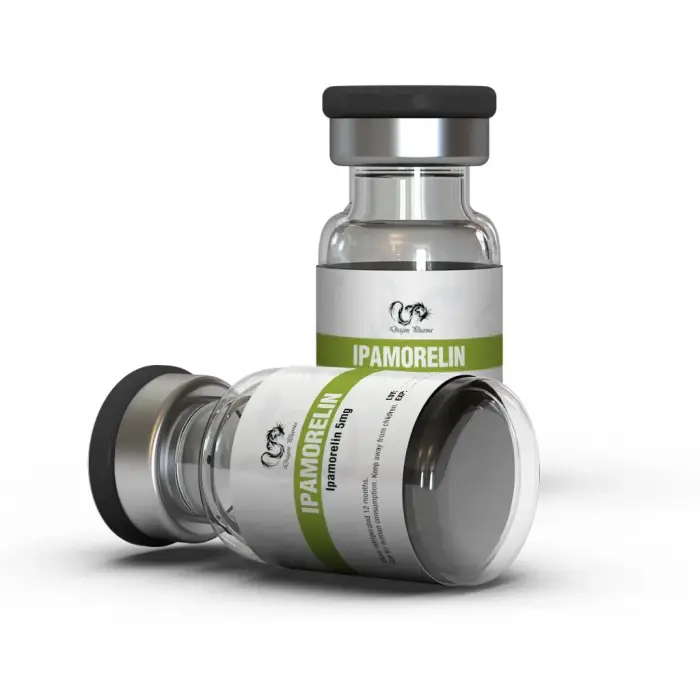
Ipamorelin 5 mg Dragon Pharma — Overview
Ipamorelin 5 mg Dragon Pharma is a synthetic pentapeptide growth hormone releasing peptide (GHRP) and the first clinically characterized selective GH secretagogue. Where earlier GHRPs — GHRP-2 and GHRP-6 — produce robust GH pulses alongside measurable elevations in cortisol, prolactin, and ACTH, ipamorelin stimulates GH release at the pituitary with high receptor selectivity and no significant effect on any other pituitary hormone at standard doses. This selectivity is its defining pharmacological characteristic: users get the anabolic and lipolytic benefits of a strong, clean GH pulse without the cortisol-driven catabolism and prolactin-related side effects that complicate protocols built around non-selective GHRPs.
Ipamorelin acts by binding the ghrelin receptor (GHS-R1a) on somatotroph cells in the anterior pituitary, triggering a discrete GH pulse that closely mimics the amplitude and shape of an endogenous GH burst. It does not stimulate GH release from the hypothalamus via GHRH, so it works through a complementary receptor pathway to CJC-1295 DAC — which is why the two compounds produce a supraadditive GH response when combined. Each 5 mg Dragon Pharma vial provides 16–50 full doses at standard 100–300 mcg per injection, making it one of the highest-value GHRP formats available at Steroid Warehouse for athletes building long-duration GH optimization protocols.
About the Compound: Ipamorelin
Ipamorelin (Ala-His-D-2-Nal-D-Phe-Lys-NH2) is a synthetic pentapeptide that binds GHS-R1a — the ghrelin receptor — on somatotroph cells in the anterior pituitary. GHS-R1a activation raises intracellular calcium via Gq-coupled phospholipase C signaling, which triggers exocytosis of GH-containing secretory granules and produces a discrete GH pulse. What makes ipamorelin pharmacologically distinct from GHRP-2, GHRP-6, and hexarelin is the narrow receptor selectivity: at doses that fully saturate GHS-R1a and produce maximal GH pulses, ipamorelin does not activate the receptors responsible for cortisol, ACTH, or prolactin release. This has been documented in head-to-head comparisons in both animal and human studies — ipamorelin's cortisol and prolactin responses are statistically indistinguishable from placebo at therapeutic doses, while GHRP-2 produces significant ACTH and cortisol elevation and GHRP-6 causes pronounced hunger and prolactin rise.
Ipamorelin's GH pulse amplitude is moderate compared to hexarelin and GHRP-2, but this is not a meaningful limitation in practical protocols because the GH response from any GHRP is dramatically amplified when paired with a GHRH analog. CJC-1295 DAC primes somatotroph cells by raising cAMP and sensitizing them to GHS-R1a activation; when ipamorelin is injected on this primed background, the resulting GH pulse is 2–10 times larger than ipamorelin or CJC-1295 alone. The ipamorelin + CJC-1295 combination is therefore the standard protocol for GH optimization, and ipamorelin's selectivity profile makes it the preferred GHRP component for users who want amplified GH output without the cortisol and prolactin burden of stronger but less selective alternatives.
What Ipamorelin Does
Ipamorelin produces a clean, dose-dependent GH pulse lasting approximately 3 hours from injection. All downstream anabolic and lipolytic effects are mediated by this GH elevation and the subsequent rise in liver-derived IGF-1 that follows.
- GH pulse stimulation — clean and selective — binding GHS-R1a triggers a discrete GH burst from the anterior pituitary; at 100–300 mcg, GH peaks within 30–60 minutes post-injection and returns to baseline by hour 3; the pulse is qualitatively similar to a physiological GH burst and does not dysregulate the endogenous GH axis between injections — the pituitary retains normal GH secretory capacity throughout the protocol
- IGF-1 elevation — dose- and frequency-dependent — each GH pulse drives hepatic IGF-1 production; with 2–3 injections per day, cumulative GH exposure raises serum IGF-1 progressively over 4–8 weeks; the degree of IGF-1 elevation reflects total daily GH exposure and is the primary efficacy marker for long-duration GH protocols; IGF-1 rises typically plateau by week 6–8 at a given injection frequency and dose
- Lipolysis — GH-driven fatty acid mobilization — GH directly stimulates lipolysis in adipocytes by activating hormone-sensitive lipase; this effect is most pronounced in visceral fat depots, which express high GH receptor density; the pre-bed ipamorelin injection is particularly important for lipolysis because the nocturnal GH pulse during slow-wave sleep is the single largest endogenous GH pulse; ipamorelin amplifies this pulse without disrupting sleep architecture
- Lean tissue preservation and recovery — elevated GH and IGF-1 support protein synthesis and nitrogen retention in skeletal muscle, reduce muscle protein catabolism during caloric restriction, and improve connective tissue collagen turnover; these effects are modest as standalone ipamorelin but meaningful within stacks that combine ipamorelin with CJC-1295 DAC or alongside AAS
- Somatostatin inhibition synergy with GHRH analogs — ipamorelin's GHS-R1a mechanism includes a partial effect on suppressing somatostatin tone at the hypothalamus; CJC-1295 simultaneously drives GHRH receptor activation at the pituitary; the combination of reduced somatostatin inhibition + direct GHRH stimulation + GHS-R1a activation produces a synergistic GH response that is several times larger than either compound alone
Who It's For
Ipamorelin is the correct GHRP choice for athletes and users who want clean GH pulse stimulation as a long-term protocol component — particularly those stacking with CJC-1295 DAC, running at higher injection frequencies (2–3×/day), or who are sensitive to the cortisol and prolactin side effects of less selective GHRPs.
What sets ipamorelin apart: it is the only GHRP with a selectivity profile that allows 2–3 daily injections without progressively worsening cortisol load, prolactin elevation, or appetite dysregulation. GHRP-6 causes pronounced hunger at every injection; GHRP-2 and hexarelin produce ACTH and cortisol rises that compound across multiple daily doses; ipamorelin runs cleanly at all standard frequencies. For users on 12–24 week GH optimization protocols where the GHRP is taken 2–3 times daily every day, the difference between a selective and non-selective GHRP at that injection frequency is practically meaningful — especially during cutting phases where cortisol management is important.
Ideal use cases:
- The primary GHRP component in a CJC-1295 DAC + ipamorelin protocol for long-duration GH optimization (12–24 weeks); ipamorelin provides the GHS-R1a-driven GH pulse that synergizes with CJC-1295's GHRH receptor activation to produce supraadditive GH output
- Athletes in a caloric deficit who need GH stimulation for lipolysis and lean tissue preservation without the cortisol elevation from stronger GHRPs — cortisol promotes catabolism and opposes the anabolic environment a deficit-phase protocol is trying to maintain
- Users who have experienced hunger dysregulation on GHRP-6 or cortisol/prolactin issues on hexarelin and are switching to a cleaner GHRP that delivers comparable GH output in combination with CJC-1295 DAC without the off-target hormonal effects
Who should consider a stronger GHRP instead: athletes who prioritize maximum single-injection GH pulse amplitude above all else, and who are doing only 1 injection per day, may prefer Hexarelin Dragon Pharma — hexarelin produces the highest GH peak per injection of any available GHRP. The cortisol and prolactin tradeoff matters less at low injection frequency. Ipamorelin's advantage is most pronounced at 2–3 daily injections over long protocols.
Ipamorelin vs Alternatives
| Compound | Key Differences | Choose Ipamorelin When | Choose Alternative When |
|---|---|---|---|
| Hexarelin Dragon Pharma Highest GH pulse amplitude · cortisol + prolactin rise |
Hexarelin produces the highest GH pulse amplitude of any available GHRP; however it significantly elevates cortisol, prolactin, and ACTH alongside GH; receptor desensitization occurs faster than with ipamorelin, limiting practical cycle length; at 1 injection/day the cortisol tradeoff is manageable; at 2–3 injections/day cortisol accumulation becomes practically significant; hexarelin also has cardiac GH secretagogue receptor (GHS-R1b) activity that ipamorelin lacks | Clean multi-injection daily protocol (2–3×/day) is planned; cutting phase where cortisol management matters; long 12–24 week protocol where receptor desensitization must be avoided; CJC-1295 stack where the synergistic amplification makes raw single-injection GHRP potency less relevant | Maximum single-injection GH pulse amplitude is the explicit priority; only 1 injection/day is the format; short 4–8 week cycle; cortisol and prolactin elevation at that frequency are acceptable |
| GHRP-2 Dragon Pharma Strong GH pulse · moderate cortisol + ACTH rise |
GHRP-2 produces a strong GH pulse with moderate cortisol and ACTH elevation — less than hexarelin but more than ipamorelin; prolactin rise is also moderate; hunger stimulation is present but less pronounced than GHRP-6; GHRP-2 is a middle-ground GHRP — stronger than ipamorelin per injection, less clean; at once-daily dosing the hormonal tradeoffs are limited; at 2–3 daily injections they compound; also a GHS-R1a agonist but with lower selectivity than ipamorelin | Selectivity at 2–3 daily injections is the priority; cutting phase; long protocols; CJC-1295 stack for synergistic amplification | Slightly higher GH output per injection without full selectivity is acceptable; once-daily format; short cycle; user has run ipamorelin and wants a step up in raw GHRP potency without going to hexarelin |
| GHRP-6 Dragon Pharma Strong GH + pronounced appetite stimulation |
GHRP-6 is GHS-R1a agonist like ipamorelin but also strongly activates ghrelin receptors in the hypothalamus and stomach, producing pronounced appetite stimulation at every injection; useful for hard gainers trying to eat above maintenance; cortisol and prolactin elevation is moderate; the appetite effect is its defining characteristic — desirable for mass-gain contexts, disruptive for cutting phases; not appropriate for 2–3 daily injections during a deficit due to hunger compounding at every dose window | Cutting phase or controlled diet; 2–3 daily injections; managing appetite is important; prolactin or cortisol sensitivity exists | Aggressive mass gain where maximizing caloric intake is the goal; appetite stimulation at every GHRP injection is a feature not a problem; once-daily injection with a large meal immediately after is the format |
Combinations
| Goal | Stack | Protocol / Timing | Notes |
|---|---|---|---|
| GH optimization — standard CJC + ipamorelin protocol | Ipamorelin + CJC-1295 DAC Dragon Pharma Also available as pre-mixed: CJC-1295 Ipamorelin 10 mg Dragon Pharma |
CJC-1295 DAC 2 mg SubQ once weekly (Saturday AM); Ipamorelin 100–200 mcg SubQ 2–3×/day fasted (pre-bed mandatory; add AM and/or pre-workout for 3×/day). Both are SubQ into the abdomen; separate injections or draw into one syringe. Run 12–24 weeks continuously. Vial math: ipamorelin at 200 mcg 2×/day = 400 mcg/day; 5 mg vial = 12.5 days → 3 vials/month | The standard GH optimization stack. CJC-1295 DAC primes GHRH receptors continuously; ipamorelin activates GHS-R1a at each fasted injection on that primed baseline, producing a synergistic GH pulse 2–10× larger than either compound alone. The pre-mixed 10 mg Dragon Pharma vial (5 mg CJC-1295 DAC + 5 mg ipamorelin) is available for convenience but requires careful dose calculation since the compounds have different injection frequencies. |
| GH stack + AAS cycle for maximum anabolic output | Ipamorelin + CJC-1295 DAC Dragon Pharma + testosterone base (e.g. Enantat 250 Dragon Pharma) | CJC-1295 DAC 2 mg SubQ once weekly; Ipamorelin 200 mcg SubQ 2×/day (AM fasted + pre-bed fasted); AAS per standard cycle protocol. Keep at least 30 min between AAS oral administration and peptide injections where applicable. Run the GH stack throughout the full AAS cycle length | AAS drives androgen receptor-mediated nitrogen retention and protein synthesis; the CJC + ipamorelin stack adds GH-driven IGF-1 elevation and lipolysis simultaneously. The combination covers three distinct anabolic/metabolic pathways: AR, IGF-1R (via liver IGF-1), and direct GH receptor on adipose tissue. Monitor IGF-1 at week 8. |
| Between-cycle lean tissue preservation (no AAS) | Ipamorelin + IGF-1 LR3 Dragon Pharma | Ipamorelin 200 mcg SubQ pre-bed fasted (daily, for GH pulse and recovery); IGF-1 LR3 40–60 mcg SubQ post-workout on training days only (4–6 week blocks with 4-week breaks). Separate ipamorelin (pre-bed fasted) from IGF-1 LR3 (post-workout with food) by several hours | Between AAS cycles, ipamorelin provides nocturnal GH stimulation for lean tissue maintenance and recovery; IGF-1 LR3 adds direct post-workout IGF-1R activation that liver-derived IGF-1 does not fully replicate at the local muscle level. Neither compound suppresses the HPG axis. Start only after post-cycle hormonal recovery is confirmed. Monitor fasting glucose during IGF-1 LR3 phase. |
Side Effects & Management
| Side Effect | Severity | How to Handle It |
|---|---|---|
| Transient flushing, warmth, tingling post-injection | Low — brief, self-limiting | The most commonly reported ipamorelin injection effect; appears within minutes of SubQ injection and typically resolves within 10–20 minutes. Caused by the GH pulse itself and possibly mild histamine release at the injection site. Not a sign of allergic reaction at standard doses — no treatment required. If flushing is pronounced or accompanied by hives or respiratory symptoms, hold the compound and assess for allergy. Rotating injection sites reduces localized skin reactions. |
| Mild headache (GH pulse) | Low — dose-dependent | GH elevation causes transient vasodilation and mild intracranial pressure changes that manifest as a dull headache within the first 1–2 hours post-injection. More common at doses above 200 mcg or when ipamorelin is combined with CJC-1295 DAC, where the GH pulse amplitude is amplified. Typically resolves as GH returns to baseline by hour 3. Reduce dose from 200 to 100 mcg if headache is consistently present; reconsider injection timing if the AM injection is interfering with productivity. Ecosprin (Aspirin) 75 mg/day can be taken for concurrent cardiovascular support; it is not specifically indicated for ipamorelin-related headache. |
| Water retention / mild edema | Low — GH-driven, dose-dependent | GH promotes sodium and water retention at the renal tubule. Mild peripheral edema — most noticeable in hands and ankles — is common during the first 1–2 weeks of a CJC + ipamorelin protocol as IGF-1 rises. Typically self-limiting as the body adapts. Persistent edema beyond week 3 or worsening edema suggests GH elevation may be excessive — reduce ipamorelin dose or injection frequency from 3× to 2× daily. Blood pressure should be checked if edema is progressive. Sartel (Telmisartan) 40 mg/day if BP is elevated alongside edema. |
| Mild hunger (post-injection) | Low — significantly less than GHRP-6 | Ipamorelin has modest ghrelin receptor activity that can produce mild hunger within 30–60 minutes of injection in some users — less pronounced than GHRP-6 but present in a subset of users at higher doses. Injecting pre-bed minimizes the practical impact since hunger resolves during sleep. For AM or pre-workout injections, have a fasted window of 20–30 minutes post-injection and then consume the scheduled meal. Dose reduction from 200 to 100 mcg reduces the hunger response if it is disruptive. |
| Cortisol / prolactin elevation | None at therapeutic doses | Ipamorelin's selectivity for GHS-R1a means cortisol, ACTH, and prolactin remain statistically unchanged from baseline at doses of 100–300 mcg. This has been confirmed in published dose-ranging studies. No AI, dopamine agonist, or cortisol-management agent is required alongside ipamorelin. If switching from hexarelin or GHRP-2 to ipamorelin, any pre-existing elevated prolactin from the prior GHRP will normalize within 1–2 weeks post-switch without additional intervention. Cabergoline Dragon Pharma is not indicated for ipamorelin protocols. |
Bloodwork Monitoring
| Lab | When to Test | Target & Action Threshold |
|---|---|---|
| IGF-1 (fasting, serum) | Baseline → week 6–8 → week 16–20 | Primary efficacy marker. Baseline establishes the pre-protocol IGF-1 level. Target at week 6–8 on a CJC + ipamorelin stack: IGF-1 in upper-normal for age (typically 200–350 ng/mL for adults under 40; 150–250 ng/mL for 40+). If IGF-1 is below target at week 8: increase injection frequency from 2× to 3×/day or increase ipamorelin dose from 100 to 200 mcg. If IGF-1 exceeds 400 ng/mL: reduce frequency or dose. IGF-1 above 400–500 ng/mL is associated with acromegalic tissue changes at sustained exposure. |
| Fasting blood glucose | Baseline → week 4 → week 12 | GH elevation from sustained ipamorelin use induces mild insulin resistance by reducing glucose uptake in peripheral tissues. Fasting glucose may drift upward over a 12–24 week protocol. Target: <100 mg/dL fasting. If 100–125 mg/dL (pre-diabetic range) on protocol: reduce injection frequency and add dietary carbohydrate management. If >125 mg/dL: discontinue the protocol; do not add Glucophage (Metformin) as a workaround without addressing the root cause (GH dose is too high). |
| Cortisol (AM fasting) | Baseline; optional at week 6–8 if stacking with other GHRPs or transitioning from hexarelin/GHRP-2 | Ipamorelin should not elevate cortisol. A normal AM cortisol (6–23 mcg/dL) at week 6 confirms ipamorelin's selectivity is working as expected and distinguishes it from any residual cortisol elevation from a prior non-selective GHRP. Not a mandatory monitoring lab for standalone ipamorelin protocols; useful diagnostically if the user is experiencing unexpected fatigue, mood disruption, or recovery impairment that might be cortisol-mediated. |
| Blood pressure | Self-monitor weekly during the first 4 weeks; monthly thereafter | Target: <130/85 mmHg. GH-driven water retention can mildly elevate blood pressure. If sustained systolic >140 mmHg: first assess whether edema is present; reduce injection frequency if so. If BP elevation persists independently: Amlip (Amlodipine) 5 mg/day or Sartel (Telmisartan) 40 mg/day. Add Ecosprin (Aspirin) 75 mg/day on protocols running 16+ weeks. |
| Thyroid function (TSH, free T4) | Baseline; optional at week 12–16 on extended protocols | Sustained GH elevation can suppress TSH and reduce thyroid hormone production in some users over long protocols. Not a common clinical finding at ipamorelin doses but worth checking on protocols of 20+ weeks or if fatigue, cold intolerance, or unexpected weight gain develops. Target: TSH 0.5–4.5 mIU/L, free T4 0.8–1.8 ng/dL. If subclinical hypothyroidism develops on protocol, assess whether continued running at the current GH level is appropriate. |
Protocol & Administration
Reconstitution: add 2.5 mL of bacteriostatic water Dragon Pharma to the 5 mg ipamorelin vial → final concentration 2 mg/mL (2,000 mcg/mL). At this concentration: 100 mcg = 0.05 mL, 200 mcg = 0.10 mL, 300 mcg = 0.15 mL. Inject the water gently down the inside vial wall; swirl slowly — do not shake. Store reconstituted vial at 2–8°C; use within 14–21 days. Discard if cloudy. At 200 mcg 2×/day the 5 mg vial provides 12.5 days of doses — plan procurement for 3 vials per month.
Injection technique: SubQ only — abdomen (preferred), lateral thigh, or upper arm. Use a 29–31 G × 8 mm insulin syringe. Pinch the skin, inject at 45° angle, release. The injection volume at 200 mcg is 0.10 mL — a small, comfortable SubQ dose. Always inject fasted: at least 2 hours after food, and wait 20–30 minutes after injection before eating. The fasted state requirement is non-negotiable — food intake raises insulin and somatostatin, both of which blunt the GH pulse from ipamorelin. Rotate injection sites across sessions.
| Protocol | Dose | Frequency | Timing Windows | Duration | Monthly Vial Need |
|---|---|---|---|---|---|
| Entry / once daily | 100–200 mcg | 1×/day | Pre-bed fasted (most important window) | 12–24 weeks | 1 vial/month at 200 mcg/day (12.5 days/vial → 2.5 vials/month; budget 3) |
| Standard / twice daily | 100–200 mcg | 2×/day | Pre-bed fasted + AM fasted (or pre-workout fasted) | 12–24 weeks with CJC-1295 DAC | 3 vials/month at 200 mcg 2×/day |
| Advanced / three times daily | 100–200 mcg | 3×/day | AM fasted + pre-workout fasted + pre-bed fasted | 12–20 weeks with CJC-1295 DAC; check IGF-1 at week 8 and adjust | 4.5 vials/month at 200 mcg 3×/day; budget 5 |
Practical Summary
- Always inject fasted — food kills the GH pulse: elevated insulin from a recent meal raises somatostatin tone, which directly suppresses GH release; ipamorelin injected in a fed state produces a fraction of the GH pulse generated in a fasted state; the fasted window is at minimum 2 hours post-meal; the pre-bed injection is the most effective single-daily window because it amplifies the naturally occurring nocturnal GH pulse during slow-wave sleep
- Pair with CJC-1295 DAC for synergistic GH output — ipamorelin alone is submaximal: at any given dose, ipamorelin alone produces a GH pulse that is 2–10× smaller than ipamorelin administered on a CJC-1295 DAC background; the GHRH receptor + GHS-R1a dual stimulation produces supraadditive GH release; for serious GH optimization, the combination is the standard protocol — ipamorelin standalone is appropriate only for very conservative entry protocols or bridging
- No cortisol or prolactin management is required alongside ipamorelin: this is ipamorelin's defining clinical advantage over all other GHRPs; do not add cabergoline, AI, or cortisol-blocking agents "just in case" — they are not indicated and add unnecessary complexity and cost to the protocol; this also makes ipamorelin the preferred GHRP for 2–3 daily injection protocols where non-selective GHRPs would accumulate cortisol and prolactin burden across the day
- Check IGF-1 at week 6–8 and calibrate from there: IGF-1 is the actionable efficacy read-out for GH protocols; target upper-normal for age; if below target, increase from 2× to 3× daily or raise dose from 100 to 200 mcg; if above 400 ng/mL, reduce frequency; re-check at week 12–16 after any adjustment; do not adjust the protocol based on how you feel — IGF-1 bloodwork drives dose decisions
- Plan vial procurement before starting — 3+ vials per month at 2×/day: at 200 mcg twice daily, one 5 mg vial covers 12.5 days; you need approximately 2.5 vials per month — order 3; reconstituted vials expire at 14–21 days so open each new vial on schedule; never reconstitute two vials simultaneously to compensate for a supply gap — reconstituted half-vials expire before they can be used
- Monitor fasting glucose at week 4 and week 12 on extended protocols: sustained GH elevation from a CJC + ipamorelin stack reduces peripheral insulin sensitivity over time; fasting glucose drifting to 100–110 mg/dL is an early warning to reduce injection frequency, not to add Metformin and continue; address the cause, not the symptom
Ipamorelin remains the cleanest, most practically sustainable GHRP available for long-duration GH optimization protocols. Its combination of selective GHS-R1a agonism, absence of cortisol and prolactin elevation, and high vial yield at 5 mg per vial makes it the default GHRP component in any CJC-1295 DAC stack at Steroid Warehouse. For athletes running 12–24 weeks of GH axis support at two or three injections per day, the selectivity advantage over hexarelin and GHRP-2 compounds meaningfully across the protocol — delivering strong, clean GH pulses every fasted window without the hormonal noise that limits long-term use of less selective GHRPs.
References
| Source | Topic | Link |
|---|---|---|
| European Journal of Endocrinology / PubMed | Raun et al. 1998 — original pharmacological characterization of ipamorelin; demonstrates potent GH-releasing activity in vitro and in vivo with a selective endocrine profile that does not meaningfully elevate cortisol, ACTH, or prolactin at tested doses; establishes ipamorelin as the first selective growth hormone secretagogue | Raun K, et al. (1998) ↗ |
| Growth Hormone & IGF Research / PubMed | Johansen et al. 1999 — rat study showing that ipamorelin, a synthetic GH-releasing peptide, stimulates GH release and induces dose-dependent longitudinal bone growth; provides early in vivo efficacy context for ipamorelin as a growth hormone secretagogue | Johansen PB, et al. (1999) ↗ |
| Journal of Medicinal Chemistry / PubMed | Ankersen et al. 1998 — medicinal chemistry study describing highly potent growth hormone-releasing peptides derived from ipamorelin; covers structure-activity development, peptidomimetic modifications, in vitro GH release in rat pituitary cells, and in vivo GH-releasing potency in animal models | Ankersen M, et al. (1998) ↗ |
| Cellular and Molecular Life Sciences / PubMed | Bowers 1998 — landmark review of the growth hormone-releasing peptide class by a key researcher in synthetic GHRP development; covers GHRP discovery, pharmacology, structure-activity relationships, pituitary and hypothalamic mechanisms, and the broader mechanistic context for GHRP compounds | Bowers CY (1998) ↗ |
| Journal of Clinical Endocrinology & Metabolism / PubMed | Bowers et al. 1990 — human study showing that growth hormone-releasing peptide stimulates GH release in normal men and acts synergistically with GHRH; provides the mechanistic human-data basis for combined GHRH-pathway plus GHS/GHRP-pathway stimulation | Bowers CY, et al. (1990) ↗ |
What is Ipamorelin for men?
Ipamorelin for men boosts GH release for muscle recovery and growth; see Key Benefits. It's non-hormonal—use with professional oversight.
What is Ipamorelin?
Ipamorelin is a peptide that stimulates natural GH release; see What is Ipamorelin. It enhances performance—consult professionals for safe use.
How long does Ipamorelin stay in your system?
With a 2-hour half-life, it's detectable for ~4-6 hours; see Mechanism of Action. Effects are short-lived—consult professionals for cycles.
Is it safe to combine Tesamorelin with CJC/Ipamorelin together?
Combining Tesamorelin with CJC/Ipamorelin is safe for synergistic GH effects when monitored; see Popular Stacks. Adjust dosing—consult professionals for safety.
How is Ipamorelin typically administered?
Ipamorelin is commonly:
- Supplied as a lyophilized (freeze-dried) peptide powder
- Reconstituted before use
- Administered through subcutaneous injection in many protocols
Usage methods vary depending on goals and protocol structure.
What are the possible side effects?
Potential side effects may include:
- Mild water retention
- Fatigue or dizziness
- Injection site irritation
- Temporary headaches or flushing sensations
Responses vary depending on dosage and individual sensitivity.
What is Ipamorelin used for?
Ipamorelin is commonly associated with supporting natural growth hormone release, recovery processes, sleep quality, and body composition-related research.
How long does it take to notice effects from Ipamorelin?
Effects vary depending on dosage, timing, and individual response. Many users report gradual improvements in sleep quality, recovery, and overall well-being over time.
Related Products
- Accelerates muscle and tendon repair for quick recovery.
- Reduces inflammation systemically and locally.
- Enhances joint and tissue resilience for intense training.
- Supports comprehensive healing for uninterrupted performance.