Ecosprin Gastro-Resistant Tablets
What Is Ecosprin?
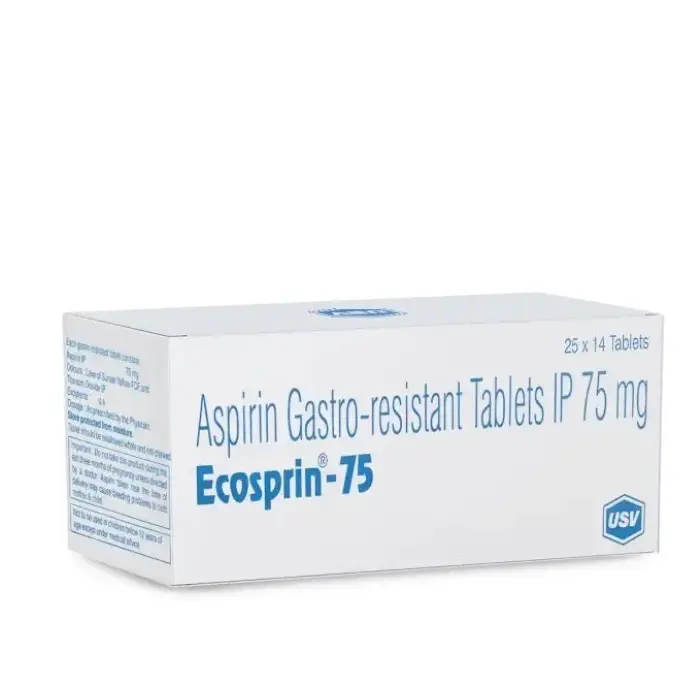
Ecosprin is acetylsalicylic acid 75 mg in a gastro-resistant tablet from USV, packed as 28 tablets. At this strength aspirin is not working as a painkiller. It is an antiplatelet drug: it acetylates cyclooxygenase-1 inside platelets, cuts thromboxane A2 production and makes the platelet less willing to clump. Platelets have no nucleus and cannot build fresh enzyme, so one tablet blocks a platelet for its whole life, roughly 7 to 10 days.
Twenty-eight tablets equal twenty-eight days, so the pack is almost literally a calendar. A refill ordered late leaves a real gap rather than a theoretical one, and that matters more than the price gap between brands. Adherence on a once-daily antiplatelet is decided at the pharmacy counter, not in the gym.
Ecosprin Dosage
One 75 mg tablet a day, swallowed whole with water, at a time of day you will not forget. The coating exists to carry the drug past the stomach, so crushing or chewing it throws away the main advantage of this formulation. Food is not required, but a tablet taken after breakfast is easier to remember and gentler on a sensitive stomach.
| Level | Dose | Units | Cycle | Note |
|---|---|---|---|---|
| Standard | 75 mg | 1 tablet | once daily, long term | whole tablet, with water |
| Higher | 150 mg | 2 tablets | once daily | only when a physician specifies it |
| Crushed | 75 mg | 1 tablet | not advised | breaks the enteric coating |
Cycle Length
There is no cycle. Duration is counted in years and reassessed annually, because the balance between clot prevention and bleeding shifts as a person ages. The number that surprises people is the tail: after the last tablet, platelet function recovers over 7 to 10 days, so any planned procedure needs that window discussed in advance.
A missed dose is taken when remembered on the same day and skipped if the next one is close. Doubling up buys nothing and adds stomach risk, since the antiplatelet effect is already saturated at 75 mg.
Ecosprin Stacks
Low-dose aspirin is rarely alone. It sits in a cardiovascular set with a statin, sometimes a second antiplatelet, and a stomach protectant when the gut complains. The combinations that matter are the ones that multiply bleeding rather than the ones that look impressive on paper.
| Partner | Role | Effect |
|---|---|---|
| Rosulip | Statin | lowers LDL, does not replace the antiplatelet |
| Plavix | Second antiplatelet | dual therapy only under cardiology direction |
| Prilosec | Proton pump inhibitor | stomach cover when irritation appears |
| Nodard | NSAID | adds gut and bleeding risk, avoid together |
The mechanism behind the last row is worth knowing. Ibuprofen and similar NSAIDs compete for the same COX-1 docking site, and regular use can blunt the irreversible effect aspirin is supposed to produce, while both drugs attack the stomach lining. The pharmacy section lists the alternatives, and the cycle support range covers the haematocrit side of the same problem.
Ecosprin Side Effects
Bleeding is the headline, and it appears far below the painkilling range: even 75 mg roughly doubles the risk of a significant gastrointestinal bleed compared with no antiplatelet at all. Bruising takes longer to settle. Less common but distinctive effects include tinnitus at higher exposure, aspirin-sensitive asthma in predisposed people, and kidney strain when the body is dehydrated.
- Stomach pain, heartburn and occult blood loss, especially with alcohol.
- Easy bruising and longer bleeding from small cuts.
- Wheezing or nasal congestion in people with aspirin-exacerbated respiratory disease.
- Ringing in the ears, a sign of too much salicylate.
- Reduced kidney function when combined with dehydration or another NSAID.
Anyone using injectable steroids and scheduled for surgery should mention aspirin explicitly, and a dental extraction counts. The 7 to 10 day platelet tail is the reason surgeons ask the question, and the answer should come from the prescriber rather than from a forum thread.
Support and Pharmacy Items
The practical support list for a low-dose aspirin user is short: something for the stomach, something to keep the cardiovascular picture measured, and a clear decision about which painkiller to use instead of an NSAID.
- Nurofen - occasional pain relief, but space doses away from aspirin.
- Steroid catalogue - why haematocrit and pressure are checked before a cycle begins.
- Pharmacy category - the rest of the cardiac and gastro line.
- Cycle planning guide - why haematocrit and blood pressure get checked first.
On a steroid cycle, aspirin is often reached for because the haematocrit is climbing. That is a conversation to have with a doctor: the post cycle plan covers bloodwork timing, and the basics explain why viscosity is not a problem a tablet solves quietly.
Where to Buy Ecosprin
Ecosprin is stocked at Steroid Warehouse as a USV product, 75 mg gastro-resistant tablets in packs of 28, with international and US domestic shipping. One pack is one month, so the sensible order matches the prescription length, not the discount tier. Buy it when a clinician has decided that a daily antiplatelet is appropriate, and keep the box with the rest of the cardiac medicines rather than in a gym bag.
This information is for educational purposes. Anabolic steroids are prescription medicines in most countries and carry serious health risks. Speak to a physician before use.
1. What is Ecosprin used for?
Ecosprin is used to reduce the risk of blood clots, heart attacks, and strokes. It supports cardiovascular health.
2. How does aspirin work in low doses?
It prevents platelets from sticking together, reducing clot formation. This improves blood flow.
3. What does gastro-resistant mean?
It means the tablet is coated to protect the stomach. It dissolves later in the digestive tract.
4. Can I take Ecosprin daily?
Yes, it is often used once daily for long-term heart protection under medical advice.
5. Are there risks of bleeding?
Yes, aspirin can increase bleeding risk. Monitoring is important, especially with long-term use.
6. How quickly does it work?
What are the possible side effects?
Potential side effects may include:.
- Nausea
- Vomiting
- Diarrhea
- Stomach irritation
- Increased sensitivity to sunlight (photosensitivity)
- Esophageal irritation or ulceration if not taken properly
To reduce the risk of esophageal irritation, doxycycline should be taken with a full glass of water, and patients should remain upright for at least 30 minutes after taking it. Avoid excessive sun exposure or use appropriate sun protection due to the risk of photosensitivity..
What makes Doxycycline different from amoxicillin?
Doxycycline belongs to the tetracycline antibiotic class and works by inhibiting bacterial protein synthesis, whereas amoxicillin is a penicillin antibiotic that disrupts bacterial cell wall formation. Because they work through different mechanisms, they are used to treat different types of bacterial infections.
Related Products