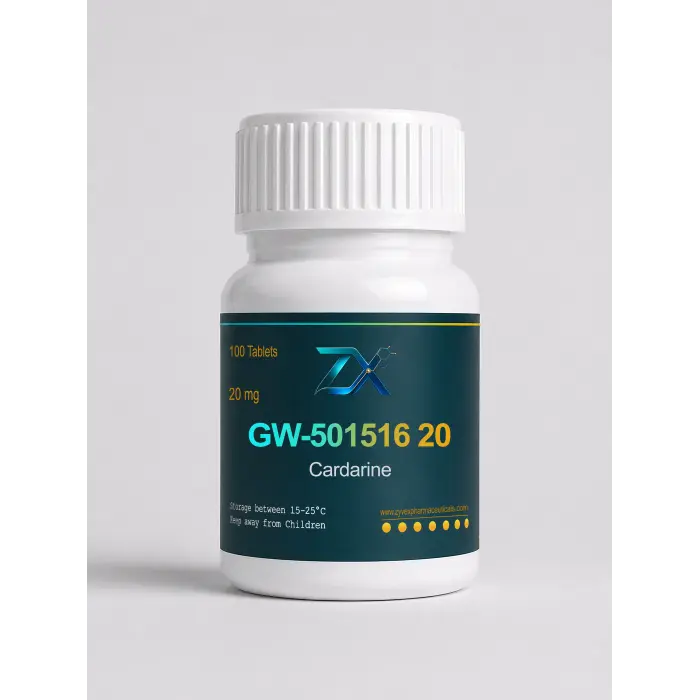
Cardarine GW-501516 - Zyvex Pharmaceuticals
Cardarine (GW-501516) - Zyvex Pharmaceuticals Overview
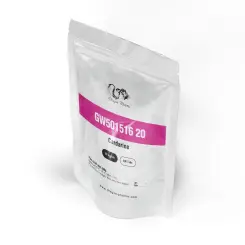
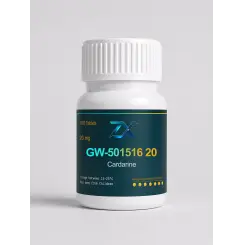
Cardarine by Zyvex Pharmaceuticals is a PPARdelta (PPARd) agonist - a compound that activates the peroxisome proliferator-activated receptor delta pathway to enhance fat oxidation and endurance at the cellular level. It is also known by its research compound designation GW-501516 and by its informal name Endurobol. Despite being sold alongside SARMs and commonly grouped with them, Cardarine is not a SARM - it does not bind to androgen receptors and has no direct effect on testosterone or estrogen. Each tablet contains 20 mg of GW-501516, formatted for once-daily pre-workout oral administration.
Cardarine was originally developed in the 1990s through a collaboration between GlaxoSmithKline and Ligand Pharmaceuticals as a potential treatment for metabolic syndrome, obesity, and dyslipidemia. It reached Phase II clinical trials before GlaxoSmithKline discontinued the program in 2007 following long-term animal toxicology studies. The compound has since been used extensively in the research and athletic community as an endurance and body composition tool, where its mechanism - upregulating genes involved in fat oxidation and mitochondrial biogenesis - produces significant, measurable improvements in aerobic capacity and fat loss.
About the Compound: Cardarine 20 mg
Cardarine (GW-501516) works by binding to and activating PPARdelta receptors, which are expressed throughout skeletal muscle, adipose tissue, and the liver. Activation of PPARd upregulates genes responsible for fatty acid oxidation, shifts fuel utilization from glucose toward fat, and promotes mitochondrial biogenesis - the creation of new mitochondria in muscle cells. The result is improved energy efficiency, greater aerobic output, and preferential fat burning during both exercise and rest.
Zyvex Pharmaceuticals produces Cardarine at 20 mg per tablet, 100 tablets per pack. The half-life of GW-501516 is approximately 16-24 hours, making once-daily dosing appropriate for stable blood levels. Some athletes split the dose (10 mg morning and 10 mg pre-workout) when using higher end doses, but for most purposes a single pre-workout dose 1-2 hours before training is the standard approach.
What Cardarine Does
Cardarine's effects all stem from PPARdelta activation and the downstream gene expression changes it produces. Unlike anabolic steroids or SARMs, Cardarine does not affect muscle mass directly - it is purely a performance and body composition compound operating through metabolic pathways.
- Endurance and VO2 max improvement - The most consistently reported and well-documented effect. PPARd activation in skeletal muscle increases mitochondrial density and shifts the muscle fiber composition toward oxidative (slow-twitch) metabolism. Athletes report significant improvements in sustained output, time to exhaustion, and recovery between intervals within the first 1-2 weeks of use. This effect operates independently of aerobic training but is amplified by it.
- Fat oxidation and body composition - Cardarine upregulates fatty acid oxidation genes, causing the body to preferentially burn fat for fuel during both training and rest. Users in a caloric deficit experience accelerated fat loss. Users eating at maintenance or slight surplus experience improved body composition - fat loss concurrent with muscle preservation. This effect is particularly useful in cutting phases alongside anabolic compounds that otherwise cause water retention or glycogen-driven weight gain.
- Preservation of muscle during a cut - By shifting fuel utilization to fat, Cardarine reduces the muscle protein catabolism that occurs during energy restriction. Muscle is spared when fat is available as fuel. This makes Cardarine a useful addition to aggressive cutting cycles where caloric restriction creates a risk of muscle loss.
- Cardiovascular performance - Beyond VO2 max, users report improvements in overall cardiovascular efficiency - lower resting heart rate during steady-state cardio, ability to maintain higher intensities for longer periods, and reduced cardiovascular strain during high-volume training blocks. This makes it valuable in sports with aerobic demands beyond pure strength training.
Not a SARM: Cardarine does not bind to androgen receptors, does not suppress testosterone production, and does not require PCT. Its mechanism is entirely separate from SARMs, anabolic steroids, and any compound affecting the HPG axis. It is categorized alongside SARMs on retail platforms for commercial convenience, not because of pharmacological similarity.
Dosing and Timing
Standard Dose
The established dose range is 10-20 mg per day. Most athletes start at 10 mg daily and assess response over the first 2 weeks before increasing to 20 mg if desired. The 20 mg/tab format from Zyvex allows flexible dosing - a full tablet for maximum effect or half a tablet for a conservative start. Doses above 20 mg daily are not documented in research or athletic use as providing additional benefit and are not recommended.
Timing
Take Cardarine 1-2 hours before training for best performance results. The pre-workout window aligns peak plasma levels with the training session, maximizing the endurance and fat oxidation effects during the workout itself. On rest days, take it in the morning to maintain consistent blood levels. Cardarine can be taken with or without food - there is no documented interaction with food that affects absorption.
Cycle Length
The recommended cycle length is 6-8 weeks. The long-term animal toxicology data that led GSK to discontinue clinical development involved continuous dosing over extended periods. An 8-week maximum with an equal break before any subsequent cycle is the standard harm-reduction approach in the athlete community. This cycle length is sufficient to achieve meaningful endurance and fat loss outcomes and is the basis for most documented user protocols.
Who Uses It and Why
| Use Case | Why Cardarine Works | Typical Protocol |
|---|---|---|
| Cutting phase (with or without anabolics) | PPARd activation shifts the body to fat-burning mode. Muscle-sparing effect during caloric restriction is significant. Compatible with all anabolic stacks - adds no hormonal burden. | 10-20 mg/day for 6-8 weeks. Stack with Ostarine or LGD-4033 for muscle preservation. Add to testosterone cycles for body composition enhancement. |
| Endurance sports and cardiovascular performance | VO2 max improvements are the most documented effect. Runners, cyclists, and combat athletes use it for sustained aerobic output gains without the hormonal complexity of anabolic compounds. | 10-20 mg/day, taken 1-2 hours pre-training. 6-8 week cycle aligned with a performance phase or competition prep block. |
| SARM cycle addition for cardio support | SARMs like LGD-4033 and RAD-140 can cause cardiovascular strain and reduce endurance capacity in some users. Cardarine offsets this effect by improving aerobic efficiency while the SARM handles muscle. | 10 mg/day alongside LGD, RAD-140, or Ostarine. Full 6-8 week cycle duration matching the SARM cycle length. |
| Recomposition (simultaneous fat loss and muscle gain) | Combined with a SARM providing anabolic stimulus, Cardarine's fat oxidation effect allows the body to lose fat and build muscle simultaneously - typically only achievable in beginners or those returning from time off without pharmaceutical support. | 10-20 mg Cardarine + LGD-4033 or Ostarine, 8 weeks, slight caloric surplus or strict maintenance. |
Side Effects and the Cancer Question
| Concern | Background | Assessment |
|---|---|---|
| Cancer risk (animal data) | GlaxoSmithKline discontinued GW-501516 Phase II trials in 2007 after animal studies showed accelerated tumor development in multiple organs at high doses administered continuously over extended periods. This is the primary safety concern cited against Cardarine use. | The animal doses were significantly higher than human athletic doses, administered continuously rather than in 6-8 week cycles. No human cancer cases have been attributed to Cardarine in the athlete community. The risk at human athletic doses in cycle lengths is theoretical rather than documented - but the animal data is real and the compound should be treated with corresponding caution. Stick to cycle lengths of 6-8 weeks maximum with breaks between cycles. |
| No hormonal side effects | Cardarine does not affect testosterone, estrogen, LH, FSH, or any other hormonal axis. There is no suppression, no estrogen conversion, no prolactin elevation, and no need for PCT. | This is a genuine advantage over SARMs and anabolic steroids for users who want endurance and fat loss benefits without hormonal intervention. |
| GI discomfort | Some users report mild stomach discomfort, particularly at the start of a cycle or when taking Cardarine on an empty stomach. | Take with food if GI sensitivity occurs. Typically resolves within the first week of use. |
| Lipid effects | Cardarine may alter lipid profiles - the PPARd pathway is involved in lipid metabolism. Some users report favorable changes (reduced LDL, improved HDL); the direction of effect can vary. | Bloodwork including a lipid panel before and after the cycle is advisable for extended or repeated use. |
Stacking Cardarine
Cardarine's non-hormonal mechanism makes it one of the most universally compatible compounds in use - it can be added to virtually any cycle without affecting the hormonal dynamics of the other compounds.
| Stack | Purpose | Notes |
|---|---|---|
| Cardarine + Ostarine | The most commonly used combination. Ostarine preserves and builds lean muscle; Cardarine provides fat oxidation and endurance. Together they produce a clean recomposition or cutting effect with no testosterone suppression when Ostarine is kept at 25 mg or below. | Cardarine 10-20 mg + Ostarine 15-25 mg, 8 weeks. No PCT needed if Ostarine dose is kept low. Bloodwork at 4 weeks to confirm no suppression. |
| Cardarine + LGD-4033 | LGD provides significant muscle and strength gains; Cardarine counters LGD's tendency to reduce endurance and adds fat oxidation. The combination produces lean gains with minimal fat accumulation. | Cardarine 10-20 mg + LGD 5-10 mg, 6-8 weeks. LGD at these doses requires a light PCT (Nolvadex 20 mg x 4 weeks). Cardarine does not require PCT. |
| Cardarine + RAD-140 | RAD-140 is the most anabolic SARM; it is also the most suppressive. Cardarine helps maintain cardiovascular performance and body composition during what can be an aggressive cycle. | Cardarine 10-20 mg + RAD-140 10-20 mg, 6-8 weeks. PCT is required after RAD-140. Cardarine can continue through PCT if desired. |
| Cardarine + Testosterone (anabolic stack) | Adding Cardarine to a testosterone cycle enhances fat loss, improves cardio capacity during the cycle, and helps manage body composition when bulking calories create fat gain alongside muscle. | Cardarine 10-20 mg for the last 6-8 weeks of a testosterone cycle. Does not interact with AI, SERM, or any other cycle support compounds. |
Frequently Asked Questions
Is Cardarine a SARM?
No - Cardarine (GW-501516) is not a SARM. It is a PPARdelta agonist, a completely different class of compound. SARMs (Selective Androgen Receptor Modulators) bind to androgen receptors and stimulate testosterone-like anabolic effects in muscle and bone. Cardarine does not touch androgen receptors at all. Instead, it activates PPARdelta receptors, which regulate fat metabolism and mitochondrial function in muscle tissue. Cardarine is sold alongside SARMs on many platforms for convenience - its effects complement SARM cycles and its non-hormonal mechanism makes it a popular addition - but pharmacologically it has nothing in common with SARMs. Calling it a SARM is a common misconception that circulates in bodybuilding forums and retail product descriptions. The practical consequence of this distinction: Cardarine does not suppress testosterone, does not cause hormonal side effects, and does not require PCT.
What does Cardarine actually do?
Cardarine activates PPARdelta receptors throughout skeletal muscle and adipose tissue, triggering gene expression changes that shift the body's fuel preference toward fat and improve mitochondrial efficiency. The concrete effects users experience from this mechanism are: significantly improved endurance and VO2 max (typically noticeable within the first 1-2 weeks of use), accelerated fat loss by preferential fatty acid oxidation over glucose, muscle preservation during caloric restriction (fat is burned instead of muscle protein when in deficit), and improved cardiovascular performance during high-volume training. Cardarine does not build muscle directly - it has no anabolic effect through androgen receptors. Its value is in body composition improvement and athletic performance, not in driving muscle hypertrophy on its own.
What is the correct Cardarine dosage?
The standard dose range is 10-20 mg per day. Most users start at 10 mg daily, assess tolerance and effect over the first 2 weeks, and increase to 20 mg if desired. The 20 mg/tab format from Zyvex Pharmaceuticals allows a full tablet for the higher dose or a half tablet for the conservative starting dose. Doses above 20 mg are not documented in research or user experience as providing additional benefit and are not recommended. Cycle length should be limited to 6-8 weeks with an equal time off before repeating. Take Cardarine 1-2 hours before training on workout days; in the morning on rest days to maintain consistent blood levels throughout the cycle.
When should I take Cardarine - before or after workout?
Before - specifically 1-2 hours pre-workout. The goal is to have peak plasma levels during the training session so the endurance and fat oxidation effects are maximized when you are actually working out. With a half-life of 16-24 hours, a single pre-workout dose maintains effective blood levels through the training session and into recovery. On rest days, take it in the morning to keep blood levels consistent throughout the cycle. There is no benefit to taking Cardarine post-workout or splitting the dose on low-dose protocols (10 mg). At 20 mg, some athletes prefer a 10 mg morning plus 10 mg pre-workout split, but a single pre-workout dose is the more common approach and works well for most users.
How long does Cardarine take to work?
Most users notice endurance improvements within the first 1-2 weeks of use - often within the first few workouts. The PPARdelta activation pathway upregulates gene expression relatively quickly, and the improved fat oxidation and mitochondrial efficiency are felt as reduced fatigue and improved sustained output during training. Fat loss effects take longer to become visually apparent - typically 2-3 weeks before body composition changes are noticeable, with more significant changes evident by weeks 4-6. The full effect on endurance capacity and VO2 max continues to develop through the cycle as mitochondrial biogenesis progresses. By week 4-6, the difference in cardiovascular performance is typically pronounced enough to be measurable in timed tests or tracked workout output.
Does Cardarine cause cancer?
This concern originates from GlaxoSmithKline's decision to discontinue GW-501516's clinical development in 2007 after long-term animal toxicology studies. In those studies, rats given high doses of Cardarine continuously over extended periods developed tumors in multiple organs. This is the factual basis of the concern and it should not be dismissed. However, several factors distinguish the animal study conditions from typical athletic use. The doses used in animal studies were substantially higher than the 10-20 mg human dose range on a weight-adjusted basis. The animals were dosed continuously over their lifetimes - not in 6-8 week cycles with breaks. No human cancer cases have been attributed to Cardarine in the athletic and research community despite widespread use for nearly two decades. The current evidence suggests that risk is associated with high-dose continuous use - the conditions of the animal studies - not with the short-cycle, standard-dose protocol used by athletes. Limiting cycle length to 6-8 weeks maximum with off-time between cycles is the harm-reduction approach the research community has converged on. Anyone with pre-existing conditions or cancer risk factors should not use Cardarine.
Do I need PCT after Cardarine?
No - Cardarine does not require post-cycle therapy. PCT exists to restore natural testosterone production after a cycle of compounds that suppress the HPG axis - anabolic steroids and most SARMs suppress LH and FSH, which reduces testosterone production. Cardarine does not interact with the HPG axis at all. It has no effect on testosterone, LH, FSH, or any other hormone involved in the HPG axis. After stopping Cardarine, there is nothing to restore - the PPARdelta pathway returns to baseline without intervention. If you are using Cardarine alongside a SARM that is suppressive (LGD-4033, RAD-140), PCT is required for the SARM component, not for the Cardarine. Cardarine can be continued through PCT if desired without affecting the hormonal recovery process.
Is Cardarine legal?
Cardarine (GW-501516) is not approved by the FDA for human use - it was never brought to market as a pharmaceutical drug following the discontinuation of clinical trials. In the United States it is legal to buy and possess as a research chemical; it is not classified as an anabolic steroid or controlled substance. The same general framework applies in most countries - it exists in a legal gray area as a research compound rather than being explicitly prohibited by drug laws. For competitive athletes, the picture is different: WADA added GW-501516 to the World Anti-Doping Agency prohibited list in 2009 and it remains prohibited in competition and out-of-competition. Athletes subject to drug testing by WADA-aligned organizations will test positive for Cardarine and face sanctions. The compound has a relatively short detection window compared to some substances, but it is actively targeted in anti-doping testing programs.
Related Products