Enanthate 250 - Zyvex Pharmaceuticals
Enanthate 250 (Testosterone Enanthate) - Zyvex Pharmaceuticals Overview
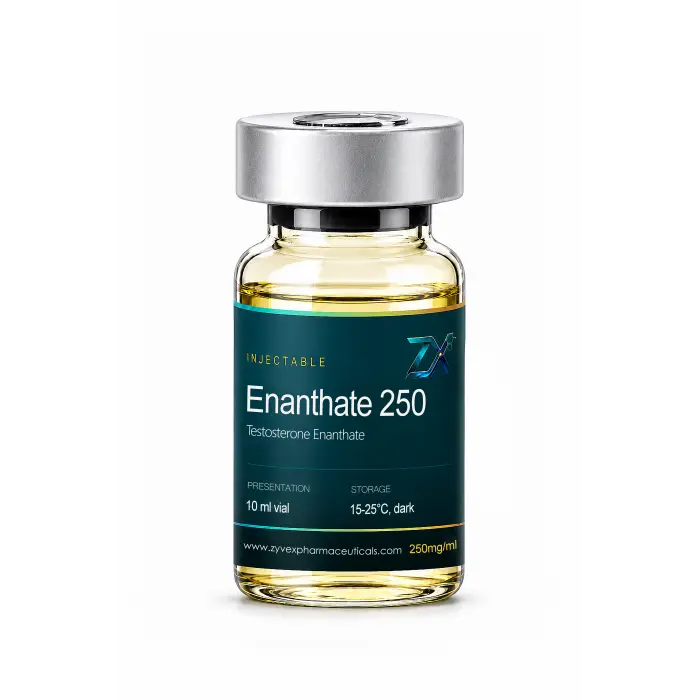
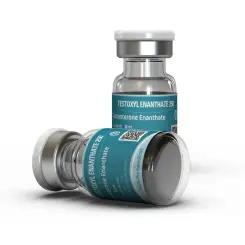
Enanthate 250 by Zyvex Pharmaceuticals contains Testosterone Enanthate at 250 mg/ml in a 10 ml multi-dose vial - the global standard testosterone ester for both TRT and performance enhancement. Testosterone Enanthate is the most widely prescribed injectable testosterone worldwide, favored for its 7-day half-life, stable blood levels on a twice-weekly injection schedule, and decades of documented use in clinical and bodybuilding settings. At 250 mg/ml, each 1 ml injection delivers 250 mg of Testosterone Enanthate. The 10 ml vial contains 2,500 mg total - sufficient for a 10-week cycle at 250 mg/week, or a standard first cycle at 300-500 mg/week split across two injections. Once injected, the enanthate ester is cleaved by plasma esterases, releasing free testosterone into the bloodstream over approximately 7 days. Peak blood levels occur around 48-72 hours post-injection, followed by a gradual decline over the following 5-6 days.
Testosterone Enanthate and Testosterone Cypionate are frequently compared as they share nearly identical pharmacokinetics. Both are long-acting esters requiring twice-weekly injection and a 14-day clearance window before PCT. The enanthate ester carries 7 carbons versus the cypionate's 8, producing a half-life approximately one day shorter - a difference with no practical impact on cycle outcomes, injection frequency, or PCT timing. The meaningful distinction is availability: Testosterone Enanthate has the broader global pharmaceutical and compounding presence, while Testosterone Cypionate is predominantly available in the United States. For users sourcing either ester, the compounds are clinically and physiologically interchangeable.
About the Compound: Testosterone Enanthate 250 mg/ml
Testosterone Enanthate is a synthetic testosterone with the enanthate ester attached to slow its release after intramuscular or subcutaneous injection. The enanthate ester adds 7 carbons to the testosterone base molecule. Once in the body, plasma esterases cleave the ester bond, releasing free testosterone over the course of the half-life period. The compound has an anabolic-to-androgenic ratio of 100:100, which is the baseline against which all other anabolic steroids are measured - Testosterone Enanthate is, by definition, the reference compound.
Unlike oral anabolics such as Dianabol or Anavar, Testosterone Enanthate carries no 17-alpha-alkylation and is not hepatotoxic. The liver processes the free testosterone released from the ester in the same way it processes naturally produced testosterone. This makes longer cycles possible compared to any oral anabolic, and the compound can be run continuously for 12-20 weeks without the liver stress constraints of 17-aa orals. The oil formulation requires no refrigeration - store at room temperature, away from direct sunlight.
What Enanthate 250 Does
Testosterone is the primary anabolic hormone in the male body. Elevating testosterone above baseline through exogenous Enanthate 250 produces a dose-dependent set of effects on muscle tissue, recovery, red blood cell production, and metabolic rate. Because Testosterone Enanthate is the reference anabolic compound with a 100:100 anabolic-to-androgenic ratio, its effects define the benchmark against which all other anabolics are compared.
- Muscle mass and strength - Testosterone binds androgen receptors in muscle cells and activates gene expression for protein synthesis. Supraphysiological testosterone increases protein synthesis above natural baseline, accelerates recovery between training sessions, and allows recovery from higher training volume. A well-run 12-week first cycle at 300-500 mg/week typically produces 15-25 lbs of total mass, with 10-18 lbs retained as lean muscle after the water that accumulates on-cycle resolves post-cycle.
- Protein synthesis and nitrogen retention - Testosterone drives the rate at which muscle cells incorporate amino acids into new muscle protein. It also improves nitrogen balance - muscle tissue retains more nitrogen in an anabolic state. This combination amplifies the training response and allows a greater proportion of dietary protein to be directed toward muscle building rather than energy or breakdown.
- Red blood cell production - Testosterone stimulates erythropoiesis through direct effects on bone marrow stem cells and by increasing kidney production of erythropoietin. More red blood cells deliver more oxygen to working muscle, improving endurance capacity and the clearance of metabolic waste during high-intensity training. This effect also raises hematocrit, which requires periodic monitoring on longer cycles.
- Recovery and anti-catabolism - Testosterone reduces the catabolic effect of glucocorticoid hormones at the receptor level. During intense training periods, this protection preserves muscle tissue that would otherwise be broken down under cortisol's influence. Recovery between sessions improves measurably, allowing higher training frequency and volume than natural testosterone levels support.
Aromatization and estrogen management: Testosterone Enanthate converts to estradiol through the aromatase enzyme. At cycle doses of 300-600 mg/week, estrogen rises significantly above baseline. An aromatase inhibitor (Anastrozole 0.25-0.5 mg every other day or Exemestane 12.5-25 mg every other day) is required on-cycle. The goal is not to eliminate estrogen - estrogen is required for joint lubrication, libido, cardiovascular function, and bone health - but to keep it in the mid-normal male range (20-40 pg/ml on bloodwork). Over-suppressing estrogen causes joint pain, low libido, and negatively impacts lipid profiles.
Dosing and Cycle Protocols
TRT (Testosterone Replacement Therapy)
For TRT - replacing clinically deficient testosterone rather than supraphysiological performance use - the standard range is 100-200 mg per week, split into two injections (50-100 mg every 3.5 days). Some TRT protocols use once-weekly injections at the cost of slightly more peak-to-trough variation. At TRT doses, hematocrit, estrogen, PSA, and lipid monitoring every 3-6 months is standard medical practice. Enanthate 250 at TRT doses requires splitting a 1 ml injection: a 100 mg dose is 0.4 ml; 150 mg is 0.6 ml.
Performance Cycles
| Experience Level | Weekly Dose | Injection Schedule | Cycle Length | Notes |
|---|---|---|---|---|
| Beginner (first cycle) | 300-400 mg/week | 2x per week (e.g., Mon + Thu) | 12 weeks | Testosterone-only first cycle. Establish individual response to testosterone before adding other compounds. AI on hand from day one. |
| Intermediate | 400-500 mg/week | 2x per week | 14-16 weeks | Can add Dianabol 30-40 mg/day for weeks 1-4 as a kickstart, or Anavar 50 mg/day for the final 6-8 weeks as a finishing compound. |
| Advanced / Bulking | 500-600 mg/week | 2x per week | 16 weeks | Stack with Nandrolone Decanoate (Deca) at 300-400 mg/week for maximum mass accumulation. Requires estrogen and prolactin management. |
| TRT base (multi-compound) | 150-200 mg/week | 2x per week | Per primary compound | Used as a base to maintain physiological function when the primary anabolic compound suppresses natural production. |
Injection Guide: Sites, Needles, and Technique
Intramuscular (IM) Injection Sites
| Site | Location | Needle Length | Gauge | Notes |
|---|---|---|---|---|
| Glute (ventrogluteal) | Side of the hip, not the upper outer buttock - ventrogluteal is preferred for lower sciatic nerve risk and better muscle mass access in most users. | 1-1.5 inch | 23-25 gauge | The gold standard IM site for testosterone injections. Largest muscle mass, easiest depth to hit in most body compositions. Rotate left and right sides. |
| Vastus lateralis (outer thigh) | Outer middle third of the thigh. Easier for self-injection than the glute for most people starting out. | 1-1.5 inch | 23-25 gauge | Good for self-injection. Slightly more post-injection soreness is common due to lower muscle mass compared to the glute. Rotate injection points within the site. |
| Deltoid (shoulder) | Middle third of the upper arm, 2-3 finger-widths below the shoulder joint. | 1 inch | 25 gauge | Limited to volumes under 1 ml per injection. Suitable for smaller TRT doses (50-100 mg). Not practical for cycle doses requiring 1 ml or more. |
Subcutaneous (SubQ) Injection
SubQ injection of Testosterone Enanthate into the subcutaneous fat layer is an accepted alternative to IM, particularly in TRT protocols. Common SubQ sites: abdomen (1-2 inches from the navel) or the upper outer thigh. Use a shorter needle: 5/8 inch or 1/2 inch at 25-27 gauge. Inject at a 45-degree angle after lifting a fold of skin. SubQ absorption is slightly slower than IM, which reduces the peak-to-trough variation in testosterone and estrogen levels - some TRT patients find this produces more stable hormone levels than IM. At cycle doses above 200 mg per injection, IM is preferred over SubQ for better absorption capacity and injection site tolerance.
Needle tip: Draw with an 18-21 gauge needle to pull oil quickly from the vial, then swap to a 23-25 gauge for the actual injection. Testosterone Enanthate is an oil-based formulation and can be slow to push through fine-gauge needles at room temperature. Warming the vial in warm (not hot) water for 1-2 minutes reduces oil viscosity and makes injection noticeably smoother.
Side Effects and Management
| Side Effect | Background | Management |
|---|---|---|
| Estrogen-related (gynecomastia, water retention, blood pressure) | Testosterone Enanthate aromatizes to estradiol. At cycle doses, estrogen rises significantly, causing water retention, blood pressure elevation from increased blood volume, nipple sensitivity, and gynecomastia risk if left unmanaged. | Aromatase inhibitor from day one: Anastrozole 0.25-0.5 mg every other day or Exemestane 12.5-25 mg every other day. Adjust based on bloodwork - target mid-normal male estrogen range. If early gyno signs appear (nipple tenderness or lump), add Nolvadex 20-40 mg/day immediately. |
| HPTA suppression and testicular atrophy | All exogenous testosterone suppresses LH and FSH production, causing the testes to reduce endogenous testosterone production and shrink on cycle. This is expected and reversible with proper PCT. | On long cycles (16+ weeks), HCG at 250-500 IU every 3-4 days maintains testicular function during the cycle and simplifies PCT recovery. Discontinue HCG at least 2 weeks before starting PCT. Proper post-cycle Clomid and/or Nolvadex restores natural production. |
| Elevated hematocrit | Testosterone stimulates red blood cell production. Hematocrit above 52-54% increases blood viscosity and cardiovascular risk - hypertension, clotting, and stroke risk increase at chronically elevated hematocrit levels. | Monitor hematocrit every 8-12 weeks on-cycle with bloodwork. If hematocrit exceeds 52%, donate blood or discuss therapeutic phlebotomy. Stay well-hydrated. Reduce dose if levels remain elevated despite hydration. |
| Androgenic effects (acne, hair loss) | Testosterone converts to DHT via 5-alpha-reductase. DHT stimulates sebaceous gland activity (acne, oily skin) and accelerates male-pattern baldness in genetically predisposed individuals. | Acne: topical benzoyl peroxide wash, maintain hygiene, low-dose accutane for severe cases. Hair loss: Finasteride (reduces DHT) or Ketoconazole shampoo. These are dose- and genetics-dependent - not every user experiences significant androgenic effects. |
| Injection site reactions | Post-injection pain, swelling, and redness can occur, especially in new or less-developed injection sites. Oil-based testosterone at 250 mg/ml can produce PIP in some users, particularly with rapid injection or cold oil. | Warm the vial before injecting. Inject slowly - 30-60 seconds per 1 ml. Rotate injection sites with every pin. Brief massage after injection. PIP typically peaks 24-48 hours post-injection and resolves within 3-5 days. |
Post-Cycle Therapy
Testosterone Enanthate has a half-life of approximately 7 days, meaning the compound remains active for roughly 14 days after the last injection. Starting PCT while active testosterone is still circulating is counterproductive - exogenous testosterone continues suppressing the HPTA while the SERM attempts to restart it. The rule for Enanthate 250: wait 14 days after the last injection before starting PCT. This applies regardless of cycle length - the 14-day wait is set by the ester, not the duration.
| PCT Protocol | Drugs and Doses | Duration |
|---|---|---|
| Standard (testosterone-only cycle) | Clomiphene Citrate (Clomid) 50 mg/day. Alternatively: Nolvadex (Tamoxifen) 20 mg/day. Either works - Clomid stimulates LH/FSH more aggressively, Nolvadex has a better side-effect profile at standard doses. | 4 weeks. Start 14 days after the last Enanthate 250 injection. |
| Heavy cycle (multi-compound or 16+ weeks) | Clomid 100 mg/day for weeks 1-2, then 50 mg/day for weeks 3-4. Add Nolvadex 20 mg/day throughout all 4-6 weeks for a combined approach after deep suppression. | 4-6 weeks. Confirm recovery with bloodwork (LH, FSH, total testosterone, free testosterone) 4-6 weeks post-PCT. |
Frequently Asked Questions
What is Testosterone Enanthate and what does Enanthate 250 contain?
Testosterone Enanthate is synthetic testosterone modified with the enanthate ester - a 7-carbon chain attached to the testosterone base molecule to slow its release after injection. Once injected, plasma esterases in the body cleave the ester bond and release free testosterone over approximately 7 days. Enanthate 250 by Zyvex Pharmaceuticals contains 250 mg of Testosterone Enanthate per milliliter in a 10 ml multi-dose vial, for a total of 2,500 mg per vial. The anabolic-to-androgenic ratio of Testosterone Enanthate is 100:100 - it is the reference compound against which all other anabolic steroids are measured. It is not hepatotoxic (no 17-alpha-alkylation), making it safe for use in 12-20 week cycles that would not be appropriate for oral anabolics. Store at room temperature; no refrigeration is needed.
What is the difference between Testosterone Enanthate and Testosterone Cypionate?
Testosterone Enanthate and Testosterone Cypionate are the two most widely used long-acting testosterone esters and are clinically interchangeable for virtually all practical purposes. The pharmacological difference: Enanthate carries a 7-carbon ester (half-life ~7 days), Cypionate carries an 8-carbon ester (half-life ~8 days). This one-day difference has no meaningful impact on cycle planning, injection frequency, dosing, or PCT timing - both require twice-weekly injections and a 14-day clearance window before PCT begins. The practical difference is availability: Testosterone Enanthate is the globally dominant pharmaceutical testosterone ester, prescribed and available in most countries. Testosterone Cypionate is predominantly used and prescribed in the United States. Peak blood levels after injection occur slightly faster with Enanthate (~48-72 hours) versus Cypionate (~72-96 hours), but this difference is not clinically significant. If you have access to either, either works. Choose based on availability, not pharmacological preference.
How often should I inject Testosterone Enanthate?
Twice weekly is the recommended injection frequency for Enanthate 250 in performance cycles - for example, Monday and Thursday, or Tuesday and Friday. With a 7-day half-life, once-weekly injection is also viable and produces stable enough blood levels for most users. However, twice-weekly injections reduce the peak-to-trough variation in blood testosterone levels, which tends to produce more stable estrogen levels and fewer side effect fluctuations between injections. In TRT protocols where the dose is lower (100-200 mg/week), some users prefer once-weekly injections for convenience, accepting the slightly wider swing between peak and trough. For cycle doses of 300 mg/week or higher, twice-weekly injections (equal doses split across two pins) are strongly preferred. Example: 400 mg/week = 200 mg every 3.5 days (Monday and Thursday).
Do I need an aromatase inhibitor with Testosterone Enanthate?
Yes - at cycle doses of 300 mg/week or higher, an aromatase inhibitor is required from day one. Testosterone Enanthate converts to estradiol through the aromatase enzyme. At supraphysiological testosterone levels, estradiol rises proportionally, causing water retention, blood pressure elevation from increased blood volume, and gynecomastia risk. The standard AI options are Anastrozole (Arimidex) at 0.25-0.5 mg every other day, or Exemestane (Aromasin) at 12.5-25 mg every other day. The correct dose varies between individuals - dial it in based on bloodwork estradiol levels, targeting mid-normal male range (20-40 pg/ml). Do not aim to eliminate estrogen entirely: estrogen is essential for joint health, libido, cardiovascular function, and bone density. Over-suppressing estrogen with excessive AI dosing causes joint pain, low libido, mood disruption, and poor lipid profiles. At TRT doses (100-200 mg/week), many users do not need an AI, though monitoring estrogen with bloodwork is still advisable.
What injection sites and needle sizes should I use for Enanthate 250?
For intramuscular (IM) injection - the most common approach at cycle doses - the three standard sites are the ventrogluteal (side of the hip, preferred), the vastus lateralis (outer thigh), and the deltoid (shoulder, limited to volumes under 1 ml). The ventrogluteal site is recommended for its large muscle mass and low risk of hitting major nerves or blood vessels. Use a 1-1.5 inch, 23-25 gauge needle for IM injection into the glute or thigh. Use a 1 inch, 25 gauge for the deltoid. To make injecting oil easier: draw from the vial with an 18-21 gauge needle, then swap to the finer injection needle. Warming the vial in warm water for 1-2 minutes before drawing reduces oil viscosity significantly. Inject slowly - 30-60 seconds per 1 ml - and rotate sites between injections. For subcutaneous (SubQ) injection at TRT doses, use a 5/8 inch, 25-27 gauge needle injected at a 45-degree angle into the abdomen or upper thigh fat layer.
Does Enanthate 250 need to be refrigerated?
No - Testosterone Enanthate does not require refrigeration. Store the vial at room temperature (59-86 degrees F / 15-30 degrees C), away from direct sunlight and heat sources. Refrigerating testosterone oil is actively counterproductive: cold thickens the oil, making it significantly harder to draw from the vial and to inject without pain. If a vial has been stored cold, warm it to room temperature - or briefly in warm (not hot) water - before drawing. Multi-dose vials like Enanthate 250 contain a preservative (typically benzyl alcohol) that prevents microbial growth at room temperature storage. The vial should be used within a reasonable period after first puncture - check the manufacturer's guidance, but most multi-dose vials are stable for the full remaining volume after opening when stored properly.
How long is Testosterone Enanthate detectable on drug tests?
Testosterone Enanthate has a detection window of approximately 3-4 months in urine for standard sports drug testing (WADA-based panels). The detection window extends significantly in hair follicle testing - hair tests can detect anabolic steroid use for up to 12 months or longer depending on hair length and growth rate. Detection windows for testosterone esters in competitive sports testing are well established because Testosterone Enanthate has been used and monitored since the 1950s. The ratio of testosterone to epitestosterone (T:E ratio) in urine is one of the primary markers used in sports testing - natural T:E ratio is approximately 1:1; a ratio above 4:1 triggers follow-up isotope ratio mass spectrometry testing, which can distinguish exogenous from endogenous testosterone regardless of the raw ratio.
When do I start PCT after Testosterone Enanthate 250?
Wait 14 days after the last injection of Enanthate 250 before starting PCT. The 14-day wait is determined by the enanthate ester's half-life (~7 days) - two half-lives allow the compound to clear sufficiently for PCT medications to work effectively against natural testosterone suppression rather than fighting active exogenous testosterone still in the bloodstream. Starting PCT too early, while blood testosterone is still elevated from the ester, is counterproductive. The 14-day rule applies regardless of cycle length. PCT protocol after a standard Enanthate 250 cycle: Clomid 50 mg/day for 4 weeks, with the option to add Nolvadex 20 mg/day for more aggressive recovery on longer or higher-dose cycles. After heavy multi-compound cycles: Clomid 100 mg/day for weeks 1-2, then 50 mg/day for weeks 3-4, combined with Nolvadex 20 mg/day throughout. Confirm full recovery with bloodwork (LH, FSH, total testosterone, free testosterone) 4-6 weeks after PCT ends.
Related Products
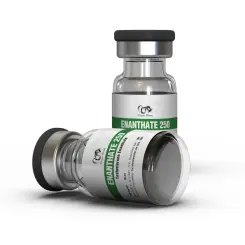
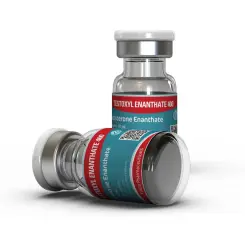
- Promotes significant muscle mass and strength gains.
- Enhances recovery and endurance.
- Supports anabolic environment with steady testosterone.
- Improves nitrogen retention for muscle gains.
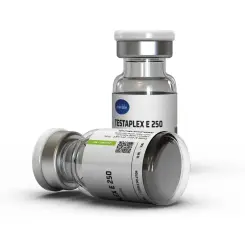
- Promotes significant muscle mass and strength gains.
- Enhances libido and energy for peak performance.
- Supports fat loss and muscle definition in cutting cycles.
- Provides sustained testosterone release.
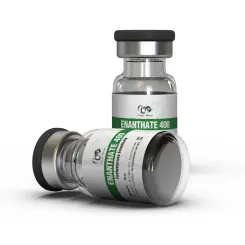
- Promotes significant muscle mass and strength gains.
- Enhances recovery and endurance.
- Supports anabolic environment with steady testosterone.
- Improves nitrogen retention for muscle gains.