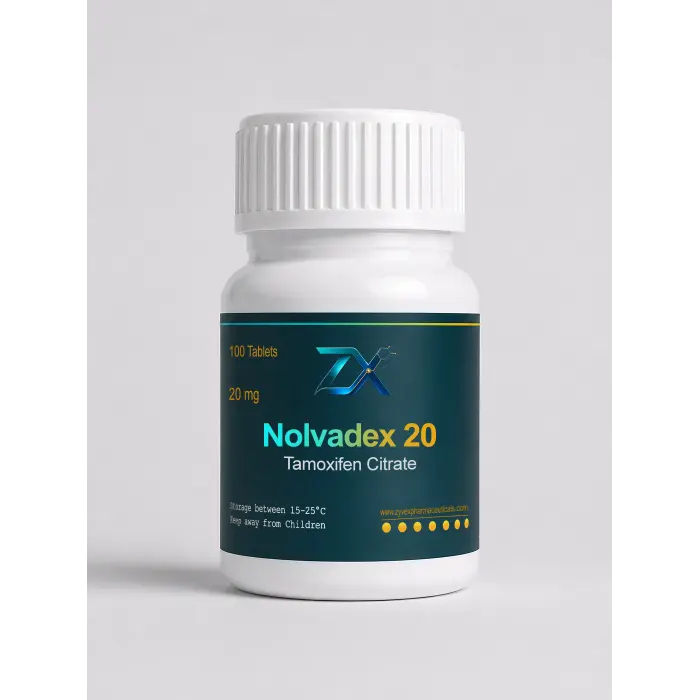
Nolvadex - Zyvex Pharmaceuticals
Nolvadex - Tamoxifen Citrate for PCT and Gynecomastia Protection
Nolvadex by Zyvex Pharmaceuticals contains Tamoxifen Citrate at 20 mg per tablet. It is a selective estrogen receptor modulator (SERM) - a compound that binds to estrogen receptors and either activates or blocks them depending on the tissue. In breast tissue, Tamoxifen acts as an estrogen antagonist, blocking the estrogen receptor and preventing estrogen-driven cell activity. In the hypothalamus and pituitary, it acts as a partial estrogen agonist - blocking the negative feedback signal that estrogen sends to suppress LH and FSH production, which restores the hormonal cascade that drives endogenous testosterone production. These two mechanisms make Nolvadex the most widely used post-cycle therapy (PCT) compound in bodybuilding.
Tamoxifen was developed in the 1960s and approved in 1977 for breast cancer treatment, where its estrogen-blocking activity in breast tissue is therapeutically useful. In bodybuilding, it entered common use in the 1980s as athletes recognized that the same hypothalamic-pituitary mechanism that makes it useful in hormone-sensitive cancer also makes it effective for restarting suppressed testosterone production after an anabolic steroid cycle. Nolvadex at 20 mg/tab allows both the standard 40 mg loading dose (2 tabs) and the maintenance 20 mg dose (1 tab) using the same tablet, making it the most practical formulation for a tapered PCT protocol.
About the Compound
Tamoxifen Citrate is a triphenylethylene compound that belongs to the SERM class. Unlike aromatase inhibitors (Arimidex, Aromasin), which prevent the production of estrogen by blocking the aromatase enzyme, Tamoxifen does not reduce estrogen levels. It works downstream, at the receptor level, competing with estrogen for binding sites. This distinction is critical for understanding when to use Nolvadex versus an AI, and how they interact when used together. Nolvadex is the backbone of post-cycle therapy because no other compound as effectively and safely stimulates the LH and FSH release that drives the recovery of natural testosterone production.
Tamoxifen has an unusually long half-life of 5-7 days for the parent compound, with an active metabolite (endoxifen) contributing additional receptor activity. In practice, this means that once-daily oral dosing maintains consistent receptor occupancy and therapeutic effect. Blood levels reach a stable state within 3-4 weeks of consistent daily dosing. For PCT purposes, the long half-life also means that the drug stays pharmacologically active for weeks after the last dose, providing a buffer against hormone fluctuations as the PCT period ends.
How Nolvadex Works
Nolvadex operates through two distinct mechanisms that make it useful both during and after anabolic steroid cycles. Understanding both mechanisms explains why it is used in different contexts at different doses.
In the hypothalamus and pituitary gland, estrogen exerts negative feedback - high estrogen signals the brain to reduce LH and FSH production, which in turn reduces testosterone output. Anabolic steroids suppress LH and FSH directly through androgen receptor activity and also indirectly through aromatization to estrogen. After a cycle ends, this suppression leaves the HPG axis unable to recover quickly on its own. Tamoxifen blocks estrogen at the hypothalamic and pituitary receptors, interrupting the negative feedback signal and allowing LH and FSH production to resume. Rising LH then signals the testes to restart testosterone synthesis. This is the PCT mechanism.
In breast tissue, Tamoxifen binds to estrogen receptors as an antagonist - blocking estrogen-driven cell proliferation in the mammary glands. This is the anti-gynecomastia mechanism. When used on cycle at 20 mg/day, it competes directly with estrogen at the receptor level in breast tissue, providing protection against gynecomastia. This use is distinct from PCT and does not restart testosterone - it only blocks the local tissue effect of estrogen at the breast.
PCT Protocols by Cycle Type
| Cycle Type | PCT Start | Nolvadex Protocol |
|---|---|---|
| SARM cycle (LGD-4033, RAD-140, Ostarine) | 3-5 days after last dose | 20 mg/day for 4 weeks. Short half-life SARMs clear quickly. Standard single-compound PCT is sufficient for most SARM cycles. |
| Short-ester steroid cycle (Test Propionate, Masteron 100) | 3-4 days after last injection | 40 mg/day for 2 weeks, then 20 mg/day for 2 weeks. Total 4 weeks. Add Clomid 50 mg/day in weeks 1-2 for heavier cycles. |
| Long-ester steroid cycle (Test Enanthate, Test Cypionate) | 14 days after last injection | 40 mg/day for 2 weeks, then 20 mg/day for 2 weeks. Total 4 weeks. The 14-day wait allows the long ester to clear before SERM therapy begins. |
| Heavy or long cycle (16+ weeks, multi-compound) | 14 days after last long-ester injection | 40 mg/day Nolvadex + Clomid 50 mg/day for weeks 1-2, then Nolvadex 20 mg/day alone for weeks 3-4 and 5-6. Total 6 weeks. Bloodwork at 4 weeks post-PCT. |
| Trenbolone-containing cycle | 14 days after last long-ester injection (or 3-4 days for Tren Ace) | Nolvadex 40/20 mg taper as standard, but Clomid added throughout. Trenbolone's stronger HPG suppression warrants the more aggressive dual-SERM protocol. |
On-Cycle Use for Gynecomastia Protection
Nolvadex can be used during an anabolic steroid cycle at 20 mg/day to protect against gynecomastia. This is distinct from the PCT use - on-cycle Nolvadex does not restore testosterone; it only blocks estrogen's effect at the breast tissue receptor. This makes it useful as a backup protection tool when gynecomastia symptoms appear (nipple sensitivity, puffiness) and the user is already running an aromatase inhibitor or cannot increase their AI dose.
Important trade-off: Tamoxifen reduces circulating IGF-1 levels. Studies show that Nolvadex use during a cycle lowers IGF-1 by 25-35%, which reduces the anabolic signaling that partly drives muscle growth on cycle. Using Nolvadex on cycle for gyno prevention therefore comes at a measurable cost to results. The preferred approach is to manage estrogen with an AI and reserve on-cycle Nolvadex for situations where gyno symptoms appear despite AI use. Do not use Nolvadex on cycle prophylactically if an AI is available and estrogen is controlled.
Side Effects
| Side Effect | Background | Management |
|---|---|---|
| IGF-1 reduction | The most significant anabolic trade-off. Nolvadex reduces liver IGF-1 output by 25-35%. This matters most when used on cycle, less so during PCT when anabolic goals are secondary to recovery. | Minimize on-cycle use to situations where it is necessary. During PCT, the IGF-1 reduction is acceptable as the primary goal is hormonal recovery, not muscle building. |
| Vision disturbances | Rare but documented. Some users report visual floaters, light sensitivity, or blurred vision with prolonged Tamoxifen use. These effects are reversible upon discontinuation but warrant attention. | Discontinue if visual symptoms appear and consult a healthcare provider. Do not extend Nolvadex use beyond 6 weeks in a single PCT period without monitoring. |
| Mood changes / low libido | Occurs during PCT as estrogen-blocking effects can temporarily lower estrogen below the optimal range for mood and libido. The low testosterone phase of early PCT compounds this. | Typically resolves as testosterone recovers over weeks 2-4 of PCT. Bloodwork confirms whether hormones are normalizing on schedule. |
| Hot flashes | Tamoxifen's estrogen receptor blocking activity can cause vasomotor symptoms in some users, similar to its effects in female breast cancer patients. More common at higher doses. | Usually mild and temporary. Dose reduction from 40 mg to 20 mg/day eliminates this in most cases while maintaining PCT efficacy. |
| Interaction with Aromasin (Exemestane) | Clinical data shows that Tamoxifen reduces plasma concentrations of Anastrozole (Arimidex) when used together. The interaction with Exemestane (Aromasin) is less pharmacokinetically significant. | If using an AI during PCT, prefer Aromasin (Exemestane) over Anastrozole (Arimidex) when combining with Nolvadex. Avoid Nolvadex + Arimidex combinations as Arimidex effectiveness is reduced. |
Nolvadex vs Clomid
| Factor | Nolvadex (Tamoxifen) | Clomid (Clomiphene) |
|---|---|---|
| Mechanism | Estrogen receptor antagonist at hypothalamus/pituitary, blocks negative feedback | Estrogen receptor antagonist at hypothalamus/pituitary, same mechanism but different receptor binding profile |
| LH stimulation | Strong. Clinical data shows LH and testosterone recovery comparable to or stronger than Clomid in most PCT contexts | Strong. Historically considered more potent LH stimulator per mg but recent data suggests comparable efficacy to Nolvadex at standard PCT doses |
| Side effect profile | Milder. Vision issues rare. Mood side effects less frequent than Clomid at standard doses | Harsher. More commonly associated with mood disturbances, emotional instability, and vision issues. Higher rate of user-reported side effects |
| Gyno protection on cycle | Yes - effective at 20 mg/day for on-cycle breast tissue protection | Less effective for gyno - Clomid's partial estrogen agonist activity in some tissues makes it less reliable for breast tissue protection |
| Standard use | First choice for most PCT protocols. Used alone for mild-to-moderate cycles. Combined with Clomid for heavy or long cycles | Added to Nolvadex for heavier cycles or stronger HPG suppression. Rarely used alone in modern PCT practice |
Frequently Asked Questions
What is Nolvadex and what does it do in bodybuilding?
Nolvadex by Zyvex Pharmaceuticals contains Tamoxifen Citrate at 20 mg per tablet. It is a selective estrogen receptor modulator (SERM) - a compound that binds to estrogen receptors and either blocks or activates them depending on the tissue. In the hypothalamus and pituitary gland, Tamoxifen blocks the negative estrogen feedback that suppresses LH and FSH production after a steroid cycle, allowing the body to restart its own testosterone output. In breast tissue, it acts as an estrogen antagonist, blocking the estrogen-driven cell activity that causes gynecomastia. These two mechanisms give Nolvadex its two main bodybuilding uses: post-cycle therapy (PCT) to restore natural testosterone production, and on-cycle gynecomastia protection as a backup when estrogen management with an aromatase inhibitor is not fully sufficient.
What is the standard Nolvadex PCT protocol?
The standard Nolvadex PCT protocol for most steroid cycles is 40 mg per day for 2 weeks, followed by 20 mg per day for 2 weeks - a total of 4 weeks. The higher 40 mg loading dose in the first two weeks produces more rapid LH and FSH stimulation to kickstart testosterone recovery; the lower 20 mg maintenance dose sustains recovery through the back half of PCT as hormone levels normalize. For heavier or longer cycles, Clomid 25-50 mg/day is added alongside Nolvadex in the first 2 weeks for stronger HPG axis stimulation. For lighter cycles such as a 6-8 week SARM cycle, 20 mg/day for 4 weeks is sufficient. Bloodwork including total testosterone, LH, and FSH at 4 weeks after PCT completion confirms that natural production has recovered to baseline before planning the next cycle.
When do I start Nolvadex PCT after my cycle?
The start timing depends entirely on the half-life of the compounds in your cycle - specifically the longest-ester compound you used. The SERM needs to begin working after the suppressive compounds have cleared to a level low enough for the HPG axis to respond. For short-ester steroid cycles (Testosterone Propionate, Masteron 100, Trenbolone Acetate), start PCT 3-4 days after the last injection. For long-ester steroid cycles (Testosterone Enanthate, Testosterone Cypionate, Masteron 200, Trenbolone Enanthate), wait 14 days after the last injection. For SARM cycles (LGD-4033, RAD-140, Ostarine), start PCT 3-5 days after the last dose. Starting PCT too early - while suppressive compounds are still at significant plasma concentrations - is a common mistake that reduces PCT effectiveness because the SERM is working against still-present androgens that continue to suppress LH and FSH.
Can Nolvadex be used on cycle to prevent gynecomastia?
Yes - Nolvadex at 20 mg/day can be used during an anabolic steroid cycle to protect against gynecomastia by blocking estrogen at the breast tissue receptor. This is a legitimate use and works by competing with estrogen at the local receptor level in mammary tissue. However, there is an important trade-off that is frequently overlooked: Tamoxifen reduces circulating IGF-1 levels by approximately 25-35% when used during a cycle. IGF-1 is an important anabolic signaling molecule that contributes to muscle growth, so suppressing it on cycle costs results. The preferred approach for estrogen management is an aromatase inhibitor (Arimidex, Aromasin), which reduces estrogen production and does not affect IGF-1. On-cycle Nolvadex is best reserved as a rescue tool when gynecomastia symptoms (nipple sensitivity, tenderness, puffiness) develop despite AI use, not as a primary prevention strategy.
Does Nolvadex reduce IGF-1?
Yes - this is one of the most clinically documented and frequently understated effects of Tamoxifen. Studies in both breast cancer patients and healthy subjects consistently show that Tamoxifen reduces serum IGF-1 by 25-35% through effects on hepatic IGF-1 production. IGF-1 is a downstream mediator of growth hormone signaling and plays a significant role in muscle protein synthesis and anabolic activity. During PCT, this reduction is considered acceptable because the primary goal is hormonal recovery, not muscle building. During an anabolic cycle, however, this IGF-1 reduction directly competes with the anabolic effect the user is trying to achieve. This is why on-cycle Nolvadex use for gyno prevention, while effective for that purpose, carries a real and measurable cost to the anabolic results of the cycle. Aromatase inhibitors do not share this IGF-1 reducing effect.
Nolvadex vs Clomid - which is better for PCT?
Both Nolvadex (Tamoxifen) and Clomid (Clomiphene) are SERMs that work by blocking estrogen feedback at the hypothalamus and pituitary to stimulate LH and FSH production. For most PCT applications, Nolvadex is the preferred first-choice compound because it has a cleaner side effect profile - Clomid at standard PCT doses more commonly causes mood disturbances, emotional instability, and visual side effects than Nolvadex at equivalent doses. Clinical data also shows that Nolvadex produces LH and testosterone recovery comparable to Clomid in most PCT contexts. The practical recommendation is: use Nolvadex alone (40/20 mg taper) for standard cycles of up to 12-14 weeks with a single testosterone ester. Add Clomid (25-50 mg/day) alongside Nolvadex for heavier protocols - longer cycles, higher doses, or multi-compound stacks with strong HPG suppression such as Trenbolone. Nolvadex is also superior to Clomid for on-cycle gynecomastia protection because Clomid has partial estrogen agonist activity in some tissues that makes its breast tissue protection less reliable.
Can Nolvadex reverse existing gynecomastia?
Nolvadex can reverse early-stage gynecomastia (recent onset, soft, tender tissue under the nipple) in many cases. The reversal protocol typically runs for 6-8 weeks at 40 mg/day, longer than a standard PCT course. Success depends heavily on how established the gynecomastia is. Early gynecomastia - tissue that has been present for less than a few months and is still soft and tender - responds best because the tissue has not yet progressed to fibrous glandular tissue. Established gynecomastia - hard, defined glandular tissue that has been present for 6 months or more - does not meaningfully respond to Nolvadex. Fibrous glandular breast tissue is permanent and requires surgical removal (mastectomy) to correct. Prevention is therefore far more effective than treatment. If gynecomastia symptoms appear on cycle, addressing them immediately with Nolvadex and correcting estrogen management gives the best chance of full reversal.
Can Nolvadex be used with Aromasin (Exemestane) during PCT?
Yes - Nolvadex and Aromasin (Exemestane) can be safely combined. Some experienced users include a low-dose aromatase inhibitor during PCT to control estrogen while Nolvadex stimulates LH and FSH recovery. The concern with combining SERMs and AIs is the documented pharmacokinetic interaction between Tamoxifen and Anastrozole (Arimidex): Tamoxifen reduces Anastrozole plasma concentrations, reducing its effectiveness. This interaction does not significantly affect Exemestane (Aromasin), which is a steroidal AI with a different metabolic pathway. If you need to control estrogen during PCT and want to combine an AI with Nolvadex, Aromasin at 12.5 mg every other day is the appropriate choice. Avoid Nolvadex combined with Arimidex (Anastrozole) as the Tamoxifen reduces Arimidex's bioavailability and effectiveness.
Related Products
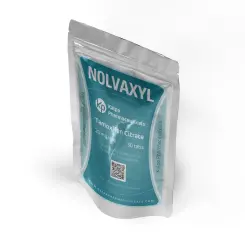
- Prevents gynecomastia and estrogen-related effects.
- Supports testosterone recovery post-cycle.
- Retains muscle gains after steroid use.
- Improves hormonal balance with minimal side effects.
- Restores natural testosterone production post-cycle.
- Prevents gynecomastia by blocking estrogen receptors.
- Supports retention of cycle gains.
- Improves hormonal balance with minimal side effects.