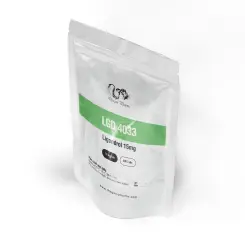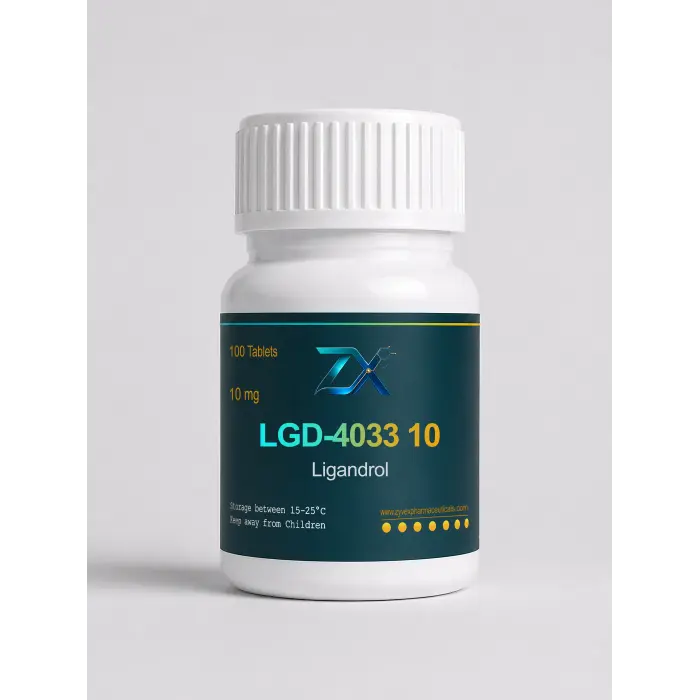
Ligandrol LGD-4033 - Zyvex Pharmaceuticals
Ligandrol LGD-4033 - Zyvex Pharmaceuticals Overview
Ligandrol LGD-4033 by Zyvex Pharmaceuticals is a selective androgen receptor modulator (SARM) - a compound that binds to androgen receptors with high affinity in muscle and bone tissue while producing minimal interaction with receptors in the prostate, skin, and liver. This selectivity is what separates LGD-4033 from anabolic steroids: it delivers the anabolic signals testosterone sends to muscle without triggering the full-body androgenic and estrogenic effects that accompany steroid use. Each tablet contains 10 mg of LGD-4033, the established dose for reliable muscle and strength gains with a manageable side effect profile.
LGD-4033 was originally developed by Ligand Pharmaceuticals - from which it takes the name Ligandrol - as a potential treatment for muscle wasting, osteoporosis, and age-related sarcopenia. Clinical development was later continued by Viking Therapeutics under the designation VK5211. A published Phase I human clinical trial demonstrated dose-dependent lean mass gains of approximately 1.2 kg over 21 days at just 1 mg per day - a dose far below the 5-10 mg used in athletic protocols. This clinical evidence base makes LGD-4033 one of the most studied SARMs in human trials and gives it a pharmacological profile that is documented rather than purely anecdotal.
About the Compound: Ligandrol LGD-4033 10 mg
LGD-4033 binds to androgen receptors with high affinity - comparable to testosterone - but with a tissue-selective binding profile. In muscle and bone, it activates the full anabolic AR signaling cascade: protein synthesis upregulation, nitrogen retention improvement, and IGF-1 expression. In tissues associated with androgenic side effects (prostate, skin, liver), its binding affinity and downstream activation are substantially reduced compared to testosterone. This selectivity is the defining feature of the SARM class and the rationale for developing these compounds as a safer alternative to traditional anabolic steroids for clinical use in muscle wasting conditions.
Zyvex Pharmaceuticals produces LGD-4033 at 10 mg per tablet, 100 tablets per pack. The half-life of LGD-4033 is 24-36 hours, making once-daily dosing sufficient for stable blood levels throughout the day. Unlike anabolic steroids, LGD-4033 is not a 17-alpha alkylated compound and does not place significant burden on liver function - a meaningful safety distinction from oral steroids like Dianabol or Anadrol that are hepatotoxic at standard doses. LGD-4033 also does not aromatize to estrogen, eliminating the estrogenic side effects (water retention, gynecomastia from high estrogen) that accompany testosterone and nandrolone-based compounds.
What LGD-4033 Does
LGD-4033 is consistently ranked as the most anabolic SARM available - not because of any single dramatic effect, but because its AR binding profile produces stronger and more consistent muscle and strength gains than other SARMs at matched doses. The compound operates exclusively through androgen receptor activation, with no contribution from estrogen, progesterone, or GH pathways.
- Lean muscle mass - The primary and most documented effect. Clinical data from Phase I trials showed approximately 1.2 kg of lean mass gained in 21 days at 1 mg/day - a dose that is one-fifth to one-tenth of what athletes use. At 5-10 mg/day over 6-8 weeks, users report 3-5 kg of lean mass gains that are predominantly dry, without the heavy water retention associated with testosterone and nandrolone cycles. Gains are retained post-cycle better than those from anabolic steroids because LGD-4033 does not depend on supraphysiological aromatization to drive its effects.
- Strength - Strength improvements appear within the first 1-2 weeks of use and are consistent throughout the cycle. Users report compound lift improvements of 10-20 kg over a 6-8 week cycle at 10 mg/day. Strength gains do not depend on significant water retention or glycogen supercompensation - they reflect genuine neuromuscular and contractile protein adaptations driven by AR activation.
- Bone density - One of the original development targets for LGD-4033 was osteoporosis treatment. AR activation in bone tissue upregulates osteoblast activity and bone mineral density, making LGD-4033 useful for athletes experiencing joint stress from high training loads or aging athletes concerned with bone health alongside lean mass.
- Nitrogen retention - LGD-4033 improves nitrogen balance, the fundamental marker of net anabolism. Positive nitrogen balance is associated with muscle protein synthesis exceeding muscle protein breakdown - the net result is lean mass accrual over time. This effect is dose-dependent and begins within days of starting the compound.
- No androgenic side effects at standard doses - Due to its tissue-selective AR binding profile, LGD-4033 at 5-10 mg/day does not produce the scalp hair loss, acne, or prostate concerns associated with testosterone. This selectivity is what makes it the preferred starting compound for users who want anabolic effects without the androgenic profile of steroids.
PCT is required: LGD-4033 suppresses endogenous testosterone production in a dose-dependent manner. Clinical data shows significant LH and FSH suppression at doses as low as 1 mg/day, with full suppression of free testosterone at 1 mg. At the 5-10 mg doses used in athletic protocols, endogenous testosterone is substantially suppressed. Post-cycle therapy with a SERM (Nolvadex or Clomid) is required to restore natural production. Skipping PCT extends the suppression window and risks extended low-testosterone symptoms.
Dosing and Timing
Standard Dose
The established dose range is 5-10 mg per day. First-time users and those new to SARMs start at 5 mg/day to assess their individual suppression response and establish a baseline before increasing. Experienced users run 10 mg/day, where the full anabolic effect is consistently achieved. Doses above 10 mg produce diminishing additional lean mass returns while increasing suppression significantly - the 10 mg ceiling is where the risk-benefit ratio is most favorable. The 10 mg/tab format from Zyvex is designed for full-dose once-daily administration, or half-tablet dosing for those starting conservatively.
Timing
LGD-4033 can be taken at any time of day - morning, afternoon, or evening. Its 24-36 hour half-life means the timing relative to training is not pharmacologically significant. Most users take it in the morning with or without food for consistency and to ensure it does not disrupt sleep (some users report mildly increased energy). Food does not significantly affect absorption.
Cycle Length
The recommended cycle length is 6-8 weeks. Six weeks produces measurable lean mass and strength gains while limiting the cumulative suppression burden. Eight weeks allows for continued gains to plateau before PCT. Cycles beyond 8 weeks produce progressively deeper suppression without proportional additional gains and are not recommended for SARM protocols. After an 8-week cycle of LGD-4033, 4 weeks of PCT followed by at least 4 weeks off before the next cycle is the standard harm-reduction approach.
Who Uses It and Why
| Use Case | Why LGD-4033 Works | Typical Protocol |
|---|---|---|
| First SARM cycle | LGD-4033 is the most commonly recommended first SARM due to its high anabolic potency, predictable response, and well-documented pharmacology from clinical trials. Users new to performance compounds get significant, measurable results at 5 mg with a lower suppression burden than at 10 mg. | 5 mg/day for 6 weeks. PCT: Nolvadex 20 mg/day for 4 weeks starting 3-5 days after last dose. Bloodwork before and after to document suppression and recovery. |
| Lean bulk | LGD-4033 drives lean mass accrual without the heavy water retention and estrogenic side effects of testosterone bulking cycles. Users eating at a caloric surplus accumulate lean tissue efficiently with manageable fat gain and a dry appearance compared to wet anabolic compounds. | 10 mg/day for 8 weeks. Calories at 300-500 surplus. Add MK-677 25 mg for GH-axis support and sleep quality. PCT: Nolvadex 20 mg/day x 4 weeks. |
| Recomposition | At maintenance calories, LGD-4033's strong anabolic signal allows simultaneous muscle gain and fat loss over an 8-week cycle. Best for users at intermediate body fat levels (15-20%) where recomposition is physiologically achievable. | 10 mg/day LGD-4033 + Cardarine 10-20 mg/day for fat oxidation support, 8 weeks at maintenance calories. Standard PCT after LGD. |
| Bridge between anabolic steroid cycles | Advanced users use LGD-4033 during the "off" period between steroid cycles to maintain anabolic signaling, preserve gains, and keep training intensity while natural testosterone recovers. The bridge ends 4-6 weeks before the next steroid cycle to allow hormone levels to normalize. | 5-10 mg/day for 6-8 weeks. Note: bridging extends total suppression duration - bloodwork is mandatory to confirm recovery status before the next cycle. |
| Addition to steroid cycle | LGD-4033 adds a separate AR-mediated anabolic signal on top of the testosterone base, in the same way that stacking Primobolan or Anavar adds anabolic effect without additional aromatization. Some advanced users prefer this approach to adding a second injectable. | 5-10 mg/day LGD alongside testosterone cycle. AI and PCT are determined by the testosterone and any other steroids used, not by LGD specifically. |
Side Effects and Suppression
| Side Effect | Background | Management |
|---|---|---|
| Testosterone suppression | The primary and most clinically significant side effect of LGD-4033. Published Phase I data shows dose-dependent LH and FSH suppression beginning at 1 mg/day, with free testosterone substantially reduced at the 1 mg dose and fully suppressed at higher doses. At 5-10 mg athletic doses, endogenous testosterone is significantly suppressed within 1-2 weeks and remains suppressed for the duration of the cycle. Without PCT, recovery takes 4-8 weeks depending on the individual and cycle length. Symptoms of suppression include fatigue, reduced libido, mood changes, and reduced recovery capacity late in the cycle. | PCT with Nolvadex 20 mg/day for 4 weeks, starting 3-5 days after the last LGD-4033 dose (the 24-36 hour half-life means the compound clears quickly, so a short wait before PCT is appropriate). Heavier or longer cycles may warrant Clomid 25-50 mg/day. Bloodwork 4 weeks after PCT completion to confirm testosterone recovery before planning the next cycle. |
| Mild water retention | Some users experience mild water retention on LGD-4033, particularly at 10 mg doses. Unlike the estrogenic water retention from testosterone cycles, this retention is driven by the anabolic activity itself (intramuscular water and glycogen increase with lean mass accrual) rather than by estrogen-mediated mechanisms. It is substantially less than what users experience on testosterone or Deca cycles. | Maintain moderate sodium intake. No aromatase inhibitor is needed for this effect - it is not estrogen-driven. The retention is temporary and resolves within 1-2 weeks of finishing the cycle. |
| Lipid changes | LGD-4033 can produce mild unfavorable lipid changes - typically a slight reduction in HDL cholesterol and a corresponding increase in LDL. This is a class effect of androgen receptor activation and is less pronounced than with oral anabolic steroids but present at 10 mg doses over 8-week cycles. | Bloodwork including a lipid panel before and after the cycle. Support with omega-3 supplementation (2-4 g/day EPA+DHA) during the cycle. Cardiovascular training maintained throughout helps mitigate lipid effects. Lipid values return to baseline after PCT completion. |
| No liver toxicity | LGD-4033 is not a 17-alpha alkylated compound and does not require hepatic first-pass metabolism modification. Clinical trial data shows no significant liver enzyme elevation at doses up to 22 mg/day. This is a meaningful safety advantage over oral anabolic steroids such as Dianabol, Anadrol, and Winstrol, which all carry hepatotoxic potential. | No liver support protocol is required for standard LGD-4033 cycles. Bloodwork including ALT and AST is still recommended as general cycle health monitoring. |
| No estrogenic gynecomastia at standard doses | LGD-4033 does not aromatize to estrogen, so it does not raise estrogen levels directly. The risk of gynecomastia from high estrogen (the mechanism behind steroid-induced gyno) is absent. Gynecomastia theoretically remains possible through a different mechanism - if suppressed testosterone shifts the estrogen-to-testosterone ratio unfavorably - but this is rare at normal doses and cycle lengths with timely PCT. | An aromatase inhibitor is not needed on an LGD-4033-only cycle. Running timely PCT prevents the prolonged suppression window that could create a relative estrogen dominance state. |
Stacking LGD-4033
LGD-4033's primary limitation as a standalone compound is that it covers only the androgen receptor axis. Adding compounds from different mechanisms - fat oxidation, GH secretion, peptide recovery - produces synergistic effects that exceed what any single compound delivers alone.
| Stack | Purpose | Notes |
|---|---|---|
| LGD-4033 + Cardarine | The most popular SARM stack. LGD provides the anabolic signal for lean mass; Cardarine provides fat oxidation, endurance improvement, and body composition support. Together they produce lean bulking or recomposition results with no additional hormonal burden from Cardarine (which is not a SARM and does not suppress). | LGD-4033 10 mg/day + Cardarine 10-20 mg/day, 6-8 weeks. PCT for LGD only - Cardarine does not require PCT. Bloodwork at cycle end to assess suppression. |
| LGD-4033 + MK-677 | LGD handles the androgen receptor axis for muscle and strength; MK-677 adds GH-IGF-1 elevation for recovery quality, sleep, connective tissue support, and additional lean mass over a longer time frame. A complete anabolic stack covering two separate mechanisms. | LGD-4033 10 mg/day + MK-677 25 mg before bed, 8-12 weeks. PCT for LGD only. MK-677 can continue through PCT and beyond - it does not affect HPTA recovery. |
| LGD-4033 + Ostarine | A conservative two-SARM stack used for recomposition. LGD provides the primary anabolic drive; Ostarine at lower doses (15-25 mg) adds joint-protective collagen synthesis support and helps maintain lean mass during a caloric deficit. Combined suppression is higher than either alone - PCT is required. | LGD-4033 5-10 mg/day + Ostarine 15-25 mg/day, 6-8 weeks. PCT required after the stack. Keep total SARM doses moderate when combining to control cumulative suppression. |
| LGD-4033 + Testosterone base | An intermediate-to-advanced combination. Testosterone provides the primary androgen base (including estrogen for joint health, mood, and libido maintenance); LGD-4033 adds AR-mediated anabolic stimulus on top without additional aromatization. The combination produces gains that exceed a testosterone-only cycle while keeping injection volume lower than stacking a second injectable. | LGD-4033 5-10 mg/day throughout a testosterone cycle. AI dose is determined by the testosterone, not by LGD. PCT timeline is set by the testosterone ester used - LGD is a minor consideration given it clears in 3-5 days. |
Frequently Asked Questions
What is Ligandrol LGD-4033 and how does it work?
Ligandrol LGD-4033 by Zyvex Pharmaceuticals is a selective androgen receptor modulator (SARM). It works by binding to androgen receptors in muscle and bone tissue with high affinity, activating the same anabolic signaling pathways that testosterone triggers - protein synthesis upregulation, nitrogen retention, and IGF-1 expression in muscle. The "selective" aspect refers to its tissue-preferential binding profile: LGD-4033 produces strong anabolic AR activation in muscle and bone while interacting minimally with androgen receptors in the prostate, skin, and liver. This selectivity is what differentiates it from traditional anabolic steroids, which activate AR throughout the body and produce the full range of androgenic effects. Each tablet contains 10 mg of LGD-4033 with a 24-36 hour half-life, making once-daily oral dosing sufficient for stable and consistent blood levels.
How does LGD-4033 compare to anabolic steroids like testosterone?
LGD-4033 and testosterone both produce anabolic effects through androgen receptor activation, but they differ significantly in their breadth of effect, side effect profile, and pharmacological mechanism. Testosterone is not selective - it activates AR throughout the body and also aromatizes to estrogen, which drives additional effects (both beneficial and problematic). The result is a broader hormonal intervention with stronger total anabolic output at standard doses, but also more side effect management: aromatase inhibitors for estrogen, monitoring for androgenic effects (acne, hair loss, prostate), and a more complex PCT. LGD-4033 is selective - it concentrates anabolic signaling in muscle and bone while reducing androgenic and estrogenic effects. The trade-off is that it is less potent in absolute mass and strength output than a testosterone cycle, and it still suppresses endogenous testosterone (requiring PCT) despite not replacing it. For users who want anabolic results without injections, without aromatization, and without the full androgenic side effect profile, LGD-4033 is the closest oral alternative. For users who want maximum anabolic output and are prepared to manage estrogen, testosterone remains the more effective compound.
Does LGD-4033 require PCT after a cycle?
Yes - LGD-4033 requires post-cycle therapy. This is one of the most important practical facts about Ligandrol and one that is frequently understated online. Published clinical trial data shows that LGD-4033 suppresses LH, FSH, and free testosterone in a dose-dependent manner starting at 1 mg/day - far below the 5-10 mg used in athletic protocols. At 10 mg/day over 6-8 weeks, endogenous testosterone is significantly suppressed and does not recover immediately after the compound clears. Without PCT, natural testosterone recovery takes 4-8 weeks or longer, during which low-testosterone symptoms (fatigue, reduced libido, mood changes, reduced muscle retention) are common. The standard PCT for a single 6-8 week LGD-4033 cycle is Nolvadex at 20 mg/day for 4 weeks, beginning 3-5 days after the last dose (the 24-36 hour half-life means LGD-4033 clears faster than long-ester steroids, so PCT can begin sooner). Longer cycles or higher doses may warrant Clomid 25-50 mg/day. Bloodwork at 4 weeks post-PCT confirms recovery.
Does LGD-4033 cause gynecomastia?
LGD-4033 does not aromatize to estrogen, so it does not raise estrogen levels directly - the primary mechanism behind steroid-induced gynecomastia. At standard doses and normal cycle lengths, gynecomastia from elevated estrogen is not a meaningful concern with LGD-4033. There is a theoretical secondary risk: if endogenous testosterone is significantly suppressed while estrogen (produced by aromatization of residual testosterone and adrenal androgens) remains relatively stable, the estrogen-to-testosterone ratio shifts unfavorably. This scenario is most likely in users who run very long cycles without PCT or who delay PCT significantly. Running timely PCT after the cycle normalizes this ratio as testosterone recovers. An aromatase inhibitor is not needed on an LGD-4033-only cycle for estrogen management - it is unnecessary and counterproductive, as it can suppress the residual estrogen that supports joint health and libido during a SARM cycle.
How long does LGD-4033 take to work?
Most users notice strength improvements within the first 7-14 days of use. Lean mass changes become visible on the scale and in the mirror by weeks 2-3, with the most significant visible progress typically occurring between weeks 3 and 6. The compound reaches stable blood levels within 3-5 days of starting due to its 24-36 hour half-life and once-daily dosing. The timeline differs from fast-acting oral steroids like Dianabol, which produce rapid water and strength responses in the first week primarily through estrogenic water retention and glycogen supercompensation. LGD-4033's gains come more gradually and are drier - leaner tissue accumulating over a 6-8 week window rather than a dramatic initial weight spike. By week 6-8, users running 10 mg/day consistently report 3-5 kg of lean mass gained and compound lift improvements of 10-20 kg above starting levels.
What side effects should I expect with LGD-4033?
The primary side effect of LGD-4033 is testosterone suppression - this is the main consideration for anyone running the compound and is covered in detail in its own question above. Beyond suppression, the side effect profile of LGD-4033 at standard doses is relatively mild compared to anabolic steroids. Mild water retention is reported by some users, particularly at 10 mg, but it is substantially less than the estrogenic water retention from testosterone cycles and resolves quickly after the cycle. Mild unfavorable lipid changes (slight HDL reduction, LDL increase) occur and warrant monitoring with a lipid panel before and after. LGD-4033 is not hepatotoxic - clinical data at doses up to 22 mg/day shows no significant liver enzyme elevation, which is a major safety distinction from oral anabolic steroids like Dianabol or Anadrol. Androgenic side effects (acne, hair loss, prostate enlargement) are minimal at standard doses due to the compound's tissue-selective AR binding profile. Users with significant male pattern baldness sensitivity should still monitor, as any AR activation in the scalp has some theoretical acceleration potential at higher doses.
When do I start PCT after LGD-4033?
Start PCT 3-5 days after the last dose of LGD-4033. This is significantly earlier than the wait required after long-ester steroids like testosterone enanthate or cypionate (where you wait 14+ days), and slightly earlier than after testosterone propionate (7 days). The reason is pharmacokinetic: LGD-4033 has a 24-36 hour half-life, meaning it clears the body relatively quickly compared to esterified androgens. By day 3-5 after the last dose, plasma levels have dropped to a point where starting SERM therapy will be effective rather than opposed by residual compound. The standard PCT protocol after a single 6-8 week LGD-4033 cycle is Nolvadex 20 mg/day for 4 weeks. After a longer cycle (8 weeks at 10 mg), some practitioners use Nolvadex 40 mg/day for the first 2 weeks then 20 mg/day for the remaining 2 weeks. Clomid 25-50 mg/day is an alternative for users who prefer it. Running bloodwork including total testosterone, LH, and FSH at 4 weeks post-PCT confirms that natural production has normalized before planning the next cycle.
What is the best stack with LGD-4033?
The most popular and well-established stack is LGD-4033 with Cardarine (GW-501516). LGD provides the anabolic signal for lean mass and strength; Cardarine adds fat oxidation, endurance improvement, and body composition support through its PPARdelta mechanism - with no additional hormonal suppression since Cardarine is not a SARM. Together they produce dry, lean results whether the goal is a lean bulk or a recomposition phase. For users who also want GH-axis support, adding MK-677 at 25 mg/day (taken before bed) creates a comprehensive stack covering androgen receptors (LGD), fat metabolism and endurance (Cardarine), and GH-IGF-1 elevation (MK-677) - three separate mechanisms with no redundancy and no additional suppression beyond LGD itself. This three-compound stack represents the upper limit of what most users need from a SARM-centered protocol. PCT after the stack covers LGD only; Cardarine and MK-677 do not suppress testosterone and require no SERM.
Related Products