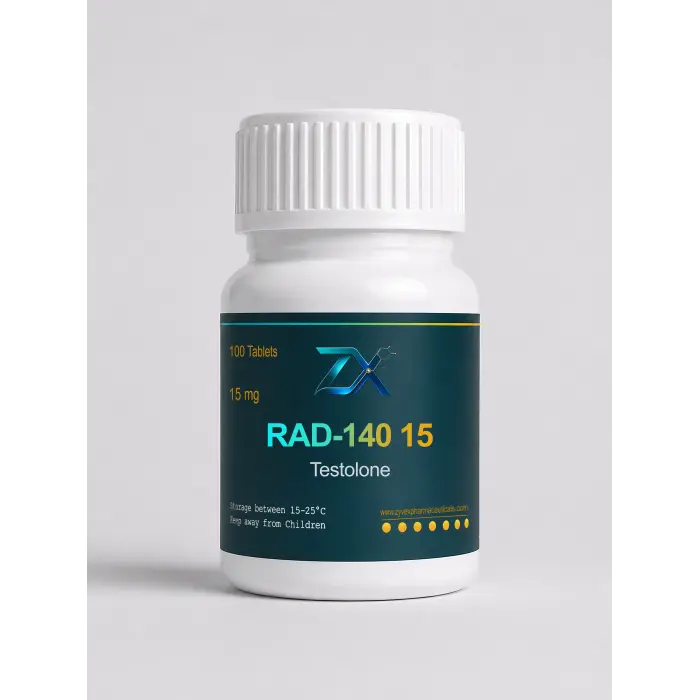
Testolone RAD-140 - Zyvex Pharmaceuticals
Testolone RAD-140 - The Strongest SARM by Anabolic Ratio, With the Suppression to Match
RAD-140 (Testolone) is a selective androgen receptor modulator developed by Radius Health, originally intended for muscle-wasting conditions and breast cancer treatment. It binds the androgen receptor with high affinity and produces anabolic effects in muscle and bone with a degree of tissue-selectivity that significantly reduces androgenic activity in the prostate and scalp compared to testosterone. The reported anabolic-to-androgenic ratio of approximately 90:1 (versus testosterone's 1:1) makes RAD-140 the most potent SARM by this measure and explains its reputation for producing significant lean mass and strength gains at relatively low doses. It does not convert to estrogen, so water retention, gynecomastia, and estrogen-driven side effects are not a concern with RAD-140 itself. No aromatase inhibitor is needed.
The tradeoff for that anabolic potency is suppression. RAD-140 is the most suppressive of the three most commonly used SARMs (alongside Ostarine and LGD-4033), and at doses of 10 mg and above, HPTA suppression becomes clinically meaningful in the majority of users. Testosterone levels drop during a RAD-140 cycle, and a proper post-cycle therapy protocol is required to restore natural production. Users who treat RAD-140 like a "suppression-free" compound based on the SARM marketing category and skip PCT frequently report prolonged recovery periods with low testosterone symptoms. This is also the SARM with the most documented concern around hepatotoxicity at higher doses - liver enzyme monitoring during a cycle is a practical precaution, particularly at 15-20 mg per day.
About the Compound
RAD-140 was developed by Radius Health and entered Phase 1 and Phase 2 clinical trials for breast cancer (particularly ER+/AR+ tumors where androgen receptor activation is antiproliferative) and for muscle wasting in cancer patients. Development as a cancer drug stalled at Phase 2, but the compound crossed into research peptide and SARM use based on its potent anabolic profile in preclinical studies. In animal models, RAD-140 outperformed testosterone in muscle anabolic effect at doses that produced proportionally less prostate stimulation - the tissue-selectivity that defines the SARM class. The anabolic-to-androgenic ratio of approximately 90:1 is derived from these animal studies; human pharmacology is less precisely characterized, but the clinical observation of significant lean mass and strength gains with lower androgenic side effects than testosterone broadly confirms the animal data.
A less commonly discussed aspect of RAD-140's pharmacology is its neuroprotective activity. Radius Health's original development rationale included central nervous system applications: RAD-140 activates androgen receptors in the brain, and in animal models has shown protection of neurons against neurotoxic insults. Clinical trials in Alzheimer's disease were initiated based on this research. For athletes this is a background pharmacological note rather than a practical consideration, but it does explain why RAD-140 is occasionally described as producing subjective improvements in mood, motivation, and cognitive sharpness during a cycle - androgen receptor activation in the brain has documented effects on these parameters, and RAD-140 is active in neural tissue.
Dosing and Cycle Design
RAD-140 is dosed once daily, consistent with its ~15-20 hour half-life. Taking it at the same time each day maintains stable blood levels. It can be taken with or without food. At 15 mg per tab, the Zyvex Pharmaceuticals tablet is calibrated for the standard performance dose - a half-tab (7.5 mg) is appropriate for a cautious first cycle or for female users. The effective dose range for lean mass gains starts at approximately 5-10 mg per day, with the majority of performance users running 10-15 mg. Doses above 20 mg per day carry meaningfully higher suppression and hepatotoxicity risk without proportional additional benefit and are not recommended.
| Experience Level | Daily Dose | Cycle Length | Notes |
|---|---|---|---|
| First RAD-140 cycle | 5-10 mg/day | 8 weeks | Assess response; note suppression and liver enzyme changes; PCT after |
| Standard performance | 10-15 mg/day | 8-10 weeks | Main dose for lean mass and strength; full PCT required |
| Advanced | 15-20 mg/day | 8-10 weeks | Significantly higher suppression; liver monitoring recommended |
| Female users | 5-10 mg/day | 6-8 weeks | Lower doses to minimize virilization risk; monitor for androgenic signs |
RAD-140 pairs well with MK-677 (Ibutamoren) for a stack that adds GH pulsatility alongside the anabolic effects: MK-677 is non-suppressive and non-hormonal, so it does not increase the PCT burden of the stack. It also stacks with LGD-4033 for enhanced mass, though the combined suppression is greater than either compound alone and PCT must be planned accordingly. Stacking RAD-140 with any suppressive SARM or anabolic steroid increases both anabolic output and the need for thorough post-cycle recovery.
PCT Protocol
PCT for RAD-140 starts 24-48 hours after the last dose, taking advantage of the compound's ~15-20 hour half-life. Because RAD-140 clears quickly, there is no need for the multi-week clearance wait required after long-ester injectable steroids. The SERMs Nolvadex and Clomid are the standard PCT tools.
| PCT Option | Weeks 1-2 | Weeks 3-4 | Notes |
|---|---|---|---|
| Nolvadex (preferred) | 20-40 mg/day | 20 mg/day | Start 24-48 hrs after last RAD-140 dose; 4 weeks total |
| Clomid (alternative) | 50 mg/day | 25 mg/day | More side effects (visual disturbances, mood) than Nolvadex; 4 weeks total |
| Nolvadex + Clomid (after 15+ mg cycles) | Nolva 20 mg + Clomid 25 mg | Nolva 20 mg | Combined for stronger suppression from higher doses or longer cycles |
Use Cases
| Goal | Protocol | Notes |
|---|---|---|
| Lean bulking | 10-15 mg/day, 10-12 weeks | Dry gains without water retention; no calorie surplus required but amplifies a moderate surplus |
| Recomposition | 10 mg/day, 8-10 weeks | Simultaneous fat loss and muscle gain possible at maintenance calories; slow but quality gains |
| Cutting (muscle preservation) | 10 mg/day, 8 weeks | Preserves lean mass during calorie deficit; dry, hard physique effect; pairs well with Cardarine |
| Strength focus | 15 mg/day, 8-10 weeks | RAD-140 produces notable strength increases independent of mass gains; useful for weight-class athletes |
| MK-677 stack | RAD-140 10-15 mg + MK-677 25 mg, 12 weeks | MK-677 non-suppressive; adds GH pulsatility and enhanced recovery; no additional PCT burden |
Side Effects
| Side Effect | Frequency / Background | Management |
|---|---|---|
| Testosterone suppression | Universal at 10 mg+ doses; moderate to significant depending on dose and cycle length; natural testosterone drops during cycle | Plan and execute proper PCT (Nolvadex 20-40 mg/day for 4 weeks) starting 24-48 hours after last dose |
| Liver enzyme elevation | Reported in clinical cases and user bloodwork, particularly at doses above 15 mg/day; RAD-140 is not 17-AA but hepatotoxicity cases exist | Limit cycles to 8-10 weeks; run bloodwork (ALT, AST) mid-cycle at higher doses; avoid alcohol during cycle |
| Androgenic effects (hair thinning, acne) | Lower frequency than testosterone due to tissue selectivity, but not absent; genetically predisposed individuals may notice hair thinning | Lower dose (5-10 mg) reduces androgenic activity; not reversible with an AI since DHT conversion is not the mechanism |
| Mood / aggression fluctuations | Some users report increased aggression or irritability; others report mood improvement; androgen receptor activity in the brain is dose-dependent | Usually manageable; awareness and monitoring; reduce dose if significant mood changes occur |
| Headache | Reported in early weeks at higher doses; mechanism not fully established | Adequate hydration; reduce dose temporarily; typically resolves within the first 2 weeks |
| No estrogenic effects | RAD-140 does not aromatize; no water retention, no gynecomastia risk from RAD-140 itself, no AI needed | No intervention required for estrogen management |
RAD-140 is not a "side-effect-free" compound despite the selective androgen receptor modulator label. At performance doses of 10-15 mg per day, HPTA suppression is real and PCT is not optional. Users who skip PCT or run it carelessly after a RAD-140 cycle risk weeks to months of low testosterone symptoms: fatigue, low libido, mood disruption, and loss of cycle gains from the catabolic hormonal environment of post-cycle crash. A full 4-week Nolvadex course starting 24-48 hours after the last dose is the minimum responsible protocol.
RAD-140 vs LGD-4033 vs Ostarine
| Feature | RAD-140 (Testolone) | LGD-4033 (Ligandrol) | Ostarine (MK-2866) |
|---|---|---|---|
| Anabolic potency | Highest (~90:1 ratio) | High (~10:1 ratio) | Moderate (~3:1 ratio) |
| Best for | Lean mass, strength, recomp | Pure mass gains, bulking | Cutting, mild lean gains, injury recovery |
| Suppression level | Moderate to significant | Moderate | Mild |
| PCT requirement | Yes (required at 10 mg+) | Yes (recommended) | Optional at low doses; recommended at 25 mg+ |
| Water retention | None | Mild | None |
| Hepatotoxicity risk | Present at higher doses | Low | Very low |
| Typical dose | 10-15 mg/day | 5-10 mg/day | 15-25 mg/day |
Frequently Asked Questions
What is RAD-140 (Testolone) and how strong is it compared to other SARMs?
RAD-140, generic name Testolone, is a selective androgen receptor modulator developed by Radius Health. Among the major SARMs, it has the highest anabolic-to-androgenic ratio - approximately 90:1 compared to testosterone's 1:1, Ligandrol's roughly 10:1, and Ostarine's approximately 3:1. This ratio means RAD-140 produces a high degree of muscle anabolic activity relative to the androgenic effects (scalp, prostate, skin) that cause androgenic side effects. In practical terms: it produces meaningful lean mass and strength gains at doses of 10-15 mg per day without the acne, hairline effects, or prostate stimulation that equivalent anabolic activity from testosterone would produce. The tradeoff is that higher anabolic potency comes with stronger HPTA suppression than milder SARMs like Ostarine, and PCT is required at standard performance doses.
Does RAD-140 require PCT?
Yes, at standard performance doses. This is one of the most frequently misunderstood aspects of RAD-140 use. The SARM category is sometimes marketed as "no PCT needed" - this is accurate for very low doses of mild SARMs like Ostarine, but it is not accurate for RAD-140 at 10-15 mg per day over an 8-12 week cycle. At these doses, testosterone suppression is real and measurable. Natural testosterone production drops significantly during the cycle as the androgen receptor activation from RAD-140 signals the hypothalamus to reduce LH and FSH release. After the cycle ends, this suppression persists until the HPTA recovers. Without PCT (Nolvadex or Clomid), recovery is slower, and the weeks of low testosterone that follow - fatigue, libido loss, mood disruption, muscle loss - undermine the gains made during the cycle. PCT starts 24-48 hours after the last dose: Nolvadex 20-40 mg/day for 4 weeks is the standard protocol.
Does RAD-140 cause liver damage?
There is a real hepatotoxicity concern with RAD-140, particularly at doses above 15 mg per day and in longer cycles. Unlike traditional oral anabolic steroids (Dianabol, Anadrol, Winstrol), RAD-140 is not 17-alpha alkylated - the modification that makes most oral steroids liver-toxic. However, case reports of cholestatic liver injury have been published in medical literature specifically associated with RAD-140 use, and liver enzyme elevations (ALT, AST) have been documented in user bloodwork at higher doses. The mechanism is not fully understood. The practical guidance: keep cycles to 8-10 weeks, avoid doses above 20 mg per day, avoid alcohol during the cycle, and run bloodwork that includes liver enzymes (ALT, AST) at mid-cycle if using 15 mg or above. Hepatotoxicity from RAD-140 at standard doses (10-15 mg) is uncommon but not impossible.
Does RAD-140 cause hair loss?
It can in genetically predisposed individuals, but at a lower rate than equivalent anabolic activity from testosterone. RAD-140's tissue selectivity means it produces less androgenic stimulation in androgen-sensitive tissues like the scalp compared to testosterone at an equivalent anabolic dose. However, it is not androgen-free. Users who are already experiencing male pattern baldness or who have strong DHT-sensitive genetics may notice accelerated hair thinning on RAD-140, particularly at doses of 15-20 mg. Unlike testosterone-based androgenic effects, this cannot be addressed with a 5-alpha reductase inhibitor (finasteride) because RAD-140's androgenic activity at the scalp is direct androgen receptor binding, not mediated through DHT conversion. The only reliable mitigation is using a lower dose (5-10 mg) or choosing a less androgenic SARM (Ostarine).
What results can I expect from a RAD-140 cycle?
At 10-15 mg per day over an 8-10 week cycle, most users report 5-8 lbs of lean muscle gain with simultaneous strength increases of 10-20% on major lifts. Unlike wet compounds (Dianabol, Deca), RAD-140 does not cause water retention, so the scale gains are closer to actual tissue than with aromatizing compounds. The physique effect is typically a harder, drier look rather than the full, pumped appearance of estrogen-driven mass. Strength increases often come before significant scale change - users commonly report notable strength improvement in weeks 3-4 before mass gains become visible. Gains are meaningful but more modest than equivalent cycles of testosterone or LGD-4033 at mass-focused doses - RAD-140 is not a replacement for an injectable AAS cycle for maximum mass. It is a serious tool for quality lean gains at a lower side effect cost than full AAS use.
Can RAD-140 be stacked with other SARMs or peptides?
Yes. Common stacks: RAD-140 with MK-677 (Ibutamoren) is the most popular combination - MK-677 stimulates GH pulsatility and increases IGF-1, complementing RAD-140's anabolic receptor activity without adding suppression or PCT burden (MK-677 is non-hormonal). This stack produces lean mass, improved recovery, and better sleep quality. RAD-140 with Cardarine (GW-501516) is used for cutting or recomp - Cardarine enhances fat oxidation and endurance while RAD-140 preserves muscle in a deficit. RAD-140 with LGD-4033 stacks the two most potent SARMs for a heavy lean bulking cycle - expect greater gains and greater suppression, requiring thorough PCT. RAD-140 with TB-500 or BPC-157 adds injury recovery support without any hormonal interaction. Stacking RAD-140 with anabolic steroids is also practiced: at moderate doses it serves as a highly anabolic addition without the estrogenic load of adding another aromatizing compound.
Is RAD-140 legal to buy?
RAD-140 occupies a gray area in most jurisdictions. It is not a controlled substance in the United States and most of Europe under current drug scheduling, and it is not FDA-approved as a pharmaceutical drug. It is sold as a research chemical or research peptide. It is explicitly banned by WADA and all major sports governing bodies for competition use - athletes subject to drug testing face disqualification and sanctions if it is detected. In the United States, the SARMs Control Act has been proposed in Congress but had not been enacted as of mid-2026 - check current regulatory status in your jurisdiction before purchasing. For non-competitive athletes purchasing for personal research, the legal exposure is generally low in most Western countries, but the regulatory environment is evolving and country-specific laws vary.
Why was RAD-140 originally developed and what is its neuroprotective research?
Radius Health developed RAD-140 for two medical applications: muscle wasting in cancer patients (where the tissue-selective anabolic effect would preserve muscle without androgenic side effects), and hormone receptor-positive breast cancer (where androgen receptor activation in ER+/AR+ tumor cells is antiproliferative - it can slow tumor growth). A third application emerged from preclinical data showing that RAD-140 activates androgen receptors in the brain and protects neurons against toxic insults, including beta-amyloid pathology relevant to Alzheimer's disease. This neuroprotective research led to Phase 2 clinical trials in Alzheimer's patients. For athletes, this research explains subjective reports of improved focus, motivation, and mood during a RAD-140 cycle - androgen receptor activation in the CNS has documented effects on these parameters, and RAD-140 crosses the blood-brain barrier and is active in neural tissue at the doses used for performance purposes.
Related Products