Tesamorelin
Tesamorelin Dragon Pharma — Overview
Tesamorelin Dragon Pharma is a synthetic analog of endogenous Growth Hormone-Releasing Hormone (GHRH), specifically the trans-3-hexenoic acid conjugate of GHRH(1–44)NH2. The structural modification improves plasma stability while preserving full biological activity at pituitary GHRH receptors: binding those receptors triggers somatotroph cells to produce and release GH in a physiologic, pulsatile pattern. Because tesamorelin acts through the pituitary rather than delivering exogenous GH directly, the feedback loops that regulate GH secretion remain intact — excess GH triggers somatostatin release, which self-limits the response. This is the mechanism that distinguishes GHRH analogs from injectable recombinant HGH. Tesamorelin is the only GHRH analog with FDA approval (Egrifta), granted specifically for visceral fat reduction in HIV-associated lipodystrophy — a designation built on multi-year, placebo-controlled phase 3 trial data demonstrating measurable visceral adipose tissue reduction.
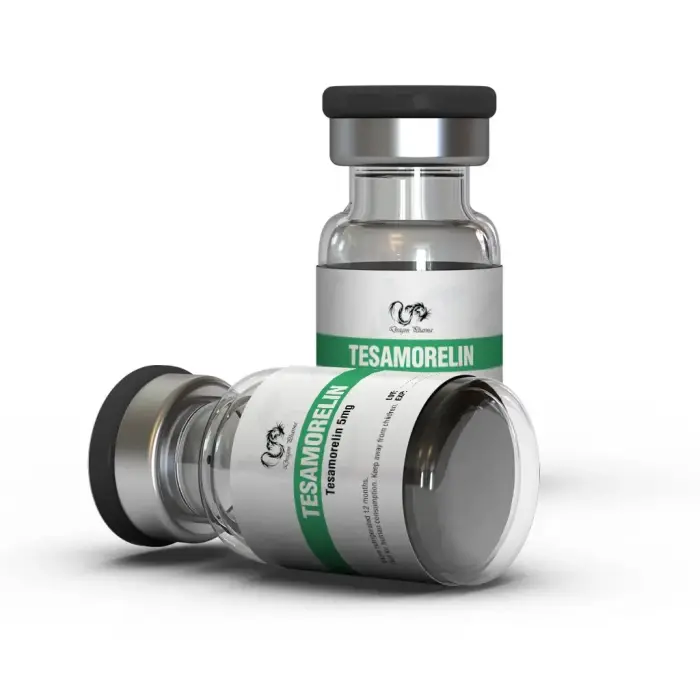
Dragon Pharma's tesamorelin is supplied as lyophilized powder in 5 mg vials reconstituted with bacteriostatic water for daily subcutaneous injection. At 1–2 mg per day, a single 5 mg vial covers 2.5–5 days of dosing, making weekly supply planning straightforward. steroidwarehouse.com carries the complete Dragon Pharma GHRH and secretagogue peptide lineup, including tesamorelin, the Ipamorelin+Tesamorelin blend, and all reconstitution supplies.
About the Compound: Tesamorelin & the GHRH Axis
Endogenous GHRH is a 44-amino acid hypothalamic peptide that travels via the portal circulation to the anterior pituitary, where it binds GHRH receptors on somatotroph cells and drives GH synthesis and secretion. GH release is inherently pulsatile: hypothalamic GHRH pulses trigger GH peaks, while somatostatin pulses suppress it between peaks. This rhythmic pattern — roughly 4–8 pulses per 24 hours, with the largest pulse occurring during the first hours of deep sleep — is the physiologic foundation for GH's anabolic, lipolytic, and tissue-repair signaling. Tesamorelin replicates GHRH's pituitary binding activity with improved pharmacokinetics: the trans-3-hexenoic acid modification increases plasma half-life and enzymatic resistance compared to native GHRH(1–44), producing a stronger and more sustained GH pulse per injection while still clearing within ~26 minutes.
- Pituitary-mediated, pulsatile GH release — tesamorelin stimulates the pituitary to release its own stored GH rather than bypassing the gland with exogenous somatropin; this preserves pulsatile GH kinetics and the self-limiting somatostatin feedback loop; GH rises sharply within 30–60 minutes of injection, then returns to baseline as somatostatin is triggered; this on-off pattern is fundamentally different from the sustained, flat GH levels produced by subcutaneous recombinant HGH injection and is believed to reduce the severity of GH-related side effects including water retention and carpal tunnel at equivalent IGF-1 elevations
- IGF-1 elevation as the downstream anabolic signal — pulsatile GH secretion drives hepatic IGF-1 production over the course of the day; IGF-1 is the primary mediator of GH's anabolic, anti-catabolic, and tissue-repair effects; tesamorelin produces clinically meaningful IGF-1 elevation within 2–4 weeks at 2 mg/day, with IGF-1 levels rising into the upper-normal range in most users; because IGF-1 elevation is driven by the user's own pituitary and GH reserve, the absolute magnitude of IGF-1 response varies with individual somatotroph function and age
- Preferential lipolysis of visceral adipose tissue — visceral (intra-abdominal) fat is highly GH-responsive; visceral adipocytes express more GH receptors and are more sensitive to GH-driven lipolysis than subcutaneous fat; tesamorelin's repeated GH pulses create a sustained lipolytic signal specifically at visceral fat depots, producing measurable reduction in visceral adipose tissue volume over 6–12 weeks; this effect is what the FDA pivotal trials measured as the primary outcome, showing trunk fat reductions of 15–20% over 26 weeks at 2 mg/day
- No endogenous GH axis suppression — tesamorelin stimulates through the normal GHRH pathway and does not create the negative feedback that exogenous GH administration does; exogenous recombinant HGH elevates circulating GH directly, triggering somatostatin release and suppressing pituitary somatotroph activity over time; tesamorelin does not create this suppression — after discontinuation, GH secretion returns to individual baseline without a recovery period, and no axis-restoration protocol is needed
- Anti-inflammatory and connective tissue remodeling — elevated GH and IGF-1 support collagen synthesis, extracellular matrix remodeling, and connective tissue maintenance; users on extended tesamorelin protocols often report improved joint comfort, skin quality, and recovery speed alongside the primary fat loss and body composition effects; these are secondary benefits driven by the GH/IGF-1 signaling rather than a primary mechanism of tesamorelin itself
What Tesamorelin Does
Tesamorelin's primary clinical outcome — measured in FDA approval trials — is reduction of visceral adipose tissue volume. Its broader effects in performance and wellness contexts extend to overall body composition, recovery, and the downstream benefits of normalized GH/IGF-1 signaling. All effects are downstream of the GHRH → GH → IGF-1 axis activation that tesamorelin drives.
- Visceral fat reduction — the most evidence-supported and clinically consistent effect; trunk and intra-abdominal fat depots are disproportionately sensitive to GH-driven lipolysis; phase 3 trial data showed 15–20% trunk fat reductions from baseline over 26 weeks at 2 mg/day; this translates to meaningful reductions in waist circumference, improved abdominal definition, and measurable changes on DEXA or CT imaging; the fat loss is preferential to visceral fat and does not primarily affect subcutaneous fat depots, which is why body weight changes may be smaller than expected while body composition shifts significantly; continued maintenance dosing sustains the effect, and visceral fat partially returns after discontinuation as endogenous GH normalizes
- Improved body composition without a caloric deficit — tesamorelin produces body composition change (visceral fat loss + preservation or modest improvement of lean mass) without requiring a caloric deficit; users in maintenance calories who are not running other anabolic compounds report visible composition improvements, particularly in the abdominal region, over 8–16 weeks of use; this makes tesamorelin useful in contexts where caloric restriction is not practical or where preserving muscle mass during a cut is a priority
- IGF-1 normalization and anabolic support — in users with low-normal or suboptimal IGF-1, tesamorelin restores IGF-1 to upper-normal range; elevated IGF-1 supports protein synthesis, satellite cell activation, and anti-catabolism; users frequently report improved recovery between training sessions, reduced DOMS severity, and subjective improvements in muscle fullness alongside the fat loss effect; for natural athletes, the IGF-1 elevation from 2 mg/day tesamorelin is meaningful but not supraphysiologic, keeping it in a well-tolerated range
- Skin, hair, and soft tissue quality improvements — GH and IGF-1 promote collagen synthesis and extracellular matrix maintenance; extended tesamorelin use (3–6 months) commonly produces improvements in skin thickness, elasticity, and overall quality; nail and hair growth acceleration are frequently reported; these cosmetic effects reflect the connective tissue anabolic environment created by sustained GH axis activation and are consistent with effects seen across GH-elevating compounds
- Sleep quality improvement — GH secretion is closely tied to slow-wave (deep) sleep; restoring or amplifying the nocturnal GH pulse through pre-sleep tesamorelin injection often correlates with improved deep sleep architecture; users report more restorative sleep, faster sleep onset, and reduced overnight waking; this is both a cause and effect of the GH axis optimization tesamorelin produces
Who It's For
- What sets tesamorelin apart from other GH-axis peptides: tesamorelin is the only GHRH analog with peer-reviewed phase 3 RCT data and an FDA approval specifically for visceral fat reduction — making it the most clinically supported GHRH analog available; its short half-life (~26 min) preserves true pulsatile GH release, producing physiologic GH kinetics rather than the continuous flat GH levels of CJC-1295 DAC or the supraphysiologic sustained levels of exogenous recombinant HGH; because tesamorelin works through the user's own pituitary, GH output is bounded by individual somatotroph reserve, making overdose-related side effects less likely than with exogenous GH at equivalent dosing; it does not interact with ghrelin receptors and does not produce the appetite stimulation, cortisol elevation, or prolactin increase associated with some GHRPs (particularly GHRP-6 and hexarelin)
- Best scenario: athletes and wellness users targeting visceral fat reduction as a primary goal alongside overall body composition improvement; intermediate-to-advanced users wanting GH axis amplification with clinical evidence behind the mechanism; users wanting a GHRH peptide that produces pulsatile GH release without the lifestyle constraints of injecting recombinant HGH multiple times daily; natural athletes who want the body composition and recovery benefits of optimized GH/IGF-1 signaling without AAS or exogenous GH; users running cutting cycles who want to preserve lean mass and improve fat oxidation without the androgenic side effects of additional steroids; those who have used Ipamorelin or CJC-1295 and want to step up to a better-documented GHRH platform with the strongest visceral fat reduction evidence base in the secretagogue class
- Choose something else instead: users with pituitary dysfunction or documented GH deficiency due to pituitary damage should not use tesamorelin — if the pituitary cannot respond to GHRH stimulation, tesamorelin produces no GH output; those users need Dragontropin HGH (exogenous recombinant somatropin that bypasses the pituitary entirely); users already running exogenous HGH will not benefit from adding tesamorelin — the circulating GH triggers somatostatin, which suppresses the pituitary response to GHRH; users whose primary goal is maximum anabolic output and IGF-1 elevation beyond the physiologic range should use Dragontropin HGH rather than tesamorelin, as exogenous GH produces higher and more controllable IGF-1 levels; users wanting weekly injection frequency rather than daily dosing should use CJC-1295 DAC Dragon Pharma, which has a ~7–8 day half-life
Tesamorelin vs Alternatives
| Compound | Key Differences | Choose Tesamorelin When | Choose Alternative When |
|---|---|---|---|
| Ipamorelin Dragon Pharma GH Secretagogue (GHRP) |
Ipamorelin is a selective GH secretagogue peptide that acts on ghrelin receptors (GHS-R1a) in the pituitary rather than GHRH receptors; it stimulates GH release through a completely different receptor system and pathway; combining a GHRH analog (tesamorelin) with a GHRP (ipamorelin) produces synergistic GH release — the two pathways amplify each other to produce 2–3× more GH than either compound alone; ipamorelin alone is the mildest and cleanest GHRP, with no meaningful cortisol, prolactin, or appetite side effects; it does not have tesamorelin's GHRH mechanism and provides less visceral fat reduction evidence per gram | Visceral fat reduction is the primary documented goal; GHRH mechanism with pituitary-mediated, physiologic GH release is preferred; or tesamorelin + ipamorelin combination (best of both pathways) is the actual protocol | Injection frequency needs to be 2–3 times daily for GH pulsing throughout the day rather than a single daily injection; or when used as the GHRP component in a GHRH+GHRP combination protocol alongside tesamorelin — in that context ipamorelin is not an alternative but a complement; see the pre-blended Ipamorelin + Tesamorelin DP |
| CJC-1295 DAC Dragon Pharma GHRH Analog (Long-Acting) |
CJC-1295 with Drug Affinity Complex (DAC) is another GHRH analog, but the DAC modification causes it to bind albumin in plasma and produce continuous, non-pulsatile GHRH receptor stimulation with a half-life of ~7–8 days; this creates a constant "GH bleed" rather than pulsatile release; requires once or twice weekly injection instead of daily; continuous GHRH receptor activation may blunt pulsatile GH architecture over time; tesamorelin's pulsatile mechanism is believed to be more physiologic and produces less receptor desensitization; CJC-1295 DAC has less clinical trial data than tesamorelin and no FDA approval for any indication | Daily injection is feasible and pulsatile GH release (most physiologic pattern) is preferred; the FDA-approval track record and phase 3 RCT data of tesamorelin are valued; visceral fat reduction is a primary stated goal | Injection convenience (once or twice weekly) is the overriding priority; a continuous GH bleed rather than pulsatile release is acceptable or preferred; CJC-1295 DAC + Ipamorelin is a common combination that some users prefer for its simpler injection schedule |
| Dragontropin HGH Dragon Pharma Recombinant Human GH (Somatropin) |
Dragontropin is injectable recombinant human growth hormone — exogenous somatropin that enters circulation directly and bypasses the pituitary entirely; produces supraphysiologic GH and IGF-1 levels proportional to dose; more potent for anabolic effects and muscle gain than tesamorelin at standard doses; carries higher risk of side effects (insulin resistance, water retention, carpal tunnel, HGH-related dose-dependent effects); suppresses pituitary somatotroph activity over time; more expensive per IU of effective GH output; does not require a functioning pituitary; provides more predictable and controllable GH and IGF-1 levels | The pituitary can respond to GHRH; physiologic pulsatile GH kinetics are preferred; the goal is fat loss and body composition with moderate IGF-1 elevation; a FDA-approved clinical mechanism matters; fewer side effects than exogenous HGH at equivalent dosing is the priority | Maximum anabolic output and supraphysiologic IGF-1 are the goal; pituitary dysfunction makes GHRH stimulation ineffective; the user is already committed to a long HGH protocol and needs precise dose control; muscle gain rather than visceral fat reduction is the primary objective |
Combinations
| Goal | Stack | Notes |
|---|---|---|
| GH pulse amplification (most popular combo) | Tesamorelin 2 mg once daily (pre-sleep) + Ipamorelin DP 200–300 mcg 2–3× daily | The GHRH + GHRP combination is the most established GH secretagogue stack; GHRH (tesamorelin) and GHRPs (ipamorelin) act on different pituitary receptor systems and when given simultaneously, produce 2–3× more GH than either compound alone; tesamorelin provides the primary GHRH pulse while ipamorelin amplifies the somatotroph response and adds its own ghrelin-pathway GH release; ipamorelin is the preferred GHRP here because it is selective and does not raise cortisol or prolactin; the nocturnal tesamorelin dose + evening ipamorelin injection aligns with the natural peak GH pulse during early sleep; for users who prefer convenience over independent dose control, the pre-blended Ipamorelin + Tesamorelin Dragon Pharma blend covers both compounds in one vial |
| Visceral fat loss + lipolysis (pure fat reduction focus) | Tesamorelin 2 mg/day + AOD-9604 Dragon Pharma 300 mcg/day | AOD-9604 is the lipolytic C-terminal fragment of GH (amino acids 176–191) — it directly activates fat cell β-3 adrenergic receptors to drive lipolysis without producing IGF-1 elevation or insulin resistance; tesamorelin and AOD-9604 operate through completely different mechanisms (GHRH → GH → IGF-1 driven lipolysis vs. direct GH fragment lipolysis) and can be used together without overlap; the combination covers both GH-receptor-mediated fat mobilization (tesamorelin) and direct β3-adrenergic lipolysis (AOD-9604); both are injected subcutaneously, making the protocol operationally simple; this is the most focused fat loss peptide stack available at steroidwarehouse.com without introducing AAS compounds |
| Maximum GH release with GHRP rotation | Tesamorelin 2 mg/day + Hexarelin DP 100 mcg 2×/day OR GHRP-2 Dragon 100–200 mcg 2×/day | Hexarelin and GHRP-2 are more potent GHRPs than ipamorelin, producing larger GH pulses but with greater cortisol and prolactin elevation at higher doses; pairing either with tesamorelin produces maximum GH release from the GHRH+GHRP synergy; this combination is suited to users whose primary goal is aggressive muscle repair, post-injury recovery, or maximum anabolic GH signaling rather than clean fat loss; hexarelin in particular has cardiac-protective signaling via GHS-R1a receptors in cardiac tissue; both GHRPs carry more appetite stimulation than ipamorelin — factor this in during cutting protocols; ipamorelin is cleaner for fat loss; GHRP-2 or hexarelin are better for mass and recovery goals |
| Lean recomp (fat loss + lean mass) | Tesamorelin 2 mg/day + Anavar 50 Dragon Pharma 40–60 mg/day | Anavar (oxandrolone) is the cleanest oral AAS for lean mass preservation and modest strength gain with minimal androgenic side effects; combined with tesamorelin's visceral fat reduction and IGF-1 elevation, this stack produces a lean recomp effect: visceral fat loss from the peptide, lean mass improvement and nitrogen retention from the oral; both compounds are suitable for moderate cutting phases; Anavar does not aromatize, making E2 management straightforward; men may want baseline bloodwork on lipids before this stack — Anavar suppresses HDL and tesamorelin-driven IGF-1 elevation does not compensate for lipid changes from the oral; a standard Anavar PCT (Nolvadex DP) follows the Anavar component; tesamorelin continues uninterrupted through and after PCT |
Side Effects & Management
| What May Occur | Background | How to Handle It |
|---|---|---|
| Water retention and peripheral edema | GH-driven IGF-1 elevation promotes sodium and water reabsorption in the renal tubules, producing extracellular fluid accumulation; the degree of water retention is dose-dependent and more pronounced in the first 2–4 weeks of use as GH and IGF-1 levels rise toward their new steady state; clinical trials at 2 mg/day reported peripheral edema in 6–10% of tesamorelin participants — lower rates than typically observed with equivalent exogenous recombinant GH; water retention from tesamorelin is generally mild and self-limiting at standard doses | Reduce sodium intake and increase water consumption during the first 2–4 weeks; most users find that water retention stabilizes or resolves after the initial adjustment period without requiring dose changes; if edema is persistent and uncomfortable, reduce to 1 mg/day for 2 weeks before attempting to step back up to 2 mg; morning injection timing (instead of pre-sleep) may reduce overnight fluid accumulation for sensitive users; if joint swelling accompanies water retention, Mobic (Meloxicam) can be used short-term for joint discomfort specifically |
| Joint discomfort and myalgia | GH and IGF-1 elevation causes fluid accumulation in joint capsules and surrounding soft tissue; this can produce joint stiffness, discomfort on loading, and general myalgias particularly in the wrists, elbows, knees, and ankles; these symptoms are more common in users with pre-existing joint concerns and during the first 4–6 weeks of elevated GH signaling; the mechanism is the same as GH-related joint effects seen with exogenous HGH, but typically milder at equivalent GH output due to tesamorelin's pulsatile rather than continuous GH elevation | Dose reduction to 1 mg/day for 2 weeks resolves most joint discomfort — this is the primary management strategy and should be tried before any pharmaceutical intervention; for acute flares during high-load training, Nurofen (Ibuprofen) 400 mg with food on an as-needed basis addresses short-term inflammation; Mobic (Meloxicam) at 7.5 mg/day is preferred for persistent joint discomfort as a longer-duration NSAID; if carpal tunnel symptoms appear (wrist tingling, numbness in fingers), reduce dose immediately and consider temporary discontinuation until symptoms clear |
| Insulin resistance and elevated fasting glucose | GH is a counter-regulatory hormone that directly antagonizes insulin action at target tissues; elevated GH from tesamorelin produces a dose-dependent reduction in insulin sensitivity, raising fasting blood glucose and requiring higher insulin secretion to maintain euglycemia; in healthy users with normal glucose metabolism this is manageable; in users with pre-existing insulin resistance, metabolic syndrome, or impaired fasting glucose, tesamorelin can meaningfully worsen glycemic control; FDA trials at 2 mg/day showed modest but real increases in fasting glucose in the tesamorelin group compared to placebo | Obtain a fasting blood glucose and HbA1c before starting tesamorelin in users over 40 or with any metabolic risk factors; recheck fasting glucose at weeks 4 and 8; keep carbohydrate intake moderate and time high-carbohydrate meals around training rather than at sedentary periods; regular aerobic exercise improves insulin sensitivity and directly counteracts GH-driven glucose elevation; if fasting glucose rises above 110 mg/dL, reduce to 1 mg/day and reassess at 4 weeks; tesamorelin is not appropriate for users with type 2 diabetes or HbA1c ≥ 6.5% |
| Injection site reactions | Subcutaneous injection of any reconstituted peptide carries risk of local erythema, bruising, or transient swelling at the injection site; tesamorelin is well-tolerated at the injection site when properly reconstituted and injected; the most common cause of local reactions is inadequate site rotation, incorrect injection technique, or injection of cold solution directly from the refrigerator | Rotate injection sites systematically across the abdomen (upper, lower, left, right quadrants); allow the reconstituted vial to warm to room temperature for 5–10 minutes before drawing; use a new insulin needle (28–31G, 6–8 mm) for each injection; inject slowly and apply light pressure after removal; local reactions that persist beyond 48 hours or involve significant warmth and swelling should prompt vial inspection for contamination and a temporary site change |
| Headache (transient, early use) | Some users report headaches in the first 1–2 weeks of tesamorelin use, coinciding with the initial GH and IGF-1 surge; this is a commonly reported early adverse event with GH-axis peptides and is believed to reflect intracranial fluid pressure changes from GH-driven sodium/water retention; the headaches are typically dull, positional, and resolve spontaneously within 1–3 weeks as the body adapts to the new GH signaling level | Ensure adequate hydration (3+ litres daily); reduce sodium intake during the first 2 weeks; starting at 1 mg/day for the first week before stepping to 2 mg/day reduces the magnitude of the initial GH surge and significantly lowers headache frequency; over-the-counter analgesics (paracetamol, ibuprofen) resolve acute episodes; persistent or severe headache beyond 3 weeks warrants dose reduction and reassessment |
Progress Monitoring
Tesamorelin does not suppress the HPG axis and does not require the standard AAS bloodwork panel. Monitoring focuses on two areas: laboratory markers of GH axis activation and metabolic safety (IGF-1 and fasting glucose), and functional progress tracking of the primary outcome targets (body composition and subjective wellbeing).
| Parameter | When to Test | Target & Action Threshold |
|---|---|---|
| IGF-1 (serum) | Baseline before starting; retest at weeks 4–6 of daily dosing | Target: upper-normal range for age and sex (typically 200–350 ng/mL for adults 20–40; labs provide age-adjusted ranges); supraphysiologic IGF-1 (>400–450 ng/mL) suggests dose is too high — reduce to 1 mg/day and retest at 4 weeks; low or unchanged IGF-1 at week 6 suggests pituitary response may be limited — check injection technique, reconstitution, and storage before concluding non-response; IGF-1 is the primary objective marker of tesamorelin efficacy |
| Fasting blood glucose | Baseline; weeks 4 and 8; monthly thereafter if baseline was borderline | Target: below 100 mg/dL (fasting); values of 100–110 mg/dL indicate mild impairment and warrant dietary modification (reduce refined carbohydrates, increase training frequency); values above 110 mg/dL consistently prompt dose reduction to 1 mg/day; fasting glucose above 126 mg/dL on two separate tests indicates tesamorelin should be discontinued and evaluated by a clinician before resuming; users who train fasted should note that glucose values taken immediately post-workout may be temporarily elevated and are not representative of baseline status |
| Waist circumference and body composition | Baseline measurement; every 4 weeks throughout the cycle | Waist circumference is the primary FDA trial outcome measure for tesamorelin; measure at the naval in the morning before eating; expect 1–3 cm reduction per 4-week period during the loading phase at 2 mg/day; DEXA or body composition measurement at baseline and at 12 weeks provides objective fat mass and lean mass data; if waist circumference is unchanged at 8 weeks, verify IGF-1 elevation has occurred (if IGF-1 is rising and body composition is not changing, dietary factors are likely limiting the response); the visceral fat response requires sustained daily dosing — missed doses meaningfully slow progress |
| Blood pressure | Baseline; monthly during tesamorelin use | Tesamorelin does not directly raise blood pressure but GH-driven sodium/water retention can contribute to mild pressure elevation in susceptible users; baseline BP and monthly checks are prudent; target below 130/85 mmHg; if sustained elevation above 140/90 mmHg occurs alongside significant water retention, reduce dose to 1 mg/day and reassess; users on tesamorelin + AAS stacks (see Combinations) should monitor BP more frequently given combined fluid retention and vascular effects; a low-dose Ecosprin (Aspirin 75 mg) taken daily provides baseline cardiovascular support during extended cycles |
Cycle Structure & Discontinuation
Tesamorelin requires no post-cycle therapy and no taper. The GH axis is not suppressed by tesamorelin use — it is stimulated. After discontinuation, the pituitary returns to its individual baseline GH secretion pattern without a recovery period. The primary cycle planning consideration is duration: tesamorelin's visceral fat reduction is a sustained, cumulative process that requires months of continuous daily dosing to produce and maintain its effects.
| Phase | Protocol | Notes |
|---|---|---|
| Ramp-up (weeks 1–2) | 1 mg/day subcutaneously, pre-sleep or AM fasted | Starting at 1 mg/day for the first 1–2 weeks reduces the incidence and severity of early side effects (headache, water retention, joint discomfort) by allowing the body to adapt to rising GH and IGF-1 levels before scaling to the full dose; some users — particularly those sensitive to GH-axis stimulation or over 40 — may choose to maintain 1 mg/day as their working dose throughout the cycle; 1 mg/day still produces clinically meaningful IGF-1 elevation and body composition change, particularly in users who have not used GH-axis peptides before |
| Main phase (weeks 3–26+) | 2 mg/day subcutaneously, once daily | The FDA approval trials used 2 mg/day as the therapeutic dose over 26 weeks; this is the best-evidenced dose for visceral fat reduction; inject subcutaneously in the abdomen, rotating sites; timing: pre-sleep injection aligns with the natural nocturnal GH pulse and produces the strongest synergy with endogenous GH secretion; AM fasted injection (30–60 minutes before eating) is the alternative for users who prefer morning protocols; keep injection site away from any fat loss compounds that may be applied topically in the same area; consistency is the most important variable — daily dosing produces cumulative effect, and sporadic use significantly blunts outcomes |
| Discontinuation | Stop at end of planned cycle; no taper required | Tesamorelin can be stopped cleanly without taper; no withdrawal effect, no rebound GH suppression, no endocrine disturbance; visceral fat reductions are partially maintained for several weeks after stopping as IGF-1 normalizes gradually, but visceral fat begins to return to pre-cycle levels as GH axis returns to individual baseline; users who want to maintain the body composition outcome long-term typically run 3–6 month cycles separated by 4–8 week off-periods, or use a maintenance dose of 1 mg/day for extended periods after completing the initial 26-week protocol |
| Reconstitution and storage | Reconstitute with 1–2.5 mL bacteriostatic water; refrigerate; use within 28 days | At 5 mg/vial + 2.5 mL bacteriostatic water: concentration = 2 mg/mL; 1 mg dose = 0.5 mL; 2 mg dose = 1 mL; at 1 mL bac water: 5 mg/mL; 2 mg dose = 0.4 mL; keep reconstituted vials refrigerated at 2–8 °C; do not freeze after reconstitution; lyophilized (unreconstituted) vials may be stored at room temperature short-term but should be kept refrigerated for long-term stability; inject cold solution only after allowing the syringe to warm to room temperature — injecting cold reconstituted peptide increases injection site discomfort |
Practical Summary
- Start at 1 mg/day for weeks 1–2 to reduce early water retention, headache, and joint discomfort; step to 2 mg/day from week 3; inject subcutaneously in the abdomen, rotating sites; pre-sleep timing provides the strongest synergy with the natural nocturnal GH pulse
- Track IGF-1 at week 4–6 to confirm pituitary response — this is the primary biomarker of tesamorelin efficacy; target upper-normal range for age; if IGF-1 has not moved meaningfully by week 6, verify injection technique, storage conditions, and reconstitution before concluding non-response
- Monitor fasting blood glucose at weeks 4 and 8; if values exceed 110 mg/dL consistently, reduce to 1 mg/day; tesamorelin is not appropriate for users with pre-existing diabetes or HbA1c ≥ 6.5%
- Combining tesamorelin with Ipamorelin DP (or using the pre-blended Ipamorelin + Tesamorelin DP) produces 2–3× the GH pulse of either compound alone; this is the recommended upgrade for users who plateau on tesamorelin alone after 8–10 weeks
- Do not run tesamorelin alongside exogenous HGH — the circulating GH from Dragontropin triggers somatostatin, which suppresses the pituitary GHRH response; these two GH-axis approaches compete rather than complement
- No PCT required; no taper; visceral fat partially returns after discontinuation as GH normalizes — plan for a maintenance protocol (1 mg/day) or cycling schedule if long-term body composition maintenance is the goal
Tesamorelin remains the most clinically documented GHRH analog available, with FDA approval and multi-centre phase 3 RCT data demonstrating consistent visceral fat reduction and favourable tolerability over 26 weeks at 2 mg/day. For athletes and wellness users looking to reduce visceral fat, improve body composition without a caloric deficit, and optimise GH/IGF-1 signaling while preserving physiologic pulsatile GH kinetics, it offers a well-evidenced and operationally straightforward once-daily protocol. Steroid Warehouse carries Dragon Pharma's full tesamorelin lineup — standalone 5 mg vials and the Ipamorelin + Tesamorelin blend — alongside the complete range of complementary peptides and reconstitution supplies needed for a structured GH secretagogue cycle.
References
| Source | Topic | Link |
|---|---|---|
| New England Journal of Medicine / PubMed | Falutz et al. 2007 — randomized placebo-controlled trial of daily tesamorelin, a growth hormone-releasing factor analogue, in HIV-infected patients with abdominal fat accumulation; primary human evidence showing reduced visceral adipose tissue and improved lipid parameters over 26 weeks | Falutz J, et al. (2007) ↗ |
| Journal of Clinical Endocrinology & Metabolism / PubMed | Falutz et al. 2010 — pooled analysis of two multicenter, double-blind, placebo-controlled phase 3 trials of tesamorelin 2 mg/day in HIV-infected patients with excess abdominal fat; key evidence for visceral fat reduction, treatment response, and safety-extension data | Falutz J, et al. (2010) ↗ |
| AIDS / PubMed | Falutz et al. 2008 — long-term safety and effects of tesamorelin in HIV patients with central fat accumulation; documents sustained visceral adipose tissue and triglyceride reductions during 52 weeks of treatment, with effects not maintained after discontinuation | Falutz J, et al. (2008) ↗ |
| Drugs / PubMed | Dhillon 2011 — review of tesamorelin use in the management of HIV-associated lipodystrophy; useful overview of mechanism, clinical efficacy, tolerability, and treatment limitations for reducing excess abdominal fat in HIV patients | Dhillon S (2011) ↗ |
What is Tesamorelin?
Tesamorelin is a peptide that stimulates growth hormone release; see What is Tesamorelin. It enhances fat loss—consult professionals for safe use.
Is there anything stronger than Tesamorelin?
Combinations like CJC-1295/Ipamorelin or Retatrutide may be stronger for GH release; see Is There Anything Stronger Than Tesamorelin. Consult professionals for alternatives.
How much Tesamorelin for bodybuilding?
1-2 mg/day subcutaneously for bodybuilding; see How to Use. Start at 1 mg—consult professionals for dosing.
Is it safe to combine Tesamorelin with CJC/Ipamorelin together?
Yes, combining Tesamorelin with CJC-1295 and Ipamorelin is safe and synergistic when monitored; see Popular Stacks. Adjust dosing—consult professionals for safety.
How does Tesamorelin work?
It binds GHRH receptors to stimulate GH release; see Mechanism of Action. It promotes fat loss—monitor with labs.
How long does it take to notice effects from Tesamorelin?
Effects typically develop gradually. Many users report changes in body composition, particularly reductions in abdominal fat, over several weeks of consistent use.
What are the main benefits of Tesamorelin?
Commonly discussed benefits include reduced visceral fat, increased growth hormone secretion, improved body composition, and potential metabolic improvements.
What makes Tesamorelin different from other growth hormone peptides?
Tesamorelin is a GHRH analog specifically known for its strong effect on visceral fat reduction and sustained stimulation of natural growth hormone release.
Related Products