Semax
Semax Dragon Pharma — Overview
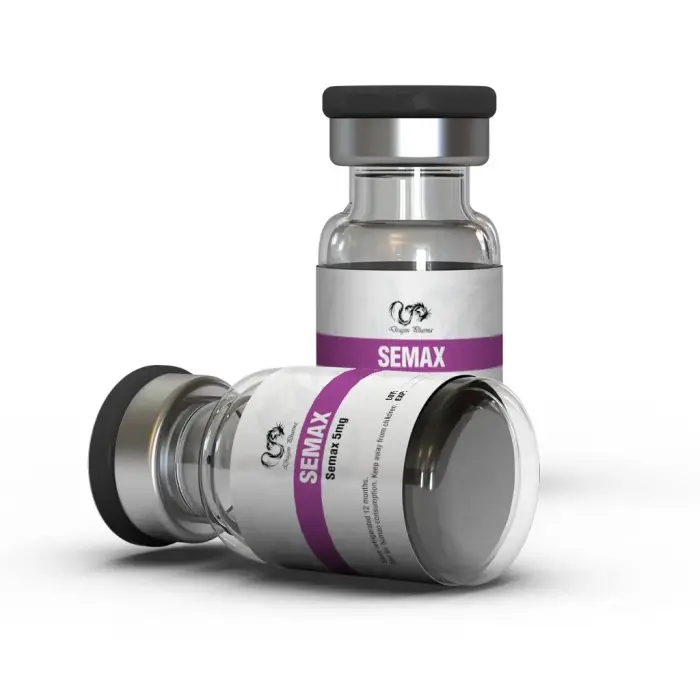
Semax Dragon Pharma is a synthetic heptapeptide nootropic supplied at 5 mg per lyophilized vial. Its sequence — Met-Glu-His-Phe-Pro-Gly-Pro — is built on the ACTH(4-7) fragment of adrenocorticotropin, extended at the C-terminus by Pro-Gly-Pro to prevent rapid enzymatic degradation. Developed at the Institute of Molecular Genetics of the Russian Academy of Sciences alongside Selank, Semax is approved in Russia for the treatment of cognitive impairment, ischemic stroke recovery, and neurasthenia, and has been in clinical use since the 1990s. In performance and cognitive optimization contexts it is the primary stimulatory nootropic peptide — producing alert, activated, goal-directed focus and drive through BDNF upregulation, melanocortin receptor activation, and enhancement of dopaminergic and serotonergic neurotransmission.
Where Selank calms and stabilizes, Semax energizes and activates. It is the compound of choice when the goal is cognitive output, motivation, learning speed, and mental drive rather than anxiety relief. It does not suppress the HPTA, causes no dependence, and produces no sedation or motor impairment at any standard dose. A 5 mg Dragon Pharma vial reconstituted in 5 mL bacteriostatic water yields 25 × 200 mcg doses at 1 mg/mL — sufficient for a full 3–4 week nootropic protocol at once-daily dosing. Semax is available at Steroid Warehouse alongside its complementary anxiolytic partner Selank for users building a comprehensive cognitive enhancement stack.
About the Compound: Semax
Semax (Met-Glu-His-Phe-Pro-Gly-Pro) is a synthetic derivative of adrenocorticotropin fragment ACTH(4-7), which is the minimal biologically active core sequence responsible for ACTH's cognitive and neuroprotective effects independent of its cortisol-stimulating function. The ACTH(4-7) tetrapeptide has an extremely short plasma half-life of 2–3 minutes due to rapid cleavage by membrane-bound aminopeptidases; Semax addresses this by appending the Pro-Gly-Pro tripeptide at the C-terminus, which sterically blocks the primary cleavage sites and extends the effective biological window to 20–30 minutes in plasma and several hours at the tissue level following subcutaneous or intranasal administration.
Semax activates the melanocortin receptor system — specifically MC2R and MC4R, which are expressed in the brain, adrenal cortex, and peripheral tissues. MC4R activation in the hypothalamus and limbic system drives the motivational, attentional, and arousal-promoting effects that define Semax's experiential profile. Simultaneously, Semax robustly upregulates brain-derived neurotrophic factor (BDNF) and nerve growth factor (NGF) expression in the hippocampus, prefrontal cortex, and striatum; this neurotrophic effect is the molecular basis for the cumulative nootropic improvement in memory consolidation and learning that builds over 2–3 weeks of consistent use. The compound also modulates dopamine and serotonin turnover in limbic and cortical regions, contributing to the drive, mood-elevation, and motivation components of its profile.
Importantly, Semax does not stimulate cortisol release despite acting on ACTH-derived sequences; the cortisol-stimulating activity of full ACTH requires the ACTH(1-24) N-terminal sequence, which is absent from Semax. The compound does not activate the HPA axis in the cortisol-releasing sense, does not suppress the HPG axis, and has no androgenic or estrogenic activity. It is pharmacologically clean in hormonal terms and can be used at any stage of a hormonal protocol without interference.
What Semax Does
- Acute cognitive activation — focus, attention, and mental drive — Semax produces a distinct state of alert, goal-directed cognitive engagement that users describe as clean mental energy without the anxious edge of stimulants; melanocortin MC4R activation in the prefrontal cortex and limbic system increases sustained attention capacity, reduces mind-wandering, and sharpens executive function; the effect is present from the first dose and peaks 1–2 hours after injection; unlike caffeine or amphetamine-class stimulants, Semax does not produce peripheral sympathetic activation (no elevated heart rate, no blood pressure spike), and does not cause the cognitive crash that follows stimulant clearance; the activation profile is smooth and terminates cleanly as the compound clears
- BDNF and NGF upregulation — cumulative nootropic effect — Semax consistently increases BDNF expression in hippocampal CA1, CA3, and dentate gyrus regions and in the prefrontal cortex in preclinical models; BDNF drives long-term potentiation, synaptic density, and the structural plasticity underlying memory consolidation and new learning; the practical consequence is that users experience improvements in memory encoding and retrieval, faster learning of new material, and enhanced working memory capacity that builds progressively over 2–3 weeks of daily use and persists 1–4 weeks post-cycle due to the durable nature of BDNF-driven synaptic changes; NGF upregulation additionally supports cholinergic neuron survival and function, contributing to the longer-term cognitive benefit
- Dopaminergic and serotonergic modulation — motivation and mood — Semax increases dopamine and serotonin turnover in the striatum, nucleus accumbens, and prefrontal cortex; the dopaminergic component drives the motivation, reward-seeking, and goal-directed behavior enhancement that users report as increased drive and task initiation; the serotonergic component contributes to mood stabilization and reduces the anhedonia or motivational flatness that may accompany high training loads, caloric deficit, or PCT; together these monoaminergic effects are the pharmacological basis for Semax's performance-enhancing profile beyond pure memory and attention
- Neuroprotection and recovery from cognitive stress — Semax has significant neuroprotective activity documented in ischemic stroke and traumatic brain injury models; it reduces the extent of neuronal apoptosis in hypoxic conditions, accelerates functional recovery of motor and cognitive deficits, and promotes neurogenesis in damaged regions; in performance contexts, this translates to accelerated cognitive recovery from periods of severe sleep deprivation, high training stress, or CNS fatigue; it is the most appropriate peptide for athletes in phases of high-volume training where cognitive degradation from accumulated fatigue is a concern
- No HPTA interaction — full hormonal protocol compatibility — Semax does not interact with androgen receptors, estrogen receptors, or the hypothalamus-pituitary-gonadal axis; LH, FSH, testosterone, E2, and SHBG are completely unaffected; it can be used during any AAS cycle, any SARM cycle, during PCT, or as a standalone compound without hormonal consequence; it is one of the most universally stackable compounds at Steroid Warehouse precisely because it adds cognitive enhancement without altering the endocrine management of any protocol it accompanies
Who It's For
- Athletes and performance users in high-demand cognitive phases — peak competition preparation, high-volume training, complex programming periods — the mental load of managing training, nutrition, recovery, and competitive demands simultaneously creates a cognitive burden that physically compromises performance in ways that are difficult to attribute to any single factor; Semax addresses this by maintaining and elevating cognitive capacity during exactly the periods when it is most taxed; it is the performance compound for the cognitive dimension of sport, complementing what AAS, SARMs, and peptides do for the physical dimension
- Users whose primary need is cognitive activation, drive, and motivation rather than anxiety relief — Semax is the correct choice when the dominant complaint is low motivation, mental flatness, reduced drive, poor focus, or cognitive fatigue; when anxiety, stress reactivity, or psychological tension is the dominant complaint, Selank Dragon Pharma is the appropriate first compound; the distinction matters because using Semax in an anxious, overstimulated user may amplify anxiety rather than improve cognitive performance, while Selank in a low-motivation, cognitively flat user provides insufficient activation
- What differentiates Semax from similar alternatives: vs Selank Dragon Pharma — Selank is the anxiolytic, calming, sedation-free counterpart from the same Russian peptide program; both upregulate BDNF and improve cognition, but through different receptor pathways and with opposite experiential profiles; Semax drives and activates, Selank calms and stabilizes; the classical pairing is Selank morning (anxiety floor, sustained calm focus) combined with Semax as needed for acute cognitive activation and drive; the stack exploits the complementary mechanisms of both compounds without redundancy; users with both anxiety and motivation deficits should start with Selank, stabilize the anxiety component, then add Semax for the activation layer
- Users who should choose something else: users with pre-existing anxiety, high stress reactivity, or a history of stimulant-induced anxiety should start with Selank rather than Semax, or use Selank + Semax only after confirming tolerance to Semax's activating profile; users whose primary need is sleep improvement rather than daytime performance should start with DSIP Dragon Pharma; users expecting anabolic, androgenic, or fat-loss effects should use the appropriate compound class — Semax has no activity in those domains
Semax vs Alternatives
| Compound | Key Differences | Choose Semax When | Choose Alternative When |
|---|---|---|---|
| Selank Dragon Pharma | Tuftsin analogue; anxiolytic nootropic; GABAergic modulation + enkephalinase inhibition; calming, sedation-free profile; upregulates BDNF via different receptor pathway; reduces anxiety and stress reactivity; improves calm sustained focus; does not activate dopaminergic drive; complementary rather than competing mechanism; the canonical nootropic pairing is Selank + Semax together (anxiolytic floor + activating ceiling); in isolation each covers a different pole of the cognitive-performance spectrum | Cognitive activation, drive, motivation, and mental energy are the primary goals; anxiety is not a concern; peak performance output on a demanding cognitive or training day; user is in a low-anxiety, low-motivation state | Anxiety, stress reactivity, or psychological tension is the dominant issue; calm sustained focus without stimulation is preferred; PCT mood support; combine with Semax for full-spectrum nootropic coverage |
| Epitalon Dragon Pharma (Epithalon) |
Tetrapeptide telomerase activator; anti-aging endpoint (telomere preservation, circadian normalization, melatonin regulation); operates over months; no acute cognitive activation effect; improves sleep quality and hormonal circadian rhythms; represents a completely different use case (longevity vs acute CNS performance); occasionally combined with Semax in comprehensive cognitive longevity protocols where both immediate performance and long-term neuroprotection are targets | Acute cognitive activation and short-cycle (2–4 week) performance enhancement are the goals; immediate cognitive output matters this week, not in 6 months | Long-term anti-aging, telomere health, and circadian rhythm normalization are the primary targets; sleep quality as a primary endpoint; extended 1–3 month longevity protocol |
| DSIP Dragon Pharma (Delta Sleep-Inducing Peptide) |
Neuropeptide that promotes slow-wave delta sleep; reduces sleep onset latency, increases total sleep time, normalizes disrupted sleep architecture from training stress or stimulant use; mild daytime stress-buffering; no daytime cognitive activation; primarily a nighttime recovery compound; addresses the recovery-side consequence of high cognitive and training demand rather than the daytime performance side; most effective when combined with Semax: Semax for daytime output, DSIP at night for sleep-driven cognitive recovery | Daytime cognitive activation and performance are the primary need; anxiety or low motivation is the dominant daytime complaint; user has adequate sleep and wants to maximize waking cognitive performance | Sleep quality, sleep onset, and overnight cognitive recovery are the primary limitations; training or stimulant use is disrupting sleep; Semax + DSIP as a complementary daytime/nighttime nootropic stack |
Dosing & Reconstitution
| Step | Details |
|---|---|
| Reconstitution | Add 5 mL bacteriostatic water to the 5 mg vial → concentration: 1 mg/mL (1000 mcg/mL). Inject BAC water slowly down the vial wall; swirl gently, do not shake. At 1 mg/mL: each 0.1 mL (10 units on U-100 syringe) = 100 mcg. Refrigerate immediately after reconstitution at 2–8°C; use within 28–30 days; protect from light. Do not use plain sterile water for multi-dose vials — BAC water only |
| Standard Dose (200 mcg) | At 1 mg/mL: draw 0.2 mL (20 units U-100). Inject subcutaneously into the lower abdomen or lateral thigh; pinch skin, insert 28–31G insulin needle at 45°, inject slowly. Administer in the morning, 30–60 minutes before cognitive work or training. This is the appropriate starting dose for first-time users — assess tolerance and acute cognitive response before escalating |
| Moderate Dose (300–400 mcg) | At 1 mg/mL: 0.3 mL (30 units) or 0.4 mL (40 units). Used by experienced users seeking stronger activation; can be split into two injections (morning + early afternoon) at 150–200 mcg each to smooth the effect curve; second injection no later than early afternoon to avoid sleep interference; most users find 300–400 mcg/day the practical sweet spot for sustained daily nootropic use |
| Higher Dose (500–600 mcg) | At 1 mg/mL: 0.5–0.6 mL (50–60 units). Upper performance range; used on demanding cognitive days or during intensive study/competition preparation periods; split BID (300 mcg morning + 200–300 mcg early afternoon); headache and irritability risk increases at the higher end of this range; do not exceed 600 mcg/day without prior tolerance confirmation at lower doses |
| Vial Yield (5 mg vial at 1 mg/mL) | At 200 mcg/day once daily: 25 doses (25 days). At 300 mcg/day: 16–17 doses. At 400 mcg/day BID (200+200): 12–13 days. At 600 mcg/day BID (300+300): 8 days. A standard 3-week protocol at 300 mcg/day requires approximately 6.3 mg — one 5 mg vial plus a second partially used. Plan vial quantity before starting the cycle |
Side Effects & Management
Semax has a minimal side-effect profile at standard doses. Most adverse effects are mild, dose-dependent, and resolve without intervention.
| What May Occur | Background | How to Handle It |
|---|---|---|
| Headache | The most commonly reported side effect; typically mild and self-limiting; caused by vasodilatory effects of melanocortin receptor activation and mild changes in cerebral blood flow; most frequent in the first 3–5 days of use as the CNS adapts; more common at doses above 400 mcg/day; usually peaks 1–2 hours after injection and resolves within 2–3 hours; rarely dose-limiting | Adequate hydration (2–3L water/day) is the primary measure; tolerance typically develops within 5–7 days; if persistent or severe at a given dose: reduce by 100 mcg and hold for one week before re-escalating; Ecosprin 75–150 mg as a mild analgesic with added vascular benefit; headache that persists beyond 2 weeks at a stable dose is a signal to reduce dose permanently |
| Insomnia (dose-timing dependent) | Semax's activating profile, driven by dopaminergic and MC4R stimulation, can disrupt sleep initiation if the second dose is taken too late in the day; dopamine elevation persists for several hours after the effective cognitive window; this is purely a timing issue and is entirely preventable with correct injection scheduling; not associated with the compound at appropriate times; less of a concern with once-daily morning dosing at 200–300 mcg | Strict timing: last injection no later than 1–2 pm; morning-only dosing at 200–300 mcg/day eliminates sleep disruption for most users; if insomnia persists even with morning-only dosing: reduce to 200 mcg once daily at the same time each morning; magnesium glycinate 300–400 mg before bed assists sleep quality; DSIP Dragon Pharma stacked at night is the peptide-specific remedy for Semax-induced sleep disruption |
| Mild irritability or anxiety at high doses | Dopaminergic and MC4R activation at doses above 500–600 mcg/day can produce excessive CNS arousal that manifests as irritability, impatience, or mild anxiety in susceptible users; more likely in users with pre-existing anxiety or elevated baseline sympathetic tone; not observed at standard 200–400 mcg/day doses in clinical populations; reflects an individual response to the stimulatory component of the mechanism rather than a systemic pharmacological risk | Reduce dose to 200–300 mcg/day; stack with Selank Dragon Pharma 250 mcg/day to provide GABAergic anxiolytic coverage that balances Semax's activating effect; the Semax + Selank combination is specifically designed to address this: Selank provides the anxiety floor while Semax provides the activation ceiling; the combination eliminates the irritability/anxiety concern at doses that would otherwise be above the comfortable solo-Semax threshold |
| Injection site reactions | Mild local redness, itching, or stinging at the SC injection site; a class effect of subcutaneous peptide injections; not specific to Semax; transient, resolves within 15–30 minutes; no tissue damage or long-term local effects at standard volumes; less frequent when rotating sites and using fresh needles for each injection | Rotate injection sites (lower abdomen quadrants, outer thighs, upper arms); use a fresh 28–31G insulin needle for each injection; allow reconstituted vial to reach room temperature before injecting (removes from refrigerator 15–20 minutes prior); inject slowly to minimize pressure in the tissue depot |
| No dependence, no withdrawal | Semax does not produce pharmacological dependence; the dopaminergic modulation it produces is modulatory rather than direct receptor agonism — it increases dopamine turnover without binding dopamine receptors directly, which is why it does not produce the receptor downregulation and dependence cycle of amphetamines or direct dopaminergic drugs; cessation of Semax produces no withdrawal syndrome, no rebound cognitive impairment, and no mood crash beyond the natural return to baseline | No taper required; cycles can be ended abruptly; BDNF-driven cognitive improvements persist 1–4 weeks post-cycle due to durable synaptic remodeling; re-starting after a 2-week off period maintains receptor sensitivity and prevents any partial accommodation to the compound's acute effects |
Bloodwork Monitoring
Semax requires no dedicated bloodwork panel. The compound has no hepatic, renal, endocrine, or hematological effects at standard doses.
| Lab | When to Test | Target & Action Threshold |
|---|---|---|
| Cortisol (serum, morning) | Optional; only relevant if user is using Semax specifically for stress and HPA axis management in combination with other compounds | Semax does not stimulate cortisol release (ACTH(1-24) N-terminal sequence is required for adrenocortical activation; Semax's ACTH(4-7) origin does not carry this activity); morning cortisol should be unaffected by Semax at any standard dose; if cortisol is elevated on bloodwork during Semax use, the cause is elsewhere (training stress, sleep deprivation, other compounds) |
| LH, FSH, total testosterone | If combining with AAS, SARMs, or PCT compounds — per the requirements of the suppressive compound, not Semax | Semax has no HPG axis interaction; these values are unaffected by Semax at any dose; monitoring is driven entirely by the concurrent hormonal compounds, not by Semax itself |
| General health panel (CBC, CMP) | Include in any routine annual or pre-cycle bloodwork; not driven by Semax specifically | Semax has no documented hematological, hepatic, renal, or electrolyte effects; no Semax-specific thresholds apply; routine health monitoring is good practice regardless of which compounds are in use |
Cycle Structure
| Cycle | Protocol | Notes |
|---|---|---|
| Short peak-performance cycle (1–2 weeks) | Semax 200–300 mcg once daily in the morning for 1–2 weeks; no off period required if cycle is under 2 weeks | Acute cognitive activation from dose 1; used to cover a specific high-demand window (exam period, competition prep, peak training block); full anxiolytic or nootropic BDNF effect is not the primary goal at this duration; no meaningful receptor accommodation occurs at this cycle length; restart after a 1-week break if repeating |
| Standard nootropic cycle (3–4 weeks) | Semax 200–400 mcg/day for 3–4 weeks; once daily or BID (morning + early afternoon); 2 weeks off; repeat as needed | BDNF-driven memory and synaptic plasticity effects require 2–3 weeks to fully establish; the 3–4 week duration allows both acute activation and cumulative nootropic improvement to operate together; cognitive benefits persist 1–4 weeks post-cycle; the 2-week off period restores full receptor sensitivity and prevents partial accommodation |
| Stack with Selank (full-spectrum nootropic) | Selank 250 mcg morning (anxiolytic, calm focus baseline) + Semax 200–300 mcg morning or early afternoon (cognitive activation, drive) | The definitive Semax + Selank pairing exploits complementary receptor mechanisms; Selank provides the GABAergic anxiolytic floor via enkephalinase inhibition while Semax drives MC4R-mediated cognitive activation; together they cover the full nootropic spectrum: calm alert focus (Selank) + energized drive (Semax); the combination eliminates Semax-induced irritability risk and eliminates Selank-alone cognitive flatness; cycle both for 3–4 weeks together, off 2 weeks, repeat |
| Stack with DSIP (24-hour cognitive protocol) | Semax 200–300 mcg morning (daytime activation) + DSIP at night (slow-wave sleep promotion) | DSIP at night directly counteracts the sleep disruption that Semax's dopaminergic activation can cause if recovery sleep is compromised; the combination optimizes the full 24-hour cognitive cycle: Semax drives daytime output, DSIP drives overnight cognitive consolidation and recovery; appropriate for users in sustained high-demand phases where both daytime performance and sleep quality are being monitored |
Practical Summary
- Morning injection only for single-dose protocols — never after 1–2 pm: Semax's dopaminergic and MC4R-driven arousal effect persists for several hours; afternoon or evening dosing disrupts sleep initiation; a strict morning injection window eliminates insomnia as a concern entirely; for BID protocols, the second dose must be no later than early afternoon
- Start at 200 mcg/day and hold for 5–7 days before escalating: the acute headache response is most pronounced in the first week; most users adapt within 5–7 days; escalating to 300–400 mcg/day after the adaptation period captures greater cognitive activation with significantly reduced headache risk; users who skip the adaptation phase and go straight to 400+ mcg/day experience more headaches and are more likely to reduce dose prematurely
- Stack Selank with Semax if anxiety, irritability, or overstimulation is a concern: Selank 250 mcg in the morning before or alongside Semax provides the GABAergic anxiolytic balance that eliminates high-dose Semax's overstimulation risk; the combination produces higher effective cognitive output than either compound alone because Selank allows higher Semax doses to be tolerated comfortably
- Expect the memory and learning effect to build over 2–3 weeks: the acute activation (focus, drive, alertness) is present from dose 1; the cumulative nootropic improvement in memory consolidation and learning speed emerges over 2–3 weeks via BDNF upregulation; do not assess the full profile based on the first week alone; cognitive benefits persist 1–4 weeks after cycle end due to BDNF-driven synaptic consolidation
- Two-week off period between cycles preserves response quality: partial MC4R accommodation develops with continuous use beyond 4 weeks; a 2-week off period restores full receptor sensitivity; users who run Semax continuously without breaks typically report diminishing acute activation by week 5–6; respecting the off period means each new cycle starts with a fresh, full receptor response
Semax Dragon Pharma is the stimulatory counterpart to Selank in the Russian nootropic peptide program — the compound for users who need output, drive, and cognitive activation rather than calm. Its ACTH(4-7)-derived mechanism provides clean, stimulant-free cognitive enhancement through BDNF upregulation and melanocortin receptor signaling, with neuroprotective benefits that compound over repeated cycles. Standalone or stacked with Selank as its complementary partner, Semax is the most pharmacologically defined nootropic peptide available at Steroid Warehouse for athletes and performance users who take the cognitive dimension of their protocols as seriously as the physical one.
References
| Source | Topic | Link |
|---|---|---|
| Brain Research / PubMed | Dolotov et al. 2006 — Semax, an ACTH(4-10) analogue with cognitive effects, regulates BDNF and TrkB expression in the rat hippocampus; supports Semax's neurotrophic mechanism related to memory, synaptic plasticity, and cognitive pharmacology | Dolotov OV, et al. (2006) ↗ |
| Neurochemical Research / PubMed | Eremin et al. 2005 — study of Semax effects on dopaminergic and serotonergic brain systems in rodents; supports monoamine-pathway involvement in Semax's neurochemical and cognitive research profile | Eremin KO, et al. (2005) ↗ |
| Neuroscience and Behavioral Physiology / PubMed | Levitskaya et al. 2004 — experimental study of Semax in MPTP-induced lesions of the brain dopaminergic system; supports Semax's neuroprotective activity in a dopaminergic injury model rather than proving a direct melanocortin-receptor mechanism | Levitskaya NG, et al. (2004) ↗ |
| Bulletin of Experimental Biology and Medicine / PubMed | Romanova et al. 2006 — Semax showed neuroprotective and antiamnesic effects during experimental ischemic infarction of the cerebral cortex; supports Semax's preclinical profile in ischemic brain injury and memory impairment models | Romanova GA, et al. (2006) ↗ |
| BMC Genomics / PubMed | Medvedeva et al. 2014 — genome-wide transcriptional analysis showing that Semax affects expression of genes related to immune and vascular systems in rat brain focal ischemia; supports a broader molecular mechanism for Semax's neuroprotective effects | Medvedeva EV, et al. (2014) ↗ |
What is Semax?
Semax is a nootropic peptide for cognitive enhancement; see What is Semax. It boosts focus—consult professionals for safe use.
What is Semax used for?
It's used for cognitive enhancement and stress resilience; see Key Benefits. It suits wellness goals—use with professional oversight.
What does Semax do?
It enhances focus and memory via BDNF and dopamine modulation; see Mechanism of Action. It supports cognition—monitor with professional guidance.
Is Semax safe?
It's safe with proper dosing and monitoring, but not FDA-approved; see Side Effects. Manage risks with professional guidance—consult for safety.
How is Semax typically administered?
Semax is commonly:
- Available as a nasal spray formulation
- Sometimes supplied as a peptide preparation for research purposes
- Used in structured cognitive-support protocols
Administration methods depend on the product format.
What are the possible side effects?
Potential side effects may include:
- Mild headaches
- Irritation of the nasal passages (with nasal use)
- Dizziness
- Fatigue or temporary mood changes in some users
Responses vary depending on dosage and individual sensitivity.
Is Semax used for cognitive enhancement?
Yes. Semax is primarily known in nootropic and peptide research communities for its potential cognitive-enhancing and neuroprotective properties.
How long does it take to notice effects from Semax?
Many users report experiencing improvements in focus and mental clarity relatively quickly, while cognitive and neuroprotective benefits may develop over longer periods of use.
Related Products
- Accelerates muscle and tendon repair for quick recovery.
- Reduces inflammation systemically and locally.
- Enhances joint and tissue resilience for intense training.
- Supports comprehensive healing for uninterrupted performance.