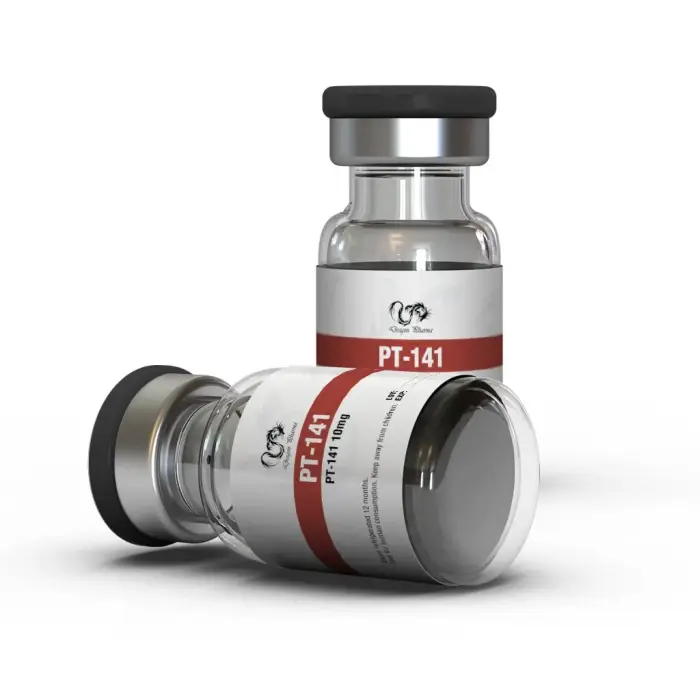
PT-141
PT-141 Dragon Pharma — Overview
PT-141 Dragon Pharma is bremelanotide — a synthetic melanocortin receptor agonist peptide supplied as a 10 mg lyophilized powder vial for subcutaneous injection. Unlike PDE5 inhibitors (tadalafil, sildenafil), which work peripherally by increasing penile blood flow in response to sexual stimulation, PT-141 acts centrally in the hypothalamus by activating melanocortin 3 and 4 receptors (MC3R / MC4R). This CNS pathway drives sexual arousal and desire directly, independent of blood flow mechanics — which is why PT-141 is effective in cases where PDE5 inhibitors have failed, including cases where the issue is central libido deficit rather than peripheral erectile function.
PT-141 is used in performance and enhancement contexts primarily for on-cycle and post-cycle libido support, for addressing AAS-related sexual dysfunction (particularly in low-estrogen or high-prolactin phases), and as a standalone libido aid. It produces no HPTA suppression, does not affect testosterone or estrogen levels, and requires no post-cycle therapy. Available at Steroid Warehouse as a 10 mg vial, PT-141 provides 5–10 uses per vial at standard doses of 1–2 mg per injection.
About the Compound: Bremelanotide
Bremelanotide is a cyclic heptapeptide analogue of alpha-melanocyte-stimulating hormone (α-MSH) — a naturally occurring neuropeptide in the melanocortin system. The melanocortin system consists of five receptor subtypes (MC1R through MC5R); the sexual function-relevant activity of PT-141 is mediated primarily through MC3R and MC4R in the hypothalamus and limbic system. MC4R activation in particular is strongly associated with sexual arousal, erection, and desire pathways in both male and female models.
The critical pharmacological distinction from PDE5 inhibitors is the site of action: tadalafil and sildenafil require peripheral nitric oxide release triggered by sexual stimulation — they amplify the vascular response to an arousal signal that must already be present. PT-141 generates the arousal signal itself at the CNS level; it does not require a pre-existing stimulus to initiate sexual interest. This mechanism explains why PT-141 is effective in cases of hypoactive sexual desire disorder (HSDD), low-libido states during AAS cycle recovery, and situations where emotional or psychological components reduce CNS-driven arousal independently of vascular function.
PT-141 is supplied as lyophilized (freeze-dried) powder that must be reconstituted with bacteriostatic water before injection. It is administered subcutaneously (not intravenously or intramuscularly) 45–90 minutes before intended sexual activity. The onset window is 45–90 minutes; the duration of effect extends 6–12 hours. At 10 mg per vial, a standard protocol of 1–2 mg per use yields 5–10 uses per vial.
What PT-141 Does
- Centrally initiates sexual arousal without requiring peripheral stimulation — MC4R activation in the hypothalamus generates a pro-sexual neurological signal independently of tactile or visual stimulus; in clinical and observational use, this is the defining feature that separates PT-141 from all PDE5 inhibitors: men and women using PT-141 report spontaneous onset of sexual desire and arousal beginning 45–90 minutes after injection, without needing to be in a state of arousal at the time of dosing; this mechanism is particularly relevant for central hypoactive sexual desire disorder, where the problem is the absence of desire rather than the mechanics of performance
- Effective when PDE5 inhibitors have failed or are insufficient — tadalafil and sildenafil require nitric oxide-mediated vasodilation triggered by arousal; if the arousal signal is absent (central libido deficit, severe psychological inhibition, high-prolactin state, post-cycle hypogonadism) PDE5 inhibitors cannot compensate; PT-141's central mechanism bypasses this gap; it restores the upstream neural drive that makes downstream vascular response possible; many users who find PDE5 inhibitors provide physical erection without accompanying desire report that PT-141 alone or in combination resolves both components simultaneously
- Supports libido during hormonal disruption phases — during AAS cycles, PCT, or post-cycle recovery, endogenous testosterone is suppressed and the endocrine environment is significantly disrupted; libido decline is a consistent symptom of HPG axis suppression; PT-141 activates the melanocortin pathway which does not depend on androgen levels to produce its arousal effect; it functions independently of testosterone, estradiol, or prolactin status, making it applicable regardless of where in the hormonal cycle the user is; it does not restore testosterone — it bypasses the need for adequate testosterone to generate desire
- Applicable in both men and women — the MC3R/MC4R arousal pathway is not sex-specific; clinical trials for bremelanotide (approved as Vyleesi for female HSDD) documented increases in desire and reduction in distress from low sexual function in premenopausal women; in performance contexts, PT-141 is used by female athletes who experience libido decline during or after AAS or peptide cycles; the subcutaneous injection protocol and dosing are the same for both sexes; nausea is the most commonly reported side effect and tends to be more pronounced in female users at higher doses
- No hormonal interference — no PCT required — PT-141 is a peptide with no androgenic, estrogenic, or gonadotropic activity; it does not suppress LH or FSH, does not alter testosterone or estradiol production, and produces no endocrine changes requiring recovery management; it can be used at any phase — on cycle, during PCT, post-cycle, or entirely off cycle — without affecting hormonal trajectory; there is no need to time or manage its use around endocrine protocols
Who It's For
- Users experiencing libido decline during or after AAS cycles — HPTA suppression reliably reduces endogenous testosterone and disrupts the hormonal environment that supports libido; this is a near-universal experience during aggressive AAS cycles and in the PCT/post-cycle window; when hormonal support measures (Proviron, AI optimization, PCT SERMs) do not fully restore libido, PT-141 addresses the residual central deficit directly; it is not a substitute for proper hormonal management but a complement when hormonal correction alone is insufficient
- Users where PDE5 inhibitors work mechanically but do not restore desire — some men report that tadalafil or sildenafil produces the physical erectile response but without accompanying interest or drive; this pattern indicates a central arousal deficit rather than a vascular one; PT-141 is the appropriate tool for this specific presentation; combining PT-141 with a PDE5 inhibitor covers both the central desire and peripheral vascular components simultaneously and is a common protocol
- What differentiates PT-141 from libido support alternatives: compared to Cialis DP (tadalafil), PT-141 works centrally on desire and arousal rather than peripherally on blood flow; Cialis requires arousal to trigger its mechanism; PT-141 generates arousal; both have a role and they combine effectively; compared to Proviron (mesterolone), PT-141 is non-hormonal and does not work through SHBG binding or free testosterone — Proviron supports background androgenic tone continuously while PT-141 is dosed acutely before activity; they operate through entirely different pathways and can be used simultaneously; compared to Viagra DP (sildenafil), the mechanism difference is the same as Cialis — peripheral vascular vs central neural; Viagra has shorter duration (~4–6 hours) and faster onset (~30–60 min)
- Users who should choose something else first: if the libido issue is purely mechanical erectile dysfunction with preserved desire and arousal, a PDE5 inhibitor addresses the problem more directly with a simpler administration; PT-141 requires subcutaneous injection and 45–90 minutes lead time; if hormonal causes of low libido (low testosterone, high prolactin, severely suppressed E2) have not been assessed and addressed, correcting the hormonal environment should be the first intervention; PT-141 on top of unmanaged prolactin elevation or severe testosterone deficiency is a workaround, not a fix
PT-141 vs Alternatives
| Compound | Key Differences | Choose PT-141 When | Choose Alternative When |
|---|---|---|---|
| Cialis DP Dragon Pharma (Tadalafil 20 mg) |
PDE5 inhibitor; peripheral mechanism; increases penile blood flow by inhibiting PDE5 and potentiating cGMP in smooth muscle; requires sexual arousal to activate (must already feel desire for the vascular mechanism to engage); onset 30–60 min; duration up to 36 hours; oral tablet; no injection required; effective for erectile dysfunction driven by vascular insufficiency; does not restore desire; no effect on arousal absent stimulus | Desire and arousal are absent or insufficient; PDE5 inhibitor has previously failed or produced erection without desire; high-prolactin or post-cycle central deficit; both PT-141 and Cialis together for the complete picture | Libido and desire are present but erectile mechanics are the issue (vascular ED); oral route preferred; no injection available; arousal stimulus is present but vascular response is insufficient |
| Viagra DP Dragon Pharma (Sildenafil 100 mg) |
PDE5 inhibitor; same mechanism category as tadalafil; shorter half-life (~4–6 hours) vs tadalafil (up to 36 hours); faster onset (30–60 min); more affected by food intake (fatty meals delay absorption); requires arousal to activate the vascular mechanism; oral; no injection; same limitation as tadalafil: no effect on central desire | Central desire deficit is the primary issue; long duration needed (PT-141's 6–12 hour window); on-cycle or PCT context where central hormonal disruption reduces arousal; use PT-141 + Viagra for combined central and vascular coverage when needed | Shorter-duration vascular support needed; arousal is present; oral route strongly preferred; erectile dysfunction is clearly vascular in nature |
| Proviron Dragon Pharma (Mesterolone 25 mg/tab) |
DHT-derived oral AAS; taken daily (not acutely); mechanism is androgenic tissue activation and SHBG binding increasing free testosterone; gradual improvement in background libido and androgenic tone over days to weeks; no immediate acute effect; continuous daily oral dosing; mild anti-estrogenic; ideal for ongoing on-cycle androgenic support; no CNS receptor mechanism; takes days to build effect | Acute on-demand libido activation is needed; response required within 45–90 min of dosing; failed response to androgenic approaches; libido deficit despite adequate free testosterone | Background on-cycle androgenic support is the goal; SHBG is elevated and free testosterone is low; oral daily support preferred; gradual sustained improvement is acceptable over immediate acute dosing |
Dosing & Use Cases
| Context | Dose & Timing | Protocol Notes |
|---|---|---|
| First use (dose assessment) | 0.5 mg subcutaneous; 45–90 min before activity | Start at 0.5 mg to assess nausea threshold; the most common adverse effect (nausea, flushing, headache) is dose-dependent and most pronounced at 2 mg; if 0.5 mg is well tolerated with satisfactory effect, remain at this dose; titrate to 1 mg and then 2 mg in subsequent uses if needed; reconstitute with 2 ml bacteriostatic water → 5 mg/ml; 0.5 mg = 0.1 ml; 1 mg = 0.2 ml; 2 mg = 0.4 ml |
| Standard use (established dose) | 1–2 mg subcutaneous; inject 60–90 min before activity; max 1 use per 24 hours | Most users find 1–1.5 mg optimal: sufficient CNS activation with manageable side effects; inject into abdominal subcutaneous fat or outer thigh; use a 29–31G insulin syringe; rotate injection sites; do not use more than once in 24 hours; nausea typically peaks 45–90 min post-injection and resolves within 2–3 hours; lying down after injection reduces nausea severity |
| On-cycle libido support | 1–2 mg as needed; no minimum frequency; use acutely when libido is absent despite hormonal support measures | PT-141 does not interfere with any AAS, AI, or SERM; it can be used alongside any combination of testosterone, Proviron, Aromasin, or Cabergoline without pharmacological conflict; it does not worsen hormonal suppression; if libido decline persists beyond what Proviron or AI optimization addresses, PT-141 on-demand is the next step; not needed if hormonal management is effective |
| PCT libido support | 1 mg as needed during the low-androgen PCT window | PCT is the highest-risk window for libido decline: testosterone is suppressed, E2 may fluctuate, and SERM-driven LH stimulation takes 2–4 weeks to produce meaningful testosterone recovery; PT-141 bridges this gap without interfering with SERM mechanism or hormonal recovery trajectory; combine with Proviron 25 mg/day and Cialis DP as needed for comprehensive coverage of central and vascular components |
| Female use | 0.5–1 mg subcutaneous; 45–90 min before activity; start at 0.5 mg | Clinical evidence supports bremelanotide efficacy in women with HSDD; in performance contexts, used by female athletes during or after AAS cycles where androgenic compounds have altered hormonal balance; nausea is more frequently reported in women at higher doses; 0.5–1 mg is the recommended starting range for female users; do not exceed 1.75 mg (the approved clinical dose) |
Side Effects & Management
| What May Occur | Background | How to Handle It |
|---|---|---|
| Nausea | The most common adverse effect of PT-141; driven by melanocortin receptor activity in the CNS; onset is typically 45–90 minutes after injection, parallel with the onset of the therapeutic effect; severity is dose-dependent — 0.5–1 mg produces nausea in a minority of users; 2 mg produces nausea in a significant proportion; the nausea is transient and resolves within 1–3 hours without intervention; it is consistently the primary tolerability factor that determines the effective dose range for each individual user | Start at 0.5 mg; titrate upward only if 0.5 mg is well tolerated and insufficient; lie down for 30–60 minutes after injection — this substantially reduces nausea severity; avoid dosing on a full stomach; if nausea is persistent and limiting: Motilium (domperidone) 10 mg taken 30 minutes before PT-141 injection prevents or substantially reduces nausea at higher doses |
| Facial flushing and warmth | Transient vasodilation in facial skin, driven by melanocortin receptor activity; begins 30–60 minutes post-injection, typically mild to moderate, resolves within 1–2 hours; not associated with significant blood pressure change at standard doses; more noticeable at 2 mg | No specific intervention required; the effect is self-limiting; avoid hot showers or alcohol (both vasodilatory) immediately after injection, which can amplify flushing; reduce dose to 1 mg if flushing is uncomfortable |
| Transient blood pressure increase | Bremelanotide has been documented to produce modest transient BP elevation (systolic +6 mmHg average in clinical trials); the effect is short-lived (1–2 hours); at standard doses of 1–2 mg the magnitude is clinically minor for normotensive users; relevant for users with pre-existing hypertension or concurrent use of other compounds affecting blood pressure | Monitor BP before first use; avoid use on days when BP is already elevated (>140/90); for users on antihypertensive therapy: no specific interaction data, but be aware of potential additive effects with vasodilatory agents; Ecosprin 75 mg/day is standard baseline on AAS cycles and does not specifically address PT-141 BP effects |
| Hyperpigmentation with frequent repeated use | Melanocortin receptor agonism (MC1R) stimulates melanin production; with repeated frequent dosing (multiple times per week over extended periods) localized or diffuse skin darkening has been reported; this effect is not a concern with occasional as-needed use; it is primarily associated with high-frequency protocols or misuse as a tanning peptide (Melanotan II, a related compound, is specifically associated with this); at standard PT-141 doses used for sexual function, hyperpigmentation is uncommon | Use PT-141 as needed, not on a fixed high-frequency schedule; if skin pigmentation changes are noted: reduce frequency or discontinue; the effect is generally reversible on cessation |
| Headache and fatigue | Reported in a subset of users, typically mild, transient; onset concurrent with other CNS effects; more common at 2 mg; resolves within 2–4 hours; not typically limiting at 1 mg doses | Dose reduction to 1 mg; adequate hydration before and after injection; rest after dosing while waiting for onset |
Bloodwork: Diagnosing the Root Cause
PT-141 does not itself require routine bloodwork monitoring — it is a non-hormonal peptide with no effect on standard endocrine or metabolic markers. However, if PT-141 is being considered because of persistent libido decline, bloodwork to identify the hormonal root cause is essential before or alongside its use. Treating the symptom without investigating the cause misses the opportunity to correct a fixable underlying problem.
| Lab | When to Test | What It Tells You |
|---|---|---|
| Total + Free Testosterone | When libido decline first appears; 4 weeks post-PCT | Low total and free testosterone is the most common correctable hormonal cause of libido decline; if total testosterone is <400 ng/dL post-PCT, recovery is incomplete; if free testosterone is low despite adequate total (SHBG elevated), Proviron is the first intervention; PT-141 is the second-line supplement when androgenic correction alone is insufficient |
| Prolactin | When libido decline is refractory; any 19-nor cycle | Elevated prolactin from 19-nor AAS (Nandrolone, Trenbolone) or idiopathic causes directly suppresses libido and sexual function; prolactin above 25 ng/mL requires Cabergoline, not PT-141; normalizing prolactin is the correct intervention for this cause; PT-141 on top of unmanaged elevated prolactin provides incomplete and unreliable relief |
| Estradiol (E2) | When libido declines in a dry stack or with aggressive AI use | E2 below 15 pg/mL causes libido loss, erectile dysfunction, fatigue, and joint pain; this is AI over-suppression and is correctable by reducing AI dose; PT-141 does not address low-E2 symptoms beyond the CNS arousal component; target E2 20–40 pg/mL on cycle; correct the AI dose first if E2 is the identified cause |
| LH + FSH | 4 weeks post-PCT | LH and FSH in reference range at 4 weeks post-PCT confirms HPG axis recovery; if LH/FSH are still suppressed at 4 weeks, testosterone recovery will be incomplete and libido decline will persist; address the recovery deficit with extended PCT rather than masking with PT-141 |
| SHBG | When free testosterone is low despite adequate total testosterone | High SHBG reduces free testosterone fraction; common during caloric restriction, post-cycle, or with oral AAS; targeted intervention is Proviron 50 mg/day; PT-141 is additive to this approach, not a replacement |
Reconstitution Guide
PT-141 is supplied as lyophilized powder and must be reconstituted with bacteriostatic water (BAC water) before use. Standard reconstitution for a 10 mg vial:
| BAC Water Added | Concentration | Volume per Dose | Uses per Vial |
|---|---|---|---|
| 2 ml BAC water | 5 mg/ml | 0.5 mg = 0.1 ml | 1 mg = 0.2 ml | 2 mg = 0.4 ml | 5 uses at 2 mg | 10 uses at 1 mg | 20 uses at 0.5 mg |
- Use a 1 ml insulin syringe (29–31G) for both reconstitution and injection
- Inject BAC water slowly down the side of the vial wall — do not aim directly at the powder
- Swirl gently to dissolve — do not shake
- Store reconstituted vial refrigerated (2–8°C); stable for approximately 4 weeks
- Inject subcutaneously into abdominal fat or outer thigh; rotate sites
- Administer 60–90 minutes before intended activity for peak effect alignment
Practical Summary
- Start at 0.5 mg — titrate upward: nausea is dose-dependent and peaks at 2 mg; 0.5 mg on the first use establishes tolerance; most users find 1–1.5 mg is the optimal balance of effect and tolerability; do not start at 2 mg
- Inject 60–90 minutes before activity: the onset window is 45–90 minutes; injecting immediately before is too early to assess readiness; plan the timing and allow for the full onset; lying down for 30 minutes post-injection reduces nausea
- Reconstitute with 2 ml BAC water → 5 mg/ml: 1 mg dose = 0.2 ml; 2 mg dose = 0.4 ml; 10 mg vial yields 10 uses at 1 mg; store refrigerated after reconstitution; use within 4 weeks
- For nausea prevention at 2 mg: pretreat with Perinorm: Motilium (domperidone) 10 mg taken 30 minutes before injection substantially reduces nausea without interfering with PT-141's CNS mechanism
- Check bloodwork before relying on PT-141 long-term: persistent libido decline has correctable hormonal causes (low testosterone, high prolactin, low E2); bloodwork before or alongside PT-141 use identifies whether the root cause can be addressed directly; PT-141 is most effective as an adjunct to optimal hormonal management, not as a substitute for it
- Combine with Cialis DP for full coverage: PT-141 handles the central desire component; Cialis DP (tadalafil) handles the peripheral vascular component; for users with both desire deficit and mechanical ED, combining both compounds at appropriate doses provides comprehensive coverage of both mechanisms
PT-141 from Dragon Pharma at Steroid Warehouse is the only CNS-acting libido compound in the lineup — the only option that generates sexual desire at the source rather than amplifying the downstream vascular response. For athletes managing libido through AAS cycles, PCT, and recovery phases, it fills a specific and non-overlapping role alongside androgenic support compounds and PDE5 inhibitors. Used at the right dose and with proper timing, it consistently addresses central arousal deficit where other approaches have reached their ceiling.
References
| Source | Topic | Link |
|---|---|---|
| Obstetrics & Gynecology / PubMed | Kingsberg et al. 2019 — two randomized Phase 3 RECONNECT trials of bremelanotide 1.75 mg administered subcutaneously as needed in premenopausal women with acquired, generalized hypoactive sexual desire disorder; primary clinical evidence supporting improvements in sexual desire and related distress, with nausea, flushing, and headache among common adverse events | Kingsberg SA, et al. (2019) ↗ |
| International Journal of Impotence Research / PubMed | Diamond et al. 2004 — double-blind, placebo-controlled evaluation of intranasal PT-141, a melanocortin receptor agonist, in healthy males and patients with mild-to-moderate erectile dysfunction; documents pharmacokinetic, safety, and erectile-response data for early PT-141 development | Diamond LE, et al. (2004) ↗ |
| CNS Spectrums / PubMed | Pfaus et al. 2022 — review of the neurobiology of bremelanotide for hypoactive sexual desire disorder in premenopausal women; covers melanocortin receptor signaling, central sexual desire pathways, hypothalamic mechanisms, dopamine-related arousal circuitry, and the rationale for MC4R-targeted pharmacology | Pfaus JG, et al. (2022) ↗ |
| Women's Health / PubMed | Clayton et al. 2016 — randomized, placebo-controlled dose-finding trial of bremelanotide in premenopausal women with female sexual dysfunctions; evaluates as-needed subcutaneous bremelanotide across 0.75 mg, 1.25 mg, and 1.75 mg dose levels and provides Phase 2b safety and efficacy context before Phase 3 RECONNECT trials | Clayton AH, et al. (2016) ↗ |
How long does PT-141 take to work?
PT-141 works within 30-120 minutes, with effects lasting 4-6 hours; see How to Use. Timing varies—consult professionals for expectations.
Is PT-141 safe?
It's safe with proper dosing and monitoring, but avoid in hypertension or cardiovascular issues; see Side Effects. Consult professionals for safety.
What is PT-141?
PT-141 is a peptide (Bremelanotide) for libido enhancement; see What is PT-141. It boosts sexual health—consult professionals for safe use.
What is PT-141 used for?
It's used for enhancing libido and sexual performance; see Key Benefits. It suits men and women—use with professional oversight.
When to take PT-141?
Inject 0.5-2 mg 45 minutes before sexual activity, max 8 doses/month; see How to Use. Use with monitoring—consult for tailored plans.
How long does it take for PT-141 to start working?
PT-141 is generally considered a relatively fast-acting peptide, with effects often reported within several hours after administration, depending on individual response.
What are the main benefits of PT-141?
Commonly discussed benefits include increased sexual desire, enhanced arousal, improved sexual responsiveness, and support for overall sexual wellness.
Does PT-141 work differently from traditional sexual performance products?
Yes. PT-141 primarily targets neurological pathways involved in desire and arousal, rather than focusing on vascular mechanisms associated with blood flow.
Related Products
- Accelerates muscle and tendon repair for quick recovery.
- Reduces inflammation systemically and locally.
- Enhances joint and tissue resilience for intense training.
- Supports comprehensive healing for uninterrupted performance.