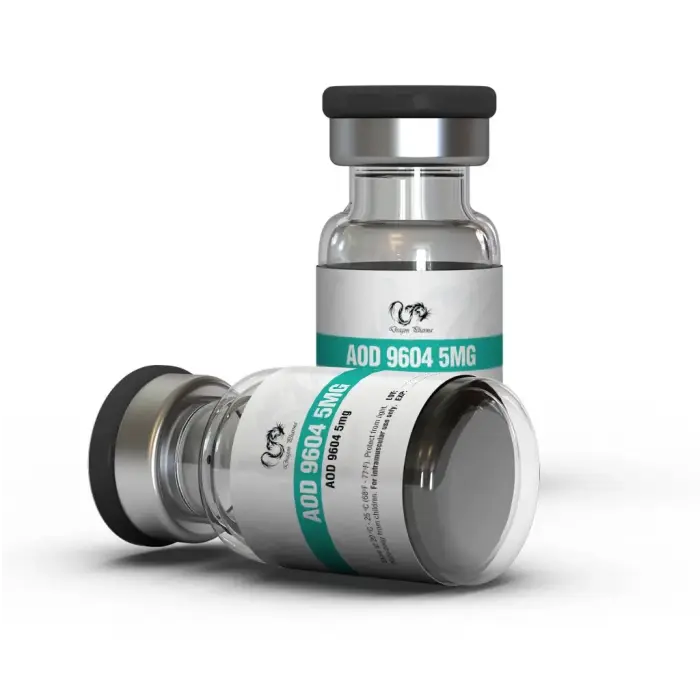
AOD 9604 Dragon Peptides
AOD 9604 Dragon Pharma 5 mg — Overview
AOD 9604 Dragon Pharma is a synthetic peptide derived from the C-terminal region of human growth hormone (hGH, residues 176–191), modified with a tyrosine residue at the N-terminus to improve stability and bioavailability. Originally developed as a targeted anti-obesity compound, AOD 9604 reproduces the fat-metabolizing activity of native hGH through direct activation of β3-adrenergic receptors in adipose tissue, while having no measurable effect on IGF-1 production, insulin signaling, blood glucose regulation, or muscle tissue growth. This specificity is its primary pharmacological advantage: the lipolytic benefit of growth hormone's fat-mobilizing domain is delivered without the metabolic side effects and growth-stimulating consequences of full hGH administration. Available at Steroid Warehouse in a 5 mg lyophilized vial, providing 10–16 days of supply depending on protocol dose, AOD 9604 is the most pharmacologically targeted option in the Dragon Pharma peptide lineup for users whose sole objective is accelerated fat loss without hormonal manipulation or HPG axis suppression.
About the Compound: AOD 9604
- What AOD 9604 is at a molecular level — AOD 9604 is a 16-amino acid peptide corresponding to residues 176–191 of the hGH sequence, with a tyrosine (Tyr) residue added at the N-terminus; the name "AOD" stands for Anti-Obesity Drug; the tyrosine modification increases metabolic stability compared to the bare 176–191 fragment (HGH Fragment), reducing enzymatic degradation after subcutaneous injection and extending the effective activity window at the injection depot; the result is a compound that retains the lipolytic activity of the native hGH C-terminal domain with improved pharmacokinetics relative to unmodified hGH fragment
- Mechanism: selective β3-adrenergic receptor activation — the primary mechanism of AOD 9604 is stimulation of β3-adrenergic receptors (β3-ARs) in white adipose tissue; β3-AR activation triggers intracellular cAMP signaling, which activates hormone-sensitive lipase (HSL), releasing stored triglycerides as free fatty acids; AOD 9604 simultaneously inhibits lipogenesis (de novo fat synthesis) in adipocytes; this dual action — enhancing fat breakdown while blocking fat storage — is specific to adipose tissue and does not engage the growth-promoting pathways of the GH receptor (GHR) that drive IGF-1 release and anabolic signaling
- What AOD 9604 does NOT do — unlike full hGH, AOD 9604 does not bind or activate the full-length GH receptor; it does not stimulate hepatic or peripheral IGF-1 production; it does not affect insulin sensitivity or fasting blood glucose in a clinically meaningful way at standard research doses; it does not suppress the HPG axis, does not elevate cortisol, and does not require post-cycle therapy; this profile was the basis of its Phase I and Phase II clinical development for obesity treatment, where its safety and tolerability profile was favorable even when the efficacy endpoints did not meet FDA thresholds for obesity drug approval
- Presentation and reconstitution — the Dragon Pharma 5 mg vial contains lyophilized (freeze-dried) AOD 9604 powder; reconstitution with bacteriostatic water (BAC water) is required before injection; the vial must be stored refrigerated after reconstitution; AOD 9604 is administered subcutaneously, typically into abdominal adipose tissue, and is compatible with standard insulin syringes (U-100)
What AOD 9604 Does
- Targeted fat mobilization from adipose tissue — β3-AR stimulation triggers hormone-sensitive lipase (HSL) activation in white adipose tissue; stored triglycerides are cleaved into free fatty acids and glycerol, which enter circulation for use as energy substrate; this lipolytic effect is most pronounced in subcutaneous abdominal and visceral fat depots, which have high β3-AR density relative to peripheral fat; fasted administration amplifies the effect by removing insulin's competing anti-lipolytic signal at the time of injection
- Lipogenesis inhibition — AOD 9604 concurrently inhibits de novo lipid synthesis in adipocytes by downregulating key lipogenic enzymes, reducing the rate at which circulating glucose and acetyl-CoA are converted back to stored fat; in a caloric deficit, this suppression of fat re-esterification means a greater fraction of mobilized fatty acids is oxidized rather than recaptured, increasing the net fat loss per unit of caloric restriction compared to diet alone
- Fat oxidation enhancement — animal model data show increased rates of fat oxidation (as measured by respiratory quotient shift toward fat utilization) in response to chronic AOD 9604 administration; this is consistent with the downstream consequences of sustained β3-AR activation: upregulation of uncoupling protein expression in adipose tissue and elevated mitochondrial fatty acid oxidation rates; the practical effect is an increase in the fat contribution to total daily energy expenditure without changes in basal metabolic rate
- Preservation of lean mass and metabolic neutrality — because AOD 9604 does not stimulate IGF-1 or engage anabolic GH receptor signaling, it does not promote muscle growth on its own; this also means it does not create the insulin resistance, glucose elevation, or carpal tunnel risk associated with pharmacological hGH; in a fat loss or recomposition context, AOD 9604 contributes only the fat-metabolism signal — lean mass preservation depends on dietary protein intake and resistance training rather than the peptide itself
Who It's For
- Key differentiator from other fat-loss peptides and GH-axis peptides — AOD 9604 is the only Dragon Pharma peptide that acts directly on adipose β3-ARs without stimulating endogenous GH secretion or producing downstream IGF-1 elevation; GH secretagogues (CJC-1295, Ipamorelin, Tesamorelin, Sermorelin) all work upstream at the pituitary or GHRH receptor level, generating a full GH pulse that includes IGF-1 and all associated anabolic and metabolic effects; AOD 9604 bypasses the GH axis entirely and delivers only the lipolytic output; this is the correct choice when the goal is isolated fat loss without any anabolic hormonal stimulus
- Best scenario — users in a cutting phase who want peptide-assisted fat mobilization without altering muscle-building hormone levels; users who cannot or do not want to run GH secretagogues due to IGF-1-mediated water retention, insulin resistance concerns, or the complexity of a GH pulse protocol; users combining AOD 9604 with a resistance training program and a caloric deficit who want a clean, pharmacologically narrow tool that targets only fat tissue; users who want an accessible entry-level peptide protocol without hormonal monitoring requirements beyond basic metabolic labs
- Choose something else instead — users seeking simultaneous fat loss and lean mass gain or recovery benefits should stack AOD 9604 with a GH secretagogue such as CJC-1295/Ipamorelin Dragon Pharma to add the anabolic and recovery dimension that AOD 9604 alone does not provide; users whose primary goal is muscle gain or body recomposition with fat loss as secondary should use a GH secretagogue stack as the primary peptide and consider AOD 9604 as an add-on rather than the lead compound
AOD 9604 vs Alternatives
| Compound | Key Differences | Choose AOD 9604 When | Choose Alternative When |
|---|---|---|---|
| HGH Fragment 176-191 5 mg Generic Unmodified hGH fragment |
Same 176–191 sequence but without the N-terminal Tyr modification; mechanism and fat-loss effects are essentially identical in practice; no meaningful clinical distinction between the two in terms of end-user outcomes; Dragon Pharma's AOD 9604 offers manufacturer quality assurance and verified purity for the same compound class | Dragon Pharma brand purity verification and consistent peptide quality are a priority; price difference is acceptable for the quality assurance | Budget is the overriding factor and a generic source is verified; or when generic availability is preferred for multi-vial longer protocols |
| CJC-1295 DAC Dragon Pharma GHRH analog · long-acting |
Works upstream: stimulates pituitary GH release continuously (DAC = Drug Affinity Complex, extends half-life to several days); produces GH pulses → elevated IGF-1 → anabolic and lipolytic effects combined; requires less frequent injection (once weekly); adds lean mass, recovery, and sleep quality benefits absent from AOD 9604; also adds IGF-1-mediated water retention and glucose considerations absent from AOD 9604 | Targeted fat loss only, with no desire for IGF-1 elevation, anabolic effects, or the complexity of a GH secretagogue protocol | Simultaneous fat loss and muscle building, recovery support, or improved sleep are objectives alongside fat reduction; full GH axis activation is acceptable and desired |
| Tesamorelin Dragon Pharma GHRH analog · visceral fat specific |
GHRH synthetic analog with clinical FDA approval for HIV-associated visceral lipodystrophy; stimulates endogenous GH → IGF-1; produces pronounced visceral fat reduction in clinical data; also increases lean mass; injection daily; adds IGF-1 elevation and associated considerations; superior clinical evidence base compared to AOD 9604; more relevant for visceral adiposity specifically | Only direct β3-AR-mediated lipolysis without GH axis activation is acceptable; or when GH secretagogue side effects are specifically to be avoided | Visceral fat is the specific target with strong clinical evidence required; or when the combination of visceral fat reduction and lean mass improvement from GH axis stimulation is the goal; see also Tesamorelin vs Ipamorelin comparison |
Combinations
| Goal | Stack | Notes |
|---|---|---|
| Pure fat loss (solo protocol) | AOD 9604 400–500 mcg/day SC · fasted AM · 12 weeks → 4-week break | The simplest and most pharmacologically clean option; no other peptides, no hormonal support, no monitoring beyond basic metabolic bloodwork; suited to users who want targeted fat-loss peptide assistance without adding any other compounds; results are diet-dependent — AOD 9604 amplifies a caloric deficit but does not replace it |
| Fat loss + GH axis activation (recomp) | AOD 9604 300 mcg AM · fasted + CJC-1295/Ipamorelin 10 mg Dragon Pharma 200 mcg CJC + 200 mcg Ipamorelin · pre-sleep injection · 12 weeks | The CJC-1295/Ipamorelin blend adds the GH pulse + IGF-1 dimension for lean mass accrual, recovery, and sleep quality; AOD 9604 runs in the morning fasted for its direct lipolytic effect; the two compounds operate via distinct mechanisms (β3-AR direct vs pituitary GH secretion) and are pharmacologically complementary; this is the most common AOD 9604 combination protocol for body recomposition |
| Fat loss + visceral targeting | AOD 9604 300 mcg AM · fasted + Ipamorelin/Tesamorelin 10 mg Dragon Pharma 200 mcg Tesamorelin + 200 mcg Ipamorelin · pre-sleep · 12 weeks | Tesamorelin specifically targets visceral adipose tissue through GH-axis activation; combined with AOD 9604's direct β3-AR lipolytic signal, this stack addresses both subcutaneous and visceral fat compartments through independent mechanisms; monitor fasting glucose at week 4 due to Tesamorelin's GH-mediated effect on insulin sensitivity; not required for subcutaneous fat loss only |
| Fat loss + connective tissue recovery | AOD 9604 400 mcg AM · fasted + BPC-157 Dragon Pharma 250 mcg 2×/day SC · morning and evening · 8–12 weeks | BPC-157 adds tendon, ligament, and gut healing support that AOD 9604 does not provide; relevant for users managing chronic joint issues during a cutting phase where reduced caloric intake may slow tissue repair; the two peptides work via completely independent pathways with no interaction; this combination is particularly suited to users returning from injury who need to maintain a fat-loss trajectory while supporting recovery |
| Fat loss + injury recovery (full support) | AOD 9604 400 mcg AM + BPC-157 Dragon Pharma 250 mcg 2×/day + TB-500 Dragon Pharma 2 mg 2×/week SC · 8 weeks | TB-500 (Thymosin Beta-4) adds systemic tissue repair and angiogenesis support that BPC-157's more localized effects do not fully cover; the three-peptide stack addresses fat loss (AOD 9604), localized tissue repair (BPC-157), and systemic recovery (TB-500) simultaneously; suitable for users in a caloric deficit managing significant soft tissue injury load; see also top peptides for recovery |
Side Effects & Management
| What May Occur | Background | How to Handle It |
|---|---|---|
| Mild headache (early weeks) | Reported in a subset of users during the first 1–2 weeks of AOD 9604 use; mechanism is not fully characterized but likely relates to the initial β3-AR-mediated fat mobilization and associated transient metabolic shifts rather than any direct vascular or CNS effect; typically self-resolving by week 3 as the body adapts to the lipolytic signal | Ensure adequate hydration throughout the protocol; headaches occurring consistently beyond week 2 may indicate dehydration from a concurrent aggressive caloric deficit; reduce dose to 200–300 mcg/day for the first week as an adaptation phase before titrating up; no pharmaceutical intervention required in most cases |
| Injection site reactions | Standard subcutaneous peptide injection reactions: mild redness, swelling, or bruising at the injection site lasting 24–48 hours; more common with abdominal subcutaneous injection; repeated injection at the same anatomical point can cause local subcutaneous fat reduction (the lipolytic mechanism acting locally at the depot) — this is cosmetically and pharmacologically undesirable if pronounced | Rotate injection sites systematically within the abdominal region and between abdomen, thigh, and lateral hip; use a fresh injection site for each administration; U-100 insulin syringe with a 31G or 32G needle minimizes tissue trauma; inject into a gathered skin fold, not into muscle; local fat depression at a favored injection site resolves over weeks once rotation is implemented |
| Mild nausea or GI discomfort | Occasional nausea reported with fasted AM administration, particularly in users with sensitive GI function or when taken alongside pre-workout stimulants on an empty stomach; not dose-dependent beyond standard 300–500 mcg range; does not indicate systemic toxicity and typically resolves after the first week of consistent fasted dosing | If fasted administration consistently causes nausea, shift the injection to 30 minutes before the training session rather than strictly first thing in the morning; a small amount of water (200–300 ml) after injection before the fast ends is acceptable and reduces GI sensitivity without blunting the lipolytic window; persistent nausea beyond week 2 is rare and may indicate a reconstitution issue |
| Mild fatigue (early protocol) | Transient low energy during the first 1–2 weeks, most commonly reported when AOD 9604 is stacked with an aggressive caloric deficit; the fatigue is not a direct peptide effect but reflects the combined metabolic demand of accelerated fatty acid mobilization and reduced caloric intake; not observed as an isolated AOD 9604 effect in clinical trial data at standard doses | Ensure total caloric intake does not fall below 20% below TDEE during the first two weeks of the protocol; moderate rather than aggressive deficit during the adaptation phase; fatigue resolves as the body establishes efficient fatty acid oxidation as the primary energy substrate; persistent fatigue should prompt a dietary review rather than peptide dose adjustment |
Bloodwork Monitoring
AOD 9604 does not suppress the HPG axis, does not alter hematocrit, does not elevate E2 or prolactin, and has no hepatotoxic pathway. Bloodwork for an AOD 9604 protocol is limited to the metabolic markers directly relevant to β3-AR-mediated fat mobilization and its downstream effects on glucose and lipid handling.
| Lab | When to Test | Target & Action Threshold |
|---|---|---|
| Fasting Glucose & Fasting Insulin (HOMA-IR) | Baseline; week 6 | Fasting glucose <100 mg/dL · fasting insulin <10 μIU/mL — AOD 9604 alone does not impair insulin sensitivity at standard doses; if combining with a GH secretagogue (CJC-1295, Tesamorelin), GH-mediated glucose elevation is the relevant risk; a mid-protocol check confirms the metabolic profile remains clean; impaired fasting glucose (>100) warrants dietary review and possibly pausing any concurrent GH-axis peptide |
| Lipid Panel | Baseline; end of cycle | LDL <130 mg/dL · HDL >40 mg/dL — AOD 9604 does not suppress lipids in the way androgenic compounds do; however, an aggressive caloric deficit combined with increased fat mobilization can transiently alter lipid panel readings, particularly if dietary fat composition is poor; baseline and end-of-cycle comparison confirms the protocol has not adversely affected the lipid profile |
| Blood Pressure | Weekly (home cuff) | Target <130/85 mmHg — not a direct AOD 9604 risk; included when used in combination with stimulants, thermogenics, or compounds with cardiovascular burden (e.g., concurrent AAS blast); AOD 9604 solo does not raise blood pressure; monitor in stacked protocols where other compounds are present |
Dosing & Cycling Protocol
| Step | Protocol | Notes |
|---|---|---|
| Reconstitution | Add 2 ml bacteriostatic water (BAC water) slowly to the 5 mg vial by injecting down the vial wall; swirl gently — never shake; resulting concentration: 2500 mcg/ml (2.5 mg/ml) | At 2500 mcg/ml on a U-100 insulin syringe: 300 mcg = 12 units; 400 mcg = 16 units; 500 mcg = 20 units; reconstituted vial is stable refrigerated (2–8°C) for 28–30 days; do not freeze reconstituted peptide; store dry lyophilized vials at room temperature away from light until use |
| Injection timing | Administer fasted, 20–30 minutes before the first meal of the day; alternatively 30 minutes before a training session when training fasted in the morning | Fasted administration maximizes the lipolytic effect by removing the insulin signal that competes with β3-AR-driven fat release; splitting the dose into two smaller injections (morning + pre-workout or morning + afternoon) is optional and may provide more sustained coverage throughout the day without meaningfully increasing total dose burden |
| Dose | Week 1 (adaptation): 200–300 mcg/day · Weeks 2–12: 400–500 mcg/day | The adaptation week reduces the frequency of early-protocol headache and GI discomfort; full protocol dose is established from week 2 and maintained consistently throughout; exceeding 500 mcg/day does not produce meaningfully greater lipolytic effect based on available data and increases cost without benefit |
| Cycle length & break | 8–12 weeks on; 4-week break minimum before the next cycle | A 4-week break after each cycle allows β3-AR receptor sensitivity to reset and avoids tachyphylaxis (progressive blunting of receptor response with continuous stimulation); there is no hormonal washout requirement since AOD 9604 does not suppress any endocrine axis; PCT is not needed; the cycle break is a receptor-level protocol consideration only |
| Vial yield | At 300 mcg/day: ~16 days per vial · At 400 mcg/day: ~12 days per vial · At 500 mcg/day: 10 days per vial | A 12-week cycle at 400 mcg/day requires approximately 7 vials; at 500 mcg/day, approximately 8–9 vials; plan supply before starting; steroidwarehouse.com carries AOD 9604 Dragon Pharma 5 mg as the primary brand and generic 5 mg variants for multi-vial protocols |
Practical Summary
- AOD 9604 targets adipose tissue directly through β3-AR activation — it is not a GH secretagogue and does not produce IGF-1, anabolic effects, or insulin-related metabolic shifts; its entire pharmacological action is confined to fat metabolism; match your expectations to this mechanism: it amplifies fat loss under a caloric deficit, it does not create fat loss independently of diet
- Reconstitute with 2 ml BAC water for practical syringe dosing: 2500 mcg/ml gives clean 12/16/20-unit doses on a U-100 insulin syringe for 300/400/500 mcg protocols respectively; swirl gently after adding water, never shake; refrigerate after reconstitution; use within 28–30 days
- Always inject fasted — the lipolytic effect of β3-AR activation competes directly with the anti-lipolytic effect of insulin; administering AOD 9604 within 1–2 hours of a meal significantly blunts the fat-mobilizing response; the fasted window is the protocol rule, not a suggestion
- Rotate injection sites every administration — the β3-AR activation that produces fat loss systemically also acts locally at the injection depot; repeated injection at the same site causes visible local subcutaneous fat reduction; systematic rotation across abdominal zones, thigh, and lateral hip prevents localized cosmetic depressions
- Run 8–12 weeks, then break for 4 weeks — no PCT, no SERM, no HCG; the break is a receptor-sensitivity reset period, not a hormonal recovery window; bloodwork required is minimal: fasting glucose and lipid panel at baseline and end of cycle
- For recomposition (fat loss + lean mass), stack with a GH secretagogue at a separate injection time — CJC-1295/Ipamorelin Dragon Pharma pre-sleep adds the GH pulse and IGF-1 dimension that AOD 9604 alone does not provide; the two compounds work via independent mechanisms and are fully compatible
AOD 9604 occupies a unique and clearly defined role in the Dragon Pharma peptide lineup: the only compound that delivers the fat-mobilizing signal of hGH without engaging the growth hormone receptor or producing IGF-1. For users whose sole goal is targeted, pharmacologically clean fat loss during a cutting phase — without hormonal manipulation, without PCT, and without the metabolic complexity of GH axis activation — it remains one of the most practical peptide options available at Steroid Warehouse for that specific objective.
References
| Source | Topic | Link |
|---|---|---|
| Endocrinology / PubMed | Heffernan MA et al. — chronic treatment with human growth hormone and its lipolytic fragment AOD9604 in obese mice and beta(3)-adrenergic receptor knockout mice; demonstrated significant reductions in body fat and body weight in obese mice and confirmed that the metabolic effects of AOD9604 are dependent on beta(3)-adrenergic receptor signaling rather than classical GH receptor activation | Heffernan MA, et al. (2001) ↗ |
| International Journal of Obesity / PubMed | Heffernan MA et al. — chronic administration of human growth hormone or the modified C-terminal fragment AOD9604 increased fat oxidation, stimulated lipolysis, and reduced body-weight gain in obese mice; unlike full-length hGH, AOD9604 did not induce hyperglycemia, suppress insulin secretion, or activate the growth hormone receptor | Heffernan MA, et al. (2001) ↗ |
| Hormone Research / PubMed | Ng FM et al. — metabolic evaluation of the synthetic lipolytic growth hormone domain AOD9604 in obese Zucker rats; demonstrated improvements in fat metabolism and supported the concept that the C-terminal region of hGH retains lipid-regulating activity independent of the growth-promoting actions associated with intact growth hormone | Ng FM, et al. (2000) ↗ |
| Journal of Endocrinology and Metabolism | Stier H et al. — review of six randomized, double-blind, placebo-controlled human studies evaluating AOD9604; summarized clinical safety, tolerability, pharmacokinetic data, absence of clinically meaningful IGF-1 elevation, lack of anti-AOD9604 antibody formation, and favorable overall safety findings in human subjects | Stier H, et al. (2013) ↗ |
| Journal of Endocrinology and Metabolism | Moré MI and Kenley D — comprehensive review of AOD9604 toxicology, metabolism, pharmacokinetics, and genotoxicity testing; reported no evidence of mutagenic, genotoxic, carcinogenic, or major toxicological concerns and supported the favorable non-clinical safety profile of AOD9604 | Moré MI & Kenley D (2014) ↗ |
What is AOD 9604 5 mg?
AOD 9604 is an injectable peptide for fat loss; see What is AOD 9604 5 mg. It targets fat metabolism—consult professionals for safe use.
How much AOD 9604 5 mg for bodybuilding?
300-500 mcg/day, split into 1-2 injections; see How Much AOD 9604 5 mg for Bodybuilding. Start at 300 mcg—consult professionals for dosing.
How does AOD 9604 5 mg work?
It stimulates lipolysis and inhibits fat storage; see Mechanism of Action. It promotes fat loss—monitor with professional guidance.
What is AOD 9604 5 mg used for?
It's used for fat loss and body recomposition; see Key Benefits. It suits cutting cycles—use with professional oversight.
What are the main benefits of AOD-9604?
Commonly discussed benefits include support for fat metabolism, assistance with body recomposition, and potential reduction in stubborn fat areas.
What are the possible side effects of AOD-9604?
Reported side effects are generally mild in research discussions and may include minor injection site irritation or temporary discomfort in some users.
What makes AOD-9604 different from HGH?
Unlike HGH, AOD-9604 is a fragment that focuses primarily on fat metabolism pathways without broadly affecting growth hormone or IGF-1 levels.
Is AOD-9604 used for fat loss?
Yes. AOD-9604 is primarily associated with fat-loss and body recomposition goals due to its influence on lipid metabolism.
Related Products
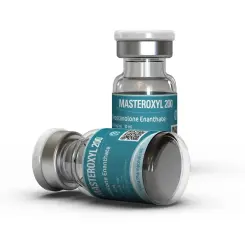
- Enhances muscle definition and hardness.
- Promotes lean muscle retention during cutting.
- Reduces estrogen-related water retention.
- Delivers sustained anabolic and anti-estrogenic effects.
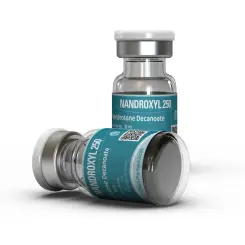
- Promotes lean muscle growth and strength.
- Enhances joint health and recovery.
- Supports sustained anabolic effects.
- Improves nitrogen retention for muscle gains.
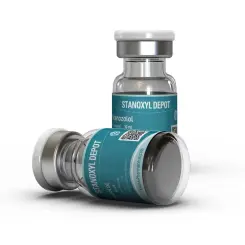
- Enhances muscle definition and hardness.
- Promotes lean muscle retention during cutting.
- Minimizes water retention and bloating.
- Boosts strength for intense workouts.
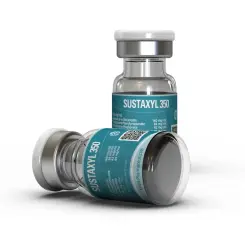
- Promotes significant muscle mass and strength gains.
- Enhances recovery and endurance.
- Supports anabolic environment with minimal injections.
- Delivers sustained testosterone levels.
- Promotes rapid muscle growth and strength gains.
- Enhances fat loss and lean muscle retention.
- Boosts nitrogen retention for anabolic effects.
- Improves vascularity and hardness.