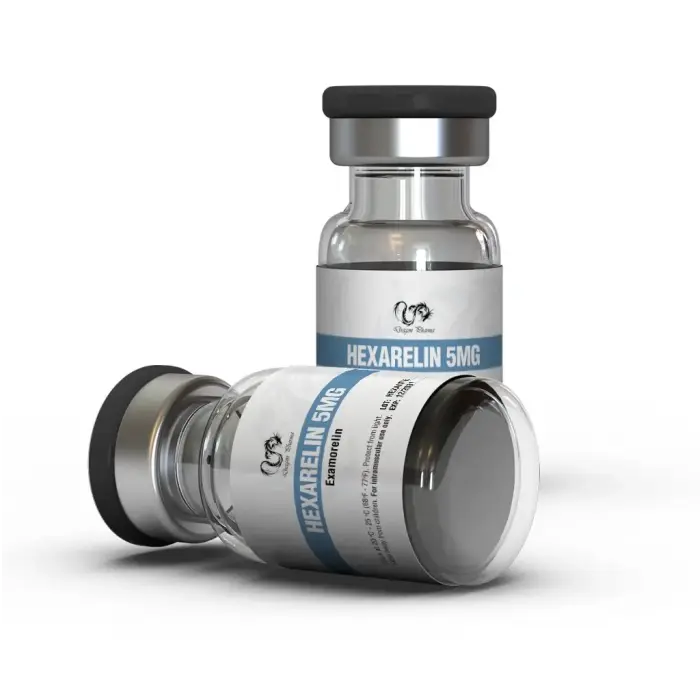
Hexarelin 5 mg Dragon Pharma
Hexarelin 5 mg Dragon Pharma — Overview
Hexarelin 5 mg Dragon Pharma is a synthetic hexapeptide growth hormone–releasing peptide (GHRP) that binds the ghrelin receptor (GHSR-1a) in the pituitary and hypothalamus and triggers a pulsatile surge in endogenous growth hormone. Vial-for-vial, hexarelin produces the strongest acute GH pulse of any GHRP currently available — larger than GHRP-2 and GHRP-6 at equivalent doses — with a characteristic dose plateau near 100–150 mcg per injection beyond which additional volume adds little to GH output. The 5 mg vial provides 50 full doses at 100 mcg each, making it one of the most cost-efficient single-peptide GH secretagogue options available at Steroid Warehouse.
Unlike synthetic growth hormone, hexarelin does not introduce exogenous GH — it stimulates the pituitary's own GH stores to release in a physiological pulse. The GH spike clears within 2–3 hours, IGF-1 rises over the following 24 hours, and the HPG axis is entirely unaffected. No post-cycle therapy is required. Hexarelin also carries a secondary pharmacological action shared with other GHRPs: direct binding to GHS-R receptors on cardiomyocytes, an effect that operates independently of GH release and is under active research for cardiac applications.
About the Compound: Hexarelin
Hexarelin (examorelin) is a synthetic six–amino acid peptide derived structurally from GHRP-6 with modifications that increase its affinity for the growth hormone secretagogue receptor (GHSR-1a). Binding GHSR-1a at the pituitary triggers a rapid, dose-dependent release of GH from somatotroph cells; simultaneously, hexarelin acts at the hypothalamus to suppress somatostatin (the GH–inhibitory hormone), amplifying the net GH pulse through both pathways at once. This dual action — pituitary stimulation plus hypothalamic somatostatin suppression — is why hexarelin produces a larger absolute GH surge than GHRP-2 or GHRP-6 at matched doses, though the response plateaus sharply at approximately 100–150 mcg per injection. Doses above 200 mcg provide no meaningful additional GH release.
GHSR-1a activation also stimulates ACTH release from the pituitary and has downstream effects on cortisol and prolactin — a characteristic tradeoff across all GHRPs except ipamorelin. The magnitude of cortisol and prolactin elevation with hexarelin is moderate and transient, resolving within 2–3 hours of injection. A separate, GH-independent effect of hexarelin — direct GHSR-1a binding on cardiac tissue — has been documented in animal models and early human studies, suggesting cardioprotective mechanisms beyond the IGF-1 pathway, though this is not the primary reason it is used in performance contexts.
What Hexarelin Does
Hexarelin produces a single intense GH pulse per injection. That pulse drives downstream effects through IGF-1 and direct GH action on target tissues. Below is what regular dosing delivers across a structured protocol.
- Pulsatile GH secretion — maximum GHRP amplitude — each injection triggers a GH spike within 15–30 minutes that exceeds the amplitude produced by GHRP-2 or GHRP-6 at the same dose; the pulse duration is short (~2 hours), which means circulating GH normalizes quickly and does not produce the sustained IGF-1 blunting seen with continuous supraphysiological GH exposure
- IGF-1 elevation — repeated GH pulses across 8–16 weeks raise serum IGF-1 into the upper-normal range; IGF-1 mediates the anabolic, connective tissue repair, and lipolytic effects attributed to hexarelin — muscle protein synthesis increases, adipocyte lipolysis increases, and collagen synthesis in tendons and joints is upregulated
- Lean mass retention and modest hypertrophy — GH and IGF-1 together create a mildly anabolic environment without direct androgen receptor activity; hexarelin does not produce the rapid nitrogen-driven hypertrophy of AAS, but it supports lean tissue maintenance, particularly during caloric restriction or alongside aerobic-dominant training
- Body fat reduction — GH directly stimulates hormone-sensitive lipase in adipocytes, accelerating lipolysis; the effect is most pronounced on visceral fat deposits and is amplified by fasted injection timing (pre-bed or pre-workout in a fasted state)
- Recovery and connective tissue repair — collagen synthesis is upregulated under sustained IGF-1 elevation; hexarelin protocols are used for joint and tendon recovery in athletes with chronic load-related injuries where GH-driven collagen turnover is the therapeutic target
- Somatostatin suppression — hexarelin's hypothalamic action partially blunts somatostatin release, allowing subsequent natural GH pulses to be slightly larger during the hours following injection; this amplification effect is part of why hexarelin's absolute GH output exceeds structurally similar GHRPs
Who It's For
Hexarelin is the GHRP of choice for users whose primary goal is maximum pulsatile GH amplitude from a single compound, with the fewest injections per day necessary to achieve that result. At 100–150 mcg per injection, hexarelin delivers a GH pulse that outperforms GHRP-2 and GHRP-6 at equivalent doses, making it the highest-efficiency option per injection for users who want GH secretagogue output with a streamlined protocol.
What sets hexarelin apart from other GHRPs: the combination of superior GH pulse strength with a dose plateau that caps early means users get near-maximum benefit at a conservative dose. There is no value in exceeding 150–200 mcg per injection — the GH response curve flattens, but cortisol and prolactin elevations continue to increase. Ipamorelin does not have this ceiling problem but produces a substantially weaker GH pulse. GHRP-6 matches hexarelin more closely on pulse strength but causes significantly more hunger and appetite dysregulation via its more potent ghrelin signaling. Hexarelin sits at the intersection: strong pulse, manageable hunger, moderate — not absent — cortisol and prolactin tradeoff.
Ideal use cases:
- Athletes in a cutting phase who want maximum GH-driven lipolysis from 2–3 injections per day without hunger amplification (hexarelin's appetite effect is substantially less than GHRP-6's)
- Users running an 8–16 week GH secretagogue cycle who want the highest GH output per injection without stacking two GHRPs or using exogenous HGH
- Athletes in post-injury recovery protocols where GH-driven collagen synthesis is the primary goal and a strong, consistent pulse is preferred over a weaker but cleaner one
- Advanced users who plan to pair hexarelin with a GHRH analog (CJC-1295 DAC Dragon Pharma) for a synergistic GH amplification stack — hexarelin provides the GHRP signal, CJC-1295 provides the sustained GHRH signal, and the combined output is significantly greater than either alone
Who should choose something else: users who are sensitive to cortisol or prolactin elevation, or who are prone to anxiety, water retention, or hormonal volatility, will be better served by Ipamorelin Dragon Pharma, which provides a clean GH pulse with essentially no cortisol or prolactin activity. Users who specifically want aggressive appetite stimulation as part of a mass-building protocol should consider GHRP-6 Dragon Pharma. Users who want sustained GH elevation without multiple daily injections should consider CJC-1295 DAC Dragon Pharma as a standalone or combination protocol.
Hexarelin vs Alternatives
| Compound | Key Differences | Choose Hexarelin When | Choose Alternative When |
|---|---|---|---|
| Ipamorelin Dragon Pharma Selective GHRP — GHSR-1a agonist |
Ipamorelin produces a clean, selective GH pulse with no cortisol or prolactin elevation — the cleanest GHRP profile available; GH pulse amplitude is lower than hexarelin at equivalent doses; no hunger stimulation; virtually no off-target receptor activity; preferred for sensitive users or long protocols where hormonal stability matters | Maximum GH pulse amplitude per injection is the priority; some cortisol/prolactin tradeoff is acceptable; cutting phase where lipolytic output is the key driver | Cortisol or prolactin sensitivity; anxiety or mood volatility on GHRPs; protocols longer than 16 weeks where minimal hormonal disruption is the goal |
| GHRP-2 Dragon Pharma GHRP-2 — GHSR-1a agonist |
GHRP-2 is the closest structural analog to hexarelin with similar GH pulse strength (slightly lower); produces moderate cortisol and prolactin elevation like hexarelin; less hunger stimulation than GHRP-6 but comparable to hexarelin; well-studied in clinical literature; considered interchangeable with hexarelin in many protocols | Maximum GH pulse is required and hexarelin is unavailable; users familiar with GHRP-2 profiles who want a known response | Hexarelin's GH pulse is demonstrably larger at the same dose and the same cortisol/prolactin tradeoff exists either way — hexarelin is the stronger choice at equivalent doses |
| GHRP-6 Dragon Pharma GHRP-6 — GHSR-1a agonist |
GHRP-6 has a slightly weaker GH pulse than hexarelin but the highest ghrelin-mediated appetite stimulation of any GHRP — acute hunger post-injection is significant and consistent; cortisol and prolactin elevation are higher than hexarelin; historically the most studied GHRP in clinical settings; often used in pediatric or medical GH-deficiency contexts | Maximum GH pulse with hexarelin's cleaner hunger profile; cutting phases where appetite control matters | Deliberate appetite amplification during a mass-building phase is part of the protocol goal; anorexia or post-illness appetite restoration contexts |
| CJC-1295 DAC Dragon Pharma GHRH analog — sustained GH elevation |
CJC-1295 DAC acts on the GHRH receptor (not GHSR-1a) — a completely different mechanism; produces a sustained baseline GH elevation over 1–2 weeks per injection rather than acute pulses; does not directly amplify individual GH spikes; best used as a complement to a GHRP (hexarelin + CJC-1295 is a synergistic stack), not as a standalone substitute; different side-effect profile — mainly water retention, no cortisol or prolactin effects | Acute high-intensity GH pulse from a standalone GHRP without committing to a once-weekly GHRH injection; short-duration protocols | A sustained elevated GH baseline across a 12–16 week protocol is the goal; stack hexarelin + CJC-1295 DAC for the maximum combined output from both mechanisms |
Combinations
| Goal | Stack | Protocol / Timing | Notes |
|---|---|---|---|
| Maximum GH output — GHRP + GHRH synergy | Hexarelin + CJC-1295 DAC Dragon Pharma | Hexarelin 100 mcg SubQ 2–3×/day (fasting, pre-bed, pre-workout); CJC-1295 DAC 2 mg SubQ once weekly. Inject hexarelin first, wait 10 min before CJC-1295 DAC if dosing together. Run 12–16 weeks. Vial math: 5 mg hexarelin at 100 mcg × 2/day = 25 days per vial → 3 vials for 12 weeks | CJC-1295 DAC elevates baseline GH between pulses; hexarelin amplifies individual peak spikes. The combined GH output significantly exceeds either compound alone. IGF-1 monitoring at week 4 and week 8 is recommended — the synergistic effect can push IGF-1 into supraphysiological territory at higher hexarelin doses. |
| Advanced lean mass + recovery stack | Hexarelin + Dragontropin HGH Dragon Pharma | Hexarelin 100 mcg SubQ pre-bed daily; Dragontropin 2–4 IU SubQ or IM daily (morning). Keep hexarelin injections separated from HGH injections by 4+ hours to avoid somatostatin-mediated blunting. Run 12–20 weeks minimum for HGH; hexarelin adds the pulsatile GHRP component alongside the exogenous GH baseline | Advanced protocol for athletes seeking maximum tissue remodeling. Monitor fasting IGF-1 and fasting blood glucose closely — combined exogenous HGH + GHRP-driven endogenous GH produces a significant total GH load. Not a starter stack; appropriate only after experience with each compound separately. |
| Body recomposition — GHRP split protocol | Hexarelin (morning/pre-workout) + Ipamorelin Dragon Pharma (pre-bed) | Hexarelin 100 mcg SubQ fasted, 30–45 min pre-workout; Ipamorelin 200–300 mcg SubQ pre-bed. Both injections fasted — no food 2 h before or 30 min after. Run 8–12 weeks | Hexarelin delivers the strongest lipolytic pulse at the point of highest metabolic demand (pre-workout fasted); ipamorelin provides a clean nocturnal GH pulse without cortisol or prolactin interference during the recovery window. The split avoids layering two cortisol-stimulating GHRPs and gives each injection a specific role. |
Side Effects & Management
| Side Effect | Severity | How to Handle It |
|---|---|---|
| Cortisol elevation | Mild–moderate — transient, resolves within 2–3 h post-injection | Hexarelin stimulates ACTH release, leading to a transient cortisol spike that peaks alongside the GH pulse and clears within 2–3 hours. Fasted injection timing (pre-bed or early morning) reduces the overlap of cortisol elevation with the training window. Keeping doses at or below 100–150 mcg per injection limits unnecessary ACTH stimulation beyond the GH plateau. If morning cortisol is consistently elevated on bloodwork, shift injections to pre-bed and review whether dose or frequency needs reduction. |
| Prolactin elevation | Mild — more pronounced at higher doses and on 3×/day protocols | Hexarelin raises prolactin via GHSR-1a downstream signaling — less than GHRP-6 but more than ipamorelin. Prolactin elevation from hexarelin alone is typically mild and clinically insignificant at standard doses; it becomes more relevant when hexarelin is stacked with other prolactin-elevating compounds. If serum prolactin exceeds 25 ng/mL, Caberlin (Cabergoline) 0.25 mg twice weekly is the standard management tool. Reduce hexarelin dose first before adding cabergoline. |
| Mild water retention / edema | Low — dose-dependent | GH-driven sodium and water retention is a class effect of all GH secretagogues. At 100–200 mcg 2×/day, fluid retention is typically minor and primarily noticeable in the hands and ankles in the first 2–4 weeks. No pharmacological management is needed at standard doses. Reduce daily injection frequency to 2×/day if 3×/day produces significant retention. Stays below 150 mcg per injection. Persistent or worsening edema warrants reducing dose before adding any diuretic. |
| Appetite increase / hunger | Low — substantially less than GHRP-6 | Hexarelin activates GHSR-1a, which is also the ghrelin receptor, producing a mild acute hunger surge post-injection in most users. The effect is significantly less pronounced than GHRP-6. It can be used strategically in mass-building phases to support caloric intake but does not typically cause the acute hunger dysregulation associated with GHRP-6. In cutting phases, scheduling injections fasted and avoiding food for 30 min post-injection preserves the lipolytic window and minimizes hunger acting on feeding behavior. |
| GH receptor / pituitary desensitization | Mild — progressive with continuous high-frequency use | Continuous GHSR-1a stimulation at high frequency can reduce pituitary responsiveness over weeks, attenuating the GH pulse amplitude. This is minimized by keeping doses at the effective plateau (100–150 mcg, not higher) and cycling the protocol: 5 days on / 2 days off weekly, or 8–12 weeks on / 4 weeks off between cycles. This maintains receptor sensitivity across longer-term use and keeps IGF-1 in a productive range without plateau fatigue. |
| Blood pressure & resting heart rate elevation | Low — via GH/IGF-1 pathway | GH and IGF-1 have vasodilatory effects that can transiently alter blood pressure and resting HR. At standard hexarelin doses, clinically significant BP changes are uncommon in otherwise healthy users. Self-monitor blood pressure weekly. If sustained systolic >140 mmHg: Amlip (Amlodipine) or Sartel (Telmisartan) as first-line options. Add Ecosprin (Aspirin) 75 mg/day for cardiovascular support on protocols exceeding 12 weeks. |
| Injection site reaction | Low | SubQ injection with a 29–31 G insulin syringe is well-tolerated. At 100 mcg per injection from a 1 mg/mL reconstituted solution, draw volume is 0.1 mL — minimal. Rotate injection sites across abdomen, lateral thigh, and upper arm with each injection. Mild transient bruising or redness may occur; resolves spontaneously. Ensure the vial is fully dissolved before drawing and store reconstituted solution at 2–8°C; discard if cloudy or if particulate matter is visible. |
Bloodwork Monitoring
| Lab | When to Test | Target & Action Threshold |
|---|---|---|
| IGF-1 (fasting) | Baseline → week 4 → week 8–12 | Target: upper-normal range for age (typically 150–300 ng/mL). IGF-1 >350 ng/mL on a standard hexarelin protocol indicates GH stimulation is supraphysiological — reduce dose or frequency before continuing. IGF-1 is the practical proxy for cumulative GH exposure and is the primary monitoring lab on any GH secretagogue cycle. |
| Fasting blood glucose | Baseline → every 4–6 weeks | Target: <100 mg/dL. GH increases insulin resistance by promoting hepatic glucose output and impairing insulin-mediated glucose uptake in skeletal muscle. If fasting glucose rises to 100–109 mg/dL (impaired fasting), review diet and reduce injection frequency. If ≥110 mg/dL, reduce hexarelin dose; consult on adding Glucophage (Metformin) if the increase persists and the protocol must continue. Avoid carbohydrate-heavy meals within 2 h of injections to minimize glucose excursion. |
| Prolactin | Baseline → week 4 → end of cycle | Target: <15–20 ng/mL (male normal range). Hexarelin produces mild prolactin elevation; clinically significant values (>25 ng/mL) are uncommon at 100 mcg doses but can occur at 3×/day protocols. If prolactin is >25 ng/mL, add Caberlin (Cabergoline) 0.25 mg twice weekly and retest at 2–3 weeks. Reduce hexarelin dose or frequency first before relying on cabergoline long-term. |
| Morning cortisol (fasting) | Baseline → week 4 | Target: within normal morning range (6–23 mcg/dL; lab-dependent). Hexarelin transiently elevates cortisol post-injection; if morning cortisol baseline drifts consistently above the normal range, shift injections to pre-bed to minimize overlap with the morning cortisol peak. Chronic supraphysiological cortisol impairs recovery and lean mass accrual — the main reasons to monitor on a GHRP cycle. |
| Blood pressure | Self-monitor weekly throughout cycle | Target: <130/85 mmHg. GH and IGF-1 have complex vascular effects; sustained BP elevation on hexarelin is uncommon but possible. If systolic consistently >140 mmHg: first-line is Amlip (Amlodipine) 5 mg/day or Sartel (Telmisartan) 40 mg/day. Add Ecosprin (Aspirin) 75 mg/day on protocols beyond 12 weeks for cardiovascular support. |
| Resting heart rate | Self-monitor weekly | Target: <80 bpm at rest. GH-driven cardiac output changes can raise resting HR in some users. Persistent tachycardia (>90 bpm at rest) is a signal to reduce hexarelin dose or frequency before any pharmacological management. Not a typical finding at 100 mcg 2×/day but worth tracking on a 3×/day protocol. |
Protocol & Administration
Reconstitution: add 5 mL of bacteriostatic water Dragon Pharma to the hexarelin vial → final concentration 1 mg/mL (1,000 mcg/mL). At this concentration, 100 mcg = 0.10 mL and 200 mcg = 0.20 mL — volumes easily measured with a standard insulin syringe. Inject the water slowly down the inside wall of the vial; swirl gently to dissolve. Do not shake. Store reconstituted vial at 2–8°C; use within 28–30 days. Do not freeze. Discard if cloudy or if the solution contains particulate matter.
Injection technique: SubQ is standard for hexarelin. Use a 29–31 G × 8–12 mm insulin syringe; pinch skin lightly; inject into the abdomen (periumbilical region preferred), lateral thigh, or upper arm. Rotate injection sites with each administration. Always inject fasted — food intake raises somatostatin and blunts the GH pulse. Minimum fast: 2 h before injection, 30 min after before eating.
| Protocol | Dose | Draw Volume (at 1 mg/mL) |
Frequency | Vial Yield | Notes |
|---|---|---|---|---|---|
| Entry / conservative | 100 mcg | 0.10 mL | 2×/day (fasted morning + pre-bed) | 1 vial = 25 days (200 mcg/day ÷ 5 mg) | Standard entry point. Fasted morning injection targets the lipolytic window; pre-bed injection captures the nocturnal GH surge. Most users achieve near-maximum GH response at this dose. |
| Standard | 100 mcg | 0.10 mL | 3×/day (morning, pre-workout fasted, pre-bed) | 1 vial = 16–17 days (300 mcg/day ÷ 5 mg); 3 vials per 8 weeks | Adding a pre-workout injection maximizes anabolic output around the training session. Space injections ≥4 h apart to avoid somatostatin rebound from back-to-back stimulation. Monitor prolactin and cortisol at week 4 on this schedule. |
| High-intensity | 150–200 mcg | 0.15–0.20 mL | 2×/day | 1 vial = 12–17 days; ~4 vials per 8 weeks | GH response plateaus at 150 mcg; 200 mcg adds cortisol and prolactin burden without proportional GH gain. Do not exceed 200 mcg per injection. Requires baseline bloodwork before starting and IGF-1 check at week 4. |
Practical Summary
- Cap each injection at 100–150 mcg — the GH response plateaus there: hexarelin's dose-response curve flattens sharply above 150 mcg per injection; higher doses add cortisol and prolactin burden without a meaningful increase in GH output; 100 mcg 2–3×/day delivers the same or greater total GH effect as 200 mcg twice daily with a cleaner hormonal profile
- Always inject fasted — food kills the GH pulse: eating within 2 hours before an injection raises circulating somatostatin and glucose, both of which blunt pituitary GH response; minimum fast is 2 h pre-injection; wait 30 min post-injection before eating; pre-bed and fasted pre-workout are the two highest-efficiency injection windows
- Space injections ≥4 hours apart: back-to-back injections within 2–3 hours trigger somatostatin rebound that attenuates the second pulse; a 4–6 hour gap between injections allows somatostatin to normalize and restores full pituitary responsiveness for the next dose
- Run a 5-on / 2-off weekly schedule to preserve receptor sensitivity: continuous daily use across 12–16 weeks progressively reduces pituitary GHSR-1a responsiveness; a 2-day weekly break (e.g. weekend off) is sufficient to maintain consistent pulse amplitude throughout the cycle without sacrificing meaningful IGF-1 elevation
- Monitor IGF-1 at week 4 and week 8 — it is the primary safety readout: IGF-1 is the practical proxy for total GH stimulation across the cycle; if it rises above 350 ng/mL at standard doses, reduce frequency before dose; supraphysiological IGF-1 carries long-term tissue growth implications beyond skeletal muscle
- Stack with CJC-1295 DAC Dragon Pharma for compounded output: hexarelin covers acute pulsatile GH spikes; CJC-1295 DAC raises the GH baseline between pulses; combining both — hexarelin 100 mcg 2–3×/day plus CJC-1295 DAC 2 mg once weekly — produces substantially greater total GH and IGF-1 elevation than either compound alone
Hexarelin remains one of the most potent endogenous GH secretagogues available to athletes who want maximum pulsatile GH output without exogenous somatropin. Its GH pulse amplitude exceeds every other GHRP at equivalent doses, it has no effect on the HPG axis, and the 5 mg Dragon Pharma vial provides enough material for multiple weeks of a structured 2×-daily protocol. The tradeoff — mild cortisol and prolactin elevation versus ipamorelin's cleaner profile — is manageable at 100–150 mcg doses with appropriate monitoring. For athletes prioritizing GH amplitude, lipolytic output, and connective tissue support in a single injectable peptide, hexarelin is the straightforward first choice.
References
| Source | Description | Reference |
|---|---|---|
| Journal of Clinical Endocrinology & Metabolism / PubMed | Ghigo et al. 1994 — clinical characterization of hexarelin in healthy adults; documents GH-releasing activity after intravenous, subcutaneous, intranasal, and oral administration; establishes subcutaneous administration as biologically active and defines route-dependent GH response patterns in humans | Ghigo E, et al. (1994) ↗ |
| Life Sciences / PubMed | Deghenghi et al. 1994 — foundational preclinical study characterizing hexarelin GH-releasing activity in infant and adult rats; supports the compound's potent growth hormone secretagogue profile and its relationship to earlier GHRP analogs | Deghenghi R, et al. (1994) ↗ |
| European Journal of Endocrinology / PubMed | Ghigo et al. 1997 — review of growth hormone-releasing peptides covering GHRP-6, GHRP-2, GHRP-1, hexarelin, GH secretagogue pharmacology, clinical GH-release data, and ACTH/cortisol or prolactin co-secretion patterns | Ghigo E, et al. (1997) ↗ |
| Annals of Endocrinology / PubMed | Muccioli et al. 2000 — review of growth hormone-releasing peptides and the cardiovascular system; documents GHRP receptor distribution in peripheral tissues including the heart and describes hexarelin-related GH-independent cardiotropic and cardioprotective effects | Muccioli G, et al. (2000) ↗ |
| Cellular and Molecular Life Sciences / PubMed | Bowers 1998 — landmark review of the growth hormone-releasing peptide class by a key researcher in synthetic GHRP development; covers GHRP discovery, pharmacology, structure-activity relationships, receptor biology, and mechanistic context for compounds such as GHRP-6 and hexarelin | Bowers CY (1998) ↗ |
What is Hexarelin?
Hexarelin is a peptide that stimulates growth hormone release; see What is Hexarelin. It enhances recovery—consult professionals for safe use.
How to use Hexarelin?
Inject 100-200 mcg 1-3 times daily; see How to Use. Use sterile technique—consult for proper administration.
What does Hexarelin do?
It boosts GH for muscle recovery and growth; see Mechanism of Action. It supports performance—monitor with professional guidance.
What are the side effects of Hexarelin?
Side effects include mild injection site reactions or cortisol increase; see Side Effects. Manage with monitoring—consult professionals for safety.
How long does Hexarelin stay in your system?
With a ~55-minute half-life, it's detectable for hours; see Mechanism of Action. Effects are short-lived—consult professionals for cycles.
How long does it take to notice effects from Hexarelin?
Effects vary depending on dosage and individual response. Growth hormone-related changes are typically gradual and depend on consistency of use and overall protocol.
Is Hexarelin stronger than other GHRPs?
Hexarelin is often considered one of the more potent GHRP-class peptides in terms of growth hormone release stimulation compared to similar compounds.
What are the possible side effects of Hexarelin?
Potential effects may include increased hunger, temporary water retention, lethargy, or receptor desensitization with prolonged use depending on protocol.
Related Products