Survodutide
Survodutide Dragon Pharma — Overview
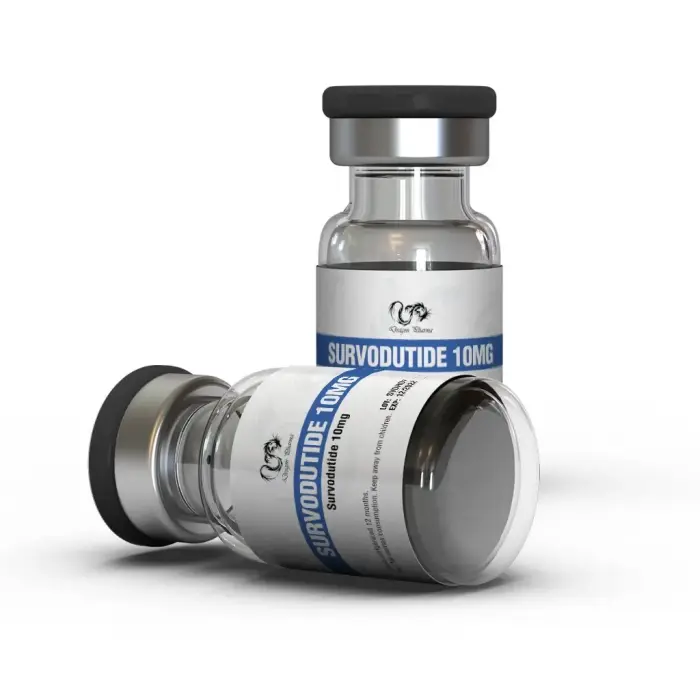
Survodutide Dragon Pharma (also known by its development code BI 456906) is a synthetic peptide dual agonist targeting both the glucagon-like peptide-1 receptor (GLP-1R) and the glucagon receptor (GcgR), supplied as a lyophilized powder at 10 mg per vial. It was developed by Boehringer Ingelheim and has completed Phase 2 clinical trials for obesity and metabolic dysfunction-associated steatohepatitis (MASH), with Phase 3 ongoing. The dual receptor mechanism produces meaningful weight reduction through complementary pathways: the GLP-1R component suppresses appetite and reduces caloric intake, while the GcgR component increases hepatic fatty acid oxidation and total energy expenditure — addressing both the intake and output sides of the energy equation simultaneously.
Compared to pure GLP-1 receptor agonists, the glucagon component provides additional metabolic benefit particularly relevant for users with elevated hepatic fat or poor metabolic flexibility. steroidwarehouse.com carries Survodutide Dragon Pharma as part of its peptide lineup alongside other metabolic and weight-management compounds, with the full lineup available for comparison below.
About the Compound: BI 456906 Mechanism
Survodutide is a co-agonist of two closely related receptors that have opposing effects on blood glucose but complementary effects on body weight and hepatic fat:
- GLP-1 receptor (GLP-1R) agonism — mimics the action of endogenous GLP-1 (glucagon-like peptide-1); reduces appetite by acting on hypothalamic satiety centers; slows gastric emptying, extending the sense of fullness after meals; augments glucose-stimulated insulin secretion; the dominant mechanism for caloric intake reduction
- Glucagon receptor (GcgR) agonism — activates the glucagon receptor in the liver and other tissues; upregulates hepatic fatty acid oxidation (the liver burns more fat for fuel); increases total energy expenditure; promotes lipolysis in adipose tissue; the dominant mechanism for increasing caloric output and reducing hepatic fat accumulation; in isolation, glucagon raises blood glucose, but when combined with GLP-1R agonism the hyperglycemic effect is largely offset
- Net metabolic effect — the combination produces greater total energy deficit than GLP-1R agonism alone; Phase 2 data showed approximately 14% body weight reduction at the 2.4 mg/week dose and up to 19% at 4.8 mg/week over 46 weeks, exceeding what comparable GLP-1 monotherapy achieves at equivalent timepoints; the glucagon component drives particularly notable reductions in hepatic fat, making survodutide relevant for MASH beyond its weight loss application
What Survodutide Does
- Significant weight loss through dual pathway — appetite suppression via GLP-1R reduces caloric intake; enhanced energy expenditure via GcgR increases caloric output; Phase 2 trial data demonstrated 14–19% total body weight reduction over 46 weeks depending on dose; the weight lost is predominantly fat mass with relative preservation of lean mass, consistent with GLP-1-class compounds
- Hepatic fat reduction — the glucagon receptor component drives meaningful reductions in liver fat content; this is pharmacologically distinct from pure GLP-1 agonists and makes survodutide particularly relevant for users with NAFLD or elevated liver fat markers; Phase 2 MASH trial data showed significant reductions in NASH Activity Score and fibrosis markers
- Increased energy expenditure — unlike pure appetite suppressants, the GcgR component raises basal metabolic rate by increasing hepatic thermogenesis and fatty acid oxidation; this metabolic rate increase provides a weight loss mechanism that operates independently of dietary compliance, making the compound more robust than single-pathway agents under real-world conditions
- Glycemic improvement — GLP-1R agonism improves insulin sensitivity and augments glucose-stimulated insulin secretion; meaningful HbA1c reductions observed in patients with type 2 diabetes in Phase 2 data; the glucagon component mildly opposes this but the net effect remains glycemic improvement, especially in hyperglycemic patients
- Cardiovascular risk factor reduction — weight loss-mediated improvements in blood pressure, triglycerides, and LDL are expected and consistent with other GLP-1-class compounds; the cardiovascular outcomes profile is under investigation in ongoing Phase 3 trials
Who It's For
- What sets it apart: Survodutide is distinct from pure GLP-1 agonists (such as semaglutide class compounds) by its active glucagon receptor component, which increases energy expenditure and hepatic fat burning on top of appetite suppression. Pure GLP-1R agonists reduce intake; survodutide reduces intake and increases output simultaneously. The MASH-relevant hepatic fat reduction effect is not seen at comparable magnitude with GLP-1R-only agents, making survodutide more targeted for users with elevated liver fat. The tradeoff is a somewhat higher incidence of GI side effects at escalating doses compared to milder GLP-1 monotherapy agents.
- Best scenario: users targeting significant body weight reduction (>10%) over a 4–6 month protocol; individuals with metabolic syndrome, elevated liver fat (NAFLD), or impaired insulin sensitivity where the dual mechanism provides compounded benefit; users who have had limited response to diet and cardio alone and want a pharmacological adjunct with a strong clinical trial evidence base; research-oriented users monitoring the MASH indication based on emerging Phase 3 data available at Steroid Warehouse.
- Choose something else instead: users seeking modest fat loss for physique finishing without significant bodyweight reduction would find compounds like AOD 9604 lower-risk and more targeted; users with a personal or family history of medullary thyroid carcinoma or multiple endocrine neoplasia type 2 should avoid all GLP-1-class compounds; users with active pancreatitis history should not use this compound; users who are pregnant or breastfeeding; anyone wanting rapid short-cycle results — survodutide requires 16–24+ weeks to reach full effect.
Survodutide vs Alternatives
| Compound | Key Difference | Choose Survodutide When | Choose Alternative When |
|---|---|---|---|
| Mazdutide Dragon Pharma | Also a GLP-1R/GcgR dual agonist with nearly identical pharmacological mechanism; Chinese compound (developed by Innovent/Eli Lilly); different peptide sequence with similar receptor binding profile; both target the same dual pathway for weight loss and hepatic fat reduction; efficacy and side effect profiles are comparable at equivalent doses | BI 456906 clinical trial data specifically supports your use case (obesity or MASH indication based on the Boehringer trial datasets); you prefer the specific pharmacological profile documented in the BI 456906 trials | You have access to Mazdutide at comparable cost and the mechanism difference is not material to your protocol; both compounds deliver GLP-1R + GcgR agonism and the choice may come down to availability |
| Cagrilintide Dragon Pharma | Long-acting amylin analogue; different receptor target (amylin/calcitonin receptor); reduces food intake via central satiety pathways rather than GLP-1R; no glucagon receptor component; no energy expenditure increase; studied in combination with semaglutide (CagriSema) showing additive weight loss effects; milder GI side effect profile than GLP-1 class compounds | You want the dual GLP-1R + GcgR mechanism for its energy expenditure increase and hepatic fat benefit | You want to avoid the GI side effects associated with GLP-1R agonism; you are combining it with a separate GLP-1 agent and need a different receptor class to stack; or you prefer the amylin pathway specifically |
| AOD 9604 Dragon Pharma | HGH fragment 176–191; stimulates lipolysis via beta-3 adrenergic receptors without affecting blood glucose or insulin; much more targeted fat-loss effect with minimal systemic metabolic impact; weaker total weight loss effect than GLP-1/GcgR agonists; no appetite suppression component; suitable for shorter cycles | Significant total body weight reduction (>10%) is the goal and you need a mechanistically comprehensive approach addressing both intake and expenditure | Your goal is localized or modest fat reduction for physique finishing rather than significant weight loss; AOD 9604 carries a lower side effect burden and can be run in shorter protocols |
How to Use: Reconstitution & Dose Escalation
Survodutide Dragon Pharma is supplied as lyophilized (freeze-dried) powder and requires reconstitution with bacteriostatic water before injection. The standard reconstitution and titration protocol mirrors the Phase 2 clinical trial design.
| Step | Detail |
|---|---|
| Reconstitution | Add 2 mL bacteriostatic water to the 10 mg vial; inject the water slowly down the side of the vial — do not shake; swirl gently until fully dissolved; final concentration: 5 mg/mL; store reconstituted vial in the refrigerator at 2–8 °C; use within 28 days of reconstitution |
| Injection site | Subcutaneous injection into the abdomen (at least 2 inches from the navel), front of the thigh, or outer upper arm; rotate sites weekly to avoid localised tissue reaction; inject at room temperature — remove from fridge 15–20 minutes before injection |
| Weeks 1–4 (Titration Phase 1) | 0.3 mg per week; draw 0.06 mL of the 5 mg/mL solution; inject once weekly on the same day each week; this dose is primarily for GI tolerance establishment — clinical weight loss effect is minimal at this stage |
| Weeks 5–8 (Titration Phase 2) | 0.6 mg per week; draw 0.12 mL; increase only if the prior dose was tolerated without significant nausea or vomiting; if GI side effects are persistent, hold at 0.3 mg for an additional 2–4 weeks before escalating |
| Weeks 9–12 (Titration Phase 3) | 1.2 mg per week; draw 0.24 mL; meaningful weight loss typically begins at this dose range; assess tolerability before escalating further |
| Weeks 13+ (Maintenance) | 2.4 mg per week (draw 0.48 mL) is the primary maintenance dose used in Phase 2 trials; 4.8 mg per week (draw 0.96 mL) is the high-dose studied in Phase 2 with greater weight loss but higher GI side effect incidence; most users target 2.4 mg/week as the risk-adjusted effective maintenance dose |
| Vial planning at 2.4 mg/week | 1 vial (10 mg) = approximately 4 weekly doses at maintenance; for a full escalation protocol (weeks 1–16): approximately 2 vials total (18 mg used); ongoing maintenance beyond week 16: approximately 1 vial per month at 2.4 mg/week |
Side Effects & Management
| What May Occur | Background | How to Handle It |
|---|---|---|
| Nausea and vomiting | The most common side effect across GLP-1-class compounds; occurs in the majority of users during dose escalation phases; caused by GLP-1R-mediated slowing of gastric emptying and direct central nausea signaling; the glucagon component may amplify this relative to pure GLP-1 agonists; typically most pronounced in the 24–48 hours following injection and improves as the body adapts | Slow titration is the most effective prevention — never escalate the dose ahead of schedule; eat smaller meals on injection day; avoid fatty or rich food for 4–6 hours post-injection; ginger supplements (tea or capsules) have modest evidence for nausea reduction; if nausea prevents eating entirely or causes repeated vomiting, hold at the current dose for 2–4 additional weeks before re-attempting escalation |
| Diarrhea and loose stools | GLP-1R-mediated change in gut motility; more common during escalation phases; may alter electrolyte balance in severe cases | Adequate hydration; electrolyte supplementation if persistent; dietary adjustment — reduce high-fiber foods around injection day; resolves spontaneously in most users as dose stabilises |
| Elevated heart rate | Glucagon receptor agonism activates cardiac GcgR, increasing heart rate; this is a predictable pharmacodynamic effect of the glucagon component and is dose-dependent; typically a mild increase of 5–10 bpm at therapeutic doses but can be more pronounced in sensitive individuals | Monitor resting heart rate weekly; if sustained resting HR increase >15 bpm above pre-protocol baseline, hold at current dose and reassess; this effect is inherent to the dual mechanism and should be discussed with a healthcare provider if persistent or concerning; note that physical activity tolerance typically improves with weight loss, which offsets the resting HR increase over time |
| Hypoglycaemia (low blood glucose) | Risk is primarily in users with type 2 diabetes already on glucose-lowering medications (insulin, sulfonylureas); in non-diabetic users, the risk is low because GLP-1R-stimulated insulin secretion is glucose-dependent; the glucagon component provides some protective counter-regulation | Non-diabetic users: monitor for dizziness, sweating, or shakiness, particularly if in a caloric deficit; diabetic users: co-ordinate dose adjustments of existing glucose-lowering medications with a healthcare provider before starting survodutide; always carry a fast-acting carbohydrate source during the initial protocol weeks |
| Injection site reactions | Localised redness, bruising, or mild nodule formation at the injection site; common to all subcutaneous peptide injections; more pronounced if the same site is used repeatedly | Strict site rotation — use a different anatomical location each week; allow at least 3–4 weeks before returning to the same specific site; ensure the solution is at room temperature before injecting; use a new needle for each injection |
| Appetite suppression and reduced food intake | The intended primary effect but can become excessive if caloric intake falls below adequate levels for lean mass maintenance; the compound does not distinguish between fat mass and lean mass as energy substrate if intake is severely restricted | Set a minimum daily protein target (1.6–2.0 g/kg body weight) and prioritise protein intake even when appetite is reduced; resistance training supports lean mass preservation during significant weight loss; do not pursue an excessively aggressive caloric deficit alongside the pharmacological appetite suppression |
Monitoring
| Parameter | When to Check | Target & Notes |
|---|---|---|
| Body weight and waist circumference | Weekly weigh-in; waist measurement monthly | Primary efficacy endpoint; expect gradual reduction from week 8–12 onward as dose escalates; 5–10% total body weight loss by week 16 at 1.2–2.4 mg/week is consistent with Phase 2 data; absence of response by week 12 warrants dose review |
| Fasting blood glucose and HbA1c | Baseline; every 12 weeks | Relevant particularly in pre-diabetic and diabetic users; expected improvement with survodutide use; diabetic users on concurrent glucose-lowering medications require more frequent monitoring to adjust dosing and avoid hypoglycaemia |
| Liver function (ALT, AST) | Baseline; week 12; end of protocol | Relevant for MASH users tracking hepatic fat response; GLP-1/GcgR dual agonism is expected to reduce liver enzymes in users with elevated baseline NAFLD; documents response to therapy |
| Lipid panel (triglycerides, HDL, LDL) | Baseline; every 12–16 weeks | Significant weight loss and improved metabolic state consistently improve the lipid profile; triglycerides typically fall most rapidly; HDL improvement follows weight loss over 12–24 weeks |
| Resting heart rate and blood pressure | Weekly (home monitoring) | GcgR agonism causes mild tachycardia; target resting HR <90 bpm; blood pressure typically improves with weight loss and should be tracked as a positive outcome marker; flag sustained HR increase >15 bpm above baseline to a healthcare provider |
| Pancreatic enzymes (amylase, lipase) | Baseline; if abdominal pain develops | GLP-1 class compounds carry a theoretical pancreatitis risk; baseline values and immediate testing if persistent mid-abdominal pain occurs; discontinue immediately and seek medical assessment if lipase >3× ULN with symptoms |
Practical Summary
- Never skip the titration schedule — the 4-week steps at each dose level exist specifically to build GI tolerance; jumping ahead in the escalation is the single most common reason for early discontinuation due to nausea
- The glucagon component increases energy expenditure and hepatic fat oxidation on top of GLP-1R appetite suppression — this dual mechanism produces greater weight loss and metabolic benefit than GLP-1 monotherapy at comparable dose weights
- Store reconstituted vials at 2–8 °C and use within 28 days; do not freeze; bring to room temperature 15–20 minutes before injecting; rotate injection sites every week
- Set a minimum protein intake target (1.6–2.0 g/kg/day) — appetite suppression is strong and some users inadvertently undereat protein, which compromises lean mass retention; resistance training during the protocol significantly improves the fat-to-muscle ratio of weight lost
- Monitor resting heart rate weekly; mild elevation is expected from the GcgR component; sustained increases >15 bpm above baseline warrant dose review
- At 2.4 mg/week maintenance: 1 vial per month; full 16-week escalation protocol uses approximately 2 vials; plan procurement accordingly before starting to avoid interrupting the dose escalation schedule
Survodutide Dragon Pharma (BI 456906) occupies a distinct position among weight-management peptides by combining appetite suppression with a metabolically active glucagon receptor component that independently increases energy expenditure and drives hepatic fat reduction. For users targeting significant body weight reduction of 10% or more over a 4–6 month window — particularly those with elevated liver fat or metabolic syndrome markers — it offers a mechanistically comprehensive option that addresses both sides of the energy balance. Steroid Warehouse carries Survodutide alongside the full Dragon Pharma metabolic peptide range, with the structured dose escalation protocol above providing the framework for safe and effective use.
References
| Source | Topic | Link |
|---|---|---|
| Lancet Diabetes & Endocrinology / PubMed | le Roux et al. 2024 — randomized, double-blind, placebo-controlled, dose-finding phase 2 trial of once-weekly survodutide (BI 456906) in adults with overweight or obesity without diabetes; documents dose-dependent body-weight reduction across 0.6–4.8 mg/week and provides the main clinical evidence base for obesity dosing and tolerability | le Roux CW, et al. (2024) ↗ |
| New England Journal of Medicine / PubMed | Sanyal et al. 2024 — phase 2 randomized trial of survodutide in metabolic dysfunction-associated steatohepatitis (MASH) with fibrosis; key human evidence for MASH improvement and liver-fibrosis endpoints, but separate from the obesity dose-finding trial | Sanyal AJ, et al. (2024) ↗ |
| Life Sciences / PubMed | Spezani & Mandarim-de-Lacerda 2022 — review of dual GLP-1/glucagon receptor agonism; explains the pharmacological rationale for combining GLP-1 receptor activity with glucagon receptor activity for appetite regulation, glucose control, and metabolic effects | Spezani R, Mandarim-de-Lacerda CA (2022) ↗ |
What is Survodutide?
Survodutide is a dual GLP-1/glucagon agonist peptide for weight loss; see What is Survodutide. It enhances fat loss—consult professionals for safe use.
How does Survodutide work?
It activates GLP-1 and glucagon receptors to reduce appetite and boost fat loss; see Mechanism of Action. It delivers significant weight loss—monitor with labs.
Is Survodutide safe?
It's safe with proper dosing and monitoring, but investigational; see Side Effects. Consult professionals for safety due to Phase II status.
What is Survodutide used for?
It's used for weight loss, glucose control, and metabolic health; see Key Benefits. It suits fitness goals—use with professional oversight.
When to take Survodutide?
Inject 0.6-4.8 mg weekly, titrating up; see How to Use. Use with diet and monitoring—consult for tailored plans.
How long does it take to notice effects from Survodutide?
Many users report gradual reductions in appetite and improvements in satiety within the first few weeks, while body composition changes typically develop over a longer period.
What are the main benefits of Survodutide?
Commonly discussed benefits include appetite suppression, enhanced satiety, support for weight loss, improved metabolic health, and assistance with body composition goals.
What are the possible side effects of Survodutide?
Potential side effects may include nausea, vomiting, diarrhea, constipation, bloating, and other gastrointestinal effects commonly associated with incretin-based peptides.
Related Products