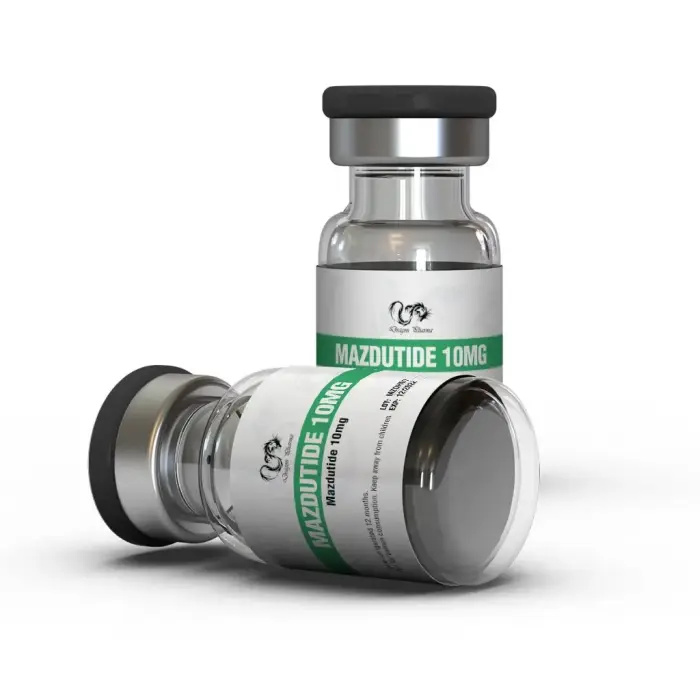
Mazdutide
Mazdutide Dragon Pharma — Overview
Mazdutide Dragon Pharma is a long-acting GLP-1 and glucagon dual receptor agonist designed for once-weekly subcutaneous injection. Unlike single-target GLP-1 agents, mazdutide engages two distinct receptors simultaneously — the GLP-1 receptor, which suppresses appetite and slows gastric emptying, and the glucagon receptor, which increases energy expenditure and promotes fat oxidation. The combination produces both sides of the weight-loss equation: reduced intake and increased output.
Each Dragon Pharma vial contains 10 mg of lyophilized mazdutide. This page covers how the GLP-1/glucagon dual agonist mechanism works, what the compound does in practice, how it compares to other weight-loss peptides, the titration protocol, and side effect management.
About the Compound: Mazdutide
Mazdutide (also designated IBI362) is an engineered peptide analogue of oxyntomodulin — a naturally occurring gut hormone that activates both the GLP-1 receptor and the glucagon receptor. Native oxyntomodulin has a very short half-life of a few minutes and cannot be used therapeutically. Mazdutide incorporates structural modifications and a fatty acid side chain that enables reversible albumin binding in circulation, extending the half-life to approximately 7 days and enabling once-weekly dosing.
The dual receptor pharmacology is the defining feature of mazdutide. GLP-1 receptor activation reduces appetite through central and peripheral satiety signaling, slows gastric emptying, and reduces postprandial glucose excursions. Glucagon receptor activation drives a distinct set of outcomes: increased hepatic glucose production is offset at therapeutic doses by the GLP-1 component, but the thermogenic and lipolytic effects of glucagon signaling are preserved — increasing resting energy expenditure and promoting direct fat oxidation in adipose and hepatic tissue. The net effect is a compound that simultaneously reduces caloric intake and increases the number of calories burned at rest, an advantage over GLP-1-only agents where weight loss is driven predominantly by intake reduction alone.
What Mazdutide Does
Mazdutide produces its effects through simultaneous activation of two receptor systems. The primary outcomes documented in clinical data:
- Appetite and caloric intake reduction — GLP-1 receptor activation in the hypothalamus and brainstem increases satiety signaling and reduces hunger between meals; the effect is sustained throughout the week due to the long half-life; at maintenance doses of 3–6 mg/week, appetite suppression is consistent and dose-dependent
- Increased resting energy expenditure — glucagon receptor activation raises basal metabolic rate by stimulating thermogenesis; this effect is not present with GLP-1-only agents and represents the key mechanistic advantage of dual agonism; energy expenditure increases contribute to weight loss independent of changes in caloric intake
- Direct fat oxidation and lipolysis — glucagon receptor signaling in adipose tissue promotes lipolysis and increases the rate of fatty acid oxidation in both adipose and hepatic tissue; this shifts fuel utilization toward fat and is particularly relevant during a caloric deficit
- Improved glucose and lipid metabolism — GLP-1 receptor activation improves insulin secretion in a glucose-dependent manner; the glucagon component at clinical doses does not elevate fasting glucose when balanced by GLP-1 activity; improvements in fasting glucose, triglycerides, and lipid profiles are documented in trial data
- Body weight reduction — Phase 2 trial data in adults with overweight and obesity shows approximately 10–15% body weight reduction at 24 weeks at the 3–4.5 mg/week dose range; effects are dose-dependent and continue to develop during maintenance phase beyond the titration period
Titration schedule: mazdutide requires a slow dose escalation to allow GI tolerance to develop. The standard protocol starts at 1 mg/week and increases in steps of 1 → 2 → 3 → 4.5 → 6 mg/week every 3–4 weeks. Skipping titration steps significantly increases nausea risk. The 10 mg vial provides approximately 1–2 weeks of supply at maintenance doses (3–6 mg/week) or longer during lower titration steps. Reconstitute with Bacteriostatic Water before use.
Who It's For
- Individuals targeting significant body fat reduction — mazdutide is suitable for adults who are overweight or obese and want a pharmacological tool that addresses both caloric intake and energy expenditure; it is most relevant for those who have reached a plateau with diet and exercise alone, or who need appetite suppression to sustain a caloric deficit
- Users who want more than appetite suppression alone — the glucagon component's thermogenic and lipolytic effects distinguish mazdutide from GLP-1-only agents; for users where caloric restriction alone is the challenge, a GLP-1 agonist such as tirzepatide may be sufficient; mazdutide's additional energy expenditure benefit is most relevant for those with a metabolic profile resistant to deficit-only approaches
- Athletes managing body composition during off-season or recovery phases — mazdutide has no androgenic or estrogenic activity and does not affect the HPG axis; it can be run independently of AAS cycle status, and its fat oxidation properties make it a practical body composition tool for athletes managing weight between training phases
- Users seeking combination weight-loss protocols — because mazdutide targets GLP-1R and GCGR, it can be combined with amylin analogues such as cagrilintide, which operate through a completely separate receptor system; the two mechanisms are additive and non-overlapping, following the same logic as the CagriSema combination data
- Users who should consider alternatives: those whose primary goal is lean mass building or strength performance will see no relevant benefit from mazdutide; those very sensitive to GI side effects may prefer starting with a GLP-1-only agent and adding the glucagon component once tolerance is established
Context & Related Products
Mazdutide belongs to the GLP-1/glucagon dual agonist class. The key distinctions between it and the other major weight-loss peptide classes:
| Product | Receptor Target(s) | Mechanism vs Mazdutide |
|---|---|---|
| Mazdutide (this product) | GLP-1 receptor + glucagon receptor (GCGR) | Reduces appetite via GLP-1 pathway AND increases energy expenditure via glucagon receptor activation; addresses both intake and output simultaneously |
| Tirze-Pep 5 mg / Tirze-Pep 10 mg (Tirzepatide) | GLP-1 receptor + GIP receptor | GIP co-agonism enhances insulin sensitivity and amplifies GLP-1-driven satiety; does not engage the glucagon receptor; produces no thermogenic or direct lipolytic effect; best-in-class for appetite suppression and insulin-mediated metabolic improvement; combining with mazdutide engages overlapping GLP-1 pathways — generally not combined |
| Survodutide | GLP-1 receptor + glucagon receptor (GCGR) | Same receptor class as mazdutide; both are GLP-1/GCGR dual agonists; different molecular structure and half-life; similar mechanistic profile including thermogenesis and fat oxidation via glucagon; not typically combined with mazdutide due to overlapping targets |
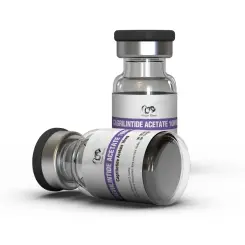
| Cagrilintide | Amylin / calcitonin receptor (AMY) | Operates through a completely separate receptor system; no overlap with GLP-1R or GCGR; produces additive appetite suppression through central amylin pathways; the combination of mazdutide + cagrilintide engages three distinct mechanisms (GLP-1, glucagon, amylin) simultaneously — a high-activity combination for aggressive body composition goals |
Reconstitution supply:
| Product | Why It's Needed |
|---|---|
| Bacteriostatic Water Dragon Pharma | Required for lyophilized peptide reconstitution. Add 1–2 mL per vial; inject the water slowly down the side of the vial and swirl gently — do not shake. Bacteriostatic water preserves the reconstituted solution for 28–30 days refrigerated. For lower weekly doses during titration (1–2 mg), using 2 mL per vial gives a manageable concentration of 5 mg/mL for accurate insulin syringe dosing |
Side Effects & Management
Mazdutide's side effect profile is dominated by GI effects arising from GLP-1 receptor activation and gastric emptying delay. The glucagon component can contribute to mild elevations in heart rate and occasional nausea at higher doses. Slow titration is the primary management tool for this drug class.
| What May Occur | Background | How to Handle It |
|---|---|---|
| Nausea (most common) | Gastric emptying delay and central appetite suppression are the primary drivers; nausea is dose-dependent and peaks at each titration step before GI accommodation develops over 1–2 weeks; the glucagon component may add to nausea at higher doses compared to GLP-1-only agents | Follow the titration schedule strictly — do not skip steps; if nausea is significant at a new dose, hold that dose for 4 additional weeks before the next escalation; small, low-fat meals and avoiding eating close to injection time reduces severity; inject in the evening so peak GI effects occur during sleep |
| Vomiting and diarrhea | Less frequent than nausea but occur with rapid escalation or at higher maintenance doses; diarrhea may reflect altered intestinal motility; both are transient at each dose step in most cases | Step back to the previous tolerated dose if vomiting is persistent; hold for 4 additional weeks before retrying the higher dose; maintain hydration; Prilosec (Omeprazole) can reduce GI discomfort in cases where gastric acid aggravates nausea |
| Elevated heart rate | Both GLP-1 and glucagon receptor activation can increase resting heart rate by 5–10 bpm; typically mild and dose-dependent; more pronounced with the glucagon component than with GLP-1-only agents | Monitor resting heart rate periodically; the elevation is generally well-tolerated in healthy individuals; those with pre-existing cardiac conditions or arrhythmia should track this closely; the effect typically stabilizes at a given dose within 2–3 weeks |
| Injection site reactions | Redness, mild induration, or pain at the subcutaneous injection site; common to all weekly injectable peptides with fatty acid modifications; usually resolves within 1–2 days | Rotate injection sites weekly across abdomen, thigh, and upper arm; use a fine-gauge insulin needle (29–31G); allow the reconstituted solution to reach room temperature before injecting; inject slowly |
| Reduced appetite leading to inadequate nutrition | At effective doses, appetite suppression can be pronounced enough to reduce intake significantly below maintenance; while this drives weight loss, it can result in inadequate protein and micronutrient intake if not managed intentionally | Prioritize protein intake within the reduced caloric budget (target 1.6–2.2 g/kg body weight); consider a comprehensive multivitamin; track food intake during the first weeks at each new dose until the new appetite setpoint is understood |
| Weight regain on discontinuation | Effects are dependent on continued use; appetite returns toward baseline when mazdutide is stopped; weight regain is expected and is not unique to this compound — it applies to all pharmacological weight management agents | Taper dose gradually rather than stopping abruptly; transition to a structured dietary and activity maintenance approach before or during the taper; combining with cagrilintide during the taper phase can partially sustain appetite suppression through the amylin pathway while the GLP-1/glucagon dose is reduced |
References
| Source | Topic | Link |
|---|---|---|
| Nature Communications / PubMed | Ji et al. 2023 — phase 2 randomised controlled trial of once-weekly mazdutide 3 mg, 4.5 mg, and 6 mg in Chinese adults with overweight or obesity; documents clinically meaningful body weight reduction over 24 weeks, GLP-1/glucagon receptor dual agonist pharmacology, tolerability profile, and dose-related metabolic outcomes | Ji L, et al. (2023) ↗ |
| Nature Chemical Biology / PubMed | Day et al. 2009 — preclinical demonstration that a single GLP-1/glucagon dual receptor agonist molecule activates both receptor systems, produces sustained satiation and lipolytic effects, and eliminates diet-induced obesity in rodents; foundational pharmacological rationale for GLP-1/glucagon co-agonism as a weight-management strategy | Day JW, et al. (2009) ↗ |
| Molecular Metabolism / PubMed | Pocai 2014 — review of oxyntomodulin pharmacology covering GLP-1 receptor and glucagon receptor co-activation, appetite regulation, energy expenditure, glucose metabolism, and the therapeutic rationale for oxyntomodulin-based dual agonists in obesity and metabolic disease | Pocai A (2014) ↗ |
| Diabetes / PubMed | Tan et al. 2013 — human study showing that coadministration of GLP-1 during glucagon infusion increases energy expenditure while ameliorating glucagon-induced hyperglycemia; supports the mechanistic rationale for combining GLP-1 receptor activity with glucagon receptor signaling in dual-agonist obesity research | Tan TM, et al. (2013) ↗ |
| Cell Metabolism / PubMed | Drucker 2018 — comprehensive review of GLP-1 mechanisms and therapeutic applications, covering incretin biology, insulin secretion, glucagon suppression, appetite regulation, gastric emptying, cardiovascular effects, and the clinical development of GLP-1-based therapeutic classes | Drucker DJ (2018) ↗ |
What is Mazdutide for men?
Mazdutide for men promotes weight loss and glucose control; see Key Benefits. It suits fat-loss goals—consult professionals for safe use.
What is Mazdutide?
Mazdutide is a dual GLP-1/glucagon agonist peptide; see What is Mazdutide. It enhances metabolism—consult professionals for safe use.
What is Mazdutide used for?
It's used for weight loss and glucose control in fitness and medical contexts; see Key Benefits. It suits men—use with professional oversight.
How to use Mazdutide?
Inject 0.5-9 mg weekly, titrating up; see How to Use. Use sterile technique and diet—consult for tailored plans.
How long does Mazdutide stay in your system?
With a 6-7 day half-life, it's detectable for ~2-3 weeks; see Mechanism of Action. Plan cycles—consult professionals.
How does Mazdutide work?
Mazdutide works by activating GLP-1 receptors to influence appetite and satiety, while also activating glucagon receptors, which may increase energy expenditure and fat utilization.
What are the main benefits of Mazdutide?
Commonly discussed benefits include reduced appetite, improved satiety, potential weight loss support, and enhanced metabolic regulation.
How is Mazdutide different from other GLP-1 compounds?
Mazdutide is unique because it targets both GLP-1 and glucagon receptors, whereas many similar compounds act only on GLP-1 pathways, potentially adding an additional metabolic effect.
Related Products