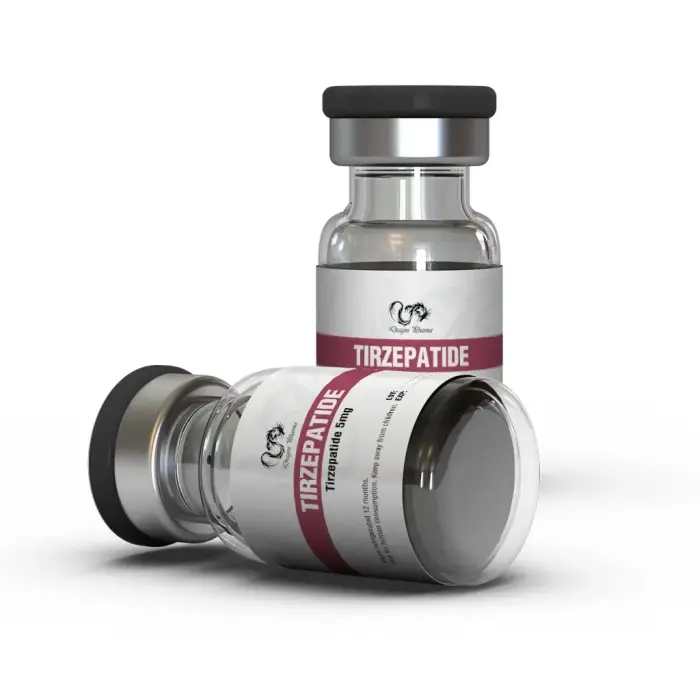
Tirze-Pep 5mg
Tirze-Pep 5mg Dragon Pharma — Overview
Tirze-Pep 5mg Dragon Pharma contains tirzepatide, a synthetic incretin-mimetic peptide that simultaneously activates both the GLP-1 receptor (glucagon-like peptide-1) and the GIP receptor (glucose-dependent insulinotropic polypeptide). This dual-receptor engagement is the defining pharmacological feature that separates tirzepatide from semaglutide and other GLP-1 mono-agonists: GIP receptor activation amplifies the appetite-suppressing and fat-mobilising effects of GLP-1 receptor activation through a complementary mechanism, producing greater weight loss than GLP-1 agonism alone at equivalent doses. The 5 mg vial represents the first full maintenance dose tier in the standard tirzepatide titration protocol and is where most users spend the bulk of their treatment period before stepping up to 7.5 mg or 10 mg if additional weight loss is required.
Clinical trial data places tirzepatide among the most effective pharmacological weight loss agents studied to date, with mean body weight reductions of 15–21% at higher doses in dedicated obesity trials. At the 5 mg tier, meaningful fat mass reduction is achievable with a side effect profile milder than higher doses. Steroid Warehouse carries both the 5 mg and 10 mg Tirze-Pep vials alongside the full Dragon Pharma peptide and body composition lineup.
About the Compound: Dual GLP-1/GIP Receptor Agonism
Tirzepatide is a 39-amino acid synthetic peptide that was engineered as a "twincretin" — a single molecule capable of activating two distinct incretin receptors that are normally stimulated by separate endogenous hormones. Understanding how the two receptor systems work independently, and why combining them produces greater weight loss, explains both the clinical efficacy of tirzepatide and its practical advantages over earlier GLP-1 mono-agonists.
- GLP-1 receptor agonism (shared with semaglutide and liraglutide) — GLP-1 is a gut-derived hormone secreted in response to food intake; it acts on GLP-1 receptors in the hypothalamus to suppress appetite and increase satiety signaling, slows gastric emptying (extending the sensation of fullness after eating), stimulates glucose-dependent insulin secretion from pancreatic beta cells, and suppresses glucagon release; these combined actions reduce total caloric intake and improve post-meal blood glucose management; tirzepatide's GLP-1 receptor binding affinity is approximately equivalent to that of semaglutide, establishing the same foundational appetite suppression mechanism
- GIP receptor agonism (unique to tirzepatide among approved agents) — GIP (glucose-dependent insulinotropic polypeptide) is secreted primarily from the upper small intestine in response to fat and carbohydrate ingestion; GIP receptors are expressed in adipose tissue, the brain, pancreas, and bone; in adipose tissue, GIP receptor activation increases insulin-stimulated glucose uptake and modulates lipid metabolism; in the central nervous system, GIP receptor signaling provides an additional appetite-suppressing signal complementary to but distinct from the GLP-1 pathway; the additive contribution of GIP receptor activation is the primary pharmacological explanation for tirzepatide producing 3–5% more body weight reduction than comparator GLP-1 agonists in head-to-head trials; GIP agonism also appears to improve the tolerability of GLP-1 agonism by attenuating GLP-1-related nausea — part of the reason tirzepatide's GI side effect profile is often milder than semaglutide at doses producing comparable weight loss
- Half-life and dosing pharmacokinetics — tirzepatide has a plasma half-life of approximately 5 days, enabling once-weekly subcutaneous injection; steady-state plasma concentrations are reached within 4–8 weeks of consistent weekly dosing; the long half-life is achieved through fatty acid modification of the peptide backbone (similar to the technique used for semaglutide) which promotes albumin binding, reducing renal clearance; once-weekly dosing provides continuous receptor engagement without the fluctuating peaks and troughs seen with shorter-acting agents; the 5 mg dose represents the second tier in the standard 4-week escalation protocol (2.5 mg for weeks 1–4, then 5 mg from week 5 onward)
- Titration rationale for the 5 mg vial — the 5 mg starting maintenance dose is not arbitrary; clinical trial data across the SURPASS and SURMOUNT programs shows that a meaningful portion of patients achieve their weight loss goals at 5–7.5 mg, particularly users with lower baseline BMI or those using tirzepatide for body composition purposes rather than treatment of severe obesity; for steroidwarehouse.com users applying Tirze-Pep in a bodybuilding or recomp context (where the caloric deficit is deliberately managed alongside training), 5 mg often provides sufficient appetite suppression to support a structured 500–750 kcal daily deficit without the more pronounced GI side effects that appear at higher doses; users requiring greater fat mass reduction can step up to Tirze-Pep 10mg Dragon Pharma after 4 weeks at 5 mg
What Tirze-Pep 5mg Does
- Appetite suppression and reduced caloric intake — the most immediately apparent effect of tirzepatide at 5 mg is a substantial reduction in appetite and hunger drive via central GLP-1 and GIP receptor signaling in the hypothalamus; most users report that meal sizes decrease naturally within the first 1–2 weeks, with a reduced drive to snack between meals and less food noise (intrusive thoughts about eating); for bodybuilders and athletes in a cutting phase, this appetite reduction makes a structured caloric deficit significantly easier to maintain than willpower-based restriction alone; the effect is dose-dependent — 5 mg typically produces appetite suppression that is meaningful but more manageable than the complete appetite blunting some users experience at 10–15 mg
- Progressive fat mass reduction — the SURMOUNT-1 trial at 5 mg demonstrated approximately 15% mean body weight reduction over 72 weeks, with the majority of weight loss coming from fat mass rather than lean tissue; the dual GLP-1/GIP mechanism produces greater fat mobilisation than GLP-1 mono-agonism alone; in a bodybuilding context where tirzepatide is combined with resistance training and adequate protein intake (≥1.6 g/kg), lean mass preservation during fat loss is significantly better than diet alone because both training stimulus and GIP receptor effects on adipose tissue promote preferential fat oxidation; fat loss is not primarily driven by increased energy expenditure (tirzepatide is not a thermogenic) but by reduced caloric intake and improved metabolic substrate utilisation
- Improved insulin sensitivity and glucose regulation — both GLP-1 and GIP receptor activation improve the efficiency of insulin-stimulated glucose uptake; tirzepatide at 5 mg produces clinically significant reductions in fasting glucose and HbA1c even in non-diabetic users; for performance athletes and bodybuilders, improved insulin sensitivity has practical benefits: better nutrient partitioning (more dietary carbohydrate directed to muscle glycogen rather than adipose storage), reduced post-meal blood glucose spikes, and reduced baseline insulin levels during the fat loss phase; these metabolic improvements are partially independent of the weight loss itself and begin within the first few weeks of use
- Lipid profile improvement — clinical data consistently shows tirzepatide improving the lipid panel in a direction opposite to most anabolic-androgenic compounds: total cholesterol, LDL, and triglycerides decrease while HDL rises; for users running concurrent AAS cycles that suppress HDL, Tirze-Pep provides a partially offsetting metabolic benefit; the lipid improvements are proportional to weight loss achieved and appear within 8–12 weeks of consistent use
- Slowed gastric emptying and modified eating behaviour — GLP-1 receptor activation slows the rate at which food leaves the stomach, extending post-meal satiety; this is a mechanistic feature, not a side effect, but it does change the pattern of eating for most users: smaller meals feel satisfying for longer, large meals feel uncomfortable, and appetite for energy-dense foods (high fat + high carbohydrate combinations) typically decreases; in a training context, the slower gastric transit requires adjustment of pre- and intra-workout nutrition timing — eating a large meal 30–45 minutes before training becomes uncomfortable at 5 mg; most users shift to smaller, faster-digesting pre-workout nutrition (protein shakes, easily digested carbohydrates) rather than full meals
Who It's For
- What sets Tirze-Pep 5mg apart from single-receptor GLP-1 agonists: the GIP receptor co-agonism produces approximately 3–5% additional body weight reduction compared to GLP-1 mono-agonists (such as semaglutide) at doses producing comparable GI side effect profiles; GIP agonism also appears to attenuate GLP-1-related nausea, making dual agonists better tolerated for the degree of weight loss they produce; at 5 mg specifically, users get the dual receptor benefit at a dose tier where GI side effects are less prominent than at 10–15 mg; compared to Survodutide Dragon Pharma (GLP-1/glucagon dual agonist), Tirze-Pep's GIP component makes it more relevant to adipose tissue directly and provides a stronger insulin-sensitising benefit; compared to AOD-9604 Dragon Pharma (HGH fragment 176-191 targeting fat cell lipolysis locally), Tirze-Pep works systemically through appetite and metabolic pathways rather than direct fat cell activation
- Best scenario: intermediate-to-advanced bodybuilders and athletes who want pharmacological support for a cutting or recomp phase with a weekly injection cadence rather than daily peptide protocols; users who have tried caloric restriction alone or thermogenic-only approaches and want a different mechanism (appetite suppression + metabolic) rather than stimulant-based fat burning; users coming off a bulking AAS cycle who need to manage rebound appetite and fat regain during the transition to a maintenance or cut phase; users who want meaningful fat loss without the cardiovascular stimulant side effects of clenbuterol or thyroid-based protocols; users at 5 mg who have completed the initial 2.5 mg titration and want to hold at this dose tier before deciding whether to step up to Tirze-Pep 10mg
- Choose something else instead: users wanting rapid short-term thermogenic fat loss rather than progressive appetite-based weight reduction — Clenbuterol Dragon Pharma or T3 Dragon Pharma work through metabolic rate mechanisms that produce faster initial results but carry different risks and require cycling; users who cannot tolerate GI effects even at low doses (some users find nausea from GLP-1 agonism intolerable regardless of dose); users looking for spot-specific fat reduction or recovery-focused effects — AOD-9604 targets fat cell lipolysis more directly with minimal systemic appetite effects; users on insulin therapy should note that tirzepatide's glucose-lowering action combined with exogenous insulin significantly elevates hypoglycaemia risk and requires careful glucose monitoring
Tirze-Pep 5mg vs Alternatives
| Compound | Key Differences | Choose Tirze-Pep 5mg When | Choose Alternative When |
|---|---|---|---|
| Tirze-Pep 10mg Dragon Pharma Tirzepatide 10 mg/vial |
Same compound and mechanism; higher vial strength covers the 7.5–10 mg dose tier and above; at 10 mg, weight loss is approximately 3–5% greater than at 5 mg in clinical data but GI side effects (nausea, vomiting, constipation) are more pronounced; the 10 mg vial is more cost-effective per milligram for users running ≥7.5 mg per week; stepping from 5 mg to 7.5 mg still uses the 5 mg vial (requiring partial dosing); moving to 10 mg weekly requires the 10 mg vial | 5 mg dose is providing sufficient appetite suppression and weight loss progress; GI tolerance at 5 mg is good and stepping up is not necessary; or the user is in an early titration phase using 5 mg as the current step | Weight loss has plateaued at 5 mg and titration to 7.5–10 mg is planned; or the user requires higher doses for the degree of fat loss needed; or cost-per-mg at higher doses is a factor |
| Survodutide Dragon Pharma GLP-1/GcgR Dual Agonist |
Survodutide co-activates GLP-1 and glucagon receptors (GcgR) rather than GLP-1 and GIP; the GcgR component increases energy expenditure (thermogenic effect) by activating liver fat oxidation and brown adipose tissue, whereas Tirze-Pep's GIP component primarily improves adipose insulin sensitivity and amplifies appetite suppression; survodutide produces more pronounced thermogenic/hepatic fat-burning effects; tirzepatide provides stronger insulin sensitisation, making it more appropriate when metabolic health improvement alongside weight loss is a goal; both are once-weekly SC peptides | Insulin sensitivity improvement is a priority alongside fat loss; GIP receptor benefit (adipose tissue, muscle insulin uptake) is specifically wanted; or prior GLP-1 agonist experience is the reference point for comparison | A thermogenic energy expenditure component (not just appetite suppression) is specifically wanted; or the glucagon receptor mechanism is preferred based on prior use; or survodutide's specific hepatic fat-burning profile is a goal |
| AOD-9604 Dragon Pharma HGH Fragment 176-191 · 5 mg |
AOD-9604 is a peptide fragment of human growth hormone that activates fat cell β-3 receptors to stimulate lipolysis specifically in adipose tissue, without the IGF-1-raising or blood glucose effects of full HGH; it does not suppress appetite, does not slow gastric emptying, and has no GI side effects; it is administered daily (SC) rather than weekly; AOD-9604 produces targeted fat mobilisation in adipose tissue directly, whereas tirzepatide works primarily through central appetite suppression and systemic insulin sensitisation; their mechanisms are complementary rather than competing, which is why they are often stacked | Appetite suppression + insulin sensitisation are the primary goals; the GLP-1/GIP systemic mechanism is preferred over direct fat cell activation; or weekly dosing convenience is important | GI side effects from GLP-1 agonists are not tolerable; appetite suppression is not the main limiting factor (training hunger is manageable); or a daily injectable protocol targeting fat cells directly is preferred; or AOD is being stacked alongside Tirze-Pep for complementary lipolytic mechanisms |
| Cagrilintide Dragon Pharma Long-Acting Amylin Analog |
Cagrilintide is a synthetic analog of amylin, a pancreatic hormone co-secreted with insulin; amylin activates separate satiety receptors in the brainstem (area postrema) and hypothalamus, providing additive appetite suppression through a pathway distinct from GLP-1 and GIP; cagrilintide does not slow gastric emptying, does not affect insulin secretion, and does not target adipose tissue insulin sensitivity; it is synergistic with tirzepatide rather than redundant (different receptor systems, different satiety pathways); the CagriSema (cagrilintide + semaglutide) clinical trial demonstrated that combining an amylin analog with a GLP-1 agonist produces greater weight loss than either alone, which provides the mechanistic rationale for combining cagrilintide with tirzepatide | Appetite suppression at 5 mg tirzepatide alone is insufficient and GI side effects prevent stepping up to 10 mg; adding a complementary amylin-pathway satiety signal is preferred over simply increasing the GLP-1/GIP dose | Tirze-Pep 5 mg alone is providing adequate appetite suppression; simplicity of a single weekly peptide is preferred; or the cagrilintide amylin mechanism is not specifically needed |
Combinations
| Goal | Stack | Notes |
|---|---|---|
| Standalone fat loss / recomp | Tirze-Pep 5mg 5 mg/wk SC + structured caloric deficit (500–750 kcal/day below maintenance) + resistance training | For most non-advanced users, Tirze-Pep 5mg as a standalone produces meaningful fat loss without additional pharmacological compounds; the appetite suppression effect reduces the effort required to maintain the caloric deficit, making it sustainable over 16–24 weeks; training must remain consistent — GLP-1/GIP agonism preserves lean mass better when resistance training is maintained than when cardio-only approaches are used; adequate protein intake (≥1.6 g/kg bodyweight) is non-negotiable for lean mass preservation during the deficit; this approach is appropriate as an entry point before considering multi-compound stacks |
| Muscle-sparing cut (with AAS base) | Tirze-Pep 5mg 5 mg/wk + Enantat 250 Dragon Pharma 200–300 mg/wk + Aromasin Dragon Pharma 12.5 mg EOD | Adding a low-dose testosterone base during an aggressive Tirze-Pep-driven cut protects lean mass through androgen receptor signaling, which maintains muscle protein synthesis rates even in a significant caloric deficit; at 200–300 mg/week of Enantat 250, the primary benefit is lean mass preservation rather than hypertrophy; Aromasin manages E2 from the testosterone component; the combination allows a more aggressive caloric deficit (750–1,000 kcal below maintenance) than either compound alone would support sustainably; libido and energy are also maintained better with a testosterone base when appetite suppression from Tirze-Pep creates a sustained energy deficit; full PCT is required after the testosterone cycle |
| Accelerated fat loss (thermogenic stack) | Tirze-Pep 5mg 5 mg/wk + T3 Dragon Pharma 25–50 mcg/day + Clenbuterol Dragon Pharma 40–80 mcg/day (2-week on/off) | T3 elevates metabolic rate by increasing basal cellular oxygen consumption; Clenbuterol drives beta-2-mediated thermogenesis and mild lipolysis; Tirze-Pep suppresses the compensatory increase in appetite that both T3 and Clenbuterol typically trigger (a major practical limitation of thermogenic-only fat loss protocols); the combination targets three distinct fat loss pathways simultaneously: appetite (GLP-1/GIP), thyroid metabolic rate (T3), and beta-adrenergic thermogenesis (Clenbuterol); this is an aggressive stack suited to experienced users in pre-competition or aggressive recomp phases; cardiac output monitoring (resting heart rate, BP) is important as both T3 and Clenbuterol are cardio-stimulant while tirzepatide modestly elevates resting heart rate; avoid this combination if resting heart rate is already above 80 bpm |
| Complementary lipolytic mechanisms | Tirze-Pep 5mg 5 mg/wk + AOD-9604 Dragon Pharma 300 mcg/day SC | AOD-9604 (HGH fragment 176-191) activates beta-3 receptors on fat cells to stimulate lipolysis directly at the adipose tissue level — a mechanism completely separate from Tirze-Pep's central appetite suppression and systemic insulin sensitisation; the two peptides address fat loss from different directions without overlapping mechanisms; AOD-9604 does not affect appetite, insulin, or gastric motility; the combination is well-suited to users who want to layer fat cell-level lipolytic activation on top of the appetite management provided by Tirze-Pep; administration is compatible: AOD-9604 is administered daily SC while Tirze-Pep is once weekly; AOD-9604 has no HPG axis effect and requires no PCT |
| Dual satiety pathway stack | Tirze-Pep 5mg 5 mg/wk + Cagrilintide Dragon Pharma 0.3–0.6 mg/wk SC | Cagrilintide is a long-acting amylin analog that activates brainstem and hypothalamic satiety receptors through the amylin pathway — entirely distinct from GLP-1 and GIP receptor signaling; adding cagrilintide to Tirze-Pep 5mg provides additive satiety through a second central mechanism without increasing GLP-1/GIP receptor load, which would otherwise amplify GI side effects; this is the approach validated in the CagriSema program (semaglutide + cagrilintide), where the combination produced greater weight loss than either alone; the rationale for combining with tirzepatide is mechanistically analogous; cagrilintide titration should begin at 0.3 mg/week and be stepped up cautiously; GI tolerance should be assessed before increasing either compound |
Side Effects & Management
| What May Occur | Background | How to Handle It |
|---|---|---|
| Nausea and vomiting | The most commonly reported side effect of tirzepatide and all GLP-1 receptor agonists; caused primarily by GLP-1 receptor activation in the GI tract and brainstem, slowing gastric emptying and triggering nausea centres; at 5 mg, nausea is typically mild-to-moderate and peaks in the first 24–48 hours after injection; severity decreases progressively as tolerance develops over 4–8 weeks; nausea is more pronounced when dose escalation is too rapid, when meals are eaten too quickly after injection, or when high-fat meals are consumed during the first 48 hours post-injection; vomiting is less common at 5 mg than at 10–15 mg | Inject in the evening to sleep through peak nausea window; eat smaller, slower meals for 48 hours post-injection; avoid high-fat, high-calorie meals immediately after injection day; Prilosec (Omeprazole) 20 mg or Protonix (Pantoprazole) 40 mg taken 30 minutes before meals on injection day reduces acid-related GI discomfort; ginger tea or ginger capsules (500–1,000 mg) can attenuate mild nausea naturally; if nausea is severe or persistent beyond week 4, do not escalate the dose and reassess after 2 additional weeks at the same dose; most users report nausea is manageable and transient |
| Diarrhoea and loose stools | GLP-1 receptor activation in the enteric nervous system alters gut motility; in some users this accelerates lower GI transit rather than slowing upper GI transit, producing loose stools or diarrhoea in the 12–72 hours post-injection; this pattern is more common in users who are sensitive to GI motility changes; diarrhoea at 5 mg is generally mild and self-limiting; it tends to improve after the first 4–6 weeks of stable dosing as the gut adapts to consistent GLP-1/GIP receptor engagement | Maintain adequate hydration on injection day and the following day; reduce dietary fibre intake temporarily if bowel symptoms are severe; electrolyte replacement (sodium, potassium, magnesium) is important if diarrhoea is frequent; if loose stools are persistent, temporarily shift injection day to allow assessment of the 72-hour GI window during low-training days; most users find that bowel symptoms normalise within 4–6 weeks without any pharmacological intervention |
| Constipation | Gastric emptying slowing from GLP-1 receptor activation extends through the entire GI tract in some users, reducing bowel movement frequency; constipation is less common than nausea at 5 mg but can be more persistent; it tends to develop over the first 2–4 weeks as the GI tract adapts to slower transit; inadequate fibre and fluid intake amplifies constipation risk during tirzepatide use; users who experience both nausea (upper GI) and constipation (lower GI) simultaneously are responding to the full GI motility-slowing effect of GLP-1 agonism | Increase daily water intake to at least 2.5–3 L; maintain 25–35 g/day of dietary fibre from low-energy sources (vegetables, psyllium husk); light cardio (walking, 30–45 minutes daily) stimulates GI motility; if constipation persists beyond 3 weeks: consider a fibre supplement (psyllium, methylcellulose) or osmotic laxative (MiraLax/polyethylene glycol) as a short-term measure; do not use stimulant laxatives repeatedly as they can impair long-term bowel function |
| Blood glucose changes — hypoglycaemia risk | Tirzepatide's insulin-stimulating effects are glucose-dependent — meaning it only drives insulin secretion when blood glucose is elevated; this makes standalone tirzepatide use a very low hypoglycaemia risk in non-diabetic users; however, when combined with exogenous insulin, sulfonylureas, or other insulin secretagogues, the combined glucose-lowering effect significantly raises hypoglycaemia risk; in the bodybuilding context, users who use insulin for nutrient partitioning post-workout need to reduce insulin doses substantially when adding tirzepatide; blood glucose monitoring is mandatory in this combination; additionally, very aggressive caloric restriction during tirzepatide use can produce mild hypoglycaemia in some users, particularly after fasted training sessions | For non-diabetic users not using exogenous insulin: standard blood glucose monitoring (fasting glucose at baseline and at 4 weeks) is sufficient; consume a fast-digesting carbohydrate source pre-workout if training fasted during the caloric deficit; for users combining with exogenous insulin: reduce insulin dose by 20–30% when initiating tirzepatide and monitor blood glucose at every meal until the dose interaction is characterised; Glucophage (Metformin) 500–1,000 mg/day is sometimes added to further enhance insulin sensitivity in metabolically managed cutting protocols but requires blood glucose monitoring to avoid additive lowering effects |
| Resting heart rate elevation | GLP-1 receptor agonists modestly increase resting heart rate; the mean increase observed across tirzepatide clinical trials was approximately 3–6 bpm at therapeutic doses; this effect appears within the first 2–4 weeks and tends to plateau; the mechanism involves GLP-1 receptor-mediated sympathetic nervous system activation and direct cardiac chronotropic effects; in most healthy users this is a minor finding with no clinical consequence; in users already combining tirzepatide with thermogenic agents (T3, Clenbuterol), the additive heart rate effects require monitoring; users with baseline resting heart rate above 85–90 bpm should exercise caution before combining tirzepatide with beta-2 agonists or thyroid hormones | Monitor resting heart rate (upon waking, before exercise) weekly for the first 4 weeks; if resting heart rate increases more than 10 bpm above baseline or exceeds 90 bpm consistently: do not add thermogenic agents and reassess the need for dose adjustment; cardiovascular training (zone 2 cardio, 3–4×/week) effectively manages mild resting heart rate elevation through increased parasympathetic tone; severe or symptomatic heart rate elevation (palpitations, chest discomfort) warrants cessation and medical assessment |
| Injection site reactions | As with all SC-injected peptides, mild local reactions at the injection site (redness, swelling, bruising, itching) can occur; these are typically minor with a properly reconstituted and correctly administered peptide; reactions are more common if bacteriostatic water is used in excess concentration, if injection depth is insufficient (intradermal rather than subcutaneous), or if the same site is used repeatedly without rotation; tirzepatide-related injection site reactions are generally milder than those reported with some other SC peptides because the injection volume is small | Rotate injection sites systematically (abdomen left/right, thigh left/right, alternate each week); inject into subcutaneous fat at a 45–90 degree angle depending on site depth; use a short, fine-gauge insulin needle (29–31 gauge, 4–8 mm) for all SC injections; allow reconstituted solution to reach room temperature before injecting; avoid injecting into areas of lipodystrophy, scarring, or active inflammation; mild local redness resolving within 24–48 hours requires no intervention |
Practical Summary
- Begin at 2.5 mg/week for the first 4 weeks regardless of target dose — titration is not optional; starting at 5 mg without the 2.5 mg adaptation period significantly increases nausea and GI side effect severity; the 5 mg vial can be halved to provide the 2.5 mg starting dose using a calibrated insulin syringe
- Inject once weekly, on the same day each week; inject in the evening to allow sleep through the first 12–24 hour nausea window; rotate sites (abdomen, thigh) with each injection; do not inject into the same site in consecutive weeks
- Adequate protein intake (≥1.6 g/kg bodyweight per day) is essential — Tirze-Pep 5mg reduces overall appetite, which makes hitting protein targets effortlessly easy to underachieve; prioritise protein in every meal even when total food volume is reduced; lean mass loss during tirzepatide use is primarily driven by protein insufficiency, not by the peptide itself
- Blood glucose: test fasting glucose at baseline and at week 4; users combining Tirze-Pep with exogenous insulin must reduce insulin doses by 20–30% at initiation and monitor blood glucose at every meal until the dose interaction is understood; do not combine with insulin without a clear glucose monitoring protocol in place
- Resting heart rate: check weekly for the first month; if combining with T3 or Clenbuterol, verify resting heart rate is below 80 bpm before adding thermogenic agents to the stack; monitor resting heart rate throughout the combination protocol
- No PCT is required after stopping Tirze-Pep; tirzepatide does not suppress the HPG axis, does not alter endogenous testosterone, LH, or FSH, and has no hormonal rebound effect upon cessation; weight loss achieved during the treatment period is partially maintained if dietary habits established during use are continued after stopping
Tirze-Pep 5mg Dragon Pharma brings the dual GLP-1/GIP receptor mechanism of tirzepatide to the body composition toolkit in a weekly subcutaneous format that integrates cleanly with both standalone fat loss protocols and concurrent AAS or peptide stacks. At the 5 mg dose tier, users access meaningful appetite suppression, progressive fat mass reduction, and insulin sensitivity improvement with a GI side effect profile that is generally more manageable than higher dose tiers. For competitive athletes and bodybuilders seeking pharmacological support for a structured cut, the combination of central satiety control and adipose-level metabolic improvement makes Tirze-Pep one of the most mechanistically comprehensive fat loss options available at steroidwarehouse.com without the cardiovascular demands of stimulant-based thermogenic protocols.
References
| Source | Topic | Link |
|---|---|---|
| New England Journal of Medicine / PubMed | Jastreboff et al. 2022 (SURMOUNT-1) — phase 3 RCT of tirzepatide 5, 10, and 15 mg/week in adults with obesity or overweight without diabetes; 72-week weight reduction of 15.0%, 19.5%, and 20.9% respectively versus 3.1% placebo; primary evidence base for tirzepatide efficacy in non-diabetic obesity | Jastreboff AM, et al. (2022) ↗ |
| New England Journal of Medicine / PubMed | Frías et al. 2021 (SURPASS-2) — phase 3 head-to-head RCT comparing tirzepatide 5, 10, and 15 mg versus semaglutide 1 mg in type 2 diabetes; tirzepatide demonstrated superior HbA1c reduction and body weight loss at all doses; useful evidence for dual GIP/GLP-1 agonism compared with GLP-1 mono-agonism in this population | Frías JP, et al. (2021) ↗ |
| JCI Insight / PubMed | Willard et al. 2020 — pharmacological characterization of tirzepatide as an imbalanced and biased dual GIP and GLP-1 receptor agonist; covers receptor signaling, in vitro pharmacology, and in vivo metabolic data relevant to understanding its dual-incretin mechanism | Willard FS, et al. (2020) ↗ |
| Lancet / PubMed | Rosenstock et al. 2021 (SURPASS-1) — 40-week phase 3 RCT of tirzepatide monotherapy in type 2 diabetes; documents dose-dependent HbA1c reduction and body-weight loss across the 5–15 mg once-weekly dose range | Rosenstock J, et al. (2021) ↗ |
| JAMA / PubMed | Aronne et al. 2024 (SURMOUNT-4) — randomized withdrawal trial in adults with obesity or overweight; continued tirzepatide treatment maintained and augmented weight reduction, while switching to placebo led to substantial weight regain after the lead-in period | Aronne LJ, et al. (2024) ↗ |
What is Tirze-Pep 5mg?
Tirze-Pep 5mg is an injectable dual GLP-1/GIP agonist (Tirzepatide) for weight loss; see What is Tirze-Pep 5mg. It enhances fat loss—consult professionals for safe use.
Is there anything stronger than Tirze-Pep 5mg?
Retatrutide or DNP may be stronger but riskier; see Is There Anything Stronger Than Tirze-Pep 5mg. Consult professionals for alternatives.
How much Tirze-Pep 5mg for bodybuilding?
2.5-15 mg/week, titrating up; see How Much Tirze-Pep 5mg for Bodybuilding. Start at 2.5 mg—consult professionals for dosing.
How does Tirze-Pep 5mg work?
It activates GLP-1/GIP receptors to reduce appetite and boost fat loss; see Mechanism of Action. It delivers significant weight loss—monitor with labs.
What is Tirze-Pep 5mg used for?
It's used for weight loss and glucose control; see Key Benefits. It suits fitness goals—use with professional oversight.
Is Tirze-Pep 5mg used for fat loss?
Yes. Tirze-Pep 5mg is primarily associated with fat-loss and weight-management due to its strong effects on appetite and calorie intake regulation.
What are the possible side effects of Tirze-Pep 5mg?
Potential side effects may include nausea, vomiting, diarrhea, constipation, reduced appetite, and general gastrointestinal discomfort, especially during dose adjustments.
What makes Tirze-Pep 5mg different from other GLP-1 peptides?
Tirzepatide is unique because it targets both GIP and GLP-1 receptors, making it more metabolically comprehensive than single-pathway GLP-1 compounds.
Related Products