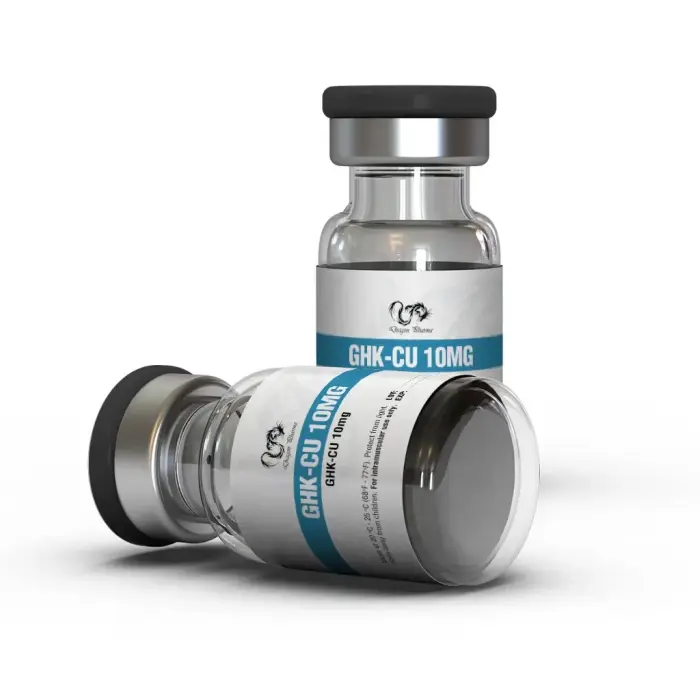
GHK-CU 10 mg
GHK-Cu Dragon Pharma — Overview
GHK-Cu Dragon Pharma delivers 10 mg of glycyl-L-histidyl-L-lysine copper(II) per vial — a naturally occurring human tripeptide with high affinity for copper(II) ions that plays a central role in tissue repair, skin remodeling, collagen synthesis, and hair follicle maintenance. GHK-Cu is present in human plasma at birth and declines progressively with age, correlating with the reduction in regenerative capacity observed in older tissue. The synthetic injectable form restores or exceeds youthful plasma concentrations and activates a broad range of repair and anti-aging pathways.
This page covers the mechanism of action, practical use cases, comparison with other repair peptides, reconstitution and dosing protocol, side effect profile, and how to cycle GHK-Cu effectively. GHK-Cu Dragon Pharma is available at Steroid Warehouse alongside BPC-157, TB-500, and the full Dragon Pharma peptide range.
About the Compound: GHK-Cu
GHK-Cu (glycyl-L-histidyl-L-lysine copper(II)) is a tripeptide–copper complex first isolated from human plasma albumin by Loren Pickart in 1973. In healthy young adults, plasma GHK-Cu concentrations reach approximately 200 ng/mL; by age 60 this falls to roughly 80 ng/mL — a drop that parallels the progressive loss of regenerative tissue capacity observed with aging. The copper(II) ion is not incidental: GHK chelates Cu²⁺ with high affinity and functions as a biological copper chaperone, delivering copper to copper-dependent enzymes such as lysyl oxidase (collagen and elastin cross-linking), superoxide dismutase-1 (antioxidant defense), and cytochrome c oxidase (mitochondrial function).
At the molecular level, GHK-Cu operates through several parallel pathways: it modulates matrix metalloproteinase (MMP) and tissue inhibitor of metalloproteinase (TIMP) expression for balanced extracellular matrix turnover; activates TGF-β and FGF signaling for fibroblast proliferation; stimulates VEGF for angiogenesis; and suppresses the NF-κB inflammatory cascade. This breadth of signaling influence is why GHK-Cu produces effects across skin, hair, bone, lung, gut, and neural tissue — rather than acting on a single receptor or pathway.
The Dragon Pharma 10 mg vial is supplied as lyophilized powder requiring reconstitution with bacteriostatic water before injection. A 50 mg vial is also available for longer runs or higher-dose protocols.
What GHK-Cu Does
GHK-Cu acts simultaneously on multiple tissue repair and remodeling pathways. Its effects are additive and occur across different organ systems — unlike most peptides whose mechanism is confined to a single receptor class:
- Collagen and elastin synthesis — stimulates fibroblasts to upregulate collagen types I and III and elastin production; also activates lysyl oxidase (copper-dependent) for proper cross-linking; the result is firmer, more resilient skin and improved connective tissue integrity in tendons, ligaments, and joints.
- Extracellular matrix remodeling — coordinates balanced MMP/TIMP activity to remove damaged collagen and replace it with new matrix; prevents both excessive fibrosis and excess matrix degradation; relevant for scar remodeling, post-injury repair, and chronic inflammation resolution.
- Hair follicle stimulation — extends the anagen (growth) phase of the hair cycle; increases follicle size and dermal papilla proliferation; reduces catagen (regression) entry; in androgenic alopecia context, GHK-Cu addresses the follicular environment independently of DHT signaling, making it effective on cycles where finasteride is not (trenbolone, boldenone, DHT-derived compounds).
- Anti-inflammatory and antioxidant activity — suppresses IL-1β, IL-6, TNF-α, and NF-κB; activates SOD1 and catalase; reduces oxidative damage in collagen and mitochondria; particularly relevant on AAS cycles where oxidative load and low-grade systemic inflammation are elevated.
- Angiogenesis and wound healing — stimulates VEGF and FGF2 for new capillary formation; accelerates keratinocyte and fibroblast migration into wound sites; clinically documented to improve healing speed and quality in diabetic wounds and chronic skin damage.
- Nerve repair — stimulates nerve growth factor (NGF) production; promotes Schwann cell activity; supports peripheral nerve regeneration following injury.
Who It Is For
GHK-Cu serves athletes and users across a wider range of goals than most peptides in the cycle-support category:
- What differentiates GHK-Cu from injury-focused repair peptides: unlike BPC-157, which targets acute tendon, muscle, and gut injury repair through growth hormone receptor and FAK pathway activation, GHK-Cu operates as a systemic tissue remodeling agent — with stronger documented effects on skin, hair, and collagen quality. BPC-157 is faster for acute injuries; GHK-Cu delivers broader anti-aging, skin, and follicular effects over a longer run. The two work by different mechanisms and are complementary.
- When GHK-Cu is the better choice: users prioritizing skin quality and anti-aging outcomes on AAS or peptide cycles; athletes with androgenic hair loss concerns whose cycle compounds are not responsive to finasteride (tren, boldenone, DHT-derived); anyone with joint, tendon, or scar tissue that needs chronic remodeling rather than acute repair; users stacking it into a collagen/skin-focused protocol alongside GH secretagogues.
- When to choose something else: for acute, specific injury (torn tendon, muscle tear, gut inflammation) BPC-157 or the BPC-157 + TB-500 blend provide faster targeted recovery; for systemic immune modulation and viral/infection resistance, Thymosin Alpha-1 is the appropriate compound.
GHK-Cu vs Alternatives
| Compound | Key Differences | Choose GHK-Cu When | Choose Alternative When |
|---|---|---|---|
| BPC-157 — Dragon Pharma | Body Protection Compound; targets tendon, ligament, muscle, and gut healing through GH receptor and FAK/paxillin signaling; faster acute repair; no direct collagen cross-linking or hair follicle mechanism; compound-agnostic | Primary goals are skin quality, hair support, or systemic collagen synthesis; GHK-Cu and BPC-157 can be run simultaneously for additive repair effects | Acute injury requiring fast targeted tissue repair — torn tendon, muscle tear, joint inflammation, gut damage from oral AAS; BPC-157 delivers faster acute results in those contexts |
| TB-500 (Thymosin Beta-4) — Dragon Pharma | Actin-sequestering peptide; promotes cell migration and systemic tissue remodeling through β-thymosin mechanism; broader anti-inflammatory and muscle healing than BPC-157; no direct hair or copper-enzyme activity | Combined skin, collagen, and follicle support are the primary targets; GHK-Cu can be stacked with TB-500 for a comprehensive repair protocol | Primary goal is systemic muscle and tendon healing across multiple areas; TB-500 has a wider distribution of action for diffuse injury; the BPC-157 + TB-500 blend covers both |
| Ipamorelin — Dragon Pharma | GH secretagogue (GHRP-type); stimulates pulsatile GH release via ghrelin receptor; systemic anabolic and recovery effects mediated through IGF-1; no direct copper-enzyme or ECM remodeling action | Direct skin, collagen, and hair follicle stimulation is the primary goal; GHK-Cu pairs well with Ipamorelin for a synergistic skin and recovery stack | Primary goal is GH-axis stimulation, lean body composition, or sleep quality — Ipamorelin handles those through a fundamentally different mechanism |
Combinations and Stacks
| Goal | Stack | Protocol Notes |
|---|---|---|
| Skin anti-aging / collagen quality | GHK-Cu + Ipamorelin | GHK-Cu 1–2 mg/day subQ (morning); Ipamorelin 200–300 mcg subQ before sleep. GHK-Cu drives direct fibroblast activation and collagen synthesis; Ipamorelin elevates GH/IGF-1, which amplifies collagen turnover and skin thickness. Run 6–8 weeks. |
| Hair loss support (cycle-agnostic) | GHK-Cu solo or + Minoxidil Dragon Pharma | GHK-Cu 2–3 mg/day subQ for follicular stimulation. Add Minoxidil topically for vasodilatory synergy — addresses both the follicle environment (GHK-Cu) and scalp blood flow (Minoxidil). Effective on trenbolone, boldenone, and DHT-derived cycles where finasteride offers no benefit. |
| Tissue repair (injury recovery) | GHK-Cu + BPC-157 | GHK-Cu 2 mg/day subQ (systemic collagen and anti-inflammatory support); BPC-157 250–500 mcg twice daily subQ near the injury site (targeted structural repair). Complementary mechanisms — BPC-157 for acute structural healing, GHK-Cu for matrix quality and oxidative protection. Run 4–6 weeks. |
| Comprehensive repair stack | GHK-Cu + BPC-157 + TB-500 blend + Ipamorelin | GHK-Cu 2 mg/day + BPC-157/TB-500 blend per label dosing + Ipamorelin 200 mcg pre-sleep. Full coverage: direct ECM remodeling (GHK-Cu), acute structural repair (BPC-157), systemic anti-inflammatory healing (TB-500), GH-axis amplification (Ipamorelin). Best suited to post-cycle or off-season recovery phases. |
| On-cycle skin and hair maintenance | GHK-Cu solo (low dose) | 1 mg/day throughout AAS cycle. Offsets androgenic and oxidative stress effects on skin and scalp. No hormonal interactions — runs cleanly alongside any AAS stack, PCT, or other peptides. Reconstitute 10 mg vial in 2 mL bacteriostatic water; 1 mg = 0.2 mL on insulin syringe. |
Reconstitution note: add 2 mL of Bacteriostatic Water Dragon Pharma to the 10 mg vial to yield a 5 mg/mL solution. For a 1 mg dose draw 0.2 mL (20 units on a 100-unit insulin syringe); for 2 mg draw 0.4 mL. Inject subQ — abdomen, thigh, or deltoid area. Reconstituted solution is stable for up to 28 days refrigerated.
Side Effects and How to Manage Them
GHK-Cu is among the most well-tolerated injectable peptides in clinical and performance use. Adverse effects are rare, generally mild, and almost always dose-dependent or site-related.
| What May Occur | Background | How to Handle It |
|---|---|---|
| Injection site reactions | Mild redness, transient swelling, or a warm sensation at the injection site — the most commonly reported effect. Usually resolves within 1–2 hours. More common when injecting into the same site repeatedly or with higher volumes. | Rotate injection sites between sessions. Keep injection volume to 0.5 mL or less per site. Ensure reconstitution is thorough and solution is at room temperature before injection. |
| Temporary skin flushing or warmth | GHK-Cu stimulates VEGF and promotes local angiogenesis — some users report a brief warming sensation or mild flushing in the skin near the injection site. Benign and transient; may actually be visible evidence of the peptide's vascular activity. | No intervention needed. If systemic flushing occurs (unlikely at standard doses), reduce dose to 0.5 mg/day and titrate up over 1–2 weeks. |
| Mild nausea (rare) | Occasionally reported at higher doses (>3 mg/day), particularly when starting. Likely related to the systemic signaling activation rather than direct GI irritation. | Start at 0.5–1 mg/day for the first week before escalating to the target dose. Take injection in the morning with food. Nausea at standard doses (1–2 mg/day) is uncommon. |
| Theoretical copper accumulation | GHK-Cu is a copper-delivery complex — at therapeutic doses, the amount of copper delivered per injection is far below physiological copper intake from diet. Copper toxicity from GHK-Cu use at standard doses (1–3 mg/day over a standard cycle) is not clinically documented. Relevant only in the context of very prolonged continuous use without cycling. | Follow standard 4–8 week on / 2–4 week off cycling. If using continuously for cosmetic purposes long-term, a serum copper check at 3–6 months is reasonable but rarely shows abnormalities at these doses. |
Bloodwork Monitoring
GHK-Cu has no hormonal activity and no known effects on the HPG axis, liver enzymes, or lipid profile — bloodwork for GHK-Cu is minimal compared to AAS or even GH secretagogue protocols.
| Lab | When to Test | Target & Action Threshold |
|---|---|---|
| Serum copper | Baseline; optional at 3–6 months for prolonged continuous use | Normal range: 70–140 mcg/dL. Standard GHK-Cu cycling doses are unlikely to elevate serum copper meaningfully. If elevated without other explanation, reduce dose or extend off-cycle break. |
| Zinc | Baseline; optional at 3–6 months | Copper and zinc compete for absorption. Prolonged elevated copper intake can depress zinc. Normal zinc: 60–120 mcg/dL. Supplement zinc if serum levels fall below normal range. |
| CBC (Complete Blood Count) | Baseline; standard protocol timing | Baseline monitoring. GHK-Cu has no direct hematological effects. If stacking with AAS, hematocrit monitoring is driven by the AAS compounds, not GHK-Cu. |
| CRP / inflammatory markers | Optional — baseline and week 6 if using for anti-inflammatory purposes | GHK-Cu's NF-κB suppression and anti-inflammatory signaling may be reflected in lower CRP over a full cycle. Not mandatory, but useful for quantifying anti-inflammatory response in users tracking systemic inflammation. |
Protocol and Cycling
GHK-Cu does not suppress endogenous hormones and has no withdrawal effect — there is no physiological requirement to "come off" it in the same sense as AAS. However, cycling it in defined blocks maximizes receptor sensitivity and avoids the theoretical concern of prolonged copper delivery:
| Protocol Context | Dose | Duration & Notes |
|---|---|---|
| Skin anti-aging / general maintenance | 0.5–1 mg/day subQ | 6–8 weeks on, 2–4 weeks off. Lower end of dose range; focus on cumulative collagen remodeling and skin quality improvement. Results build over 3–4 weeks and continue to develop after the cycle ends. |
| Hair loss support | 2–3 mg/day subQ | 6–8 weeks on, 2–4 weeks off. Higher dose to maximize follicle stimulation. Can be run concurrently with any AAS cycle regardless of compound type. Results in androgenic alopecia context are gradual — assess at 6–8 weeks before adjusting. |
| Injury recovery / tissue repair | 2–3 mg/day subQ | 4–6 weeks focused cycle. Pair with BPC-157 for acute injury; can extend to 8 weeks for chronic scar or joint tissue remodeling. Inject subQ near the affected area where practical (abdomen/thigh for systemic; local subQ for targeted effect). |
| Reconstitution reference | 5 mg/mL working solution | Add 2 mL Bacteriostatic Water to 10 mg vial. 1 mg = 0.2 mL = 20 units (insulin syringe). Refrigerate after reconstitution; stable 28 days. Swirl gently — do not shake. Discard if discolored or cloudy. |
Practical Summary
Key rules for using GHK-Cu on protocol:
- 1 mg/day for maintenance, 2–3 mg/day for hair or injury repair — there is no clinical benefit to exceeding 3 mg/day for performance purposes; higher doses increase injection site reactions and theoretical copper load without proportionally greater effect.
- Compound-agnostic hair support — GHK-Cu stimulates follicle growth through a DHT-independent mechanism; it is effective on trenbolone, boldenone, and DHT-derived compound cycles where finasteride is ineffective or contraindicated; combine with Minoxidil for additive effect via a complementary vascular mechanism.
- Pairs cleanly with BPC-157 and TB-500 — GHK-Cu operates through copper-enzyme activation and ECM remodeling while BPC-157 and TB-500 work through GH receptor and actin signaling; the mechanisms do not overlap and the compounds can be run together without interaction; the combination covers both acute structural repair and long-term tissue quality improvement.
- Always reconstitute with Bacteriostatic Water — plain sterile water will degrade the peptide within 24–48 hours; Bacteriostatic Water Dragon Pharma extends reconstituted stability to 28 days under refrigeration; never use tap or distilled water.
- Cycle in 4–8 week blocks with a 2–4 week break — GHK-Cu has no hormonal suppression or withdrawal, but defined cycling prevents receptor desensitization and avoids unnecessary prolonged copper delivery; effects continue to develop during the off period as remodeled collagen matures.
- No hormonal interactions — runs cleanly alongside any AAS, SERM, or AI protocol — GHK-Cu does not affect E2, LH, FSH, or testosterone; it can be run throughout a cycle, through PCT, or as a standalone between cycles without any endocrine consideration.
GHK-Cu remains one of the most extensively studied naturally occurring peptides in the repair and anti-aging literature, with a research history spanning over five decades from Pickart's original isolation work to modern genomic analyses showing its influence on hundreds of human genes. For athletes at Steroid Warehouse, its value lies at the intersection of on-cycle tissue maintenance, androgenic hair loss mitigation, and skin quality — areas where standard AAS support protocols offer no direct tool. At 1–3 mg/day over a 6–8 week run, GHK-Cu delivers measurable improvements in collagen quality, scalp environment, and anti-inflammatory tone with a side effect profile approaching that of a micronutrient supplement.
References
| Source | Relevance | Link |
|---|---|---|
| International Journal of Molecular Sciences / PubMed | Pickart & Margolina 2018 — comprehensive review of GHK-Cu regenerative and protective actions, including skin repair, collagen and elastin support, glycosaminoglycan synthesis, antioxidant activity, anti-inflammatory signaling, angiogenesis, and gene-expression effects | Pickart L & Margolina A (2018) ↗ |
| Journal of Biomaterials Science, Polymer Edition / PubMed | Pickart 2008 — detailed review of the human tripeptide GHK and tissue remodeling; covers GHK-Cu formation, copper binding, fibroblast and keratinocyte activity, wound healing, collagen and elastin synthesis, angiogenesis, and skin regeneration context | Pickart L (2008) ↗ |
| Oxidative Medicine and Cellular Longevity / PubMed | Pickart et al. 2012 — review of GHK-Cu in oxidative stress and degenerative aging mechanisms; covers antioxidant defense, anti-inflammatory effects, copper binding, tissue protection, and broader regenerative biology | Pickart L, et al. (2012) ↗ |
| Archives of Pharmacal Research / PubMed | Pyo et al. 2007 — in vitro study of a related tripeptide-copper complex, AHK-Cu, on human hair follicle elongation and dermal papilla cell proliferation; useful as supporting copper-peptide hair-growth context, not direct GHK-Cu evidence | Pyo HK, et al. (2007) ↗ |
| BioMed Research International / PubMed | Pickart et al. 2015 — review describing GHK as a natural modulator of multiple cellular pathways in skin regeneration, including wound repair, extracellular matrix remodeling, anti-inflammatory activity, and gene-expression regulation | Pickart L, et al. (2015) ↗ |
What is GHK-CU?
GHK-CU is a copper-binding peptide for tissue repair and anti-aging; see What is GHK-CU. It enhances recovery—consult professionals for safe use.
How to use GHK-CU peptide injection?
Inject 0.5-2 mg daily via subcutaneous or IM shots; see How to Use. Use sterile technique—consult for proper administration.
How much GHK-CU should I inject daily?
Inject 0.5-2 mg daily, starting low; see How to Use. Adjust based on response—consult professionals for tailored plans.
What is GHK-CU used for?
GHK-CU is used for tissue repair, skin health, and anti-aging; see Key Benefits. It suits athletes—use with professional oversight.
How does GHK-CU work?
It promotes repair and anti-aging via copper-mediated pathways; see Mechanism of Action. It enhances vitality—monitor with professional guidance.
How long does it take to see results from GHK-CU?
Visible effects vary depending on application method and individual response. In topical or cosmetic contexts, gradual improvements in skin appearance are typically reported over time.
What are the main benefits of GHK-CU?
Commonly discussed benefits include improved skin texture, increased collagen support, enhanced wound healing response, and potential support for hair follicle health.
Is GHK-CU used for skin or hair?
GHK-Cu is widely associated with both skin rejuvenation and hair-related applications, particularly in products aimed at improving scalp and follicle health.
Related Products
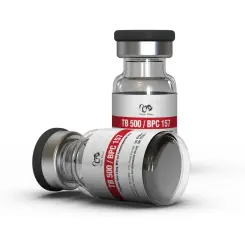
- Accelerates muscle and tendon repair for quick recovery.
- Reduces inflammation systemically and locally.
- Enhances joint and tissue resilience for intense training.
- Supports comprehensive healing for uninterrupted performance.