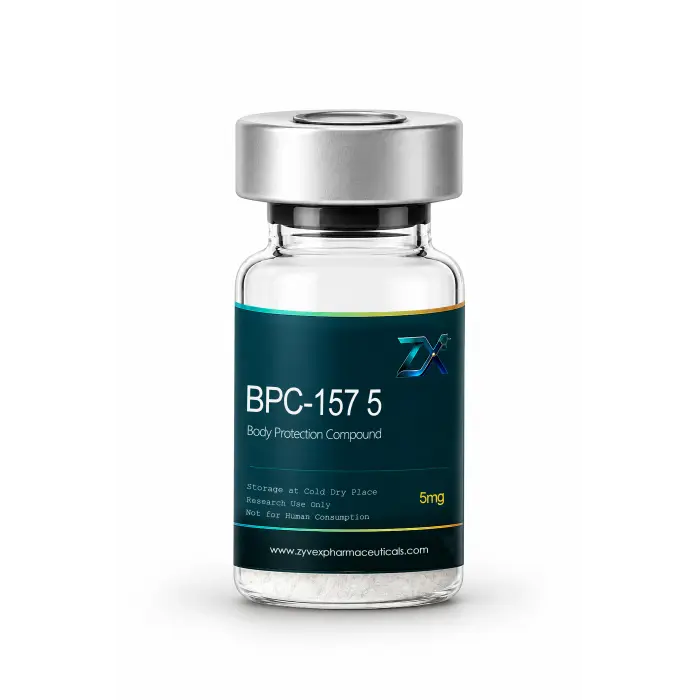
BPC 157 - Zyvex Pharmaceuticals
BPC 157 - Zyvex Pharmaceuticals Overview
BPC 157 by Zyvex Pharmaceuticals is a synthetic pentadecapeptide - a sequence of 15 amino acids - derived from a protein found in human gastric juice. Body Protective Compound 157 has been extensively studied for its effects on tissue healing, specifically tendons, ligaments, muscle, bone, and the gastrointestinal tract. It promotes angiogenesis (new blood vessel formation), upregulates growth hormone receptors at injured sites, and modulates nitric oxide pathways to accelerate repair. Each vial contains 5 mg of lyophilized (freeze-dried) BPC 157, which is reconstituted with bacteriostatic water before injection.
BPC 157 is used by athletes and bodybuilders primarily as an injury recovery tool - not as a performance-enhancing compound in the traditional sense. Its value lies in the speed and quality of healing it delivers for the connective tissue injuries (tendinopathy, ligament sprains, muscle tears) that are common consequences of heavy training loads.
About the Compound: BPC 157 5 mg
BPC 157 (Body Protective Compound 157) is a partial sequence of the body protection compound found in human gastric juice. The peptide consists of 15 amino acids: Gly-Glu-Pro-Pro-Pro-Gly-Lys-Pro-Ala-Asp-Asp-Ala-Gly-Leu-Val. It is synthetically manufactured and does not occur in this isolated form naturally in the body.
Its mechanisms of action involve multiple pathways: it upregulates growth factor receptors (including VEGFR2 and FGFR2) at sites of injury, stimulates new blood vessel growth (angiogenesis), modulates nitric oxide synthesis to improve blood flow to damaged tissue, and activates pathways involved in collagen synthesis and tendon-to-bone healing. Unlike anabolic steroids, BPC 157 does not increase systemic hormone levels - its effects are primarily localized to areas of injury and the gastrointestinal lining.
Zyvex Pharmaceuticals supplies BPC 157 as a lyophilized powder in a 5 mg vial. The powder is reconstituted with bacteriostatic water (typically 1-2 mL per vial) before use, creating a solution that is administered via subcutaneous or intramuscular injection.
What BPC 157 Does
BPC 157's effects are centered on tissue repair and protection. The compound does not build muscle in the way anabolic steroids do, but it creates the conditions for faster and higher-quality healing of injuries that would otherwise sideline training for weeks or months.
- Tendon and ligament healing - BPC 157 is most documented for its effects on tendon injuries. It accelerates tendon-to-bone healing, increases collagen synthesis in damaged tendons, and promotes the formation of new blood vessels that supply the healing tissue. Athletes with chronic tendinopathy (rotator cuff, Achilles, patellar tendon) and ligament sprains report significantly faster functional recovery compared to rest alone.
- Muscle repair and injury recovery - BPC 157 promotes myocyte (muscle cell) survival and proliferation after injury, reduces inflammation in damaged muscle tissue, and accelerates the repair of muscle tears. At 200-500 mcg/day injected near the injury site, it shortens the recovery timeline for muscle strains and contusions.
- Gastrointestinal protection and repair - the compound was originally identified in gastric juice and has strong protective effects on the GI lining. It accelerates healing of gut ulcers, inflammatory bowel conditions, and damage caused by NSAIDs (which are often overused during training injuries). For athletes with gut issues exacerbated by high NSAID use, BPC 157 is one of the few compounds with documented repair effects.
- Anti-inflammatory and analgesic effects - BPC 157 modulates inflammatory pathways and nitric oxide synthesis, reducing pain and swelling at injury sites. The analgesic effect is a secondary benefit - the primary mechanism is repair, not just pain suppression. This distinguishes it from NSAIDs and corticosteroids, which reduce inflammation but can impair long-term healing if used chronically.
- Bone healing support - studies in animal models show BPC 157 accelerates bone healing following fractures and improves integration at bone-tendon junctions. Athletes recovering from stress fractures and bone-related injuries use it alongside conventional treatment to support faster structural recovery.
Research status: BPC 157 has extensive animal study data and significant anecdotal evidence from human use. It has not completed human clinical trials and is not FDA-approved for any medical use. It is sold as a research compound. Athletes use it based on the preclinical evidence and community protocols, understanding that human clinical validation is still pending.
Dosing and Administration
Standard Protocol
The standard dose is 200-500 mcg per day. Most athletes start at 200-250 mcg daily and increase to 500 mcg if needed for severe or slow-healing injuries. At 500 mcg/day with a 5 mg vial reconstituted in 2 mL bacteriostatic water, one vial provides approximately 20 days of treatment (10 mg concentration per mL, 0.1 mL per 500 mcg dose). Cycle length is typically 4-8 weeks, or until the injury has healed to functional capacity. There is no established need for a PCT-style off-cycle protocol - BPC 157 does not suppress the endocrine system.
Injection Site - Local vs Systemic
BPC 157 can be injected in two ways. Local injection (subcutaneous or intramuscular near the injury site) concentrates the peptide's effects at the damaged tissue and is the preferred approach for specific localized injuries - a torn tendon, a muscle strain, a joint issue. The injection does not need to be directly into the injury - subcutaneous injection within 5-10 cm of the injured area is sufficient. Systemic injection (subcutaneous into abdominal fat, away from any specific injury site) is used when the goal is gut healing, systemic anti-inflammatory effect, or when the injury is difficult to reach directly. Both approaches are used in practice; many athletes use local injection for primary injuries and add systemic dosing for GI support simultaneously.
Reconstitution
Add 1-2 mL of bacteriostatic water to the lyophilized BPC 157 powder using a sterile syringe. Allow the powder to dissolve without shaking - swirl gently. The resulting solution is stored refrigerated (2-8 degrees C) and is stable for approximately 30 days. Do not freeze the reconstituted solution.
Use Cases and Protocols
| Injury / Condition | Protocol | Expected Timeline |
|---|---|---|
| Tendinopathy (Achilles, patellar, rotator cuff) | 250-500 mcg/day subcutaneous near tendon. Local injection preferred. Combine with TB-500 for systemic coverage. | Noticeable improvement in 2-3 weeks. Full functional recovery at 6-8 weeks for moderate injuries. |
| Muscle strain / tear | 250-500 mcg/day intramuscular near injury site, or subcutaneous if deep. 4-6 weeks cycle. | Reduction in pain and swelling within 1 week. Return-to-training capacity at 3-6 weeks depending on severity. |
| Ligament sprain (knee, ankle) | 500 mcg/day subcutaneous near the joint. 6-8 weeks. Combine with TB-500 for stronger effect on systemic healing. | Pain reduction in 1-2 weeks. Structural stability improvement over 6-8 weeks. |
| GI issues (NSAID damage, gut inflammation) | 250-500 mcg/day systemic subcutaneous injection into abdominal fat. 4-6 weeks. | GI symptom improvement typically within 1-2 weeks. Full lining repair over 4-6 weeks. |
| General recovery (high training load) | 200-250 mcg/day systemic subcutaneous. Used during high-volume training blocks to maintain tissue integrity and reduce cumulative micro-injury. | Ongoing - used as a maintenance protocol rather than acute treatment. |
Side Effects and Safety
| What May Occur | Background | How to Handle It |
|---|---|---|
| Injection site reactions | Mild redness, swelling, or discomfort at the injection site are the most commonly reported side effects. These are typically transient and resolve within 24 hours. | Rotate injection sites. Ensure sterile technique. Use insulin needles (29-31 gauge) for subcutaneous injections to minimize discomfort. |
| Nausea / lightheadedness | Some users report mild nausea or lightheadedness after injection, particularly at higher doses (500 mcg+). This is dose-dependent and often resolves with the first few injections. | Start at 200-250 mcg and titrate up. Inject after eating rather than on an empty stomach. Reduce dose if symptoms persist. |
| Unknown long-term effects | Human clinical trial data is limited. Long-term effects of extended BPC 157 use in humans have not been formally studied. All current human use data comes from anecdotal sources and extrapolation from animal studies. | Use for defined treatment cycles (4-8 weeks) for specific injuries rather than indefinite continuous use. This is a research compound - understand the evidence limitations before use. |
| Possible tumor growth concern | BPC 157 promotes angiogenesis (new blood vessel formation). Some researchers have raised the theoretical concern that this could support tumor vascularity in individuals with pre-existing malignancies. No evidence of tumor promotion in healthy individuals has been documented in animal studies. | Do not use BPC 157 if you have a current or recent history of cancer or other proliferative conditions. Consult a healthcare provider before use if any relevant history exists. |
BPC 157 and TB-500 Stack
The combination of BPC 157 and TB-500 (Thymosin Beta 4) is the most established peptide healing stack in bodybuilding. The two compounds have complementary mechanisms: BPC 157 is most effective for localized tissue repair - tendons, ligaments, muscle at the injury site - while TB-500 operates more systemically, promoting cell migration, muscle fiber flexibility, and anti-inflammatory effects throughout the body. Together they address injury healing from both local and systemic angles.
| Compound | Dose | Role in the Stack |
|---|---|---|
| BPC 157 | 250-500 mcg/day, SubQ near injury site | Local tissue repair - tendons, ligaments, muscle. Angiogenesis and collagen synthesis at the injury site. Primary driver of structural healing. |
| TB-500 | 2-2.5 mg 2x/week, SubQ systemic | Systemic healing support - cell migration, anti-inflammatory, muscle fiber repair throughout the body. Complements BPC 157 with broader coverage. |
A typical BPC 157 + TB-500 cycle runs 4-8 weeks for acute injury treatment. Both are research compounds - no interaction data from clinical trials exists, but the stack is widely used based on the complementary mechanism profiles and extensive anecdotal reporting.
Frequently Asked Questions
What is BPC 157 and what does it do?
BPC 157 (Body Protective Compound 157) is a synthetic pentadecapeptide - a chain of 15 amino acids derived from a protein found in human gastric juice. It was identified by researchers studying the stomach's natural ability to protect and repair its own lining, and the isolated peptide sequence was found to have tissue-healing effects far beyond the gut. BPC 157 accelerates healing of tendons, ligaments, muscle, bone, and the gastrointestinal tract by promoting angiogenesis (new blood vessel growth), upregulating growth factor receptors at injury sites, increasing collagen synthesis, and modulating nitric oxide pathways to improve blood flow to damaged tissue. It does not build muscle or raise hormone levels the way anabolic steroids do - its role is repair and recovery. Athletes and bodybuilders use it primarily to speed healing of connective tissue injuries that are the common consequence of heavy training: tendinopathy, ligament sprains, muscle tears, and gut damage from chronic NSAID use.
Is BPC 157 legal to buy and use?
BPC 157 is not a controlled substance in the United States - it is not scheduled under the Controlled Substances Act and is not classified as an anabolic steroid. It is sold legally as a research peptide. It is not FDA-approved for human medical use, which means it cannot be prescribed or marketed as a drug for treating injuries in people. WADA has banned BPC 157 for competitive athletes as a prohibited peptide hormone and growth factor. The practical summary: legal to purchase as a research compound in the US, not legal for use in sanctioned competitive sport, and not a medical treatment with FDA approval. Athletes use it based on preclinical evidence and anecdotal reports, with awareness that human clinical trial data is limited.
What is the correct BPC 157 dosage?
The standard protocol is 200-500 mcg per day. Most users start at 200-250 mcg daily for moderate injuries and increase to 500 mcg for severe or slow-healing injuries. To calculate doses from a reconstituted vial: add 2 mL of bacteriostatic water to the 5 mg vial to get a concentration of 2,500 mcg per mL (2.5 mcg per microliter). At this concentration, 200 mcg = 0.08 mL and 500 mcg = 0.2 mL per injection. Some athletes split the daily dose into two injections (morning and evening) at the higher end of the range, though once-daily dosing is common and effective. Cycle length is 4-8 weeks, or until the injury has healed to functional capacity. There is no known need for a post-cycle recovery period - BPC 157 does not suppress the endocrine system.
Where should I inject BPC 157 - near the injury or anywhere?
Both approaches are used and serve different purposes. Local injection (subcutaneous or intramuscular near the injury site) is the preferred method for specific localized injuries - a damaged tendon, a muscle tear, a joint problem. The injection does not have to be directly into the injury: subcutaneous injection within 5-10 cm of the injured area concentrates the peptide's effects where they are needed. This is the recommended approach for tendinopathy, ligament sprains, and muscle strains. Systemic injection (subcutaneous into abdominal fat, away from any specific injury) is used when the goal is gut healing, general anti-inflammatory effect, or when the injury location is difficult to inject locally. In practice, many athletes use local injection for the primary injury and add a systemic dose for GI support simultaneously. For gut-specific conditions, systemic subcutaneous injection is the only practical option.
How long does BPC 157 take to work?
Most users report noticeable pain reduction and improved function within 1-2 weeks of daily dosing. The speed of response depends on the injury type and severity. Soft tissue injuries - tendinopathy, mild muscle strains, gut inflammation - typically show early improvement within 7-14 days. More structural injuries like ligament sprains or significant muscle tears take longer: functional improvement is usually measurable at 3-4 weeks, with full recovery extending to 6-8 weeks of consistent dosing. GI conditions often respond fastest - some users report symptom improvement within the first week. BPC 157 is not a painkiller that masks symptoms; the pain reduction that occurs reflects actual tissue repair rather than suppression of the inflammatory signal, which is why the timeline tracks the healing process rather than providing immediate relief.
How do I combine BPC 157 and TB-500?
BPC 157 and TB-500 (Thymosin Beta 4) have complementary mechanisms that make them the most established peptide healing stack in bodybuilding. BPC 157 acts primarily at the local injury site - it drives tendon-to-bone healing, collagen synthesis, and angiogenesis at the damaged tissue. TB-500 operates more systemically - it promotes cell migration, reduces inflammation throughout the body, and improves muscle fiber flexibility. Running them together addresses healing from both local and systemic angles simultaneously. The standard protocol: BPC 157 at 250-500 mcg per day via local subcutaneous injection near the injury site, combined with TB-500 at 2-2.5 mg twice per week via systemic subcutaneous injection (abdominal fat). Run both for 4-8 weeks. There is no known negative interaction between them - the combination is widely used because the mechanisms are additive, not redundant. For acute injuries, this stack consistently outperforms either compound used alone based on anecdotal evidence across bodybuilding communities.
Is BPC 157 FDA approved?
No. BPC 157 has not completed human clinical trials and is not FDA-approved for any medical use. It is sold as a research compound. The evidence base for BPC 157 consists of extensive animal studies (rodent and some larger animal models) showing consistent tissue-healing effects, plus a substantial body of anecdotal human reports from athletes. The gap between the preclinical evidence and FDA approval is not a question of safety concerns - the animal data is generally favorable and human reports rarely document serious adverse effects - but a question of clinical trial completion, which has not occurred. This means BPC 157 cannot be prescribed by a physician for injury treatment, cannot be marketed as a therapeutic drug, and is used by athletes who are self-administering a research compound based on available evidence rather than approved medical guidance.
What are the side effects of BPC 157?
BPC 157 has a favorable safety profile in animal studies and a low rate of serious adverse effects in human anecdotal use. The most commonly reported side effects are injection site reactions - mild redness, swelling, or discomfort that typically resolves within 24 hours. Some users report mild nausea or lightheadedness after injection, particularly at 500 mcg doses, which often resolves after the first few injections and can be minimized by injecting after eating rather than on an empty stomach. One theoretical concern: BPC 157 promotes angiogenesis (new blood vessel formation), and some researchers have raised the possibility that this could support tumor vascularity in individuals with pre-existing malignancies. No evidence of tumor promotion in healthy individuals has been documented in animal studies. Anyone with a current or recent history of cancer should not use BPC 157. Long-term effects of extended human use are unknown due to the absence of clinical trial data - use is recommended in defined 4-8 week cycles for specific injuries rather than indefinite continuous administration.
Related Products
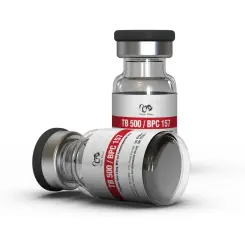
- Accelerates muscle and tendon repair for quick recovery.
- Reduces inflammation systemically and locally.
- Enhances joint and tissue resilience for intense training.
- Supports comprehensive healing for uninterrupted performance.