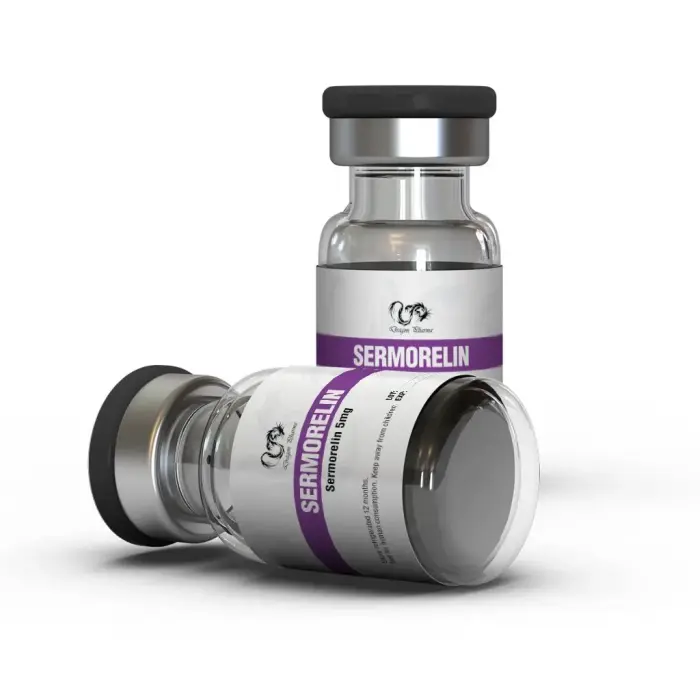
Sermorelin
Sermorelin Dragon Pharma — Overview
Sermorelin Dragon Pharma is a synthetic 29-amino acid peptide corresponding to the biologically active N-terminal fragment of endogenous growth hormone-releasing hormone (GHRH). Where exogenous recombinant HGH bypasses the hypothalamic-pituitary axis and delivers GH directly into the bloodstream, Sermorelin works through the body's own pituitary gland — binding the GHRH receptor on somatotroph cells and triggering the natural, pulsatile release of GH that the body's feedback mechanisms recognize and regulate. The result is a physiological GH profile: pulse-pattern secretion with intact feedback loops, upstream IGF-1 production, and none of the axis-suppression risk that comes with prolonged exogenous GH administration. Available at Steroid Warehouse as a Dragon Pharma 5 mg lyophilized vial, Sermorelin is the entry point for GH optimization for athletes who want meaningful IGF-1-driven benefits — fat loss, lean tissue support, recovery, and sleep quality — without committing to exogenous HGH protocols or accepting the axis tradeoffs that come with them.
Sermorelin is most often used at bedtime, aligned with the body's natural first-sleep GH pulse, or in a twice-daily fasted morning plus bedtime protocol for users targeting accelerated fat loss or recovery during high-volume training blocks. At steroidwarehouse.com, it is available alongside its most complementary stack partner Ipamorelin Dragon Pharma, which amplifies pituitary GH output via the separate ghrelin receptor pathway for significantly greater pulse amplitude than either compound achieves alone.
About the Compound: Sermorelin
Sermorelin (GHRH(1-29)-NH₂) is the synthetic C-terminally amidated form of the first 29 amino acids of endogenous growth hormone-releasing hormone. Endogenous GHRH is a 44-amino acid hypothalamic peptide; the first 29 residues contain the complete binding epitope for the GHRH receptor (GHRHR) and carry the full biological activity of the intact molecule. The C-terminal amide modification protects against carboxypeptidase cleavage, extending effective plasma half-life to approximately 10–12 minutes — sufficient for meaningful GHRHR activation and pituitary response at subcutaneous doses of 200–300 mcg.
The mechanism is strictly pituitary-mediated. Sermorelin binds GHRHR on anterior pituitary somatotroph cells, activating adenylyl cyclase via Gs-protein coupling, which elevates intracellular cAMP and triggers calcium-mediated exocytosis of stored GH. Released GH acts primarily on the liver: hepatic GH receptor activation drives synthesis and secretion of insulin-like growth factor 1 (IGF-1), which mediates most of GH's anabolic and lipolytic downstream effects. Because Sermorelin does not introduce exogenous GH into the circulation but instead instructs the pituitary to release its own GH, the hypothalamic-pituitary-somatotrophic (HPS) axis feedback remains fully operational. Somatostatin continues to modulate and attenuate GH pulses, preventing runaway IGF-1 elevation, and the axis does not downregulate as it would under prolonged exogenous HGH administration.
Sermorelin has no androgenic, estrogenic, or corticotropic activity. It does not stimulate cortisol or ACTH release (a key distinction from the GHRP class at higher doses) and has no documented effect on LH, FSH, or testosterone. It is compatible with any concurrent hormonal protocol.
What Sermorelin Does
- Pulsatile, axis-preserved GH elevation — Sermorelin instructs the pituitary to release GH in discrete pulses synchronized with the body's natural secretory rhythms rather than delivering a continuous pharmacological GH load; the pulsatile pattern is essential for GH's anabolic and lipolytic signaling, as GH receptors in adipose tissue and skeletal muscle are most responsive to pulsed exposure rather than sustained elevation; the body's own somatostatin-mediated feedback can modulate each pulse, which prevents the IGF-1 overshoot seen with fixed-dose exogenous HGH; users can expect a gradual, progressive GH optimization over 4–8 weeks as pituitary GH stores and each pulse amplitude build, rather than the immediate supraphysiological spike of recombinant HGH
- Progressive IGF-1 elevation — lean tissue support, anabolism, recovery — the primary measurable consequence of Sermorelin use is a rising serum IGF-1 over the first 4–8 weeks of a cycle; elevated IGF-1 drives satellite cell activation in skeletal muscle, accelerates collagen synthesis in connective tissue, promotes nitrogen retention, and enhances nutrient partitioning; the IGF-1 response supports both lean mass accrual and fat loss simultaneously, which is the mechanism behind Sermorelin's utility across bulking, cutting, and recomposition phases; IGF-1 levels typically stabilize by weeks 8–10 at a new set point determined by pituitary responsiveness and dose
- Lipolysis and fat loss — visceral and subcutaneous adipose mobilization — GH directly activates hormone-sensitive lipase in adipose tissue, promoting free fatty acid mobilization; visceral adipose tissue is particularly sensitive to GH-driven lipolysis; at standard Sermorelin doses of 200–300 mcg/day, the lipolytic effect proceeds without the insulin resistance amplification seen at high exogenous HGH doses; users on a caloric deficit report improved fat mobilization and better body composition change per unit of caloric restriction, which is the GH/IGF-1 contribution to cutting protocols
- Sleep architecture improvement — delta wave deepening — the natural peak GH pulse occurs during slow-wave (delta) sleep in the first hour after sleep onset; bedtime Sermorelin amplifies this pulse and as a secondary effect deepens delta wave sleep architecture itself; users consistently report improved sleep quality, faster overnight recovery from training, and more restorative sleep within the first 1–2 weeks — this is one of the earliest and most reliably noticeable effects, often perceived before any measurable IGF-1 change appears in bloodwork
- Connective tissue, joint, and skin quality — IGF-1 and GH together drive type I collagen synthesis and fibroblast proliferation; after 6–12 weeks of consistent use, users typically report improved joint comfort under load, faster tendon recovery from overuse stress, and improved skin texture; these are particularly relevant for athletes in high-volume phases where connective tissue stress accumulates faster than recovery allows, and for users over 35 where baseline GH secretion has declined meaningfully from youthful peak levels
Who It's For
- Users seeking GH axis optimization without exogenous HGH axis suppression — the core use case is athletes who want the benefits of elevated GH/IGF-1 but are unwilling to accept the axis-suppression consequence of prolonged recombinant HGH; Sermorelin preserves somatostatin-mediated feedback and pulsatile secretion, which means stopping the compound does not leave the HPS axis unable to produce GH autonomously; this makes it the rational GH optimization choice for users who intend to run GH protocols long-term in repeated cycles rather than as a one-time intervention
- Athletes in cutting or recomposition phases where simultaneous fat loss and lean tissue preservation are priorities — the GH/IGF-1 combination has a uniquely favorable body composition effect in caloric restriction: lipolysis is promoted while lean mass catabolism is suppressed; Sermorelin at 200–300 mcg/day provides this metabolic environment without the insulin resistance amplification that comes with high-dose exogenous HGH; it is compatible with AAS cycles, SARM cycles, and standalone use
- What differentiates Sermorelin from similar alternatives: vs Dragontropin (exogenous HGH) — Dragontropin delivers GH directly and produces faster, more potent, and more predictable IGF-1 elevation, but at the cost of progressive HPS axis suppression with long-term use; Sermorelin's advantage is physiological GH elevation with intact feedback, no shutdown risk, and lower cost per cycle; users who want maximum IGF-1 elevation in a defined short cycle should choose Dragontropin; users prioritizing long-term axis health or running ongoing multi-month GH protocols should choose Sermorelin; vs Ipamorelin — Ipamorelin works via the separate ghrelin receptor (GHSR-1a) rather than GHRHR and is the natural stacking partner rather than a competing alternative; the two compounds amplify GH output via different receptor pathways and are consistently more effective combined than either alone
- Users who should choose something else: users targeting the fastest possible IGF-1 elevation for a defined short cycle where axis preservation is not a priority should use Dragontropin; users whose primary need is visceral fat reduction with the strongest clinical evidence base should evaluate Tesamorelin Dragon Pharma (FDA-approved for visceral adiposity); users who want the oral route without injections should consider MK-677 Dragon Pharma, accepting that its continuous GH signal differs from Sermorelin's pulsatile profile
Sermorelin vs Alternatives
| Compound | Key Differences | Choose Sermorelin When | Choose Alternative When |
|---|---|---|---|
| Ipamorelin Dragon Pharma | Ghrelin mimetic GHRP; activates GH release via GHSR-1a, not GHRHR; highly selective for GH with minimal cortisol or prolactin elevation; t½ ~2 hours; dose 100–300 mcg/injection; the canonical pairing with Sermorelin exploits dual-receptor synergy — GHRH primes pituitary GH stores while Ipamorelin triggers release via a separate pathway; the combination produces significantly larger GH pulses than either compound alone at the same dose; not a competing alternative — a complementary stack component | Running Sermorelin solo to assess individual pituitary response before stacking; budget or vial logistics favor one compound at a time | Adding Ipamorelin to Sermorelin from cycle start for maximum GH pulse amplitude — the standard recommendation for body composition goals |
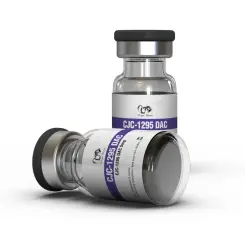
| CJC-1295 DAC Dragon Pharma | Long-acting GHRH analogue; Drug Affinity Complex (DAC) modification binds plasma albumin, extending half-life to 6–8 days; dosed once or twice weekly vs Sermorelin's daily requirement; produces sustained, blunted GH elevation ("GH bleed") rather than distinct pulses; reduces peak pulse amplitude while eliminating the post-pulse trough; preferred by users valuing injection convenience over pulsatile physiology; do not combine both GHRH analogues simultaneously — same receptor target, redundant | Daily injection is acceptable; pulsatile, physiological GH pattern is the priority; Sermorelin + Ipamorelin provides sharper, higher-amplitude pulses than CJC-1295 alone | Once or twice-weekly injection convenience is a decisive preference; sustained low-grade GH elevation rather than peak pulses is the goal; user cannot maintain a daily injection schedule |
| Tesamorelin Dragon Pharma | Trans-3-hexenoic acid-modified GHRH analogue; FDA-approved for HIV-associated visceral lipodystrophy; strongest visceral fat-targeting evidence in the GHRH class; t½ ~26 minutes; 2 mg/day standard clinical dose; pulsatile, axis-preserving mechanism like Sermorelin; slightly stronger IGF-1 response per dose unit; higher cost | GH optimization, recovery, and sleep quality alongside fat loss as a secondary benefit; 5 mg vial format suits straightforward cycle planning | Visceral fat reduction is the explicit primary endpoint with clinical evidence preferred; FDA-approved compound context is specifically required; 2 mg/day dosing protocol is acceptable |
| MK-677 Dragon Pharma | Oral ghrelin mimetic (GHSR-1a agonist); not a peptide — orally active small molecule; 24-hour GH and IGF-1 elevation at 12.5–25 mg/day; continuous rather than pulsatile GH signal; raises appetite substantially via ghrelin; can increase fasting glucose with long-term use; no injection required; suited for bulking phases where appetite stimulation and constant anabolic signal are welcome | Injection-based daily protocol is acceptable; pulsatile GH and axis preservation are priorities; fat loss in caloric deficit is a primary goal (continuous GH + appetite stimulation complicates cuts) | Oral convenience is a decisive factor; bulking phase where appetite stimulation is a benefit; user is unwilling or logistically unable to inject daily |
Dosing & Reconstitution
| Step | Details |
|---|---|
| Reconstitution | Add 5 mL bacteriostatic water to the 5 mg vial → concentration: 1 mg/mL (1000 mcg/mL). Inject BAC water slowly down the vial wall; swirl gently, never shake. Refrigerate at 2–8°C immediately; use within 28–30 days; protect from light. Do not use plain sterile water for multi-dose vials |
| Starting dose (200 mcg) | At 1 mg/mL: draw 0.2 mL (20 units on a U-100 syringe). Appropriate for first-time users; covers GHRHR activation threshold for a meaningful GH pulse. Inject subcutaneously — lower abdomen or lateral thigh; pinch skin, 28–31G needle at 45°, inject slowly. Assess sleep quality and tolerance in the first 1–2 weeks before escalating |
| Standard dose (300 mcg) | At 1 mg/mL: draw 0.3 mL (30 units). The practical optimum for solo Sermorelin use; produces measurably larger GH pulses and higher IGF-1 at steady state; incremental benefit above 300 mcg solo diminishes sharply — the more efficient path to higher GH output is adding Ipamorelin rather than further dose escalation |
| Timing | Bedtime (primary): inject 30–60 minutes before sleep; requires 2–3 hours of fasting prior — insulin suppresses GH pulsatility, so a fed state significantly reduces the GH output per dose. BID protocol: 100–200 mcg fasted upon waking (before first meal) + 200 mcg at bedtime; adds a second amplified pulse covering the morning anabolic window alongside the nocturnal peak |
| Vial yield (5 mg · 1 mg/mL) | At 200 mcg/day once nightly: 25 doses / 25 days. At 300 mcg/day: ~16–17 days. At BID 400 mcg/day (200 + 200): 12–13 days. For a full 12-week cycle at 200 mcg/day: ~8.4 mg — plan 2 vials per 4-week block. Map out vial quantity before starting to avoid protocol gaps |
Side Effects & Management
Sermorelin is among the best-tolerated GH secretagogues. Side effects at standard doses are mild and transient. Cortisol or prolactin elevation — the primary concern with GHRP-class peptides at higher doses — is not a feature of the GHRH class.
| What May Occur | Background | How to Handle It |
|---|---|---|
| Injection site reactions | Mild local redness, warmth, or itching; a class effect of subcutaneous peptide administration; transient (15–30 minutes); no tissue damage when site rotation is practiced | Rotate sites (lower abdomen quadrants, outer thighs, upper arms); fresh 28–31G insulin needle per injection; allow vial to reach room temperature before injecting; inject slowly |
| Flushing and warmth | Brief facial or body warmth within minutes of injection; peripheral vasodilatory response to the triggered GH pulse; more noticeable at doses above 300 mcg or in the first 1–2 weeks; a pharmacodynamic indicator that the pituitary responded, not an adverse reaction | No intervention required; diminishes after 1–2 weeks of regular use; if pronounced, reduce starting dose to 100 mcg for one week then titrate up; ensure adequate hydration |
| Water retention (mild, early) | GH-driven sodium and water retention, mediated via IGF-1's renal tubular effect; most prominent in the first 2–4 weeks as IGF-1 rises; self-limiting as the body equilibrates to the new IGF-1 level; rarely significant at standard Sermorelin doses of 200–300 mcg/day | Moderate sodium restriction (<2,000 mg/day) during the ramp-up phase; adequate water intake; typically resolves within 3–4 weeks without dose change; if persistent, reduce dose by 50–100 mcg temporarily |
| Morning grogginess or vivid dreams | The bedtime injection deepens slow-wave sleep architecture; some users experience heavier sleep or vivid dreams in the first 1–2 weeks; these are consequences of the desired delta wave deepening effect, not adverse reactions; normalizes within 7–10 days | Shift injection timing slightly earlier (90 minutes before sleep rather than 30) if morning grogginess is disruptive; resolves naturally for most users within one week without any dose change |
| Occasional mild headache | Reported in the first 1–2 weeks by a minority of users; related to initial GH pulse amplitude changes and mild fluid shifts; self-limiting; not dose-dependent across the standard 200–300 mcg range | Adequate hydration; Ecosprin 75–150 mg as needed; resolves within 1–2 weeks without dose change; if persistent beyond 2 weeks, reduce to 100 mcg for one week then re-escalate |
| No cortisol or prolactin elevation | Sermorelin does not bind ghrelin receptors (GHSR-1a) and does not trigger the cortisol and prolactin co-stimulation that GHRP-2 and GHRP-6 produce at higher doses; both hormones remain within normal ranges throughout standard Sermorelin use | No intervention required; this is a key advantage of the GHRH class over GHRPs and makes Sermorelin the preferred base compound in stacks for users with cortisol-sensitive goals; Ipamorelin is the only GHRP-class partner equally clean on cortisol and prolactin |
Bloodwork Monitoring
| Lab | When to Test | Target & Action Threshold |
|---|---|---|
| IGF-1 (serum) | Baseline before starting; retest at weeks 6–8 (full pituitary adaptation); retest mid-cycle if adjusting dose | Target: 200–350 ng/mL (age-adjusted; lower end for users over 50). Below 200 ng/mL at week 8: increase to 300 mcg/day or add Ipamorelin. Above 400 ng/mL: reduce dose by 50–100 mcg — prolonged excess IGF-1 amplifies insulin resistance and soft tissue responses |
| Fasting glucose | Baseline; retest at weeks 6–8; retest if water retention persists or increased thirst is reported | Target: <100 mg/dL. GH reduces peripheral insulin sensitivity; at 200–300 mcg Sermorelin the effect is modest. Fasting glucose creeping toward 100–110 mg/dL warrants dose reduction and carbohydrate timing adjustment (avoid carbs within 2 hours of injection). Above 110 mg/dL: reduce dose and retest at 4 weeks |
| Cortisol (morning, optional) | Relevant only if stacking with GHRP-2 or GHRP-6 rather than Ipamorelin | Sermorelin alone does not elevate cortisol; normal morning reference: 6–23 mcg/dL. Elevated cortisol during solo Sermorelin use indicates an independent source (overtraining, sleep deprivation). If combining with GHRP-2 or GHRP-6, cortisol monitoring becomes important as those peptides can raise it at doses above 100–200 mcg |
| LH, FSH, total testosterone | Only if running concurrent AAS or PCT; driven entirely by those compounds | Sermorelin has no HPG axis interaction; LH, FSH, and testosterone are unaffected at any standard dose |
Cycle Structure
| Cycle | Protocol | Notes |
|---|---|---|
| Solo introductory (8–12 weeks) | Sermorelin 200 mcg SC at bedtime daily; retest IGF-1 at week 8; adjust to 300 mcg if IGF-1 below 200 ng/mL; 4–6 weeks off before repeating | Minimum 8 weeks for full pituitary adaptation and measurable IGF-1 shift; sleep and recovery improvements appear in weeks 1–3; fat loss and body composition changes measurable by weeks 4–6; IGF-1 stabilizes by weeks 8–10 and persists elevated 2–4 weeks post-cycle |
| Sermorelin + Ipamorelin stack (12–16 weeks) | Sermorelin 200 mcg + Ipamorelin 200 mcg, both SC at bedtime; draw into the same insulin syringe, single injection; retest IGF-1 at weeks 8 and 12; 4–6 weeks off between cycles | The standard GH secretagogue stack: dual-receptor activation produces GH pulses 2–3× larger than Sermorelin alone at the same GHRH dose; Ipamorelin adds no cortisol or prolactin burden; IGF-1 target at steady state 250–350 ng/mL; the most practical high-output GH secretagogue protocol available without exogenous HGH |
| BID fat-loss protocol (12 weeks) | Sermorelin 200 mcg fasted AM (30 min before first meal) + Sermorelin 200 mcg at bedtime; total 400 mcg/day; add Ipamorelin 200 mcg at bedtime for the nocturnal pulse if targeting maximum overnight GH output; track fasting glucose monthly | Morning fasted injection adds a second GH pulse timed to the post-overnight fast when GH receptor sensitivity is highest and circulating insulin is minimal; accelerates lipolysis across a larger daily window; doubles vial consumption — plan accordingly; monitor fasting glucose at weeks 4 and 8 |
| On-cycle GH layer (alongside AAS) | Sermorelin 200–300 mcg at bedtime throughout AAS cycle; can be maintained through PCT; no interaction with AI, SERM, or HCG management | Addresses the recovery, sleep quality, and connective tissue dimensions that AAS alone do not optimize; GH/IGF-1 elevation complements androgenic anabolism without receptor redundancy; does not interfere with any component of AAS cycle management or PCT; can be continued through PCT for ongoing IGF-1 support while HPG axis re-establishes |
Practical Summary
- Bedtime injection, fasted 2–3 hours prior — non-negotiable for full response: insulin suppresses GH pulsatility; eating within 1–2 hours of the bedtime injection significantly reduces pituitary output per dose; the fasted bedtime window consistently produces the largest GH pulse achievable with Sermorelin and must be protected in every protocol
- Test IGF-1 at baseline and week 8 — use it to dose-adjust: subjective improvements in sleep and recovery are the early signal (weeks 1–3); measurable IGF-1 elevation is the objective confirmation of pituitary response (weeks 6–8); target 200–350 ng/mL; do not escalate beyond 300 mcg/day solo without bloodwork justification — the incremental IGF-1 return above this dose falls sharply without a GHRP partner
- Add Ipamorelin for significantly greater GH pulse amplitude at no additional cortisol cost: Ipamorelin 200 mcg at bedtime combined with Sermorelin 200 mcg produces GH pulses substantially larger than either compound alone; Ipamorelin is the cleanest GHRP partner because it does not raise cortisol or prolactin; the Sermorelin + Ipamorelin combination is the standard GH secretagogue stack
- Do not combine with CJC-1295 DAC simultaneously: both target GHRHR; combining them is receptor-redundant and does not meaningfully increase GH output; choose one GHRH-class compound as the base and pair it with a GHRP (Ipamorelin preferred)
- Plan for 12–16 week cycles minimum for body composition results: sleep and recovery improve in weeks 1–3; fat loss and lean mass changes require 4–6 weeks of sustained IGF-1 elevation; users who evaluate at 4 weeks are doing so prematurely; plan 4–6 week off periods between cycles to preserve pituitary responsiveness
Sermorelin Dragon Pharma is the axis-preserving foundation of GH optimization — the compound for athletes who want the fat loss, recovery, sleep, and IGF-1-driven body composition benefits of elevated GH without committing to exogenous somatropin or accepting the HPS axis suppression that comes with it. Its GHRH(1-29) mechanism keeps hypothalamic-pituitary-somatotrophic feedback fully operational across extended repeated cycles, and stacked with Ipamorelin as its natural GHRP partner it forms the most practical high-output GH secretagogue protocol available at Steroid Warehouse for athletes prioritizing long-term hormonal health alongside sustained performance results.
References
| Source | Topic | Link |
|---|---|---|
| Clinical Interventions in Aging / PubMed | Walker 2006 — editorial review discussing sermorelin as a GHRH analogue for adult-onset growth hormone insufficiency; useful for explaining the axis-preserving rationale of stimulating endogenous GH release rather than using direct exogenous HGH replacement | Walker RF (2006) ↗ |
| Metabolism / PubMed | Vittone et al. 1997 — clinical study of single nightly GHRH(1-29) injections in healthy elderly men; documents increased nocturnal GH release and selected strength/endurance changes, but does not support claims of strong IGF-1 elevation or proven sleep-quality improvement | Vittone J, et al. (1997) ↗ |
| BioDrugs / PubMed | Prakash & Goa 1999 — review of sermorelin use in the diagnosis and treatment of children with idiopathic growth hormone deficiency; covers sermorelin pharmacology, diagnostic testing, tolerability, and once-daily subcutaneous use in pediatric GHD | Prakash A & Goa KL (1999) ↗ |
| Journal of Clinical Endocrinology & Metabolism / PubMed | Thorner et al. 1996 — multicenter study of once-daily subcutaneous GHRH therapy in growth hormone-deficient children; supports the clinical concept that GHRH-based stimulation can increase growth response when pituitary GH reserve is present | Thorner M, et al. (1996) ↗ |
| Endocrine Reviews / PubMed | Corpas et al. 1993 — review of human growth hormone and aging; explains age-related GH/IGF-1 decline, body-composition associations, and the clinical controversy around GH-axis intervention in older adults | Corpas E, et al. (1993) ↗ |
What is Sermorelin?
Sermorelin is a peptide that stimulates growth hormone release; see What is Sermorelin. It enhances recovery—consult professionals for safe use.
What is Sermorelin used for?
It's used for muscle recovery, fat loss, and anti-aging; see Key Benefits. It suits athletes—use with professional oversight.
What does Sermorelin do?
It boosts natural GH production for recovery and vitality; see Mechanism of Action. It supports performance—monitor with professional guidance.
Is Sermorelin safe?
It's safe with proper dosing and monitoring, but not FDA-approved for bodybuilding; see Side Effects. Consult professionals for safety.
How does Sermorelin work?
Sermorelin works by stimulating the pituitary gland to release growth hormone naturally. This may help support:
- Growth hormone production
- IGF-1 related pathways
- Recovery and tissue repair processes
- Sleep and recovery quality
Unlike direct growth hormone products, Sermorelin encourages the body's own hormone production.
Is Sermorelin the same as HGH?
No. Somatropin (HGH) provides growth hormone directly, while Sermorelin stimulates the body to produce its own growth hormone through natural signaling pathways.
How long does it take to notice effects from Sermorelin?
Effects are generally gradual. Many users report improvements in sleep quality, recovery, and overall well-being before noticing changes in body composition.
What are the possible side effects of Sermorelin?
Potential side effects may include injection site irritation, headaches, flushing, dizziness, and temporary water retention depending on individual response.
Related Products