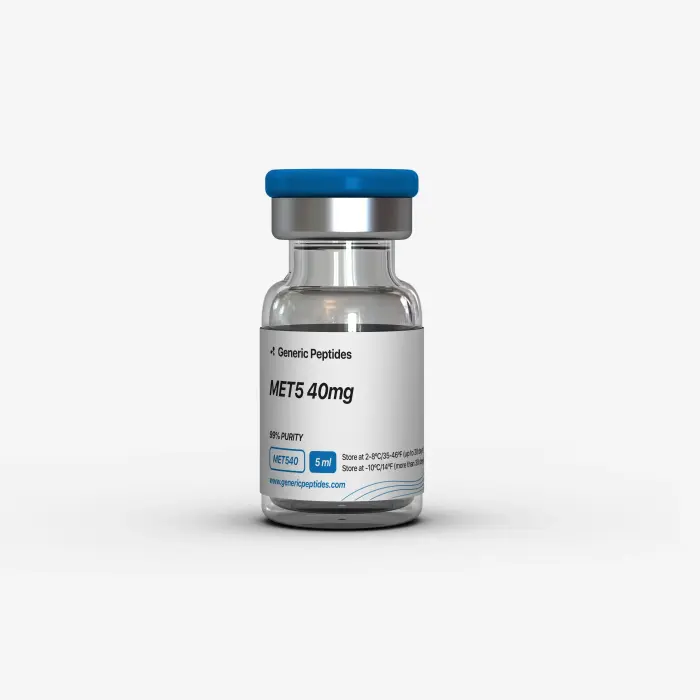
MET5 40 mg
- Modulates opioid receptors.
- Supports pain pathway studies.
- Enhances enkephalin research.
- Promotes understanding of analgesia.
What is MET5 40 mg?
MET5 40 mg is a synthetic enkephalin analog, a pentapeptide designed to interact with opioid receptors for pain modulation research. Available in a vial from Generic Peptides, it is used in experimental settings to study analgesia and opioid pathways, requiring reconstitution before use.
How Does MET5 40 mg Work?
MET5 40 mg works by binding to delta-opioid receptors, mimicking natural enkephalins to modulate pain signals and stress responses in the central nervous system. In research, it helps explore analgesic mechanisms, with effects beginning within minutes and lasting hours in models.
What Are Side Effects of MET5 40 mg?
Side effects of MET5 40 mg in research may include respiratory depression, tolerance development, or nausea in models. Human safety data is limited, so it is strictly for laboratory use. Monitor for adverse reactions in experiments and consult protocols for risk management.
Is MET5 40 mg Safe?
MET5 40 mg is not established as safe for human use and is intended solely for research purposes. Potential risks in experimental settings include opioid-related effects like dependence or sedation. Use is limited to controlled lab environments under professional supervision.
How Long Does MET5 40 mg Stay in Your System?
MET5 40 mg has a half-life of approximately 1-2 hours in experimental models, requiring frequent dosing for sustained effects. It remains detectable for about 12-24 hours, depending on dosage, metabolism, and testing methods. Researchers should use appropriate assays for clearance.
Mechanism of Action MET5 40 mg
MET5 binds to delta-opioid receptors, inhibiting pain transmission and modulating stress responses. It mimics enkephalins, offering a targeted approach in opioid research. Effects begin rapidly and are short-lived. What doesn't happen: no broad systemic impact, but monitoring is essential.
How It Works & Key Benefits
MET5 40 mg excels for researchers exploring pain and opioid pathways, requiring controlled lab conditions to maximize its experimental potential.
- Modulates opioid receptors.
- Supports pain pathway studies.
- Enhances enkephalin research.
- Promotes understanding of analgesia.
- Delivers rapid receptor binding.
- Stacks with other research peptides.
Who It's For & Product Specifications
Best for researchers in neuroscience or pharmacology; intended for laboratory use only, not for human consumption. Not recommended for personal use or those without research credentials.
| Substance | Enkephalin |
|---|---|
| Concentration | 40 mg |
| Form | Vial (requires reconstitution) |
| Pack Size | Vial |
| Half-life | ~1-2 hours |
| Aromatization/Hepatic | Non-applicable / Minimal hepatic |
| Primary Use | Opioid and pain research |
| Manufacturer | Generic Peptides |
| Brand | MET5 |
How to Take MET5 40 mg
- Dosage: Research use only; follow lab protocol (typically 10-50 mcg/ml in cell cultures or animal models); not for human dosing.
- Frequency: As per experimental design, often daily or as needed in studies.
- Cycle length: Determined by research objectives; discontinue if unexpected reactions occur.
- Preparation/Monitoring tips: Reconstitute with 1-2 ml Bacteriostatic Water using a sterile syringe (22-25 gauge), handle in a controlled lab environment; monitor opioid receptor activity and assay results; use protective equipment.
- Results timeline: Effects on receptors observed within minutes in vitro; study-specific.
- PCT timing: Not applicable; for research use only.
Popular Stacks
DSIP: Complements stress studies.
Selank: Enhances anxiety research.
Semax: Supports cognitive opioid interactions.
Cycle Support: Ensures lab safety protocols.
Comparisons & Alternatives
MET5 40 mg vs MET5 20 mg: 40 mg offers higher potency per cycle; 20 mg is a lower dose option.
MET5 40 mg vs DSIP: MET5 targets opioids; DSIP modulates sleep.
MET5 40 mg vs Selank: MET5 focuses on pain; Selank on anxiety.
Side Effects & Risk Management
- Lab-related: Irritation from handling—use gloves, ventilate area.
- Experimental: Respiratory effects in models—monitor closely.
- Other: Contamination risk—sterilize equipment thoroughly.
Consult a research professional to ensure safe handling and monitor experimental outcomes.
What is MET5 40 mg?
MET5 is a peptide-based compound commonly discussed in research and wellness-focused peptide protocols. The 40 mg version refers to the total peptide content in the vial or formulation package.
What is MET5 commonly used for?
MET5 is commonly associated with:
- Recovery support
- Cellular wellness research
- Performance and recovery-focused protocols
- General peptide and wellness applications
Usage discussions may vary depending on the exact formulation and intended research purpose.
How does MET5 work?
MET5 is believed to influence cellular and recovery-related pathways involved in:
- Tissue support
- Recovery processes
- Cellular signaling and repair mechanisms
Its exact mechanisms are still being explored in peptide research settings.
Why is MET5 popular in peptide communities?
Users and researchers are interested in MET5 because it may:
- Support recovery-focused wellness goals
- Complement advanced peptide protocols
- Be useful in experimental recovery and performance discussions
Interest in MET5 continues to grow in peptide research communities.
How is MET5 40 mg typically administered?
MET5 is commonly:
- Supplied as a lyophilized (freeze-dried) peptide powder
- Reconstituted before use
- Administered through injection in research settings
Protocols vary depending on intended application and research goals.
What are the possible side effects?
Potential side effects may include:
- Injection site irritation
- Mild headaches
- Temporary fatigue or dizziness
Because research is still limited, individual responses may differ.
How long does it take to notice effects?
The timing of biological effects varies depending on the research setting, study design, and individual factors. As an investigational peptide, there are no established timelines for effects in humans.
What are the main areas of research involving MET5 40 mg?
MET5 40 mg is commonly studied for its potential role in:
- Tissue regeneration
- Cellular repair
- Recovery research
- Inflammation research
- Regenerative medicine
Related Products
- Modulates opioid receptors.
- Supports pain pathway studies.
- Enhances enkephalin research.
- Promotes understanding of analgesia.
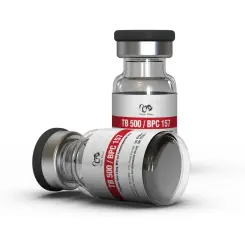
- Accelerates muscle and tendon repair for quick recovery.
- Reduces inflammation systemically and locally.
- Enhances joint and tissue resilience for intense training.
- Supports comprehensive healing for uninterrupted performance.