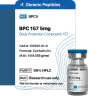
BPC-157 5 mg
What Is BPC-157 5 mg?
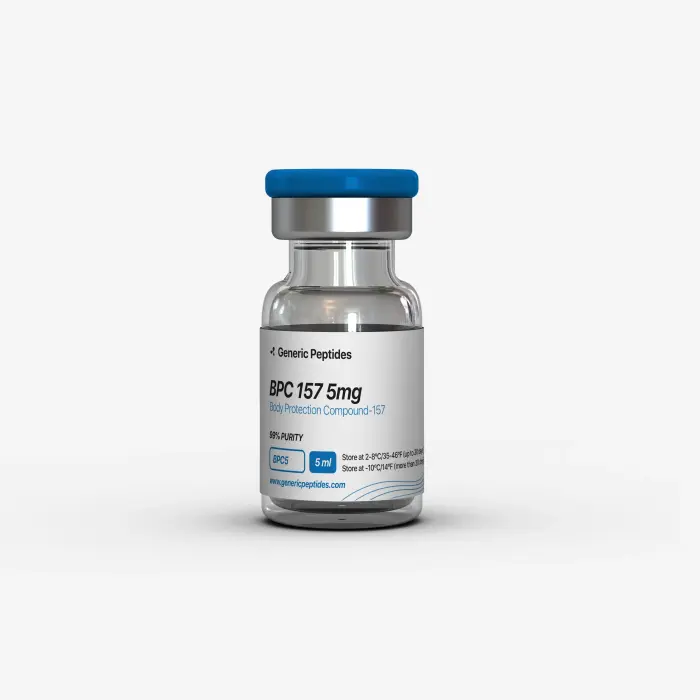
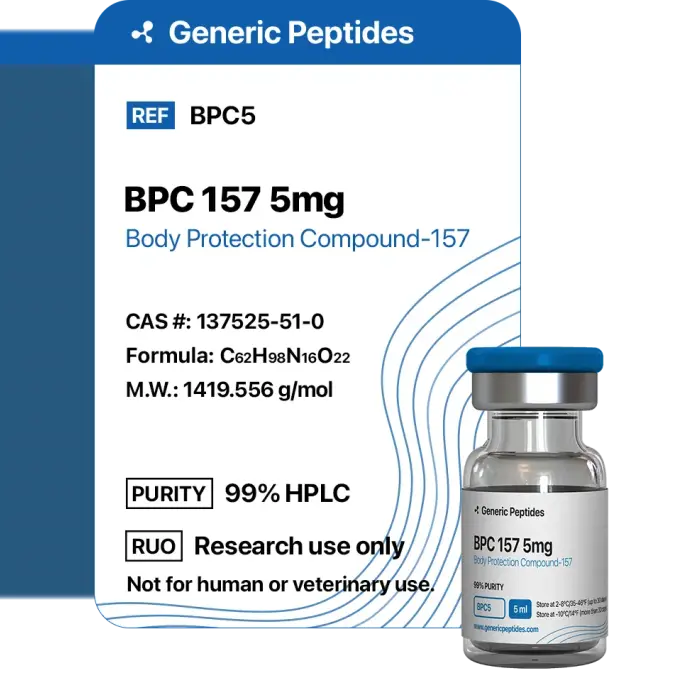
BPC-157 is a fifteen amino acid fragment derived from a protein found in gastric juice, and it is the peptide most often bought for connective tissue rather than for hormones. It does not raise growth hormone, does not touch the androgen receptor, and does not shut down natural testosterone. Generic Peptides packs 5 mg of the lyophilized peptide per vial.
This is a repair compound, and the gap between the short half-life and the long effect is the interesting part. In rodent work the peptide clears from plasma within half an hour, yet tendon and gut lesions keep closing for weeks. That pattern is why dosing is discussed in daily totals rather than peaks and troughs.
BPC-157 5 mg Dosage
Community protocols use 250 to 500 mcg once or twice daily, injected subcutaneously, often as close to the sore tissue as is practical. With 2 mL of bacteriostatic water the vial is 2.5 mg per mL, so one unit on a U-100 syringe equals 25 mcg: 250 mcg is 10 units, 500 mcg is 20 units. A 5 mg vial therefore covers ten days at the higher end.
| Level | Dose | Units | Cycle | Note |
|---|---|---|---|---|
| Low | 250 mcg daily | 10 units at 2.5 mg/mL | 4 weeks | 20 days per vial |
| Standard | 250 mcg twice daily | 10 units per shot | 4-6 weeks | 10 days per vial |
| High | 500 mcg daily | 20 units per shot | 3-4 weeks | 10 days per vial |
Cycle Length
Four to six weeks covers most tendon, elbow and shoulder complaints, and it is long enough to judge whether anything is changing. Because the vial is small in days, a six week run at 500 mcg a day needs four vials, which is the number to price before starting rather than after the first one runs dry.
BPC-157 5 mg Stacks
BPC-157 pairs with compounds that work on the same tissue through a different route. The stable version adds a systemic repair signal, the thymosin fragment addresses the inflammatory side, and GH secretagogues add collagen turnover from above.
| Partner | Role | Effect |
|---|---|---|
| TB-500 5 mg | Cell migration | Classic repair pairing |
| BPC-157 10 mg | Same peptide | Longer supply, fewer vials |
| CJC-1295 / Ipamorelin blend | GH support | Collagen turnover from the GH side |
| GHK-Cu 50 mg | Copper peptide | Skin and connective tissue |
The first two rows are the established combination: BPC-157 for the local signal, TB-500 for cell migration and a wider field. The blend and the copper peptide are the options for people treating recovery as a whole-body project rather than one sore elbow.
BPC-157 5 mg Side Effects
Reported sides are few and mostly local: redness or a small lump at the injection site, occasional nausea, and a headache in the first days. No hormonal axis is involved, so the usual steroid checklist of gyno, blood pressure and shutdown does not apply.
- Injection site redness, itching or a small lump.
- Mild nausea or a brief headache.
- Loose stools in the first week at higher doses.
- Drowsiness within an hour of injecting.
- No established human safety data for long-term use.
The list is short because the compound is narrow. That narrowness cuts both ways: it is unlikely to disturb hormones, and equally unlikely to replace sleep, food and a rehabilitation plan that loads the tissue.
Support and Supplies
Because the dose is measured in units rather than millilitres, the two things that decide whether a run goes smoothly are the diluent and the syringe. Water quality matters more with a peptide you inject daily for a month.
- Bacteriostatic water keeps the mixed vial stable across the ten days it lasts.
- Syringe with needle in insulin size for 10 and 20 unit doses.
- Peptide calculator if you change the water volume and need new unit values.
- Liv.52 as general liver support while running any injectable protocol.
For the tendon side, the pharmacy shelf offers Mobic for flare-ups and Ursocol for keeping bile markers tidy when an oral stack runs in parallel.
Other strengths in the line
Where to Buy BPC-157 5 mg
Shipped as a single 5 mg vial of powder with the peptide name and amount on the label. Mix with the diluent used for the whole run and refrigerate; do not freeze the reconstituted solution. The rest of the repair range is in the peptide catalog, and this comparison covers what separates a peptide from a steroid.
This information is for educational purposes. Anabolic steroids are prescription medicines in most countries and carry serious health risks. Speak to a physician before use.
What does BPC-157 5mg do?
BPC-157 5mg promotes healing and reduces inflammation; see What Does BPC-157 5mg Do. It's effective; for safe use.
Can I take BPC-157 every day?
Yes, with oversight for 4-6 weeks; see Can I Take BPC-157 Every Day. Monitor effects.
What are the negative effects of BPC-157?
Side effects may include irritation; see What Are the Negative Effects of BPC-157. Use with care.
How long does it take for a BPC-157 to work?
It works in 2-7 days; see How Long Does It Take for a BPC-157 to Work. Track progress.
How is BPC-157 5 mg typically administered?
BPC-157 is commonly.
- Supplied as a lyophilized (freeze-dried) peptide powder
- Reconstituted before use
- Administered through subcutaneous injection in research settings
Some users also discuss oral formulations, depending on the intended use.
What are the possible side effects?
Potential side effects may include.
- Injection site irritation
- Mild headaches
- Temporary dizziness or fatigue
Most users report relatively mild side effects when used responsibly.
How long does it take to notice effects?
The timing of any biological effects varies depending on the research setting, study design, and individual factors. Observed changes in tissue healing and recovery generally develop gradually over days to weeks.
What are the main areas of research involving BPC-157 5 mg?
BPC-157 5 mg is commonly studied for its potential role in:.
- Tendon and ligament repair
- Muscle recovery
- Gastrointestinal tissue protection
- Wound healing
- Connective tissue regeneration
Related Products