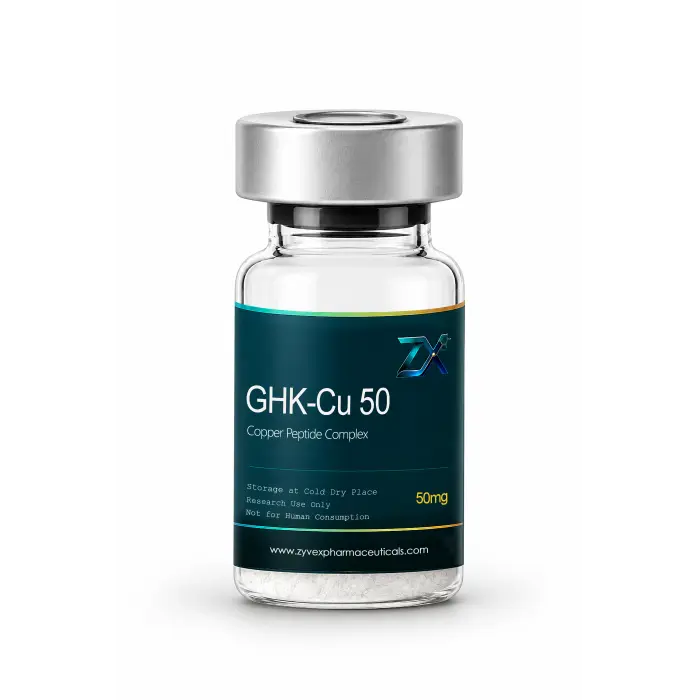
GHK-CU 50 - Zyvex Pharmaceuticals
GHK-Cu 50 - Zyvex Pharmaceuticals Overview
GHK-Cu 50 by Zyvex Pharmaceuticals is a copper-chelating tripeptide consisting of Glycine-L-Histidine-L-Lysine complexed with a copper ion. GHK-Cu is a naturally occurring peptide found in human blood plasma, saliva, and urine - plasma concentrations are highest in youth and decline significantly with age, which has driven interest in its role in wound healing, tissue regeneration, collagen synthesis, and anti-aging processes. Each vial contains 50 mg of lyophilized (freeze-dried) GHK-Cu powder, which is reconstituted with bacteriostatic water before subcutaneous injection.
In bodybuilding and performance contexts, GHK-Cu is used primarily as a recovery and tissue repair compound. Its value is distinct from anabolic steroids - it does not increase hormone levels or stimulate muscle protein synthesis through androgenic pathways. Instead, GHK-Cu works by upregulating genes involved in collagen synthesis, angiogenesis, anti-inflammatory signaling, and tissue remodeling. It is most commonly used for connective tissue recovery, skin repair, and hair growth support, and is frequently stacked with BPC-157 for a complementary healing effect that covers both local tissue repair (BPC-157) and systemic regeneration (GHK-Cu).
About the Compound: GHK-Cu 50 mg
GHK-Cu (Glycine-L-Histidine-L-Lysine Copper) is a tripeptide - three amino acids bonded in sequence - that naturally chelates (binds) a copper ion. It was first isolated from human plasma albumin in 1973 and has since been shown to regulate a broad range of biological processes. Blood plasma GHK-Cu levels peak at around 200 ng/mL in young adults (around age 20) and fall to roughly 80 ng/mL by age 60, suggesting a role in the age-related decline in tissue repair capacity.
The peptide operates through gene modulation rather than through direct receptor activation. Research by Loren Pickart identified that GHK-Cu can modulate the expression of over 4,000 human genes - activating systems involved in tissue regeneration, anti-inflammatory signaling, and antioxidant defense, while down-regulating pathways associated with inflammation and oxidative stress. Key mechanisms include stimulation of collagen types I, II, and III production, upregulation of VEGF and FGF (growth factors that drive angiogenesis and tissue repair), and reduction of TNF-alpha and IL-6 (pro-inflammatory cytokines). Zyvex Pharmaceuticals supplies GHK-Cu as a 50 mg lyophilized powder per vial, reconstituted with bacteriostatic water before use.
What GHK-Cu Does
GHK-Cu's effects span multiple biological systems - the compound does not work through a single receptor or pathway but through broad gene modulation. The result is a compound with documented relevance to tissue repair, collagen remodeling, hair biology, and inflammatory control.
- Collagen synthesis and wound healing - GHK-Cu is one of the most thoroughly studied compounds for its stimulatory effect on collagen production. It increases synthesis of collagen types I, II, and III in fibroblasts, promotes wound contraction, and upregulates the production of fibronectin and glycosaminoglycans - the structural components of the extracellular matrix that give repaired tissue its tensile strength. Wound closure speed, scar quality, and dermal thickness are all improved in studies examining GHK-Cu application or injection at wound sites.
- Angiogenesis and tissue oxygenation - GHK-Cu upregulates vascular endothelial growth factor (VEGF) and fibroblast growth factor (FGF), two of the primary signals for new blood vessel formation. Better vascularization means more oxygen and nutrient delivery to healing tissue, which accelerates the repair of tendons, ligaments, and muscle that have poor baseline blood supply. Athletes recovering from connective tissue injuries benefit from this improved local circulation.
- Anti-inflammatory and antioxidant effects - GHK-Cu reduces TNF-alpha, IL-6, and IL-1beta - three of the primary pro-inflammatory cytokines responsible for prolonged post-injury inflammation. It also upregulates superoxide dismutase and other antioxidant enzymes that neutralize reactive oxygen species at injury sites. The result is faster resolution of the inflammatory phase of healing without the tissue repair impairment caused by prolonged NSAID or corticosteroid use.
- Hair growth support - GHK-Cu has documented effects on hair follicle biology. It enlarges hair follicles, stimulates growth factors (KGF, HGF, VEGF) in the scalp dermis, and counteracts some effects of DHT-driven follicle miniaturization through anti-inflammatory pathways. Users experiencing hair thinning from androgenic alopecia use GHK-Cu subcutaneous scalp injections as an adjunct to other hair loss treatments, reporting improvements in hair density and thickness over 4-8 week cycles.
- Skin regeneration and anti-aging - The age-related decline in plasma GHK-Cu levels correlates with the thinning and reduced elasticity of aging skin. Exogenous GHK-Cu has been shown to increase dermal collagen density, improve skin elasticity, reduce fine lines, and promote a more uniform skin tone - effects that have been exploited by the cosmetic industry in topical copper peptide serums. Injectable GHK-Cu delivers significantly higher systemic bioavailability than topical application, making the effects more pronounced and extending them beyond the skin surface to deeper connective tissues.
Research status: GHK-Cu has extensive in vitro and animal study data, and a strong body of human research on topical use for wound healing and skin. Systemic injectable use for bodybuilding recovery and hair growth is based on extrapolating this mechanism data and on community protocols. Human clinical trials for injectable performance and recovery use specifically are limited. It is sold as a research compound.
Dosing and Administration
Standard Protocol
The standard injectable dose is 1-3 mg per day administered subcutaneously. Most protocols use 1-2 mg/day for general recovery and anti-aging, stepping up to 2-3 mg/day for active injury treatment. At 2 mg/day with a 50 mg vial reconstituted in 2 mL bacteriostatic water (25 mg/mL concentration, 0.08 mL per 2 mg dose), one vial provides 25 days of treatment. Cycle length is typically 4-8 weeks for injury recovery. For anti-aging and ongoing skin or hair support, some users run continuous low-dose protocols (1 mg/day) without a defined cycle end. GHK-Cu does not suppress the endocrine system - no PCT is required.
Injection Site
GHK-Cu is administered subcutaneously - injected into the fat layer just below the skin using an insulin needle (29-31 gauge, 5/8 inch). For general recovery and systemic effects, inject into the abdominal fat away from the navel. For hair growth protocols, injections are placed subcutaneously into the scalp at the affected area - a technique sometimes called mesotherapy. For localized connective tissue recovery (tendon, joint), subcutaneous injection near the injury site is used, similar to BPC-157 local injection protocols. The injection does not need to be directly into the injured structure - subcutaneous placement within 5-10 cm of the target area is sufficient.
Reconstitution
Add 1-2 mL of bacteriostatic water to the lyophilized GHK-Cu powder using a sterile syringe. Insert the needle through the rubber stopper and allow the water to run down the vial wall - do not inject directly onto the powder cake. Swirl gently to dissolve; do not shake. Store the reconstituted solution refrigerated at 2-8 degrees C. Stability after reconstitution is approximately 28-30 days refrigerated. Do not freeze the reconstituted solution. The lyophilized powder vial can be stored at room temperature before mixing.
Use Cases and Protocols
| Goal / Condition | Protocol | Expected Timeline |
|---|---|---|
| Connective tissue repair (tendon, ligament) | 2-3 mg/day SubQ near injury site. Combine with BPC-157 (250-500 mcg/day) for local tissue repair and with GHK-Cu for systemic collagen support. 6-8 weeks. | Improved pain and function within 2-3 weeks. Structural improvement over 6-8 weeks. Best results when combined with BPC-157. |
| Skin regeneration / anti-aging | 1-2 mg/day SubQ systemic (abdominal fat). 4-8 weeks on, 4 weeks off. Can run longer at 1 mg/day as a maintenance protocol. | Skin texture and elasticity improvements typically noticed by weeks 3-4. Continued improvement over 8-12 weeks of use. |
| Hair thinning / androgenic alopecia support | 1-2 mg/day SubQ scalp injections (mesotherapy technique) at affected areas. 8-12 weeks. Best combined with conventional hair loss treatments. | Reduction in shedding within 4-6 weeks. Improvements in density and thickness over 8-12 weeks. Not a standalone DHT blocker. |
| General recovery (heavy training load) | 1-2 mg/day SubQ systemic. Used during high-volume training blocks to maintain connective tissue integrity and support ongoing collagen remodeling. 4-8 weeks or ongoing at 1 mg/day. | Reduced cumulative joint and connective tissue wear. Most athletes report improved recovery quality after 2-3 weeks of use. |
| Wound healing (post-surgery or injury) | 2-3 mg/day SubQ near or at the wound site. 4-6 weeks. Promotes faster closure, reduces scarring, and improves tissue quality compared to healing without intervention. | Accelerated wound closure within 1-2 weeks. Scar formation quality improvement over 4-6 weeks. |
Side Effects and Safety
| What May Occur | Background | How to Handle It |
|---|---|---|
| Injection site reactions | Mild redness, swelling, or discomfort at the injection site are the most commonly reported effects. These are transient and typically resolve within 24 hours. Scalp injections can be mildly uncomfortable due to the density of nerve endings in the scalp skin. | Rotate injection sites consistently. Use 29-31 gauge insulin needles for SubQ injection. Inject slowly. For scalp protocols, use 30-32 gauge needles for minimum discomfort. |
| Copper toxicity concern (theoretical) | GHK-Cu contains a copper ion. At the doses used in peptide protocols (1-3 mg/day), copper intake is a small fraction of the upper safe daily limit for copper (10 mg/day per EFSA). Copper toxicity from GHK-Cu at normal peptide doses is not a documented concern in the literature. | Use at recommended doses (1-3 mg/day). Do not combine with other high-copper supplementation in excess. Individuals with Wilson's disease (a copper metabolism disorder) should not use GHK-Cu. |
| Unknown long-term effects | Human clinical trial data on injectable GHK-Cu for performance and recovery applications is limited. Long-term effects of extended injectable use in healthy adults have not been formally studied. All current human protocol data comes from anecdotal sources and extrapolation from topical and wound healing research. | Use for defined treatment cycles (4-8 weeks) for specific goals. Understand the research compound status before use. GHK-Cu has a strong safety profile in the available literature but gaps in long-term injectable data remain. |
| Theoretical angiogenic concern | GHK-Cu promotes angiogenesis (new blood vessel formation). The same theoretical concern raised for BPC-157 applies: stimulating blood vessel growth could theoretically support vascularity in pre-existing tumors. No evidence of tumor promotion in healthy individuals has been found in the literature. | Do not use GHK-Cu if you have a current or recent history of cancer or other proliferative conditions. Consult a healthcare provider before use if any relevant medical history exists. |
GHK-Cu and BPC-157 Stack
The combination of GHK-Cu and BPC-157 is the most practical healing peptide stack for athletes and bodybuilders. The two compounds operate through distinct but complementary mechanisms: BPC-157 is most effective for localized tissue repair at the injury site - it upregulates growth factor receptors locally and drives structural healing of tendons, ligaments, and muscle. GHK-Cu works more broadly, stimulating systemic collagen synthesis, promoting angiogenesis throughout the body, and modulating inflammatory and antioxidant pathways at a gene expression level. Using both together addresses injury healing from the local (BPC-157) and systemic (GHK-Cu) dimensions simultaneously.
| Compound | Dose | Role in the Stack |
|---|---|---|
| BPC-157 | 250-500 mcg/day, SubQ near injury site | Local tissue repair - tendons, ligaments, muscle at the injury site. Angiogenesis and collagen synthesis focused at the damaged area. Primary driver of structural healing for specific injuries. |
| TB-500 (optional addition) | 2-2.5 mg 2x/week, SubQ systemic | Cell migration and actin regulation, systemic anti-inflammatory. Adds a third mechanism layer when recovering from severe or multi-site injuries or during high-load training blocks. |
A typical GHK-Cu and BPC-157 healing cycle runs 6-8 weeks for acute injury treatment. Both are research compounds - no formal interaction data from clinical trials exists, but the stack is widely used based on the complementary mechanism profiles and extensive community reporting.
Frequently Asked Questions
What is GHK-Cu 50 and what does it contain?
GHK-Cu 50 by Zyvex Pharmaceuticals contains the copper tripeptide GHK-Cu (Glycine-L-Histidine-L-Lysine complexed with a copper ion) as 50 mg of lyophilized (freeze-dried) powder per vial. GHK-Cu is a naturally occurring tripeptide found in human blood plasma, saliva, and urine - plasma levels are highest in youth and decline with age, which has driven research into its role in tissue repair and regeneration. It is not a hormone or anabolic steroid. GHK-Cu works by modulating gene expression: research has shown it can regulate over 4,000 human genes involved in collagen synthesis, angiogenesis, anti-inflammatory signaling, and antioxidant defense. The 50 mg vial is reconstituted with bacteriostatic water before subcutaneous injection. At 1-2 mg/day dosing, one vial provides 25-50 days of treatment.
What is the difference between GHK-Cu injection and topical GHK-Cu serum?
Topical GHK-Cu serums are one of the most widely sold copper peptide skincare products and are based on the same active compound as GHK-Cu 50. The difference is bioavailability and depth of effect. Topical application delivers GHK-Cu to the upper layers of the skin - it can improve surface skin texture, reduce fine lines, and improve skin tone through local collagen and glycosaminoglycan stimulation. However, absorption through intact skin is limited, and systemic blood levels from topical use are negligible. Injectable GHK-Cu bypasses the skin barrier entirely, enters systemic circulation directly, and reaches deep connective tissues, tendons, scalp dermis, and internal organs that topical formulations never touch. For general skin care, topical GHK-Cu serums are a practical option. For tissue repair, connective tissue recovery, hair loss treatment via scalp injection, or systemic anti-aging effects, injectable GHK-Cu is the relevant format - the mechanism and depth of action are not comparable.
What does GHK-Cu do for bodybuilders and athletes?
For athletes and bodybuilders, GHK-Cu is used primarily as a recovery and connective tissue support compound. Its main applications are: accelerating recovery from tendon, ligament, and muscle injuries through collagen synthesis stimulation and angiogenesis promotion; supporting ongoing connective tissue remodeling during high training loads to prevent the accumulation of micro-damage that leads to chronic injuries; reducing prolonged post-training inflammation through cytokine modulation (TNF-alpha, IL-6, IL-1beta reduction); and as a complement to BPC-157 in healing stacks where BPC-157 handles local tissue repair and GHK-Cu provides systemic collagen and anti-inflammatory support. GHK-Cu does not increase strength, stimulate muscle protein synthesis through androgenic pathways, or suppress the endocrine system. Its role in a bodybuilding context is injury prevention and recovery optimization, not direct performance enhancement.
How do I reconstitute and inject GHK-Cu 50?
Reconstitution: draw 1-2 mL of bacteriostatic water into a syringe. Insert the needle through the rubber stopper of the GHK-Cu 50 vial and allow the water to run gently down the inside wall of the vial - do not inject directly onto the powder. Swirl gently to dissolve; never shake. At 2 mL bacteriostatic water: concentration is 25 mg/mL. A 1 mg dose = 0.04 mL, a 2 mg dose = 0.08 mL. Store the reconstituted vial refrigerated at 2-8 degrees C. Use within 28-30 days. Injection: draw the calculated dose into a 29-31 gauge insulin syringe. For systemic administration, inject subcutaneously into the abdominal fat (pinch the skin, insert at 45 degrees, release the skin before injecting). For scalp hair protocols, use a 30-32 gauge needle and inject subcutaneously at the target scalp area. For local connective tissue support, inject subcutaneously near the injury site. The lyophilized powder vial stores at room temperature before mixing; refrigerate after reconstitution.
Does GHK-Cu cause copper toxicity?
No - copper toxicity from GHK-Cu at normal peptide protocol doses is not a documented clinical concern. The copper content in a 2 mg/day dose of GHK-Cu is a very small fraction of the established safe upper limit for daily copper intake (10 mg/day per EFSA, 8 mg/day per the US Institute of Medicine). The copper in GHK-Cu is also chelated (bound) in the tripeptide complex, which affects its bioavailability and metabolic handling compared to free copper ions. The theoretical concern applies at doses far above the 1-3 mg/day range used in peptide protocols. There is one meaningful exception: individuals with Wilson's disease - a genetic disorder of copper metabolism that causes pathological copper accumulation in the liver, brain, and other organs - should not use GHK-Cu, as any additional copper loading is contraindicated in that condition.
Can GHK-Cu help with hair growth and hair loss?
Yes - GHK-Cu has documented effects on hair follicle biology and is used in injectable mesotherapy protocols for hair thinning. Its mechanisms relevant to hair growth include: enlargement of hair follicle size in studies, stimulation of keratinocyte growth factor (KGF) and hepatocyte growth factor (HGF) in the scalp dermis, promotion of VEGF-driven angiogenesis in the scalp (improving blood supply to follicles), and reduction of inflammatory cytokines that accelerate follicle miniaturization in androgenic alopecia. GHK-Cu is not a DHT blocker and does not replicate the mechanism of finasteride or dutasteride - it works through growth factor stimulation and anti-inflammatory pathways, not by inhibiting 5-alpha-reductase. In practice, it is used as an adjunct to established hair loss treatments (finasteride, minoxidil) rather than as a standalone replacement. For bodybuilders on anabolic steroids - where androgenic alopecia can be accelerated by elevated DHT from testosterone conversion - GHK-Cu scalp injections are sometimes added alongside other interventions to support follicle health during a cycle.
How does GHK-Cu differ from BPC-157?
GHK-Cu and BPC-157 are both research peptides used for injury recovery and tissue repair, but they operate through fundamentally different mechanisms and have different primary strengths. BPC-157 (Body Protective Compound 157) is a 15-amino-acid peptide derived from gastric juice protein. It works by upregulating growth factor receptors (VEGFR2, FGFR2) at sites of injury and modulating nitric oxide pathways - its effects are most pronounced at the local injury site and it is particularly effective for tendon, ligament, and GI repair. BPC-157 is injected near the injury for maximum local effect. GHK-Cu is a 3-amino-acid copper-chelating tripeptide that operates through gene expression modulation at a broader systemic level - it promotes collagen synthesis throughout the body, drives systemic angiogenesis, and has documented effects on skin, hair, and connective tissue systemically. GHK-Cu is injected systemically for broader coverage. The two compounds are frequently stacked together precisely because their mechanisms are complementary: BPC-157 handles the local structural repair at the injury site while GHK-Cu supports systemic collagen remodeling and anti-inflammatory control throughout the body.
Does GHK-Cu require PCT after use?
No - GHK-Cu does not require post-cycle therapy. GHK-Cu is not a hormone, does not bind androgen receptors, and does not suppress the hypothalamic-pituitary-testicular axis (HPTA). It does not affect LH, FSH, or endogenous testosterone production in any way. There is no endocrine suppression to recover from, so PCT medications (Clomid, Nolvadex) are not relevant or needed after a GHK-Cu cycle. This is one of the key differences between peptide compounds and anabolic steroids. GHK-Cu can be used at any time relative to a steroid cycle - before, during, or after - without any concern about interference with hormonal recovery. When running GHK-Cu alongside anabolic steroids as part of a broader stack, the PCT protocol is determined entirely by the steroid compounds used, not by the peptide.
Related Products
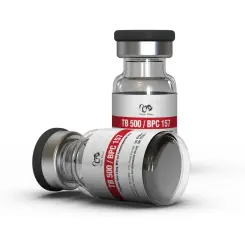
- Accelerates muscle and tendon repair for quick recovery.
- Reduces inflammation systemically and locally.
- Enhances joint and tissue resilience for intense training.
- Supports comprehensive healing for uninterrupted performance.