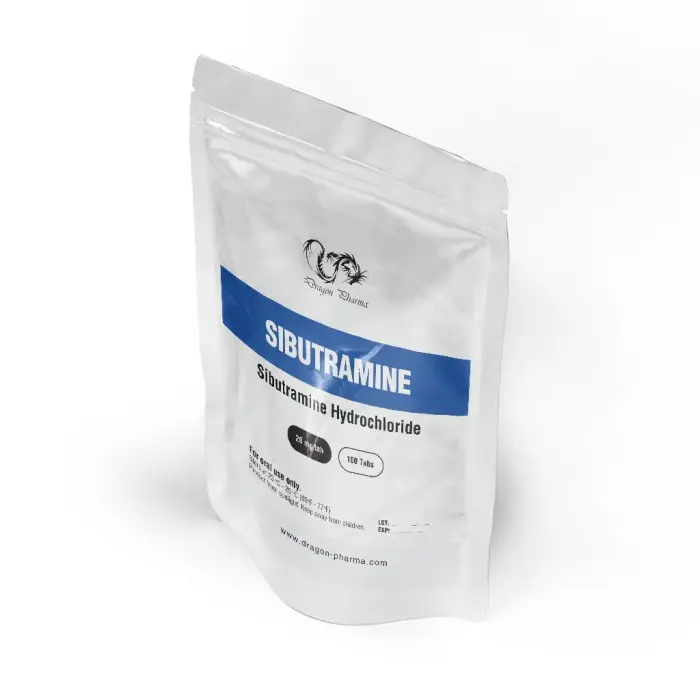
Sibutramine
Sibutramine Dragon Pharma — Overview
Sibutramine Dragon Pharma is an oral CNS-acting appetite suppressant supplied as 20 mg tablets. It is not a steroid, thermogenic, or thyroid compound — it works by blocking the reuptake of serotonin and norepinephrine in the hypothalamus, extending the duration of satiety signals and reducing hunger without raising metabolic rate or core body temperature. The result is a sustained reduction in caloric intake that makes dietary compliance during a structured cut significantly easier to maintain.
This page covers the SNRI mechanism behind sibutramine's appetite-suppressing effect, what it does and does not do, how it compares to clenbuterol and T3, practical combination protocols, cardiovascular and CNS side effects with management guidance, and a cycle structure overview. Available at steroidwarehouse.com as a Dragon Pharma 20 mg tablet.
About the Compound: Sibutramine
Sibutramine hydrochloride is a centrally acting serotonin-norepinephrine reuptake inhibitor (SNRI). Originally developed as an antidepressant and later repurposed for obesity management, it reduces food intake by prolonging the activity of satiety neurotransmitters in the hypothalamus. It does not directly burn fat — its mechanism is entirely demand-side: hunger signals are attenuated, and users eat less as a result.
The compound's active metabolites — desmethylsibutramine and didesmethylsibutramine — are responsible for most of the pharmacological activity and carry plasma half-lives of 14–16 hours. Once-daily morning dosing is sufficient to maintain appetite suppression throughout the day and into the evening. Unlike beta-2 agonists such as clenbuterol, sibutramine does not raise core temperature or basal metabolic rate. Unlike T3, it has no thyroid activity. Fat loss is driven entirely by the caloric deficit it enables.
What Sibutramine Does
Sibutramine has one primary mechanism — appetite suppression via SNRI activity — and the downstream effects follow from sustained caloric deficit rather than direct metabolic or hormonal action:
- Reduces meal size and frequency — users report significantly lower hunger between meals and reduced desire to eat past maintenance; the effect is consistent throughout the day when dosed in the morning, with peak suppression typically 4–6 hours post-dose
- Supports adherence to a caloric deficit over multi-week cuts — the most common reason cutting protocols fail is hunger-driven dietary breaks; sibutramine directly removes that obstacle and sustains the deficit required for fat oxidation
- Mild sympathomimetic-adjacent effects — norepinephrine reuptake inhibition produces minor increases in blood pressure and resting heart rate; these are dose-dependent and are the primary side effects to monitor rather than a therapeutic target
- No thermogenesis, no direct lipolysis — sibutramine does not activate beta-2 receptors, does not raise core temperature, and does not directly break down stored triglycerides; all fat loss is secondary to the caloric deficit it enables
- No androgenic, anabolic, or hormonal activity — does not interact with the HPG axis; no suppression of LH, FSH, or endogenous testosterone
Expectation context: sibutramine does not create fat loss on its own. Users who maintain their training and dietary protocol will see results; users looking for a thermogenic or metabolic booster should consider Clenbuterol Dragon Pharma or T3 Dragon Pharma instead.
Who It's For
- What sets it apart: sibutramine acts on appetite and satiety rather than metabolism. It is the only compound in the steroidwarehouse weight-loss lineup that works primarily through CNS hunger suppression — not thermogenesis, beta-2 stimulation, or thyroid upregulation. The fat loss mechanism is indirect and entirely diet-dependent.
- Best scenario: users whose main obstacle during a cut is hunger and dietary compliance. If you can sustain a deficit when disciplined but find cravings and meal frequency undermining progress week after week, sibutramine directly addresses that failure point. It is particularly effective during AAS or peptide cuts where training and diet structure are already in place.
- Choose something else instead: users who need a metabolic rate increase (T3, CY3), a thermogenic effect without strict dieting (clenbuterol, Helios), or cardiovascular endurance improvement alongside fat loss (GW-501516) will not get those effects from sibutramine.
- Suitable for both male and female users; women typically run 10 mg/day throughout the cycle
- Avoid if baseline blood pressure is already elevated (>130/85 mmHg) or resting HR exceeds 90 BPM before starting
Sibutramine vs Alternatives
| Compound | Key Difference | Choose Sibutramine When | Choose Alternative When |
|---|---|---|---|
| Clenbuterol Dragon Pharma | Beta-2 agonist; raises core temp and metabolic rate via direct lipolysis; does not suppress appetite centrally | Hunger and dietary compliance is the limiting factor; no interest in thermogenic stimulation | You want direct thermogenesis, muscle preservation via anti-catabolic effect, or bronchodilation alongside fat loss |
| T3 Dragon Pharma | Thyroid hormone; increases basal metabolic rate; catabolic without adequate protein; no appetite effect | Appetite is manageable but fat loss has stalled on a reasonable deficit | You need a metabolic accelerator for a hard pre-contest plateau or want to push basal caloric expenditure higher |
| GW-501516 Dragon Pharma | PPAR-δ agonist; improves fat oxidation and endurance; no appetite or thermogenic effect | Primary goal is hunger suppression with minimal cardiovascular impact | You need enhanced cardio performance and fat oxidation rate during training sessions |
| Helios Dragon Pharma | Clenbuterol + yohimbine blend; systemic and localized thermogenic; injection-based protocol | Oral-only protocol; appetite suppression is the primary goal | You want injectable localized fat loss or a dual thermogenic-adrenergic effect across the whole body |
Combinations
| Goal | Stack | Notes |
|---|---|---|
| Basic cut — hunger control only | Sibutramine 10–15 mg/day + high-protein diet | Standalone protocol; most common entry use; no additional compounds required |
| Enhanced thermogenic cut | Sibutramine 10 mg/day + Clenbuterol Dragon Pharma | Clen handles thermogenesis and direct lipolysis; sibutramine handles appetite — complementary mechanisms; monitor BP and resting HR closely; do not stack with additional stimulants |
| Contest prep / hard plateau | Sibutramine 10–15 mg/day + T3 Dragon Pharma | T3 elevates metabolic rate; sibutramine maintains dietary compliance; keep protein at 2.2+ g/kg to offset T3 catabolism; monitor BP |
| AAS cutting cycle support | Sibutramine 10 mg/day alongside testosterone-based cut + Clenbuterol | Addresses diet adherence during aggressive AAS-assisted cuts; sibutramine does not interfere with androgen action or HPG axis management |
| Endurance-focused recomp | Sibutramine 10 mg/day + GW-501516 Dragon Pharma | GW improves fat oxidation during cardio; sibutramine reduces caloric intake; synergistic for recomp-style cuts where cardio volume is high |
Side Effects & Management
| What May Occur | Background | How to Handle It |
|---|---|---|
| Elevated blood pressure | Norepinephrine reuptake inhibition increases sympathetic tone; BP elevation of 2–4 mmHg is typical at 20 mg; more pronounced with pre-existing hypertension or when stacking with stimulant compounds | Monitor BP at baseline and weekly during weeks 1–4; reduce dose to 10 mg if systolic exceeds 140 mmHg; second-line options include Amlip (Amlodipine) or Sartel (Telmisartan) if BP remains elevated after dose reduction |
| Elevated resting heart rate | Sympathomimetic-adjacent effect; average increase of 3–7 BPM at 15–20 mg; rarely clinically significant in healthy users; concern amplifies when stacking with clenbuterol or other adrenergic compounds | Track resting HR each morning; keep below 90 BPM; stagger sibutramine and clenbuterol timing if stacking; avoid adding other stimulants (ephedrine, high-dose caffeine, yohimbine) |
| Dry mouth | SNRI-mediated anticholinergic-adjacent effect; very common at 20 mg; not harmful but affects comfort, particularly during training | Increase water intake throughout the day; no pharmacological intervention required; improves with dose reduction to 10 mg |
| Insomnia / sleep disruption | Most sleep complaints arise from afternoon or evening use; active metabolite half-life of 14–16 hours extends CNS stimulation into the night if taken late in the day | Always dose before 10 AM; if persistent, Meloset (Melatonin) 3–5 mg before bed; reduce dose to 10 mg if insomnia continues past week 2 |
| Headache | Common in the first 1–2 weeks; associated with appetite suppression and reduced food/fluid intake during adjustment rather than direct CNS toxicity | Ensure adequate hydration and a caloric floor above 1,500 kcal/day while adapting; symptoms typically resolve by week 2 without intervention |
| Nausea / GI discomfort | Occurs in a subset of users at 20 mg taken on an empty stomach; serotonin activity in the GI tract contributes to nausea during the first week | Take with a small meal or snack; Motilium (Domperidone) if persistent; reduce to 10 mg if discomfort continues beyond week 1 |
Bloodwork Monitoring
| Lab | When to Test | Target & Action Threshold |
|---|---|---|
| Blood pressure (systolic / diastolic) | Baseline; weekly for weeks 1–4; every 2 weeks thereafter | Target <130/85 mmHg; reduce dose or pause if systolic exceeds 140 mmHg on two consecutive readings |
| Resting heart rate | Daily (morning, before rising); ongoing throughout the run | Target <85 BPM; pause use and reassess if resting HR exceeds 95 BPM; do not combine with stimulants until HR normalizes |
| Lipid panel (HDL, LDL, total cholesterol) | Baseline; repeat at week 6 on runs of 8+ weeks | Sibutramine produces modest adverse lipid effects at higher doses; target LDL <130 mg/dL; if elevated, consider Rosulip (Rosuvastatin) |
| CBC (complete blood count) | Baseline; repeat at week 8 | Routine safety check; no sibutramine-specific hematological concern; confirms no underlying issue exacerbated by prolonged caloric restriction |
| Fasting glucose | Baseline; repeat at week 6 | Relevant when cutting to low bodyweight; target fasting glucose <100 mg/dL; prolonged restriction can affect insulin sensitivity in some users |
Cycle Structure
| Phase | Protocol | Notes |
|---|---|---|
| Weeks 1–2 (intro) | 10 mg/day, morning, with food | Assess BP, HR, and GI tolerance; most side effects surface in this window; do not escalate until both BP and HR are confirmed stable |
| Weeks 3–8 (main cut) | 15–20 mg/day, morning | Escalate to 20 mg only if 15 mg is well tolerated and cardiovascular markers remain stable; 15 mg is sufficient for most users and carries a lower BP/HR burden |
| Weeks 9–12 (extended run) | 10–15 mg/day, morning | Optional taper back to 10 mg for the final phase; total run cap is 12 weeks; appetite gradually normalizes as fat mass decreases and caloric targets become easier to hit without pharmacological support |
| Post-cycle | No PCT required | Sibutramine has no hormonal activity; no SERM, AI, or gonadotropin needed. Hunger typically normalizes within 3–5 days of stopping. Maintain dietary structure post-discontinuation to preserve fat loss results. |
Practical Summary
- Start at 10 mg/day and escalate to 15–20 mg only after confirming BP and resting HR are stable through the first two weeks
- Always dose in the morning — the 14–16 hour active metabolite half-life means afternoon dosing pushes stimulation into sleep hours
- Monitor blood pressure weekly; reduce dose or pause if systolic exceeds 140 mmHg on two consecutive readings
- Do not combine with ephedrine, high-dose caffeine, or yohimbine without closely tracking resting HR; stagger timing carefully if stacking with clenbuterol
- No PCT required — sibutramine has no hormonal activity; appetite rebounds within 3–5 days of stopping; maintain dietary structure post-cycle
- Maximum run is 12 weeks; total cut cap applies regardless of dose — do not extend to manage rebound hunger; structure the diet to stand alone before discontinuing
Sibutramine remains one of the most practical appetite management tools for athletes whose primary obstacle during a structured cut is dietary compliance rather than metabolic rate. Its SNRI mechanism sets it apart from every thermogenic and hormonal fat loss compound in the Steroid Warehouse weight-loss lineup — it does not burn fat directly, it removes the main barrier to burning it. At 10–20 mg/day across a 4–12 week run, users maintaining a well-structured caloric deficit consistently report improved adherence and accelerated progress compared to diet-only protocols. Available through steroidwarehouse as Dragon Pharma 20 mg tablets, it fits cleanly into solo cutting runs or as a compliance layer alongside clenbuterol, T3, or AAS-assisted cuts.
References
| Source | Topic | Link |
|---|---|---|
| Archives of Internal Medicine / PubMed | Arterburn et al. 2004 — systematic review of sibutramine efficacy and safety for weight loss; documents clinically meaningful additional weight reduction versus placebo while also noting blood pressure and pulse-rate concerns that limit risk-benefit interpretation | Arterburn DE, et al. (2004) ↗ |
| New England Journal of Medicine / PubMed | James et al. 2010 (SCOUT trial) — large cardiovascular outcomes trial assessing long-term sibutramine use in overweight or obese patients with preexisting cardiovascular disease and/or type 2 diabetes; key reference for elevated nonfatal myocardial infarction and stroke risk in high-risk patients | James WPT, et al. (2010) ↗ |
| International Journal of Obesity and Related Metabolic Disorders / PubMed | Lean 1997 — clinical efficacy review of sibutramine; summarizes controlled studies showing dose-related weight loss in the 5–30 mg/day range, with 10–15 mg/day commonly discussed as effective clinical dosing | Lean ME (1997) ↗ |
| European Journal of Pharmacology / PubMed | Luque & Rey 2002 — review of the discovery and clinical status of sibutramine as an anti-obesity drug; covers serotonin-norepinephrine reuptake inhibition, active metabolites, weight-loss pharmacology, and cardiovascular safety concerns | Luque CA, Rey JA (2002) ↗ |
| Drugs / PubMed | McNeely & Goa 1998 — detailed review of sibutramine's contribution to obesity management; covers pharmacokinetics, pharmacology, appetite suppression, clinical efficacy, tolerability, and safety considerations including blood pressure effects | McNeely W, Goa KL (1998) ↗ |
How does Sibutramine work?
It inhibits serotonin and norepinephrine reuptake to suppress appetite; see Mechanism of Action. It promotes fat loss—monitor vitals closely.
What is Sibutramine?
Sibutramine is an oral SNRI for weight loss; see What is Sibutramine. It's effective but risky—consult professionals for safe use.
Is Sibutramine safe?
It's conditionally safe with strict monitoring, but withdrawn due to cardiovascular risks; see Side Effects. Avoid in heart conditions—consult professionals.
What is Sibutramine used for?
It's used for weight loss and appetite control in cutting; see Key Benefits. It suits fitness goals—use with professional oversight.
Why was Sibutramine popular for weight loss?
Users often discussed Sibutramine because it may:
- Help reduce hunger and cravings
- Support portion control
- Promote gradual weight-management progress when combined with diet and exercise
It became widely known as an appetite-suppressing medication.
What are the possible side effects?
Potential side effects may include:
- Increased heart rate
- Elevated blood pressure
- Dry mouth
- Insomnia
- Headaches
- Nervousness or anxiety
Responses varied depending on dosage and individual sensitivity.
How long does it take to notice effects from Sibutramine?
Many users report appetite-suppressing effects relatively quickly after beginning use, although individual responses can vary.
What are the main benefits of Sibutramine?
Commonly discussed benefits include reduced hunger, improved portion control, support for weight management, and assistance with maintaining a calorie deficit.
Related Products