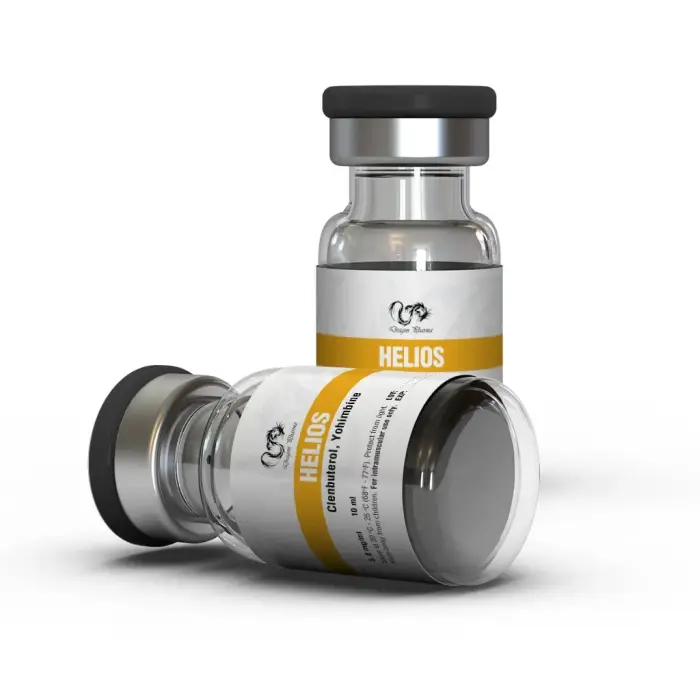
Helios
Helios Dragon Pharma — Injectable Clenbuterol + Yohimbine for Targeted Fat Loss
Helios Dragon Pharma is a dual-action injectable fat-burning solution that pairs Clenbuterol HCl with Yohimbine HCl 5.8 mg/mL in a single 10 mL vial. Where oral fat burners work systemically, the subcutaneous injection route delivers a high local concentration of yohimbine directly into the target fat depot — blocking the alpha-2 adrenergic receptors that make stubborn fat areas resistant to lipolysis — while clenbuterol drives whole-body thermogenesis through beta-2 receptor activation in parallel. Available at Steroid Warehouse in the full Dragon Pharma weight-loss lineup.
This page covers how the two compounds work together, what to expect from each mechanism, practical protocol guidance, possible side effects and how to manage them, and bloodwork monitoring.
About the Compound: Clenbuterol HCl + Yohimbine HCl
Helios contains two pharmacologically distinct agents that address fat loss from opposite sides of the adrenergic signaling pathway.
Clenbuterol HCl is a selective beta-2 adrenergic receptor agonist. Beta-2 receptor activation in adipocytes stimulates adenylate cyclase → cAMP → protein kinase A → hormone-sensitive lipase (HSL) → triglyceride breakdown and free fatty acid release. Systemically, this raises basal metabolic rate through increased thermogenesis in both adipose tissue and skeletal muscle. Clenbuterol also has a mild anti-catabolic effect through mTOR-associated pathways, which is relevant during a caloric deficit. Half-life is approximately 35–40 hours.
Yohimbine HCl is a selective alpha-2 adrenergic receptor antagonist. Alpha-2 receptors are expressed at high density in certain subcutaneous fat depots — characteristically the lower abdomen, flanks, and inner thighs. These receptors normally inhibit adenylate cyclase and suppress cAMP-driven lipolysis, which is why these areas respond poorly to caloric restriction alone. Injected subcutaneously into or adjacent to the target depot, yohimbine achieves a local concentration at the alpha-2 receptor site that oral dosing cannot reproduce. The result is a site-specific disinhibition of lipolysis that complements the systemic thermogenic effect running simultaneously.
What Helios Does
Helios acts through two distinct receptor pathways that address different aspects of fat mobilization. In practice, athletes running Helios report the following:
- Raised whole-body thermogenesis — beta-2 adrenergic activation in adipose and skeletal muscle increases basal metabolic rate; more calories are burned at rest throughout the day during the run
- Systemic lipolysis — cAMP → PKA → HSL pathway drives free fatty acid mobilization from all fat stores; this effect occurs regardless of injection site
- Localized alpha-2 blockade at the injection site — yohimbine disinhibits lipolysis specifically in the alpha-2 receptor-dense subcutaneous depot where the needle is placed; this is the effect that oral fat burners cannot replicate
- Mild lean mass retention — clenbuterol has a documented anti-catabolic effect through mTOR-associated pathways; not anabolic, but it supports preservation of existing lean mass during a caloric deficit
- No androgenic, estrogenic, or hormonal activity — Helios does not affect testosterone, estrogen, or any axis of the HPG system; it produces no mass gain and no hormonal change
On expectations: Helios is a finishing tool, not a primary fat-loss driver. It does not replace a caloric deficit and does not produce dramatic scale results. Its localized alpha-2 blockade effect becomes meaningful only when overall body fat is already low and the remaining stubborn deposits are the specific target.
Who It's For
Helios is specific. A general clenbuterol user can get the systemic thermogenic effect from oral Clenbuterol Dragon Pharma at a fraction of the cost and without injections. What Helios adds is the subcutaneous yohimbine component — and that localized alpha-2 blockade only matters in a narrow set of circumstances.
What differentiates Helios from oral alternatives: oral yohimbine distributes systemically through first-pass metabolism and reaches the alpha-2 receptor in target fat depots at a fraction of the concentration delivered by subcutaneous injection into that depot. The local blockade at the injection site is substantially stronger — that is the entire pharmacological rationale for the injectable format.
The specific scenario where Helios is the better choice:
- Athletes already at low body fat — roughly sub-15% for men, sub-22% for women — who retain specific stubborn deposits in lower abdomen, flanks, or inner thighs that have not responded to extended caloric restriction or oral fat burners
- Pre-contest or pre-photoshoot phase where the target is the last visible layer of subcutaneous fat over alpha-2 receptor-dense regions
- Users who have run oral clenbuterol before and understand their personal stimulant tolerance; Helios is not a first-experience fat burner
Who should choose something else: athletes with a higher body fat starting point get more value from oral Clenbuterol Dragon Pharma — the localized SubQ advantage of Helios is irrelevant when the goal is broad fat reduction rather than targeted depot work. Users who are stimulant-sensitive should avoid both clenbuterol and yohimbine, as neither component can be separated from the blend.
Helios vs Alternatives
| Compound | Key Differences | Choose Helios When | Choose Alternative When |
|---|---|---|---|
| Clenbuterol Dragon Pharma | Oral tablet; systemic beta-2 agonist only; no localized alpha-2 blockade; no injection required; lower cost per cycle | Stubborn alpha-2 dense depots are the remaining problem after general fat loss; the localized SubQ yohimbine effect is the specific goal | General fat loss from a higher body fat starting point; avoiding injections; cost is a priority; first run with a beta-2 agonist |
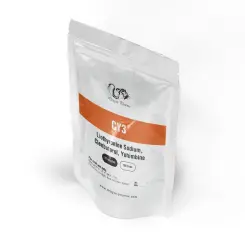
| CY3 Dragon Pharma | Oral blend of Clenbuterol + Yohimbine + T3; adds thyroid-driven metabolic acceleration; no localized SubQ effect; capsule format | Localized subcutaneous alpha-2 blockade at specific depots is the primary objective; no T3 is wanted in the protocol | Adding T3-driven thyroid acceleration to the stack is the goal; oral-only protocol preferred; aggressive whole-body metabolic acceleration is acceptable |
| GW501516 Dragon Pharma | PPARδ agonist; improves fat oxidation and endurance capacity; oral; no stimulant or adrenergic activity; no localized effect | Thermogenic + localized adrenergic fat mobilization is the mechanism needed and stimulant response is well tolerated | Endurance improvement alongside fat oxidation is a priority; stimulant-sensitive user; oral-only protocol |
| Sibutramine Dragon Pharma | CNS appetite suppressant via SNRI mechanism; reduces hunger signaling; no thermogenesis; no localized fat-mobilizing effect | Energy expenditure and thermogenesis are the primary fat-loss drivers; appetite control is not the limiting factor in the deficit | Caloric adherence is the main challenge; controlling hunger is more important than raising metabolic rate |
Combinations
Helios is most commonly added as a finishing layer to an existing cycle or cutting stack. The combinations below reflect the contexts where its localized SubQ effect and systemic thermogenesis are most useful.
| Goal | Stack | Protocol | Notes |
|---|---|---|---|
| Pre-contest definition — final stage | Helios + Masteron 100 DP + Winstrol 50 DP |
Helios 1 mL/day SubQ in target depots · Masteron 100 EOD · Winstrol 50 mg/day last 4–6 weeks | DHT compounds eliminate subcutaneous water retention and produce a hard, dry appearance; Helios targets residual alpha-2 resistant fat deposits in the final weeks when everything else is already dialed in |
| Cutting with lean mass preservation | Helios + Enantat 250 DP + T3 Dragon Pharma |
Helios 0.5–1 mL/day · Enantat 250 mg/wk · T3 25–50 mcg/day · 8–12 weeks | Low-dose testosterone prevents catabolism during an aggressive deficit; T3 raises BMR through the thyroid axis; Helios adds adrenergic thermogenesis and localized lipolysis on top |
| Fat oxidation + localized targeting | Helios + GW501516 Dragon Pharma |
Helios 0.5–1 mL/day SubQ · GW501516 10–20 mg/day · 6–8 weeks | GW501516 improves mitochondrial fat oxidation and endurance via PPARδ — a complementary mechanism with no stimulant overlap; compatible with the adrenergic load of Helios |
| Standalone — first Helios run | Helios alone | Start 0.5 mL/day · titrate to 1 mL over 7–10 days · 5 days on / 2 days off · 4–6 weeks | Establishes individual stimulant tolerance before stacking additional compounds; suitable for experienced users trying Helios specifically for the first time |
Side Effects & Management
Side effects arise from both the clenbuterol (beta-2 adrenergic) and yohimbine (alpha-2 antagonist / central norepinephrine) components. The two compounds produce overlapping cardiovascular and CNS stimulation that is additive at higher doses.
| What May Occur | Background | How to Handle It |
|---|---|---|
| Elevated heart rate / palpitations | Beta-2 adrenergic activation increases cardiac chronotropy; most pronounced in the first 1–2 weeks before partial tolerance develops | Start at 0.5 mL and titrate gradually. Sustained resting HR >100 bpm → reduce dose. If palpitations persist: Nebicard (Nebivolol) at low dose can blunt the cardiac rate response without fully blocking the lipolytic effect |
| Blood pressure elevation | Both clenbuterol and yohimbine increase sympathetic tone; rise is typically modest at low doses but amplified in stacked protocols or at maximum dose | Monitor weekly. If SBP >140 mmHg: dose reduction first. Persistent elevation: Amlip (Amlodipine) or Sartel (Telmisartan) |
| Tremors / muscle cramps | Tremors from direct beta-2 skeletal muscle activation; cramps from intracellular potassium shift — beta-2 stimulation promotes K+ uptake by skeletal muscle, lowering serum potassium | Dose reduction resolves tremors in most cases. Supplement potassium (potassium citrate 400–800 mg/day with meals) throughout the run. Test serum potassium if cramps persist |
| Insomnia / sleep disruption | Clenbuterol's ~35–40-hour half-life means afternoon or evening dosing produces meaningful plasma levels through the night; yohimbine also increases CNS adrenergic tone | Strict morning dosing. If insufficient: Meloset (Melatonin) 3–5 mg at bedtime as first step; Zopisign (Zopiclone) if melatonin is insufficient |
| Anxiety / CNS restlessness | Alpha-2 blockade by yohimbine increases central norepinephrine release; combined with clenbuterol's peripheral adrenergic load, CNS stimulation can be pronounced in sensitive individuals, especially on an empty stomach | Reduce dose. Dose with food — yohimbine is significantly more activating on an empty stomach. Avoid caffeine throughout the protocol |
| Blood glucose rise | Clenbuterol stimulates hepatic glycogenolysis and can transiently reduce peripheral insulin sensitivity; relevant mainly at higher doses or in users with borderline glucose metabolism | Check fasting glucose at baseline. FBG above 110 mg/dL: reduce carbohydrate load around the dose window. Glucophage (Metformin) 500 mg if glucose remains elevated on repeat testing |
| Injection site reactions | Subcutaneous injection of yohimbine solution can produce a localized burning sensation; repeated injection into the same site causes tissue irritation | Use a 25–27G insulin syringe; inject slowly; rotate sites each session across the target depots (lower abdomen, flanks, glutes); do not re-inject the same site on consecutive days |
Bloodwork Monitoring
Neither compound affects hormonal or lipid parameters in the same way as AAS. Monitoring for Helios focuses on cardiovascular and metabolic markers that reflect adrenergic stimulation.
| Lab | When to Test | Target & Action Threshold |
|---|---|---|
| Blood pressure | Before starting; weekly throughout | Target <130/80 mmHg. SBP >140 mmHg on two consecutive readings → reduce dose; add Amlip or Sartel if lifestyle changes are insufficient |
| Resting heart rate | Daily self-monitoring (morning, before caffeine) | Target <80 bpm at rest. Sustained >100 bpm → reduce dose. >110 bpm or irregular rhythm → stop and assess |
| Fasting blood glucose | Before start; every 2 weeks | Target 70–99 mg/dL. 100–125 mg/dL → reduce dose + adjust diet. >126 mg/dL → pause protocol |
| Serum potassium | Before start; mid-cycle if cramps or weakness develop | Target 3.5–5.0 mEq/L. <3.5 mEq/L → supplement and retest within 1 week. <3.0 mEq/L → pause protocol |
| ECG (optional) | Baseline for users with cardiac history or known arrhythmia risk | Normal sinus rhythm. Any new arrhythmia or significantly prolonged QTc → stop Helios immediately |
Protocol & Administration
Helios is injected subcutaneously into or immediately adjacent to the target fat depot using an insulin-gauge syringe. The subcutaneous route is what separates it from oral clenbuterol and yohimbine combinations — the local yohimbine concentration at the injection site is the pharmacological advantage.
| Parameter | Value | Notes |
|---|---|---|
| Starting dose | 0.5 mL/day | Delivers 2.9 mg Yohimbine HCl; assess cardiovascular and CNS tolerance before increasing |
| Maximum dose | 1 mL/day | Delivers 5.8 mg Yohimbine HCl; titrate up over 7–10 days if 0.5 mL is well tolerated |
| Cycle pattern | 5 days on / 2 days off | Beta-2 receptor downregulation begins within days of continuous exposure; the 2-day break preserves receptor sensitivity throughout the cycle |
| Cycle length | 4–8 weeks | Diminishing returns beyond 8 weeks as beta-2 desensitization accumulates even with the on/off pattern |
| Injection timing | Morning only | Clenbuterol's ~35–40-hour half-life means any dose taken after noon produces active plasma levels through the night and impairs sleep |
| Injection sites | Rotate across target depots | Lower abdomen, flanks, glutes, inner thighs — areas with highest alpha-2 receptor density; rotate per session to avoid site irritation and tissue damage |
| Syringe gauge | 25–27G insulin syringe | SubQ injection; fine gauge minimizes discomfort and tissue trauma at the site |
| PCT | Not required | Neither clenbuterol nor yohimbine suppresses the HPG axis; natural testosterone production is unaffected |
Practical Summary
- Start at 0.5 mL/day and titrate to 1 mL over 7–10 days — clenbuterol's adrenergic load needs acclimation before running at the top dose; leading with 1 mL on day 1 is the most common cause of intolerance
- Inject strictly in the morning — the ~35–40-hour clenbuterol half-life means any dose taken after noon is active through the night; insomnia is predictable without morning-only timing
- Follow a 5-days-on / 2-days-off schedule throughout — beta-2 receptor downregulation begins within days of continuous exposure; the break is not optional and is what keeps the thermogenic effect active across a full 6–8 week run
- Rotate injection sites across the target fat depots each session — the localized alpha-2 blockade is site-specific and maximal when the same depot is not re-injected consecutively; rotating also prevents injection site tissue reactions
- Monitor resting heart rate daily — sustained HR >100 bpm at rest is the primary signal to reduce dose before adding any pharmaceutical intervention; this check costs nothing and gives an immediate read on adrenergic load
- Supplement potassium throughout the run — beta-2 stimulation shifts K+ intracellularly; muscle cramps are the early symptom of subclinical hypokalemia and a consistent complaint at the 1 mL/day dose without potassium support
Helios remains one of the most targeted fat-loss tools available for athletes who have already completed the bulk of their cut and face the problem of stubborn, alpha-2 receptor-dense depots that resist both caloric restriction and systemic fat burners. Its injectable yohimbine component provides a local alpha-2 blockade at the injection site that oral yohimbine cannot replicate, while clenbuterol ensures systemic thermogenesis is running in parallel. For the right candidate — lean, experienced, with specific areas to target — it performs a function no oral fat burner in the lineup can. Steroid Warehouse carries Helios Dragon Pharma alongside the complete Dragon Pharma weight-loss catalog for a full pre-contest protocol in one order.
References
| Source | Topic | Link |
|---|---|---|
| Journal of Lipid Research / PubMed | Lafontan & Berlan 1993 — comprehensive review of adrenergic receptor subtypes in white and brown adipose tissue; covers beta-adrenergic stimulation of lipolysis, alpha-2 adrenergic inhibition of lipolysis, cAMP-mediated signaling, and species differences in adipocyte adrenergic regulation | Lafontan M & Berlan M (1993) ↗ |
| Bioscience Reports / PubMed | Emery et al. 1984 — animal study examining chronic beta-2 adrenergic agonist exposure, body composition, skeletal muscle hypertrophy, and protein synthesis; foundational preclinical evidence for clenbuterol-related repartitioning and anti-catabolic mechanisms | Emery PW, et al. (1984) ↗ |
| Medicine & Science in Sports & Exercise / PubMed | Prather et al. 1995 — review of clenbuterol use in athletics, covering beta-2 agonist pharmacology, reported fat-loss and anabolic claims, animal husbandry evidence, anti-doping concerns, and the lack of controlled human efficacy and safety trials at the time of publication | Prather ID, et al. (1995) ↗ |
| Research in Sports Medicine / PubMed | Ostojic 2006 — randomized controlled trial examining yohimbine supplementation in professional soccer players; reports changes in body composition while finding no meaningful improvement in exercise performance markers | Ostojic SM (2006) ↗ |
| European Journal of Clinical Investigation / PubMed | Galitzky et al. 1988 — human study showing that oral yohimbine, an alpha-2 adrenergic antagonist, can increase lipid mobilization in healthy male volunteers; mechanistic support for alpha-2 blockade as a fat-mobilization pathway, especially in the context of fasting and adrenergic stimulation | Galitzky J, et al. (1988) ↗ |
What is Helios?
Helios is an injectable blend of Clenbuterol and Yohimbine for fat loss; see What is Helios. It's ideal for cutting—consult professionals for safe use.
What is Helios used for?
Helios is used for fat loss and muscle definition in cutting cycles; see Key Benefits. It suits bodybuilders—use with professional oversight.
How does Helios work?
It boosts thermogenesis and fat mobilization via beta-2 and alpha-2 receptors; see Mechanism of Action. It delivers a shredded look—monitor with labs.
What are the side effects of Helios?
Side effects include jitters, increased heart rate, and tremors; see Side Effects. Manage with monitoring—consult professionals for safety.
How long does Helios stay in your system?
With half-lives of 36-48 hours (Clen) and 1-2 hours (Yohimbine), it's detectable for ~4-7 days; see Mechanism of Action. Plan cycles—consult professionals.
How long does it take to see results from Helios?
Results vary depending on body fat level, diet, training, and consistency. Changes are typically gradual and most noticeable when combined with a structured calorie deficit.
What are the main benefits of Helios?
Commonly discussed benefits include enhanced fat mobilization, support for stubborn fat reduction, improved body contouring, and increased metabolic activity in targeted areas.
Is Helios used for overall fat loss or spot reduction?
Helios is most often associated with localized fat reduction strategies, though overall fat loss still depends primarily on diet and training.
Related Products