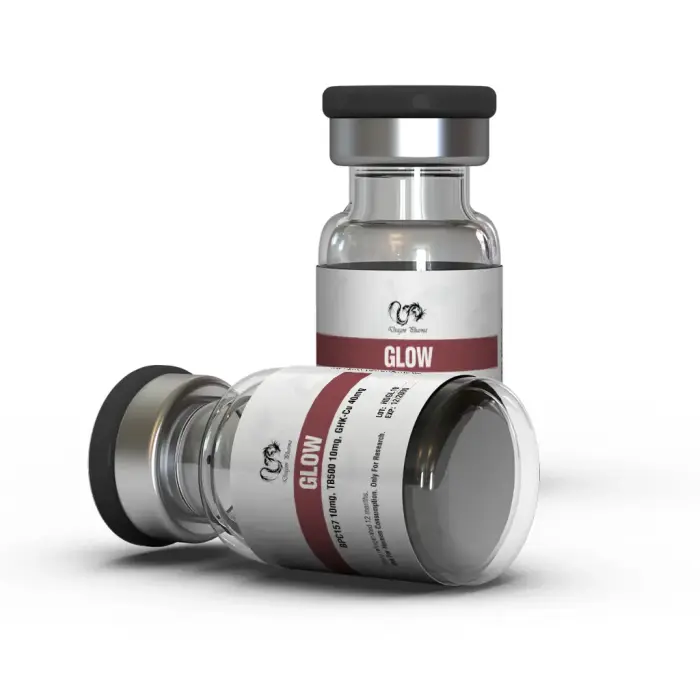
Glow Blend
What Is Glow Blend 60 mg?
Glow Blend 60 mg is a single Dragon Pharma vial holding three peptides in one lyophilised cake: BPC-157 for local tissue repair, TB-500 for systemic cell migration, and GHK-Cu for collagen and skin. Sixty milligrams is the total content of the vial, not the dose of each component, and the product page does not publish the split. Treat it as a three way blend with a copper peptide inside and dose the vial, not a pretend split.
That arithmetic is the useful part. At 1 mg per day the vial lasts two months; at 2 mg it lasts a month; at 0.5 mg it stretches to four. TB-500 clears over days while the other two clear within hours, so one daily shot gives a sawtooth rather than a flat level. The skin effect needs weeks before anything is visible.
Glow Blend 60 mg Dosage
Everything goes under the skin, into a pinch of fat beside the navel or over the area being rehabbed. Reconstitute with 3 ml of bacteriostatic water for 20 mg per ml, which makes 1 mg equal five units and keeps the numbers readable.
| Level | Dose | Units | Cycle | Note |
|---|---|---|---|---|
| Low | 0.5 mg daily | 2.5 units at 20 mg/ml | 8 weeks | 120 doses, gentle start |
| Standard | 1 mg daily | 5 units | 4-8 weeks | 60 doses from the vial |
| High | 2 mg daily | 10 units | 4 weeks | 30 doses, copper load rises |
Cycle Length
Four to eight weeks is the practical window for a repair protocol, and skin or hair changes need the longer end. Two injections a day are common when the goal is tendon work, because the BPC-157 fraction is gone within hours either way. A break of equal length between runs keeps the copper intake honest.
Glow Blend 60 mg Stacks
Blends are convenient but fixed, so a single peptide is added to push the fraction that matters: BPC-157 for a tendon, GHK-Cu for skin.
| Partner | Role | Effect |
|---|---|---|
| BPC-157 | Local repair | more of the gut and tendon fraction |
| TB-500 | Systemic healing | longer acting coverage between shots |
| GHK-Cu 50 mg | Collagen and skin | adds copper peptide without extra BPC |
| Klow Blend 80 mg | Four peptide version | same base plus KPV for inflammation |
The BPC-157 and TB-500 pair is the two component version of this idea, and it is easier to reason about if you want to know exactly what each milligram is doing. The injury recovery overview sets out where these peptides sit next to rest and physiotherapy.
Glow Blend 60 mg Side Effects
Reported reactions are mostly local: a red spot, a small lump, occasional itch for a day. GHK-Cu adds a copper load, and that is the part worth thinking about before a long run rather than after it.
- Injection site redness, swelling, or a lingering lump
- Fatigue or a mild flu-like feeling in the first days
- Copper accumulation with high dose or long use
- Headache and flushing after a larger shot
- Allergic reaction, rare but possible with any peptide
Stop for spreading rash, fever, or joint pain that starts after the first shots. The blend cannot be split, so a reaction to one component means dropping the vial rather than adjusting a ratio.
Support and Supplies
Three peptides in one cake behave differently from a single peptide, and the practical kit is the same: water, pins, and somewhere cold to keep the mixed vial.
- Bacteriostatic water, 3 ml for a 20 mg/ml mix that stays stable for weeks
- Insulin syringes in 31 gauge, one per shot, never reused
- Liv.52 and Ursocol for people running a long protocol alongside oral medication
- Ecosprin, low dose aspirin, only where a clinician has already recommended it for cardiovascular reasons
Keep the mixed vial at 2-8 C, out of light, with the mix date on the label. A cloudy solution or a colour change means discard, not shake harder. The peptide primer covers the basics of handling these vials.
Other strengths in the line
Where to Buy Glow Blend 60 mg
Steroid Warehouse lists the vial under the peptide category with the concentration printed on the box, and the batch number should match between box and vial. Check that the cake is intact before reconstitution, photograph the label, and keep one unopened vial as a reference when a second order arrives. The counterfeit checklist covers what usually gives a copy away.
This information is for educational purposes only. These products are not approved medicines in most countries, human safety data is limited, and self-administration carries risk. Speak to a physician before use.
All products from this manufacturer are listed together in the Dragon Pharma range.
What is BPC-157 and TB 500 good for?
It accelerates healing; see What is BPC-157 and TB 500 Good For. It's effective; for safe use.
What is GHK-Cu BPC-157 TB 500 blend?
It's a regeneration blend; see What is GHK-Cu BPC-157 TB 500 Blend. Monitor with care.
Does GHK-Cu actually work?
Yes, for skin and repair; see Does GHK-Cu Actually Work. Use with guidance.
How much GHK-Cu per day?
1-2 mg in blend; see How Much GHK-Cu Per Day. Adjust with oversight.
What is this peptide stack commonly used for?
This stack is commonly associated with.
- Recovery support
- Joint, tendon, and connective tissue wellness
- Skin and hair support
- Mobility and rehabilitation-focused protocols
It is widely discussed in peptide wellness and performance communities.
When are effects usually noticed?
Users commonly report.
- Gradual recovery and mobility improvements over weeks
- Better flexibility and movement quality
- Skin and tissue-support benefits with consistent use
Results depend on consistency, activity level, and lifestyle habits.
What is Glow Blend used for?
Glow Blend is commonly associated with research involving:.
- Skin rejuvenation
- Tissue repair
- Wound healing
- Collagen production
- Hair and scalp health
- Cellular regeneration
How does Glow Blend work?
Glow Blend combines three peptides with complementary mechanisms of action:.
- GHK-Cu is studied for its potential role in collagen synthesis, skin remodeling, and cellular repair.
- BPC-157 is investigated for its potential effects on soft tissue repair and angiogenesis.
- TB-500 is researched for its potential to promote cell migration, tissue remodeling, and recovery.
Together, these peptides are investigated for their potential synergistic effects on regenerative processes..
Related Products