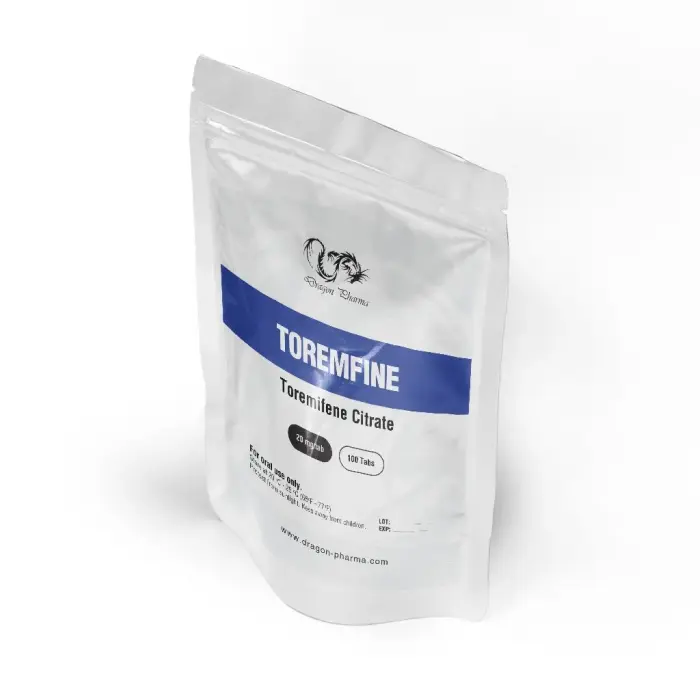
Toremfine
Toremfine Dragon Pharma — Overview
Toremfine Dragon Pharma contains toremifene, a third-generation selective estrogen receptor modulator (SERM) from the triphenylethylene family — the same structural class as tamoxifen, but with a distinct metabolic profile that makes it a preferred alternative for a portion of AAS users who find tamoxifen difficult to tolerate. Toremifene competitively blocks estrogen receptors in breast tissue (preventing and reversing gynecomastia) while preserving partial estrogenic activity in bone and liver, and stimulates hypothalamic-pituitary release of LH and FSH to drive endogenous testosterone recovery during and after an AAS cycle. The 20 mg tablet format allows flexible dose titration across the standard PCT protocol range.
Within the Dragon Pharma lineup available at steroidwarehouse.com, Toremfine occupies the same functional role as Nolvadex Dragon Pharma (tamoxifen) but with two practical advantages that make it a meaningful clinical distinction rather than a like-for-like swap: toremifene is not converted to reactive epoxide metabolites associated with tamoxifen's longer-term organ toxicity concerns, and its ocular side effect profile is substantially cleaner — a relevant difference for users who have experienced visual disturbances on tamoxifen or who plan extended use over 6–12 weeks.
About the Compound: Third-Generation SERM Mechanism
SERMs (selective estrogen receptor modulators) work by binding competitively to estrogen receptors and producing tissue-selective responses — acting as antagonists in some tissues while preserving or mimicking estrogenic activity in others. This selectivity is what makes SERMs pharmacologically distinct from aromatase inhibitors (which reduce circulating estrogen levels globally) and from full estrogen agonists or antagonists. Understanding the specific mechanism of toremifene, and how it differs from tamoxifen at the molecular level, explains both its clinical advantages and its practical position in a PCT or on-cycle support protocol.
- Estrogen receptor antagonism in breast tissue — toremifene binds the estrogen receptor alpha (ERα) with high affinity and competitively displaces endogenous estradiol from the receptor; in breast tissue, the toremifene-ER complex recruits co-repressor proteins rather than the co-activator complexes recruited by estradiol, producing a net anti-estrogenic transcriptional signal; this blocks the estrogenic stimulation of breast glandular tissue that drives gynecomastia; the antagonism is competitive and dose-dependent — higher circulating E2 from aromatizing AAS cycles requires higher toremifene doses to maintain effective receptor blockade; the same ERα antagonism in breast tissue is why toremifene (like tamoxifen) is used clinically as a treatment for ER-positive breast cancer
- Hypothalamic-pituitary LH and FSH stimulation — the HPG axis suppression produced by exogenous AAS is mediated in part through estrogen receptor activation in the hypothalamus and pituitary, where estradiol exerts negative feedback on GnRH, LH, and FSH secretion; toremifene blocks these hypothalamic and pituitary estrogen receptors, removing the estrogenic component of negative feedback and allowing endogenous GnRH, LH, and FSH secretion to resume; the result is rising gonadotropin levels that drive testicular Leydig cell testosterone synthesis; this is the primary mechanism of toremifene's usefulness in PCT — it accelerates the recovery of the HPG axis that was suppressed during an AAS cycle; the LH stimulation from toremifene is broadly comparable to tamoxifen, with some comparative data suggesting a slight advantage in LH pulse amplitude
- Distinction from tamoxifen: metabolic pathway and safety profile — tamoxifen is metabolised in the liver primarily to 4-hydroxytamoxifen and then to endoxifen, the most potent active metabolite; during this metabolic process, reactive epoxide intermediates are generated that have been associated with hepatotoxic and potentially genotoxic effects with long-term use; toremifene undergoes a different hepatic metabolic pathway that does not produce these reactive epoxide intermediates, making it pharmacologically cleaner from a liver safety standpoint; this distinction is particularly relevant for users running toremifene for more than 4–6 weeks or following cycles with significant hepatic load (oral AAS, elevated liver enzymes); toremifene also lacks tamoxifen's significant stimulation of triglyceride synthesis, which can elevate serum triglycerides and worsen the lipid profile impact of AAS cycles
- Distinction from tamoxifen: ocular profile — tamoxifen is associated with dose-dependent retinal toxicity (tamoxifen maculopathy, corneal deposits, decreased visual acuity) at high cumulative doses and with extended use; toremifene's ocular safety data is substantially cleaner, with no reports of the retinal deposition pattern seen with tamoxifen; for users who have experienced visual disturbances on tamoxifen (light sensitivity, blurred vision, colour perception changes) or who require extended SERM use (>6 weeks), toremifene is the preferred alternative
- Half-life and dosing pharmacokinetics — toremifene has a plasma half-life of approximately 5 days (range: 4–6 days), slightly shorter than tamoxifen (~7 days); once-daily oral dosing achieves stable plasma concentrations within 4–6 weeks of consistent use; for PCT purposes, toremifene is typically administered at 60 mg/day for the first 2 weeks (highest HPG axis stimulation when suppression is most profound) stepping down to 40 mg/day for weeks 3–4; for on-cycle gyno management, 60 mg/day is maintained continuously until symptoms resolve; the 20 mg tablet allows 3-tablet and 2-tablet daily dosing without cutting
What Toremfine Does
- Post-cycle HPG axis recovery — the most central function of Toremfine in a bodybuilding context is driving the recovery of endogenous testosterone production after an AAS cycle; by blocking hypothalamic and pituitary estrogen receptors, toremifene removes the estrogenic component of negative feedback that keeps LH and FSH suppressed during the period immediately following cycle cessation; within 7–14 days of starting Toremfine at 60 mg/day, serum LH and FSH begin to rise, followed by increasing testicular testosterone output over weeks 2–4 of PCT; the rate of recovery depends on the depth and duration of suppression from the preceding cycle, but most users running a standard 12–16 week testosterone-based cycle recover to functional endogenous testosterone levels within 4–6 weeks of Toremfine PCT; longer or more suppressive cycles (involving 19-Nor compounds, high-dose multi-compound protocols) typically require the full 6-week PCT or the addition of HCG and/or Clomid to achieve adequate recovery
- Gynecomastia prevention during AAS cycles — when used on-cycle during periods of elevated E2 from aromatizing AAS (testosterone, Dianabol, Anadrol), toremifene at 60 mg/day competitively blocks breast tissue estrogen receptors, preventing the glandular tissue proliferation and breast sensitivity that precede clinical gynecomastia; this on-cycle use is most appropriate when aromatase inhibitors (AIs) are producing unwanted side effects at doses sufficient for gyno prevention, or when gyno breakthrough occurs despite adequate AI use; toremifene does not lower serum E2 (it is not an AI), so its use does not carry the joint pain, libido suppression, or cardiovascular HDL-lowering effects associated with aggressive AI protocols
- Gynecomastia reversal — at early stages of gyno development (breast sensitivity, small glandular lump without significant fibrosis), toremifene at 60 mg/day for 6–12 weeks can reduce or eliminate existing breast tissue growth by blocking ER-mediated glandular stimulation and allowing the body's natural resorptive processes to reverse early-stage glandular proliferation; this reversal effect is most reliable when gyno has been present for less than 6–12 months and no significant fibrosis has developed; established fibrotic gynecomastia does not respond meaningfully to SERM treatment and requires surgical intervention; early intervention is significantly more effective than delayed treatment
- Favourable lipid profile impact — unlike AAS which uniformly suppress HDL and often raise LDL, toremifene's partial estrogenic activity in the liver produces modest LDL-lowering and HDL-neutral effects; during PCT, when endogenous testosterone is still recovering and AAS-induced lipid damage is partially reversing, toremifene does not add further lipid-adverse burden; this contrasts with the concern that some SERMs (particularly clomiphene) can raise triglycerides in susceptible individuals; toremifene's lipid profile is cleaner than tamoxifen and comparable to or better than clomiphene for most users
- Estrogenic bone and liver effects (preserved) — unlike full estrogen antagonists, toremifene acts as a partial agonist at estrogen receptors in bone tissue, preserving bone mineral density effects during the low-estrogen window of PCT; this is pharmacologically relevant for users who run extended PCT periods or who follow prolonged AAS use with significant E2 suppression; in the liver, the partial estrogenic agonism drives the modest LDL-lowering effect noted above and does not produce the hepatocellular toxicity associated with oral 17-alpha-alkylated AAS
Who It's For
- What sets Toremfine apart from other SERMs in the Dragon Pharma lineup: toremifene's core advantages over tamoxifen (Nolvadex) are a cleaner hepatic metabolic pathway (no reactive epoxide intermediates) and a substantially better ocular safety profile — the two most practically significant tolerability differences between these otherwise closely related compounds; compared to Clomid Dragon Pharma (clomiphene), toremifene produces milder mood and vision side effects while providing comparable estrogenic HPG axis blockade, but Clomid provides stronger direct LH pulsatility stimulation from its follicle-stimulating properties that can be beneficial in severe suppression cases; compared to Raloxifene Dragon Pharma, toremifene's LH/FSH stimulation is stronger (raloxifene has weaker hypothalamic SERM activity), making toremifene the better PCT choice while raloxifene is preferred for refractory or established gyno; compared to Enclomiphene Dragon Pharma, toremifene carries some estrogenic partial agonism (useful for maintaining mood, bone density, and lipids during low-E2 PCT), whereas enclomiphene is fully non-estrogenic and produces stronger LH pulsatility with less estrogenic side effects
- Best scenario: users seeking a tamoxifen alternative with a cleaner tolerability profile — particularly those who have experienced visual disturbances, mood volatility, or GI issues on Nolvadex; users running PCT following testosterone-based cycles (enanthate, cypionate, propionate, or blends) of moderate length (10–16 weeks) where standard HPG axis recovery protocols are appropriate; users with elevated baseline liver enzymes from oral AAS use who want to minimise additional hepatic metabolite burden during PCT; users managing early-stage on-cycle gyno symptoms who prefer ER blockade over AI-driven E2 suppression (preserving E2's positive effects on libido and joints while protecting breast tissue)
- Choose something else instead: users who specifically need the strongest possible LH stimulation for severe or prolonged HPG suppression — Enclomiphene or a Clomid-inclusive protocol provides superior direct gonadotropin drive; users with established fibrotic gynecomastia (present for >12–18 months) where no SERM will be effective and surgical consultation is the appropriate path; users who want AI-level E2 reduction on-cycle — toremifene does not lower serum E2 and should not replace Aromasin or Arimidex for controlling aromatization-related water retention, blood pressure elevation, or cardiovascular risk during an AAS cycle
Toremfine vs Alternatives
| Compound | Key Differences | Choose Toremfine When | Choose Alternative When |
|---|---|---|---|
| Nolvadex Dragon Pharma Tamoxifen Citrate · 20 mg |
Tamoxifen and toremifene share the same triphenylethylene scaffold and broadly equivalent ER antagonism in breast tissue and ER blockade at the hypothalamus/pituitary; tamoxifen is metabolised to endoxifen (more potent active metabolite) via CYP2D6 — users who are poor CYP2D6 metabolisers may get weaker response from tamoxifen but normal response from toremifene; tamoxifen generates reactive epoxide intermediates not produced by toremifene; tamoxifen has more documented ocular toxicity risk at cumulative doses; tamoxifen is more extensively studied for PCT and its efficacy data is broader; both are once-daily oral SERMs with ~5–7 day half-lives | Visual disturbances, mood changes, or elevated liver enzymes have been experienced on Nolvadex; extended PCT duration (>6 weeks) is planned; CYP2D6 poor metaboliser status is suspected (reduced tamoxifen conversion to endoxifen); liver enzyme support during PCT is a priority | Tamoxifen is well tolerated from prior use with no ocular or hepatic concerns; strong clinical efficacy data from prior cycles confirms response; cost or availability favours Nolvadex; the user has not previously trialled either compound and wants to start with the more extensively documented SERM |
| Clomid Dragon Pharma Clomiphene Citrate · 50 mg |
Clomiphene is a mixed SERM consisting of the active enclomiphene isomer and the inactive zuclomiphene isomer; clomiphene produces stronger direct LH pulsatility stimulation than toremifene, making it more effective for severe HPG suppression recovery; however, clomiphene is more associated with mood disturbances (emotional volatility, depression, anxiety) and visual disturbances (blurring, floaters, light sensitivity) than toremifene; clomiphene's LH-stimulating advantage is primarily relevant for users recovering from prolonged or highly suppressive cycles; for moderate cycles, toremifene provides equivalent HPG recovery with a better side effect profile; they are often combined (Toremfine + Clomid at lower Clomid doses) for synergistic HPG axis stimulation | Moderate cycle length and suppression depth where toremifene alone provides adequate HPG recovery; mood stability during PCT is a priority; visual side effects from Clomid have been experienced previously; or combining toremifene with low-dose Clomid for additional LH drive | Severe HPG suppression from long cycles (>20 weeks) or 19-Nor-heavy protocols requires maximum LH pulsatility stimulation that Clomid provides more reliably; or Clomid monotherapy has worked well in prior cycles without tolerability issues |
| Raloxifene Dragon Pharma Raloxifene HCl · 60 mg |
Raloxifene is a benzothiophene-class SERM with different tissue-selectivity profile from toremifene; raloxifene has weaker ER antagonism at the hypothalamus/pituitary (lower LH/FSH stimulation than toremifene or tamoxifen), making it less effective as a standalone PCT compound; however, raloxifene has stronger ER antagonism at breast glandular tissue for refractory or established gynecomastia cases — clinical and anecdotal data consistently places raloxifene above tamoxifen/toremifene for reversing established pubertal or AAS-induced gyno; raloxifene also has a better cardiovascular safety profile with stronger LDL reduction and no progestogenic activity | PCT from standard testosterone cycles where HPG recovery is the primary goal; on-cycle gyno prevention is needed alongside the SERM; LH/FSH stimulation efficacy is prioritised over gyno reversal specifically | Established or refractory gynecomastia that has not responded to tamoxifen or needs aggressive breast tissue reversal — raloxifene is the preferred agent for this specific application; or cardiovascular lipid benefit from the SERM is a secondary consideration |
| Enclomiphene Dragon Pharma Trans-Clomiphene · 25 mcg |
Enclomiphene is the pharmacologically active trans-isomer of clomiphene, isolated to remove the inactive zuclomiphene isomer responsible for much of Clomid's side effect burden; it is a fully non-estrogenic ER antagonist (no partial agonist activity anywhere), producing the strongest pure LH-stimulating SERM effect available in the Dragon Pharma lineup without estrogenic co-activity; this means enclomiphene raises testosterone more strongly than toremifene but does not preserve any of the estrogenic benefits (mood, bone, HDL support) that toremifene's partial agonism provides; enclomiphene is better suited to TRT bridge protocols or hypogonadism management; toremifene is more appropriate for standard AAS cycle PCT where some estrogenic co-activity during recovery is beneficial | Standard PCT where the partial estrogenic activity of toremifene (mood support, lipid benefit, bone density) during recovery is a feature rather than a concern; combined use with enclomiphene at lower doses for dual SERM synergy | Maximum LH stimulation without any estrogenic activity is specifically needed (testosterone replacement context, or users sensitive to even partial SERM estrogenic effects); enclomiphene's cleaner side effect profile from removing zuclomiphene is the specific reason for choosing it over clomiphene or toremifene |
PCT Protocols & Context
| Use Case | Protocol | Notes |
|---|---|---|
| Standard PCT — testosterone-based cycles | Toremfine 60 mg/day × 2 weeks, then 40 mg/day × 2 weeks. Start 2 weeks after last long-ester injection (enanthate, cypionate) or 3 days after last short-ester injection (propionate). See the full PCT guide for timing details | The 60/60/40/40 mg protocol is directly analogous to the standard tamoxifen PCT dose structure; most users running a 10–16 week testosterone-based cycle achieve adequate HPG recovery within this 4-week window; total testosterone, LH, and FSH should be checked at week 0 (PCT start) and week 4 to confirm recovery trajectory; if LH and FSH remain flat by week 2, adding HCG or stepping up to Clomid combination is indicated; if total testosterone is recovering at week 4 but has not reached the lower end of the normal range, extend at 40 mg/day for an additional 2 weeks |
| PCT with HCG bridge — heavier or longer cycles | HCG 5000 IU Dragon Pharma 500–1,000 IU EOD for 2 weeks (while still in the ester clearance window), then Toremfine 60 mg/day for 2 weeks → 40 mg/day for 2 weeks | After cycles longer than 16 weeks or cycles involving multiple suppressive compounds (Tren, Deca, high-dose Dianabol), testicular atrophy and Leydig cell desensitisation may reduce the effectiveness of SERM-only PCT; HCG restores testicular volume and Leydig cell sensitivity by directly stimulating LH receptors before the SERM phase begins; this primes the testes to respond more effectively to the LH stimulation from Toremfine; HCG should be completed before starting Toremfine because HCG raises intratesticular E2, which partially counteracts SERM-driven HPG stimulation if they overlap; the combined protocol produces faster and more complete HPG recovery than either agent alone in cases of significant suppression |
| PCT combination — Toremfine + Clomid for severe suppression | Toremfine 60 mg/day + Clomid Dragon Pharma 25–50 mg/day × 2 weeks, then Toremfine 40 mg/day + Clomid 25 mg/day × 2 weeks | Combining toremifene and clomiphene provides dual SERM stimulation of HPG axis recovery; the mechanism of action is partly additive (both block hypothalamic ER, but may occupy different receptor pools or produce different GnRH pulse patterns); this combination is used after highly suppressive cycles where Toremfine monotherapy is insufficient; using Clomid at 25–50 mg/day alongside Toremfine allows lower Clomid dosing than typical Clomid-only protocols, reducing Clomid's mood and visual side effects while maintaining the stronger LH pulsatility benefit; Toremfine handles the tolerability profile while Clomid drives additional gonadotropin stimulation |
| On-cycle gyno prevention — SERM approach | Toremfine 60 mg/day, beginning when gyno symptoms (breast sensitivity, nipple puffiness) appear mid-cycle; continue at 60 mg/day until symptoms fully resolve, then reassess AI dosing to prevent recurrence | Using a SERM on-cycle for gyno prevention is appropriate when AI-based E2 management alone is not preventing gyno breakthrough, or when the user prefers to maintain higher E2 levels (for joint comfort, libido, mood, and cardiovascular HDL benefit) while protecting breast tissue directly via ER blockade; Toremfine does not lower serum E2, so it does not interfere with the benefits of circulating estrogen during a cycle; the combination of a moderate AI dose (maintaining E2 in range rather than crashing it) plus Toremfine 60 mg/day provides dual-layer gyno protection; when gyno symptoms resolve, the AI dose can be optimised and Toremfine dose may be reduced to 20–40 mg/day as a precautionary measure for the remainder of the cycle |
| Early-stage gyno reversal | Toremfine 60 mg/day × 6–12 weeks (off-cycle, with stable low-E2 environment); combine with Aromasin Dragon Pharma 12.5–25 mg EOD or Arimidex Dragon Pharma 0.5 mg EOD to reduce E2 competition at ER during reversal | Early-stage gyno reversal (glandular tissue present for less than 6–12 months, no significant fibrosis) responds best to sustained ER blockade combined with reduced circulating E2 to minimise the estrogenic stimulus competing with Toremfine at the receptor; Aromasin is preferred over Arimidex here because it is a suicidal AI (permanent enzyme inactivation) and provides more stable, predictable E2 suppression without the rebound effect; Toremfine is favoured over tamoxifen for extended 6–12 week reversal protocols because of its cleaner ocular and hepatic metabolite profile; users with established fibrotic or glandular tissue present for more than 12–18 months have very low pharmacological reversal probability and should consult a specialist regarding surgical options |
Side Effects & Management
| What May Occur | Background | How to Handle It |
|---|---|---|
| Hot flashes | The most commonly reported side effect of all SERMs; caused by estrogen receptor blockade in the hypothalamus, which disrupts thermoregulatory set-point control and produces episodic vasodilation and sweating; hot flashes are more frequent at 60 mg/day than at 40 mg/day; severity is highly individual — some users experience mild occasional warmth, while others find frequent hot flashes disruptive to sleep and daily function; in most users, hot flashes attenuate as the body adjusts to stable SERM plasma levels within 2–3 weeks; they resolve completely within days of stopping toremifene; monitor: blood pressure and resting heart rate during peak flash frequency (BP is usually not significantly affected); LH and FSH tracking confirms that the hypothalamic ER blockade causing hot flashes is the same mechanism driving HPG axis stimulation — hot flashes can be viewed as a pharmacodynamic marker that the SERM is active | Dose timing adjustment: splitting the 60 mg daily dose into two 30 mg doses (morning and evening) can reduce peak plasma concentration and attenuate flash intensity without reducing total daily dose; maintaining room temperature and using light bedding reduces sleep disruption; hydration supports thermoregulatory buffering; if hot flashes are severe and disruptive after 2 weeks, reducing to 40 mg/day earlier than planned may be necessary — monitor LH/FSH at week 2 to confirm HPG stimulation remains adequate; most users adapt within 2–3 weeks without dose adjustment |
| Mood changes and emotional variability | SERM-induced reduction in the estrogenic input to CNS estrogen receptors affects mood-regulatory circuitry in the limbic system; this produces irritability, low mood, anxiety, or emotional blunting in some users, particularly in the first 1–2 weeks of PCT when endogenous testosterone is still low and the E2 signal is being partially blocked by the SERM; toremifene's partial estrogenic agonism in neural tissue (present, unlike the fully non-estrogenic enclomiphene) attenuates but does not eliminate this effect; mood side effects are generally less pronounced with toremifene than with clomiphene at comparable doses, making it a better-tolerated option for mood-sensitive users; mood typically improves progressively as testosterone recovery proceeds during PCT weeks 2–4; test at week 0 and week 4: rising total testosterone confirms the mood recovery will follow | Tracking morning mood, libido, and energy levels during PCT provides useful feedback on recovery progress and identifies mood changes that may be dose-related; if mood deterioration is severe in weeks 1–2, the PCT dose reduction to 40 mg/day can be brought forward while monitoring LH/FSH weekly; adequate sleep (7–9 hours), resistance training continuation during PCT, and protein intake maintenance (≥1.6 g/kg) all support mood stabilisation during the recovery window; severe or persistent mood symptoms beyond 3–4 weeks of PCT warrant assessment of testosterone recovery labs |
| Nausea and GI discomfort | A proportion of SERM users experience mild nausea, stomach discomfort, or appetite changes in the first 1–2 weeks; this is more common when the tablet is taken on an empty stomach; the mechanism is not fully characterised but may involve GI tract estrogen receptor interactions; GI symptoms with toremifene are typically mild and self-limiting, resolving within 7–14 days of consistent use; severe or persistent GI symptoms are uncommon with toremifene at standard PCT doses | Take toremifene with food or shortly after a meal to reduce GI irritation; if nausea persists beyond 2 weeks, temporarily splitting the dose (30 mg twice daily) can reduce peak plasma concentration and GI exposure; Prilosec (Omeprazole) 20 mg taken before the meal with the tablet resolves most acid-related GI discomfort; avoid taking toremifene with high-fat meals that delay absorption significantly |
| Visual disturbances | Toremifene's ocular profile is substantially better than tamoxifen's — the retinal deposition and maculopathy pattern associated with cumulative tamoxifen use has not been reproduced with toremifene at standard doses; however, mild visual symptoms (light sensitivity, occasional blurring) can occur with any SERM due to ER modulation in retinal cells; these symptoms are typically transient and dose-dependent; at standard PCT doses (60/40 mg/day for 4–6 weeks), clinically significant visual changes are uncommon; visual symptoms are more likely to emerge with extended use (>8–12 weeks) or at doses above 60 mg/day; this is one of the key reasons toremifene is preferred over tamoxifen when longer SERM duration is needed: its absence of progressive ocular toxicity is a practical safety advantage for 6–12 week gyno reversal protocols | Report any new or changing visual disturbances (decreased acuity, colour perception changes, floaters, persistent light sensitivity) promptly; if visual symptoms emerge during toremifene use, discontinue and allow washout before assessing whether symptoms resolve; do not increase above 60 mg/day without a clear clinical rationale; for extended use beyond 6 weeks, periodic visual self-assessment (reading small text at a fixed distance, noting any changes in peripheral vision) is a reasonable precaution; discontinue and assess if any persistent vision change occurs |
| Lipid profile effects | Toremifene's partial estrogenic activity in the liver produces a modestly favourable lipid effect: LDL and total cholesterol tend to decrease slightly during toremifene PCT, while HDL remains stable or improves marginally; triglycerides do not increase significantly, unlike tamoxifen which can raise triglycerides in some users; these lipid effects partially offset the AAS-induced HDL suppression that is still reversing during the PCT window; for users who ran lipid-adverse AAS (oral steroids, trenbolone, high-dose testosterone) for extended periods, a lipid panel at week 0 and week 6 of PCT provides useful data on cardiovascular recovery progress; blood pressure should be monitored weekly during PCT as the cardiovascular impact of the preceding AAS cycle is still present in the early recovery period | Lipid panel (total cholesterol, LDL, HDL, triglycerides) at PCT start and at week 4–6 is the primary monitoring tool; toremifene itself does not require statin addition for lipid management, but if the post-cycle lipid panel shows persistent LDL elevation or HDL suppression, Rosulip (Rosuvastatin) 10 mg/day is an appropriate short-course intervention to support cardiovascular recovery; monitor blood pressure at PCT start and weekly if above 130/85 mmHg coming off cycle |
Practical Summary
- Start Toremfine at the right time: for long-ester cycles (enanthate, cypionate), begin 2 weeks after the last injection to allow ester clearance and avoid competing with declining exogenous androgens; for propionate-based cycles, start 3 days after the last injection; starting PCT too early (while androgens are still clearing) wastes the first week of SERM and reduces its LH-stimulating effectiveness
- Follow the 60/60/40/40 dose structure: 60 mg/day for weeks 1 and 2 when HPG suppression is deepest and the highest receptor blockade drive is needed, stepping down to 40 mg/day for weeks 3 and 4 as endogenous testosterone begins to recover; extending at 40 mg/day for a 5th and 6th week is appropriate if week-4 bloodwork shows total testosterone below 400 ng/dL or LH still suppressed
- Bloodwork at week 0 and week 4 is not optional — LH, FSH, and total testosterone at PCT start establishes the suppression baseline; the week-4 panel confirms whether recovery is on track or whether extending Toremfine, adding HCG, or adding Clomid is necessary; making PCT decisions without bloodwork is guesswork that risks extended suppression or unnecessary over-treatment
- Toremfine is not an aromatase inhibitor — it does not lower serum E2; users expecting AI-like reductions in water retention or blood pressure during PCT will not see them; if circulating E2 is significantly elevated post-cycle and producing estrogenic symptoms, a low-dose AI (Aromasin 12.5 mg twice weekly) alongside Toremfine addresses the E2 excess while the SERM handles the breast tissue and HPG axis components
- Choose Toremfine over Nolvadex when: visual disturbances have been experienced on tamoxifen; PCT duration will exceed 6 weeks; elevated liver enzymes from oral AAS use are present at cycle end; or the user is a suspected CYP2D6 poor metaboliser with suboptimal tamoxifen conversion history
- No PCT is required after Toremfine itself — SERMs do not suppress the HPG axis and produce no hormonal rebound or dependence; toremifene can be stopped abruptly at the end of the PCT protocol without tapering
Toremifene remains one of the most underutilised tools in the post-cycle recovery toolkit, frequently overlooked in favour of the more heavily discussed tamoxifen and clomiphene despite offering a meaningfully cleaner tolerability profile for extended or repeat PCT use. Its third-generation SERM pharmacology — effective ER blockade without reactive epoxide metabolites, minimal ocular risk, and a favourable lipid interaction — makes Toremfine Dragon Pharma a logical first choice for users prioritising both recovery effectiveness and long-term safety margin. steroidwarehouse.com stocks Toremfine alongside the full Dragon Pharma PCT and cycle-support lineup, giving users the flexibility to build protocols that match both their cycle suppression depth and individual tolerability profile.
References
| Source | Topic | Link |
|---|---|---|
| StatPearls / NCBI Bookshelf | Anabolic Steroids — clinical overview of synthetic testosterone-derived AAS, androgen receptor mechanisms, misuse patterns, adverse effects, monitoring considerations, HPG-axis suppression, and withdrawal context; notes that post-cycle withdrawal therapy with hCG and clomiphene is commonly used but has not undergone stringent scientific review | StatPearls: Anabolic Steroids (NBK482418) ↗ |
| Endotext / NCBI Bookshelf | Androgen Physiology, Pharmacology, Use and Misuse — covers testosterone physiology, androgen receptor signaling, synthetic androgen pharmacology, androgen misuse, and delayed recovery of the hypothalamic-pituitary-testicular axis after prolonged high-dose androgen exposure | Endotext: Androgen Physiology, Pharmacology, Use and Misuse ↗ |
| BJU International / PubMed | Wiehle et al. 2013 — pharmacodynamic and pharmacokinetic study of enclomiphene citrate in men with secondary hypogonadism; shows restoration of testosterone with increased LH and FSH, useful for explaining SERM-driven HPG-axis stimulation without presenting it as direct toremifene PCT evidence | Wiehle R, et al. (2013) ↗ |
| Clinical Pharmacokinetics / PubMed | Taras et al. 2000 — clinical pharmacokinetics of toremifene; covers absorption, distribution, metabolism, elimination, active metabolites, and clinically relevant PK properties of toremifene as a triphenylethylene SERM | Taras TL, et al. (2000) ↗ |
| Breast Cancer Research and Treatment / PubMed | Tominaga et al. 2010 — comparison of toremifene and tamoxifen effects on lipid profiles in postmenopausal breast cancer patients; useful for lipid-profile context, but not direct evidence for post-cycle therapy in men | Tominaga T, et al. (2010) ↗ |
What is Toremfine?
Toremfine is an oral SERM (Toremifene Citrate) for gynecomastia prevention and PCT; see What is Toremfine. It manages estrogen—consult professionals for safe use.
How much Toremfine for bodybuilding?
20-60 mg/day for PCT or gynecomastia; see How Much Toremfine for Bodybuilding. Start at 20-40 mg—consult professionals for dosing.
How does Toremfine work?
It blocks estrogen in breast tissue and supports testosterone recovery; see Mechanism of Action. It prevents gynecomastia—monitor with labs.
What is Toremfine used for?
It's used for gynecomastia prevention and PCT support; see Key Benefits. It suits bodybuilders—use with professional oversight.
What are the possible side effects of Toremfine?
Potential side effects may include hot flashes, nausea, headaches, fatigue, and occasional visual or mood-related changes depending on individual sensitivity.
What makes Toremfine different from aromatase inhibitors?
Unlike aromatase inhibitors that reduce estrogen production, Toremfine works by modulating estrogen receptors while allowing circulating estrogen levels to remain present.
How long does it take to notice effects from Toremfine?
Receptor-level effects begin relatively quickly, but noticeable hormonal balance changes typically depend on consistent use and individual endocrine response.
What are the main benefits of Toremfine?
Commonly discussed benefits include estrogen receptor modulation, support for hormonal balance, and maintenance of normal endocrine activity in estrogen-sensitive systems.
Related Products
- Promotes significant muscle mass and strength gains.
- Supports joint health and reduces pain during training.
- Enhances recovery for consistent performance.
- Provides steady anabolic effects with fewer injections.
- Promotes lean muscle growth and strength.
- Enhances muscle definition and hardness.
- Supports fat loss for a vascular physique.
- Delivers dry gains with minimal water retention.
- Promotes significant muscle mass and strength gains.
- Enhances libido and energy for peak performance.
- Supports fat loss and muscle definition in cutting cycles.
- Provides sustained testosterone release with multiple esters.