T4
T4 Dragon Pharma — Overview
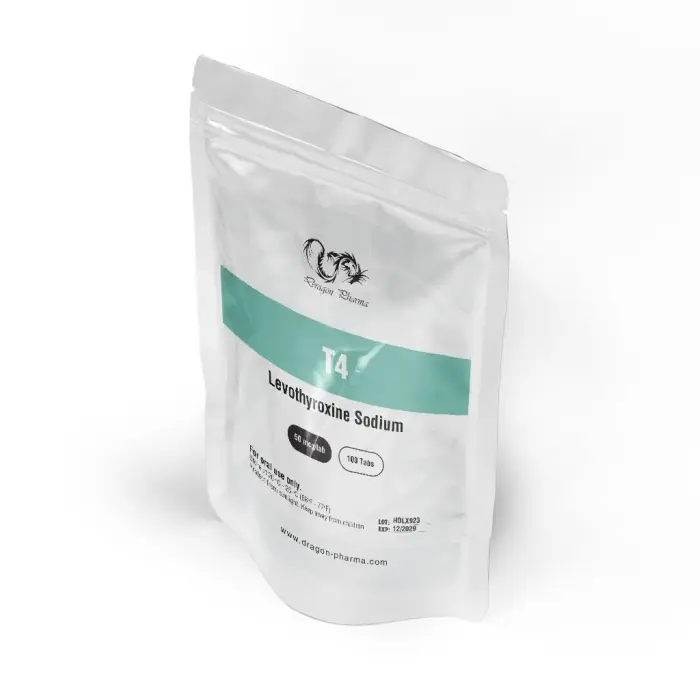
T4 Dragon Pharma is levothyroxine sodium — thyroxine, the primary thyroid prohormone — at 50 mcg per tablet, supplied in packs of 100 tabs. T4 is not directly active at the receptor level: it must first be converted to triiodothyronine (T3) by peripheral deiodinase enzymes (D1 and D2) before binding thyroid hormone receptors and producing metabolic effects. This conversion step makes T4 inherently more gradual and forgiving than direct T3 administration — peak metabolic effect builds over one to two weeks as tissue conversion reaches steady state, and the seven-day plasma half-life means blood levels remain stable with once-daily dosing and fluctuate minimally if a dose is delayed.
In performance and physique contexts, T4 is used during cutting phases where sustained, controlled metabolic acceleration is the goal without the sharp cardiovascular and catabolic responses that can accompany aggressive T3 protocols. steroidwarehouse.com carries the Dragon Pharma 50 mcg tablet format, giving users a precise starting unit that matches the standard clinical tablet strength and supports gradual dose titration to individual response.
About the Compound: Levothyroxine (T4)
The healthy thyroid gland secretes primarily T4 (approximately 80% of total thyroid output) and a small amount of T3 directly. T4 circulates bound to thyroxine-binding globulin (TBG) and acts as the body's thyroid hormone reservoir. Its biological activity depends almost entirely on peripheral conversion: type I deiodinase (D1), concentrated in the liver, kidney, and thyroid, removes the outer-ring iodine atom from T4 to produce T3; type II deiodinase (D2), found in the pituitary, brain, and skeletal muscle, performs the same reaction with higher substrate affinity and is particularly relevant to muscle and CNS thyroid hormone availability. The result is that tissues regulate their own T3 supply by controlling local D1/D2 enzyme activity — a self-limiting mechanism that caps how much active T3 any given tissue receives from circulating T4.
- Conversion-gated activity — the core pharmacokinetic difference from T3 — because exogenous T4 must be converted before becoming active, tissue-level T3 availability rises gradually over days to weeks as deiodinase enzymes process the increasing T4 substrate load; this built-in delay prevents the abrupt spike in receptor activation that occurs when T3 is dosed directly; the catabolic and cardiovascular effects of thyroid hormone excess are correspondingly slower to develop and more readily managed by dose reduction before significant harm accumulates
- Seven-day plasma half-life — levothyroxine has one of the longest plasma half-lives of any orally administered hormone; blood levels are highly stable with once-daily dosing, and steady state is reached only after approximately 5–6 half-lives (roughly 5–6 weeks at a fixed dose); missing a single dose has negligible impact on serum levels; this pharmacokinetic stability is the primary reason T4 is more forgiving to use than T3, where the shorter 2.5-day half-life produces more pronounced troughs and sharper responses to missed doses
- Dose requirement is higher than T3 — because only approximately 20–30% of circulating T4 is converted to the active T3 form, and the remainder is converted to reverse T3 (rT3, a metabolically inactive isomer) or excreted, performance T4 doses of 100–200 mcg/day are needed to generate a metabolically meaningful increase in tissue T3 availability; this contrasts with direct T3 administration where 25–75 mcg/day typically achieves the same receptor-level effect
- Morning fasted administration is required — levothyroxine absorption is significantly impaired by food, calcium, iron, and some medications; taking T4 in a fed state reduces bioavailability by up to 40%; the standard protocol is to take the tablet 30–60 minutes before the first meal with a full glass of water; this is a practical point that directly affects dose consistency and therefore the linearity of metabolic response across the cycle
- HPT axis suppression and post-cycle recovery — exogenous T4 suppresses TSH via negative feedback on the hypothalamic-pituitary-thyroid axis, just as T3 does; however, the slow decline in serum T4 after the cycle ends (driven by the 7-day half-life) gives the HPT axis a more gradual opportunity to resume function; rebound hypothyroidism is less pronounced after T4 discontinuation than after abrupt T3 cessation, though a formal taper is still recommended to support a smooth recovery
What T4 Does
The metabolic effects of T4 are mediated entirely through its downstream conversion product, T3. Tissues that express high levels of D2 — particularly skeletal muscle, the pituitary, and the brain — convert T4 to T3 locally and achieve near-normal intracellular T3 concentrations even when serum T3 is modestly elevated. This tissue-regulated conversion means the thermogenic and anabolic/catabolic balance that results from T4 administration is more physiologically constrained than the effects seen with direct T3: the body's deiodinase capacity acts as a partial buffer against excess T3 receptor stimulation.
- Gradual basal metabolic rate elevation — as exogenous T4 raises circulating thyroxine levels, D1/D2 enzymes progressively convert the increased substrate to T3; resting energy expenditure rises over one to two weeks as tissue T3 concentrations build toward a new steady state; the increase in BMR at peak effect is comparable to that achievable with moderate T3 dosing, but the onset curve is slower and the effect ceiling is lower because peripheral conversion cannot fully replicate the receptor activation achieved by very high direct T3 doses
- Sustained fat oxidation without sharp dose-response peaks — the stability of T4 blood levels (7-day half-life, once-daily dosing) produces a consistently elevated substrate pool for deiodinase conversion throughout the day; there are no pronounced peaks or troughs in T3 availability as occur with the shorter T3 half-life; users typically report steadier thermogenesis, fewer acute cardiovascular surges, and more predictable fat loss progress across the cycle relative to equivalent-effect T3 dosing
- Preserved lean mass at moderate doses — the conversion-gated mechanism limits peak tissue T3 concentration relative to circulating T4 levels; at doses of 100–150 mcg/day, the net catabolic drive on skeletal muscle protein is meaningfully lower than with direct T3 at doses that produce equivalent thermogenesis; while an AAS base is still recommended for cycles above 150 mcg/day, the margin for error is wider than with T3 and the consequences of running T4 without an AAS base at moderate doses are less severe
- Cardiovascular and CNS effects are dose- and conversion-dependent — elevated heart rate, increased cardiac output, and thermogenic CNS symptoms (sweating, heat intolerance) emerge as tissue T3 levels rise from T4 conversion; at therapeutic and moderately supraphysiologic T4 doses these effects are substantially milder than the acute cardiovascular load of high-dose direct T3; at very high T4 doses (> 200 mcg/day) sufficient T3 can be generated from conversion to produce significant tachycardia and catabolic pressure, particularly when D1/D2 enzyme activity is upregulated by the high substrate load
- T3/T4 ratio modulation in stacked protocols — some advanced users run T4 as a base thyroid support compound alongside a small amount of direct T3 (25 mcg/day) to benefit from both the stable serum levels of T4 and the faster receptor activation of T3; T4 sustains the thyroid hormone pool while T3 provides the acute metabolic edge; this combination allows lower T3 doses to be used than would be required if T3 were the sole thyroid agent, reducing the catabolic and cardiovascular risk of the T3 component
Who It's For
- What sets T4 apart: T4's defining characteristic among thyroid-based fat loss agents is the conversion buffer — peripheral deiodinases regulate how much active T3 tissues actually produce from the T4 substrate, creating a self-limiting ceiling on receptor activation that direct T3 does not have; this makes T4 pharmacologically more forgiving: dose titration does not require the same precision as T3, missed doses do not produce acute troughs, and the cardiovascular and catabolic consequences of a dose that is slightly too high develop slowly enough to be caught and corrected before meaningful harm accumulates; the seven-day half-life also means the compound effectively self-tapers when discontinued, substantially reducing rebound hypothyroidism risk compared to abrupt T3 cessation
- Best scenario: intermediate to advanced users who want thyroid-mediated metabolic acceleration during a cutting cycle but have previously found T3 too harsh, too cardiovascularly demanding, or too unforgiving to dose precisely; athletes running longer cutting blocks of 8–12 weeks where the stability of T4 serum levels is a practical advantage over T3; users who prefer not to titrate doses week-by-week based on daily heart rate readings; advanced users who want to combine a T4 base with a low-dose T3 top-up to achieve a balanced thyroid hormone profile; users running GH-inclusive protocols where GH's ability to upregulate peripheral D2 activity enhances T4-to-T3 conversion and amplifies T4's metabolic effect
- Choose something else instead: users who need fast, precise, week-by-week adjustable fat loss in a defined short prep window (4–6 weeks) should choose T3 Dragon Pharma — T4 takes 1–2 weeks to reach effective metabolic output and cannot be rapidly up- or down-titrated the way T3 can; users not on an AAS base who want a non-catabolic fat loss agent should consider Clenbuterol Dragon Pharma, which supports thermogenesis through a mechanistically distinct pathway without thyroid axis involvement or the need for post-cycle recovery
T4 vs Alternatives
| Compound | Key Differences | Choose T4 When | Choose Alternative When |
|---|---|---|---|
| T3 Dragon Pharma Liothyronine (T3) 25 mcg/tab |
T3 is directly active at thyroid receptors without conversion; faster onset (48–72 hours vs 1–2 weeks); shorter half-life (2.5 days vs 7 days) requiring more precise dosing; stronger acute catabolic and cardiovascular response at equivalent metabolic output; mandatory strict taper to prevent rebound hypothyroidism; more potent per mcg but less forgiving of dosing errors | A stable, longer-cycle metabolic accelerator is needed; precise week-by-week dose adjustments are not required; a lower cardiovascular and catabolic risk profile is the priority; GH is co-administered (GH upregulates D2 conversion, amplifying T4's effect) | Fast onset within the first week is required; a short 4–6 week prep window demands rapid fat loss acceleration; fine-grained dose adjustments based on weekly response are needed; or you want the stronger acute thermogenic output that only direct T3 receptor activation provides |
| Clenbuterol Dragon Pharma Beta-2 Adrenergic Agonist |
Completely different mechanism (beta-2 receptor agonism); no thyroid axis involvement; no HPT suppression or recovery period needed; receptor desensitization within 2 weeks requires 2-on/2-off cycling; anti-catabolic properties at standard doses; stronger acute stimulant side effects (jitteriness, insomnia); can be used without an AAS base; additive rather than synergistic when combined with T4 | Sustained thyroid-axis-mediated metabolic acceleration over 6–12 weeks is the goal; combining both mechanisms in the same cut adds independent fat loss output from each agent; you want thyroid-level BMR elevation that Clenbuterol's receptor-limited mechanism cannot maintain beyond 2 weeks | Thyroid axis involvement is not desired; you are not on an AAS base; or a non-suppressive standalone fat loss agent is needed; Clenbuterol can be used safely by intermediate users without the post-cycle thyroid recovery requirement that T4 (and T3) carry |
| Helios Dragon Pharma Clenbuterol + Yohimbine injectable blend |
Injectable format targeting localized subcutaneous fat via alpha-2 adrenergic blockade (yohimbine) plus systemic thermogenesis (clenbuterol); mechanism is regional rather than global; effective for targeting stubborn fat depots where alpha-2 receptor density is high; no thyroid axis involvement; no conversion dependency; different risk profile (injection-site reactions, systemic yohimbine effects) | Global basal metabolic rate elevation across all tissues is the goal over a multi-week cutting phase; T4's systemic mechanism raises total energy expenditure uniformly rather than targeting specific fat depots | Localized treatment of stubborn subcutaneous fat deposits (lower abdominal, flank, hip) is the primary objective; Helios's combined alpha-2 blockade and local thermogenesis is more targeted to specific depot fat than systemic T4-driven BMR elevation |
Combinations
| Goal | Stack | Notes |
|---|---|---|
| Standard cutting cycle (AAS base + T4) | T4 150 mcg/day + Enantat 250 300–400 mg/wk + Clenbuterol DP 80 mcg/day (2 on / 2 off) | The most practical T4 cutting structure; Enantat 250 provides the anabolic base that protects lean mass while T4-driven T3 conversion accelerates fat oxidation; Clenbuterol adds adrenergic thermogenesis through an independent pathway for additive fat loss output; start T4 2–3 weeks before adding Clenbuterol to allow thyroid levels to reach steady state before layering additional cardiovascular stress; monitor resting heart rate throughout — target < 90 bpm at rest |
| Controlled thyroid protocol (T4 base + low T3) | T4 100 mcg/day + T3 Dragon Pharma 25 mcg/day + AAS base 200–300 mg/wk testosterone equivalent | T4 maintains a stable thyroid hormone pool (slow, stable serum levels); T3 at 25 mcg/day provides the acute receptor-level metabolic boost without the full dose burden that carries higher catabolic and cardiovascular risk; the combined T4/T3 protocol more closely mirrors a physiologically elevated thyroid state than either compound alone at higher doses; useful for users who have found 75 mcg T3 alone too aggressive but want more metabolic output than T4 alone at 100–150 mcg/day provides |
| Dry pre-competition conditioning | T4 100–150 mcg/day + Masteron 100 400 mg/wk + Primobolan 100 400–600 mg/wk | A dry, non-aromatizing stack for the final 8–12 weeks of a competition prep; Masteron 100 and Primobolan 100 contribute anabolic muscle protection without estrogenic water retention, supporting the lean and hard look required for the stage; T4 drives the metabolic acceleration without the acute cardiovascular load of T3, which is a practical advantage when training volume and caloric restriction are both at maximum; no AI required for this stack if a testosterone base is not included |
| Advanced GH-inclusive prep | T4 150–200 mcg/day + Dragontropin (HGH) 2–4 IU/day + testosterone base 200–300 mg/wk | GH administration upregulates type II deiodinase (D2) activity, increasing the rate of T4-to-T3 peripheral conversion; users running GH alongside T4 often achieve the metabolic output of a higher T4 dose at a moderate T4 dose because GH is amplifying the conversion yield; this combination is used in advanced contest prep for simultaneous lipolysis (GH/IGF-1), metabolic rate elevation (T4-derived T3), and body composition optimization; monitor both resting heart rate and fasting glucose — GH causes insulin resistance and elevated T3 from enhanced T4 conversion can compound glucose turnover effects |
Side Effects & Management
| What May Occur | Background | How to Handle It |
|---|---|---|
| Elevated resting heart rate | T3 generated from T4 conversion increases cardiac output via THRα-mediated gene expression in cardiomyocytes; at T4 doses of 150–200 mcg/day, tissue T3 concentrations can rise sufficiently to produce measurable resting tachycardia; the onset is slower than with direct T3 administration and typically peaks 2–3 weeks after reaching the current dose as steady-state conversion output stabilizes; the cardiovascular effect is generally milder than equivalent-effect T3 dosing but is still a meaningful monitoring parameter | Monitor resting heart rate weekly (morning, before activity); reduce dose by 50 mcg/day if consistently > 90 bpm at rest; for persistent tachycardia: Nebicard (Nebivolol) 5 mg/day as a beta-1 selective beta-blocker; due to T4's long half-life, a dose reduction takes approximately 5–7 days to produce a measurable change in serum T4 levels and a further few days for tissue T3 to decline; act on elevated heart rate early rather than waiting for the trend to worsen |
| Skeletal muscle catabolism at high doses | At T4 doses above 150–200 mcg/day, peripheral conversion generates sufficient T3 to shift the protein synthesis/degradation balance toward net catabolism in the absence of adequate androgen signaling; the catabolic threshold is higher than with direct T3 because the conversion cap limits peak tissue T3, but it is not absent; users who run high T4 doses without an AAS base will experience measurable lean mass loss alongside fat loss, particularly in combination with a significant caloric deficit | For doses ≥ 150 mcg/day, maintain an AAS base providing at minimum 200 mg/week of testosterone equivalent; high dietary protein (2.5–3.5 g/kg lean body mass/day) supports net muscle protein retention; if weight loss exceeds 1.5 kg/week consistently, reduce T4 dose or increase dietary protein and caloric intake before assuming the rate of loss is purely fat-driven; lean mass loss is recoverable but slows contest prep and requires additional time off-season to regain |
| Hyperthyroid symptoms (sweating, anxiety, insomnia) | Supraphysiologic T4 doses produce enough converted T3 to cause symptoms of clinical hyperthyroidism in susceptible individuals: profuse sweating particularly at night, heat intolerance, anxiety or irritability, loose stools, and difficulty sleeping; symptom onset is typically delayed 1–2 weeks after reaching an elevated dose as steady-state conversion builds; symptoms are generally milder than with equivalent-output T3 dosing but indicate the current dose is above optimal and carries elevated cardiovascular and catabolic risk | Dose reduction by 50 mcg/day is the primary intervention; allow 7–10 days after reduction for serum T4 to fall and tissue T3 to follow; for insomnia: Altonil (Melatonin) 3–5 mg at bedtime; for GI distress: Motilium (Domperidone) 10 mg before meals; do not manage symptoms symptomatically without reducing the dose — the conversion-derived T3 elevation driving the symptoms is also producing cardiovascular and catabolic effects that symptom suppressants do not address |
| HPT axis suppression | Exogenous T4 suppresses TSH via negative feedback at the pituitary and hypothalamus; with reduced TSH, the thyroid gland decreases endogenous T4 and T3 production; this suppression is complete and expected during any T4 cycle and does not indicate toxicity; upon stopping exogenous T4, the 7-day half-life means serum levels decline slowly over 4–6 weeks, giving the HPT axis a gradual recovery window that substantially reduces the severity of rebound hypothyroidism compared to abrupt T3 cessation | A formal taper (reducing by 50 mcg every 5–7 days) is recommended; due to the long half-life the taper is less critical than for T3, but it supports a smoother HPT axis recovery; post-taper TSH and free thyroid hormones should be checked 4–6 weeks after the last tablet to confirm axis recovery before planning a subsequent cycle; see Taper & Recovery section below |
| Absorption impairment (dosing error risk) | Levothyroxine has well-documented absorption interactions: food (particularly high-fiber or high-calcium foods), calcium supplements, iron supplements, antacids, proton pump inhibitors, and some other medications reduce intestinal absorption by up to 40%; if T4 is taken inconsistently — sometimes fasted, sometimes with food — the resulting variability in absorbed dose produces unpredictable fluctuations in serum T4 and conversion-dependent T3, undermining dose-response linearity and making the cycle harder to manage | Take T4 consistently on an empty stomach, 30–60 minutes before the first meal, with a full glass of water; do not take calcium or iron supplements within 4 hours of the T4 dose; if using a proton pump inhibitor (e.g., Omeprazole), take T4 at least 60 minutes before PPI administration; consistent fasted morning dosing eliminates the absorption variability that produces erratic serum levels and simplifies dose-response assessment across the cycle |
Monitoring
| Marker | When to Check | Target & Action Threshold |
|---|---|---|
| TSH (thyroid-stimulating hormone) | Baseline (mandatory); week 4–6 on-cycle; 4–6 weeks post-cycle | Baseline establishes individual pre-cycle thyroid function; on-cycle suppression to < 0.1 mIU/L is expected and confirms exogenous T4 is producing adequate feedback suppression; post-cycle TSH returning toward 0.5–4.0 mIU/L confirms HPT axis recovery; due to T4's long half-life, the post-cycle check is best run 5–6 weeks after the last tablet rather than the 4-week check used for T3 |
| Free T4 (fT4) | Baseline; week 4–6 on-cycle | On-cycle fT4 will be elevated above the normal reference range as exogenous T4 accumulates; this is expected and confirms dosing is producing adequate systemic levels; extremely elevated fT4 (> 3.0 ng/dL on standard assay) alongside resting tachycardia suggests dose reduction is warranted; the post-cycle fT4 level is less critical than TSH as a recovery marker, since fT4 tracks exogenous levothyroxine clearance (7-day half-life) rather than HPT axis function directly |
| Free T3 (fT3) | Baseline; week 4–6 on-cycle | Measures the active thyroid hormone being produced from T4 conversion; should be elevated above normal range during the cycle, confirming peripheral conversion is occurring; if fT3 remains in the normal range despite adequate T4 serum levels, deiodinase conversion may be individually low — in this case switching to direct T3 is more effective than increasing T4 dose further |
| Resting heart rate | Weekly self-check throughout cycle (morning, before activity) | Target < 90 bpm at rest; sustained readings ≥ 95 bpm indicate the current dose is generating excessive tissue T3 from conversion; due to T4's long half-life the effect develops gradually — a rising trend over 2 consecutive weekly checks is more meaningful than a single elevated reading; reduce dose by 50 mcg/day on a confirmed rising trend and allow 7–10 days before reassessment |
| Blood pressure | Baseline; every 2 weeks on-cycle | Target < 130/85 mmHg; T4-derived T3 increases cardiac output and peripheral blood flow; when combined with AAS compounds that also raise BP (testosterone, trenbolone), the cardiovascular load is additive; standard BP check protocol as used in AAS cycles applies here |
| Lipid panel (if AAS co-administered) | Baseline; week 6–8 of cutting stack | T4 has a mild favorable effect on LDL by upregulating hepatic LDL receptor expression via T3 generated from conversion; however, HDL suppression from co-administered AAS (particularly 17-alpha alkylated compounds or DHT derivatives like Masteron) may offset this; monitor the combined stack lipid impact, particularly if Winstrol or other HDL-suppressive agents are in the protocol |
Taper & Recovery
T4 does not require SERMs or gonadotropins. The mandatory pharmacological consideration after a T4 cycle is HPT axis recovery. However, T4's 7-day half-life provides a built-in biological taper: even when dosing stops completely, serum levothyroxine declines gradually over 4–6 weeks as the body clears the remaining compound at the natural half-life rate. This makes the rebound hypothyroidism risk after T4 cycles substantially lower than after T3 cycles, where abrupt cessation causes a rapid drop in circulating T3 that the suppressed HPT axis cannot immediately compensate for.
| Phase | Protocol | Notes |
|---|---|---|
| Dose taper (recommended at cycle end) | Reduce by 50 mcg every 5–7 days | From 200 mcg/day: 200 → 150 → 100 → 50 → stop over approximately 20–28 days; from 150 mcg/day: 150 → 100 → 50 → stop over 15–21 days; from 100 mcg/day: 100 → 50 → stop over 10–14 days; the taper is less pharmacologically urgent than for T3 (the long half-life already produces a natural level decline), but it supports a smoother HPT axis recovery and reduces the likelihood of any transient fatigue or cold-sensitivity post-cycle |
| Post-cycle recovery (weeks 1–6) | No pharmaceutical intervention required | As serum T4 clears over several half-lives and TSH gradually rises, endogenous thyroid production resumes; mild fatigue and cold sensitivity in the first 1–2 weeks post-taper are common and resolve without treatment as the HPT axis restores normal output; ensure adequate caloric intake during recovery — maintaining an aggressive deficit post-cycle while thyroid output is transitioning can slow recovery and extend mild hypothyroid symptoms; temporarily increase daily intake by 200–300 kcal if post-cycle fatigue is significant |
| Post-cycle bloodwork | TSH, Free T3, Free T4 — 5–6 weeks after the last tablet | The later post-cycle check (5–6 weeks vs 4 weeks for T3) accounts for T4's long clearance time; TSH recovery into the 0.5–4.0 mIU/L reference range with normalized fT4 and fT3 confirms full axis recovery; if TSH remains below 0.1 mIU/L at the 6-week check, wait an additional 2–4 weeks before rechecking; persistent post-cycle suppression beyond 10 weeks warrants further evaluation |
| Minimum cycle gap | 8–12 weeks off between T4 cycles (confirmed by bloodwork) | As with T3, do not begin a new T4 cycle before TSH and fT4 have fully recovered to pre-cycle baseline; the minimum off-period should be confirmed by lab results, not estimated by calendar alone; longer off-periods are recommended if multiple consecutive T4 cycles are planned |
Practical Summary
- T4 requires 1–2 weeks to reach effective metabolic output and 5–6 weeks to reach true steady state at any fixed dose — plan the cycle accordingly; starting T4 2–3 weeks before peak prep intensity allows levels to build before the most demanding phase of the cut begins
- Take T4 consistently on an empty stomach, 30–60 minutes before food, every morning — calcium, iron, and food reduce absorption by up to 40%; inconsistent dosing produces variable serum levels that make dose-response assessment unreliable and undermine cycle management
- At 150–200 mcg/day an AAS base is strongly recommended; the conversion-gated mechanism reduces catabolism risk relative to equivalent-effect T3 dosing, but does not eliminate it at high T4 doses; moderate doses of 100–150 mcg/day carry significantly lower catabolism risk and may be used without an AAS base if the caloric deficit is not aggressive
- Monitor resting heart rate weekly; due to T4's long half-life, cardiovascular effects build gradually over 2–3 weeks at any new dose — a rising weekly trend is a more reliable signal to act on than a single elevated reading; reduce by 50 mcg/day on a confirmed rising trend and allow 7–10 days before reassessment
- 1 pack (100 tabs × 50 mcg) = 5,000 mcg total; at 100 mcg/day a pack lasts 50 days; at 150 mcg/day it lasts 33 days; at 200 mcg/day it lasts 25 days; factor taper tablets into the pack calculation when planning supply
- Post-cycle bloodwork (TSH, Free T3, Free T4) at 5–6 weeks after the last tablet; the longer clearance window vs T3 means checking too early understates how well the HPT axis has recovered; do not begin the next T4 cycle until all three markers have returned to pre-cycle baseline
T4 Dragon Pharma occupies a distinct position among thyroid-based fat loss agents — not as a replacement for T3's precision and potency, but as a pharmacologically more forgiving alternative suited to longer cutting blocks, users with lower cardiovascular tolerance for acute thyroid receptor stimulation, and protocols where stable serum levels over 8–12 weeks outweigh the advantage of week-by-week dose adjustability. At 50 mcg per tablet, the pack allows gradual titration from a single-tablet starting dose through to the 200 mcg/day performance ceiling without the arithmetic complexity of splitting smaller tablets. Used correctly — fasted dosing, weekly heart rate checks, an AAS base at higher doses, and a confirmed post-cycle bloodwork sign-off — T4 remains a reliable and well-tolerated metabolic tool for the cutting phases carried by Steroid Warehouse.
References
| Source | Topic | Link |
|---|---|---|
| Physiological Reviews / PubMed | Mullur, Liu & Brent 2014 — comprehensive review of thyroid hormone regulation of metabolism; covers thyroid hormone receptor mechanisms, basal metabolic rate, thermogenesis, lipid and carbohydrate metabolism, and tissue-level metabolic effects; primary mechanistic reference for both T4 and T3 pharmacology | Mullur R, et al. (2014) ↗ |
| Journal of Clinical Investigation / PubMed | Bianco & Kim 2006 — review of deiodinase enzymes and local control of thyroid hormone action; covers D1/D2 enzyme biology, T4-to-T3 peripheral conversion, tissue-specific thyroid hormone availability, and why exogenous T4 depends on deiodinase capacity for its metabolic effect | Bianco AC & Kim BW (2006) ↗ |
| Medical Clinics of North America / PubMed | Danzi & Klein 2012 — thyroid hormone effects on the cardiovascular system; covers cardiac myocyte and vascular smooth muscle mechanisms, heart rate, contractility, vascular resistance, and cardiovascular consequences of supraphysiologic thyroid hormone exposure relevant to T4 cycle management | Danzi S & Klein I (2012) ↗ |
| New England Journal of Medicine / PubMed | Klein & Ojamaa 2001 — major clinical review of thyroid hormone and the cardiovascular system; covers T3-mediated changes in heart rate, contractility, cardiac output, vascular resistance, and cardiovascular risk applicable to understanding T4 cycle cardiovascular monitoring | Klein I & Ojamaa K (2001) ↗ |
What is T4?
T4 is an oral thyroid hormone (Levothyroxine) for fat loss; see What is T4. It boosts metabolism—consult professionals for safe use.
Is there anything stronger than T4?
T3, Clenbuterol, or DNP are stronger but riskier; see Is There Anything Stronger Than T4. Consult professionals for safer alternatives.
How does T4 work?
It upregulates metabolism via conversion to T3 for fat loss; see Mechanism of Action. It delivers steady results—monitor with labs.
Is T4 safe?
It's safe with careful dosing and monitoring; see Side Effects. Taper off and use anabolics to prevent muscle loss—consult professionals for safety.
How is T4 typically taken?
T4 is commonly:
- Taken orally in tablet form
- Used once daily in most treatment plans
- Taken consistently according to healthcare provider instructions
Proper timing and consistency are important for optimal results.
What are the possible side effects?
Potential side effects, particularly if the dose is too high, may include:
- Rapid heartbeat
- Anxiety or nervousness
- Insomnia
- Increased sweating
- Tremors
- Weight changes
Side effects often relate to excessive thyroid hormone levels.
Is T4 used for metabolism support?
Yes. T4 is primarily associated with maintaining healthy thyroid hormone activity, which plays a central role in regulating metabolism and energy expenditure.
What makes T4 different from T3?
T4 is a precursor hormone that must be converted into T3 before becoming fully active, whereas T3 is already in its active form and typically produces effects more rapidly.
Related Products