Minoxidil
Minoxidil Dragon Pharma — Overview
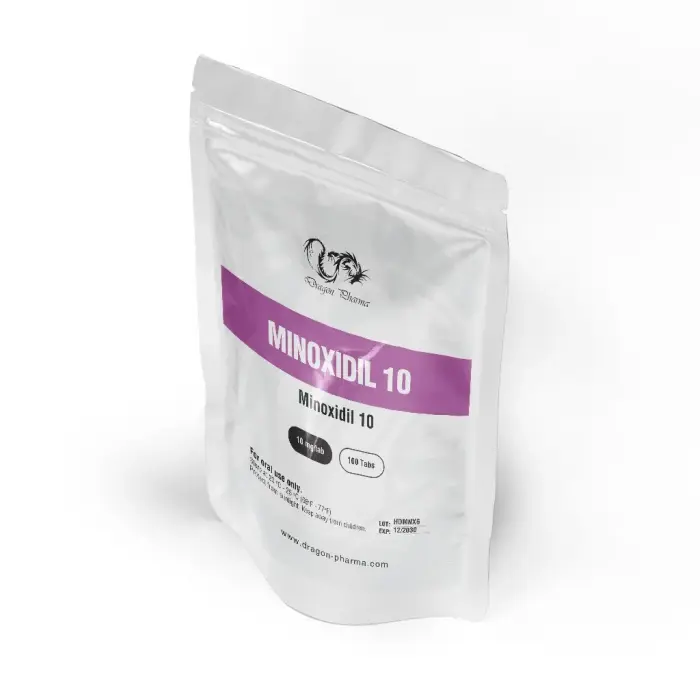
Minoxidil Dragon Pharma is an oral tablet formulation of minoxidil at 10 mg per tablet. Minoxidil was originally developed as an oral antihypertensive and remains one of the most pharmacologically well-characterized vasodilators in clinical use. Its secondary application — promoting hair regrowth and slowing androgenic alopecia — was identified during antihypertensive trials when patients consistently reported hypertrichosis as a systemic side effect. This discovery led to decades of topical formulation work and, more recently, to renewed clinical interest in low-dose oral minoxidil specifically for androgenic hair loss.
For users of anabolic-androgenic steroids, oral minoxidil addresses one of the most common non-endocrine side effects of prolonged AAS use: accelerated androgenic alopecia in users with genetic susceptibility. This page covers minoxidil's mechanism at the hair follicle level, how low-dose oral use differs from topical application, who benefits most, how it works alongside Finasteride, and its cardiovascular side effect profile at hair loss doses.
About the Compound: Oral Minoxidil
Minoxidil (2,4-diamino-6-piperidinopyrimidine 3-oxide) is an ATP-sensitive potassium channel opener. Its primary pharmacological action is smooth muscle relaxation through hyperpolarization of vascular smooth muscle cell membranes — the mechanism that underlies both its antihypertensive effect and its hair follicle activity.
At the hair follicle level, the current working model is that minoxidil opens potassium channels in dermal papilla cells, increasing local blood flow and oxygen delivery to the follicle, prolonging the anagen (growth) phase of the hair cycle, and reducing the duration of the telogen (rest) phase. Minoxidil sulfate — the active metabolite formed by sulfotransferase enzymes in the follicle itself — is believed to be the primary mediator of this effect. Individuals with higher follicular sulfotransferase activity respond better, which partly explains the variability in response across users.
Oral administration produces consistent systemic bioavailability and uniform distribution to all scalp regions, including areas where topical application is difficult. At low doses (2.5–5 mg/day) used for hair loss, systemic antihypertensive effects are typically mild in normotensive individuals but measurable. The 10 mg Dragon Pharma tablet allows half-tablet dosing at 5 mg and quarter-tablet dosing at 2.5 mg.
What Minoxidil Does
- Prolongs the anagen phase — minoxidil extends the active growth phase of affected hair follicles; follicles that have miniaturized due to DHT exposure or direct androgen receptor activation maintain larger diameter and produce thicker, more pigmented hair shaft over time; this effect is most pronounced in follicles that have not yet undergone complete fibrosis
- Increases follicular blood supply — potassium channel-mediated vasodilation in perifollicular vessels increases oxygen and nutrient delivery to the dermal papilla; this supports follicle viability in androgen-stressed scalp regions where microvascular compression contributes to miniaturization
- Initial shedding phase (paradoxical telogen release) — in the first 2–8 weeks of use, many users experience a temporary increase in shedding; this occurs because minoxidil accelerates the transition of telogen-phase hairs into anagen, releasing dormant hairs prematurely; this is a normal pharmacological response and predicts eventual regrowth; it should not be interpreted as treatment failure
- Antihypertensive effect at higher doses — at the hair loss dose range (2.5–5 mg/day), a mild reduction in resting blood pressure is often observed in normotensive individuals; in AAS users with elevated blood pressure from water retention or erythropoiesis, this secondary BP effect can be a practical advantage; at 10 mg/day and above, antihypertensive activity is clinically significant and BP must be monitored
- No direct androgenic or anabolic activity — minoxidil has no effect on the androgen receptor, does not reduce DHT or testosterone levels, and does not influence the HPG axis; it does not address the underlying hormonal cause of AAS-related hair loss — it works around it by supporting follicle survival under androgenic stress
Who It's For
- AAS users with genetic susceptibility to androgenic alopecia who are actively cycling — elevated androgen load from AAS dramatically accelerates hair loss in users who carry the genetic variant (androgen receptor sensitivity at the scalp); minoxidil works as a follicle-survival intervention during and after high-androgen cycles; the compound does not stop androgenic signaling but supports follicle viability in spite of it; the earlier it is started relative to significant miniaturization, the better the outcome
- Users who have noticed early or progressive thinning during AAS cycles — thinning beginning at the temples, hairline, or crown during a cycle is an early signal of androgen-driven miniaturization; starting minoxidil at this stage, before follicles undergo fibrosis, maximizes the probability of halting further progression and achieving some regrowth; waiting until significant balding has occurred reduces the response ceiling
- Users combining with Finasteride for full DHT coverage — minoxidil and finasteride address hair loss through different mechanisms and are additive in effect; minoxidil supports follicle survival; finasteride reduces scalp DHT; together they represent the most evidence-supported oral intervention available; for AAS users, this combination is more relevant than either alone because AAS compounds that do not convert to DHT (MENT, boldenone, nandrolone) are not addressed by finasteride, while minoxidil works regardless of androgen type
- Users who should consider different options or set realistic expectations: users with fully established bald areas (follicular fibrosis) should not expect regrowth from minoxidil alone; users with significant cardiovascular history or hypotension should assess BP response carefully at the hair loss dose; users who cannot commit to continuous long-term use will lose gains within 3–6 months of stopping — minoxidil is not a cure and its benefit is entirely sustained by ongoing use
Context & Related Products
Oral minoxidil is most effective when used as part of a deliberate hair preservation strategy during AAS cycles, not as a reactive measure after significant loss has already occurred. The two primary companion interventions available at Steroid Warehouse are:
| Product | Mechanism | How It Complements Minoxidil | Limitation |
|---|---|---|---|
| Finasteride Dragon Pharma | 5α-reductase type II inhibitor; reduces scalp DHT by ~60–70%; addresses the primary hormonal driver of androgenic alopecia in testosterone-based cycles | Directly reduces the androgenic signal driving follicle miniaturization; while minoxidil supports follicle survival under stress, finasteride reduces the stress itself; the combination covers both the cause and the consequence of AAS-driven hair loss | Only effective against DHT-converted androgens (testosterone, DHB); does not reduce androgenic activity from compounds that are not 5α-reduced (MENT, nandrolone, boldenone, trenbolone); not useful in cycles without a significant testosterone-to-DHT conversion component |
| Minoxidil (this product) | Potassium channel opener; prolongs anagen phase; increases follicular blood supply; acts via minoxidil sulfate at the dermal papilla | Works independently of the type of androgen present; effective whether hair loss is DHT-driven or direct AR-mediated; supports follicle viability across all AAS compound classes | Does not reduce androgenic signaling; does not treat the hormonal cause; benefit is lost within months of stopping; response varies by individual sulfotransferase activity |
Practical usage context: For testosterone-based cycles, running both minoxidil and finasteride addresses hair loss from two angles. For cycles involving non-DHT-converting compounds (nandrolone, MENT, boldenone, trenbolone), minoxidil is the primary oral option since finasteride will not reduce direct AR-mediated follicle miniaturization. The 10 mg Dragon Pharma tablet is scored and can be split to deliver the clinically established 5 mg/day dose or the lower 2.5 mg/day dose used in some protocols, particularly as a starting point when monitoring for blood pressure or fluid retention effects.
Side Effects & Management
At the hair loss dose range (2.5–5 mg/day), minoxidil is generally well tolerated in otherwise healthy individuals. The side effect profile at this dose is meaningfully different from the antihypertensive dose range (10–40 mg/day), where cardiovascular effects are the primary clinical concern.
| What May Occur | Background | How to Handle It |
|---|---|---|
| Initial shedding (telogen effluvium) | The most common reason users discontinue prematurely; occurs in weeks 2–8 as dormant telogen-phase hairs are released during the anagen transition; shedding typically peaks at 4–6 weeks then resolves; net hair count subsequently increases as new anagen hairs emerge | Continue treatment; the shedding phase is a normal and expected pharmacological response; stopping minoxidil at this point forfeits the benefit without ever reaching the regrowth phase; if shedding is severe and distressing, confirm with a baseline photo comparison before discontinuing |
| Fluid retention / ankle edema | Potassium channel opening causes reflex sodium retention through compensatory aldosterone activation; at 2.5–5 mg/day this is typically subclinical in users without pre-existing cardiovascular issues; more noticeable at 10 mg/day; can compound with water retention from concurrent estrogenic AAS | Monitor for ankle swelling; reduce dose to 2.5 mg/day if edema is present; if edema is significant and persistent, reassess concurrent AAS estrogen management via AI first, then minoxidil dose |
| Blood pressure reduction (hypotension) | Vasodilatory action lowers peripheral resistance; in normotensive users the effect is mild at 2.5–5 mg/day; in users already running antihypertensives (e.g. Amlodipine) or with naturally low BP, the additive effect can cause symptomatic hypotension (dizziness on standing, fatigue) | Check resting BP before starting; monitor weekly for the first 4 weeks; reduce to 2.5 mg/day if systolic drops below 100 mmHg or symptoms occur; if already on antihypertensive medication, evaluate the combination carefully — minoxidil's vasodilation adds to existing BP reduction |
| Tachycardia / palpitations | Reflex sympathetic activation in response to vasodilation can increase resting heart rate; typically mild at hair loss doses; more significant at 10 mg/day; in users with elevated resting heart rate from stimulant use or high-dose AAS, this effect may be more noticeable | Check resting pulse baseline and monitor; most users at 2.5–5 mg/day do not experience clinical tachycardia; if pulse exceeds 90 bpm at rest with minoxidil added, consider dose reduction; concurrent cardiovascular load from AAS should be evaluated holistically |
| Hypertrichosis (body hair increase) | Systemic minoxidil increases hair growth in all follicle-containing areas, not only the scalp; increased facial, body, or limb hair growth is a known side effect consistent with minoxidil's original discovery; more pronounced at higher doses; generally mild at 2.5–5 mg/day | Dose-dependent; reduce to 2.5 mg/day if unwanted body hair growth is bothersome; this is the same mechanism that produces the intended scalp effect — it cannot be selectively blocked for non-scalp follicles with oral administration; topical minoxidil avoids this side effect by limiting distribution to the scalp |
| Pericardial effusion (rare, high-dose risk) | A documented risk at antihypertensive doses (≥10 mg/day) involving fluid accumulation around the heart; this is not a meaningful concern at the 2.5–5 mg/day hair loss dose in healthy users; it is included here because the Dragon Pharma 10 mg tablet means some users may take a full tablet without recognizing that 10 mg/day crosses into the antihypertensive dosing range | Do not exceed 5 mg/day for hair loss applications without clinical indication; the 10 mg tablet is intended to allow half-dose (5 mg) or quarter-dose (2.5 mg) splitting; taking a full tablet daily (10 mg) for hair loss is above the established evidence-based range for this use and increases cardiovascular side effect risk without additional hair benefit |
References
| Source | Topic | Link |
|---|---|---|
| Journal of the American Academy of Dermatology / PubMed | Randolph & Tosti 2021 — review of oral minoxidil treatment for hair loss; covers efficacy, tolerability, low-dose oral use, clinical limitations, and its role as an alternative for patients who have difficulty with topical formulations | Randolph M & Tosti A (2021) ↗ |
| Drug Design, Development and Therapy / PubMed | Suchonwanit et al. 2019 — comprehensive review of minoxidil use in hair disorders; covers topical minoxidil, mechanism of action, minoxidil sulfate activation, potassium-channel effects, clinical efficacy, adverse events, and off-label dermatologic applications | Suchonwanit P, et al. (2019) ↗ |
| Journal of the American Academy of Dermatology / PubMed | Vañó-Galván et al. 2021 — large multicenter safety study of low-dose oral minoxidil in 1404 patients with hair loss; reports hypertrichosis, lightheadedness, fluid retention, tachycardia, headache, edema, discontinuation rates, and overall tolerability | Vañó-Galván S, et al. (2021) ↗ |
| JAMA Dermatology / PubMed | Penha et al. 2024 — randomized clinical trial comparing oral minoxidil 5 mg once daily with topical minoxidil 5% twice daily in men with androgenetic alopecia; provides modern comparative data on efficacy, tolerability, and clinical outcomes over 24 weeks | Penha MA, et al. (2024) ↗ |
| Journal of the American Academy of Dermatology / PubMed | Ramos et al. 2019 — randomized clinical trial comparing oral minoxidil 1 mg with topical minoxidil 5% solution for female-pattern hair loss; useful clinical reference for low-dose oral minoxidil in women and comparison with topical treatment | Ramos PM, et al. (2019) ↗ |
How does Minoxidil work?
Minoxidil works by improving blood flow to hair follicles and prolonging the growth phase of the hair cycle, which can help strengthen existing hair and promote regrowth in some users.
How to take Minoxidil?
Take 5-10 mg daily or twice daily; see How to Use. Use with monitoring—consult for proper administration.
What is Minoxidil?
Minoxidil is an oral hair growth stimulant; see What is Minoxidil. It enhances hairlines—consult professionals for safe use.
What is Minoxidil used for?
It's used for hair regrowth and preventing hair loss; see Key Benefits. It suits men—use with professional oversight.
How long does Minoxidil stay in your system?
With a 4-5 hour half-life, it's detectable for ~1-2 days; see Mechanism of Action. Effects persist with consistent use—consult professionals.
Is Minoxidil safe?
It's safe with proper dosing and monitoring; see Side Effects. Manage risks with professional guidance—consult for safety.
What are the main benefits of Minoxidil?
Commonly reported benefits include increased hair density, reduced hair loss progression, and stimulation of new hair growth in responsive areas.
What are the possible side effects of Minoxidil?
Possible side effects may include scalp irritation, dryness, itching, and temporary shedding during the initial phase of use.
Related Products
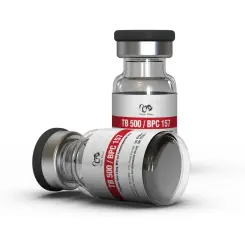
- Accelerates muscle and tendon repair for quick recovery.
- Reduces inflammation systemically and locally.
- Enhances joint and tissue resilience for intense training.
- Supports comprehensive healing for uninterrupted performance.