Clomid - Zyvex Pharmaceuticals
Clomid (Clomiphene Citrate) - Zyvex Pharmaceuticals Overview
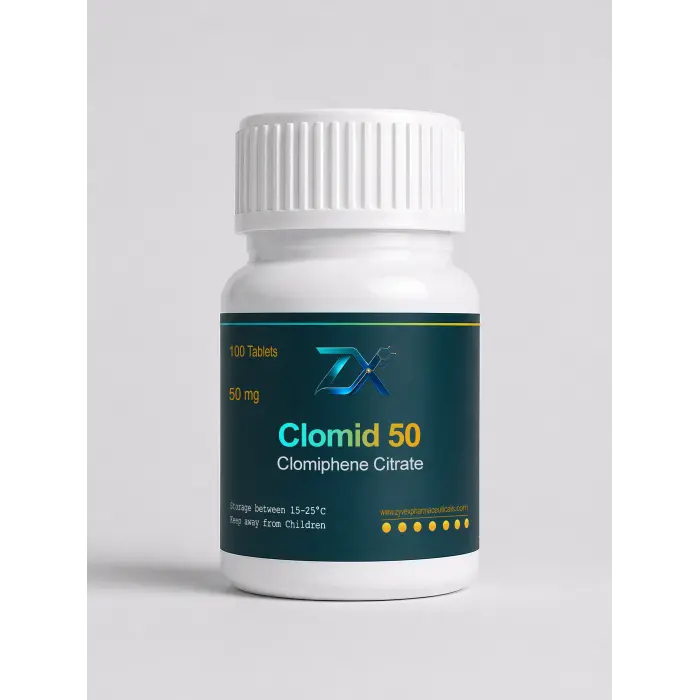
Clomid by Zyvex Pharmaceuticals contains Clomiphene Citrate - a Selective Estrogen Receptor Modulator (SERM) originally developed to treat infertility in women by stimulating ovulation. In the bodybuilding context it serves an entirely different but equally important role: restarting the body's own testosterone production after an anabolic steroid cycle. Clomiphene works by blocking estrogen receptors at the hypothalamus, which removes estrogen's negative feedback on the pituitary gland. The pituitary responds by releasing more LH (luteinizing hormone) and FSH (follicle-stimulating hormone), which signal the testes to resume testosterone production. Each tablet contains 50 mg of Clomiphene Citrate, the standard concentration used in PCT protocols.
Unlike aromatase inhibitors (Arimidex, Aromasin), which reduce estrogen levels by blocking its synthesis, Clomiphene is a SERM - it competes with estrogen at receptor sites without lowering circulating estrogen. This distinction matters for PCT: suppressing estrogen too aggressively during recovery can impair testosterone production, which itself requires some estrogen for proper signaling. Clomiphene's receptor-blocking approach at the hypothalamus provides the stimulus for recovery without crashing estrogen at the tissue level. Its long half-life of 5-7 days (with the active metabolite enclomiphene lasting up to 10 days) means once-daily dosing maintains consistent pituitary stimulation throughout the PCT window.
About the Compound: Clomiphene Citrate 50 mg
Clomiphene Citrate is a triphenylethylene SERM - the same structural class as Tamoxifen (Nolvadex). It exists as two geometric isomers: enclomiphene (the trans isomer, which provides most of the gonadotropin-stimulating effect) and zuclomiphene (the cis isomer, which is more weakly estrogenic and takes longer to clear). The mixture of these two isomers in pharmaceutical Clomiphene is what gives it both its PCT efficacy and its characteristic side effect profile. The zuclomiphene component accumulates over a PCT course due to its slower clearance, which is why some users report lingering visual disturbances after stopping Clomid - the zuclomiphene isomer is still circulating.
Zyvex Pharmaceuticals produces Clomiphene Citrate at 50 mg per tablet, 100 tablets per pack. The 50 mg concentration aligns with the standard starting dose for PCT. For the opening days of PCT after a heavily suppressive cycle, tablets can be taken together to reach 100 mg. The long half-life means splitting the daily dose across morning and evening provides no advantage over a single daily dose.
What Clomid Does
All of Clomiphene's effects in a bodybuilding context derive from its action as a selective estrogen receptor modulator at the hypothalamus and pituitary. It does not build muscle, burn fat, or directly affect testosterone production - it restores the hormonal signaling chain that drives the body's own testosterone output.
- HPTA restart through LH and FSH stimulation - The hypothalamic-pituitary-testicular axis (HPTA) is suppressed by exogenous anabolic steroids: when the body detects high androgen levels, it shuts down its own LH and FSH production, and without LH and FSH the testes stop producing testosterone. Clomiphene blocks estrogen receptors at the hypothalamus and pituitary, removing the negative feedback brake and causing a surge in LH and FSH output. This directly stimulates Leydig cells in the testes to resume testosterone synthesis. LH levels typically begin rising within 3-5 days of starting Clomiphene, with measurable testosterone increases following within 1-2 weeks.
- Restoration of natural testosterone production - The goal of PCT is to get endogenous testosterone back to pre-cycle baseline as quickly as possible. Clomiphene accelerates this process compared to recovery without any SERM. Without PCT, natural testosterone recovery from a typical 10-12 week cycle can take 3-6 months or longer. With Clomiphene PCT, most users achieve significant testosterone recovery within 4-6 weeks. Bloodwork 4-6 weeks post-PCT should confirm recovery.
- Prevention of post-cycle muscle loss and hormonal symptoms - The window immediately after stopping anabolic steroids - before natural testosterone recovers - is when most post-cycle muscle loss, fat gain, mood decline, and low libido occur. Low testosterone and relatively elevated estrogen during this window also creates conditions for gynecomastia. Clomiphene closes this hormonal valley by accelerating testosterone recovery and occupying estrogen receptors at breast tissue, blocking the estrogenic stimulus for gyno development.
- Gynecomastia prevention during PCT - As a SERM, Clomiphene blocks estrogen receptors at breast tissue in addition to the hypothalamus. During PCT when endogenous testosterone is recovering and estrogen remains elevated relative to testosterone, this receptor-blocking effect provides protection against gynecomastia development. This is distinct from - and complementary to - the gyno-prevention role of an aromatase inhibitor on-cycle.
Clomid does not lower estrogen: Clomiphene is a SERM, not an aromatase inhibitor. It competes with estrogen at receptor sites rather than reducing the amount of estrogen in the bloodstream. Circulating estrogen levels may actually increase during Clomiphene use because the pituitary responds to blocked feedback by releasing more gonadotropins, which increase testosterone production, and some of that testosterone converts to estrogen through aromatization. Use an aromatase inhibitor on-cycle to manage estrogen - Clomiphene is for post-cycle recovery.
PCT Dosing Protocols
Standard PCT Protocol
The most common Clomiphene PCT for a standard testosterone or oral steroid cycle: 50 mg per day for 4 weeks. Some practitioners start at 100 mg per day for the first week and drop to 50 mg for weeks 2-4, particularly after more heavily suppressive cycles. The rationale for the higher opening dose is to get LH and FSH elevated rapidly in the early recovery window when the hormonal environment is most unstable. For most users on testosterone enanthate or cypionate-based cycles without 19-nor compounds, 50 mg/day for 4 weeks is sufficient.
Heavy Cycle Protocol
After cycles including Nandrolone (Deca, NPP) or Trenbolone, or after long cycles exceeding 16 weeks, suppression is deeper and recovery takes longer. The protocol: 100 mg per day for weeks 1-2, then 50 mg per day for weeks 3-6. Clomiphene is typically combined with Nolvadex (20 mg/day) throughout for maximum HPTA stimulation. Bloodwork at 6 weeks post-PCT determines whether an extension is needed.
Clomid-Only vs Clomid + Nolvadex
For mild cycles (short oral-only cycles, one compound at low dose), Clomid alone at 50 mg/day for 4 weeks is often sufficient. For standard testosterone cycles, Clomid alone at 50 mg/day covers most users. For heavily suppressive cycles (multi-compound, 19-nor compounds, long duration), combining Clomid 50 mg + Nolvadex 20 mg daily provides stronger combined HPTA stimulation than either alone. The combination works because both SERMs stimulate LH/FSH through the same mechanism but at slightly different receptor affinities - the combined signal is stronger than either compound individually.
When to Start PCT
| Last Compound Used | Wait Before Starting PCT | Reasoning |
|---|---|---|
| Short esters (Propionate, Acetate, NPP) | 3-5 days after last injection | Short esters clear quickly. Starting PCT too early while the ester is still releasing active hormone is counterproductive - the steroid continues suppressing the HPTA while Clomid tries to restart it. |
| Long esters (Enanthate, Cypionate) | 14 days after last injection | Long esters take approximately 2 weeks to clear to levels low enough that PCT can meaningfully work. Starting earlier wastes Clomid and delays effective recovery. |
| Oral steroids only (Dianabol, Anavar, Winstrol) | 24-48 hours after last dose | Oral steroids have very short half-lives (6-24 hours). PCT can begin almost immediately after stopping. These cycles are typically shorter and suppression less severe. |
| Nandrolone Decanoate (Deca) | 3 weeks after last injection | Deca has an extremely long ester (decanoate) with a half-life of approximately 6-8 days. Full clearance requires 3 weeks minimum. Deca also suppresses through prolactin - ensure Cabergoline use during cycle and confirm prolactin is normalized before PCT. |
Side Effects and Management
| Side Effect | Background | Management |
|---|---|---|
| Visual disturbances | The most serious side effect. Blurred vision, visual floaters, light sensitivity, or halos around lights occur in a small percentage of users. Caused by Clomiphene's effect on retinal cells (the SERM receptors exist in the eye as well as the hypothalamus). The zuclomiphene isomer is the likely culprit and can persist after stopping due to its slow clearance. | Stop Clomiphene immediately if any visual symptom appears. Do not continue on a reduced dose - visual side effects from Clomiphene can become permanent if use continues after onset. Switch to Nolvadex-only PCT. Seek medical evaluation if symptoms persist after stopping. |
| Mood disturbances and emotional sensitivity | Clomiphene's estrogenic effects (particularly the zuclomiphene isomer, which has mild agonist properties at some estrogen receptors) can cause emotional lability, irritability, and in some users mild depression. These effects are more common at higher doses (100 mg+) and in users sensitive to hormonal fluctuations. | Reduce dose if mood effects are significant. Some users find Nolvadex produces fewer psychological side effects and switch for this reason. The effects resolve as Clomid clears over the long half-life period after stopping. |
| Hot flashes | The anti-estrogenic effect at the hypothalamus affects thermoregulation, causing brief episodes of warmth and flushing - similar to menopause symptoms in women. Common, dose-dependent, and generally mild. | Dose-dependent and manageable. Reducing to 50 mg/day typically reduces frequency. No specific intervention required - this is a known and expected effect of Clomiphene's mechanism. |
| Estrogen rebound effects | As Clomid stimulates more LH and FSH, testosterone production rises, and with it estrogen via aromatization. Some users experience elevated estrogen symptoms (water retention, mild sensitivity) during PCT despite Clomid's receptor-blocking action. | If estrogen-related symptoms are significant, a low-dose AI (Aromasin 12.5 mg every other day) can be added during PCT. Avoid high AI doses that crash estrogen - some estrogen is required for proper HPTA recovery and testosterone-to-estrogen conversion in the brain. |
Clomid vs Nolvadex for PCT
| Factor | Clomid (Clomiphene 50 mg) | Nolvadex (Tamoxifen 20 mg) |
|---|---|---|
| LH/FSH stimulation | Strong - the primary reason it is the preferred SERM for heavy suppression | Moderate - effective but somewhat less potent LH signal |
| Visual side effects | Present - visual disturbances are a known risk, requiring immediate stop if they appear | None significant - Nolvadex has much lower affinity for retinal SERM receptors |
| Mood effects | More common - zuclomiphene isomer has mild estrogenic activity that can cause emotional lability | Generally better tolerated - fewer reported mood side effects |
| Best use case | Heavy, multi-compound cycles; 19-nor cycles; longer suppression periods | Mild to moderate cycles; solo testosterone; users sensitive to Clomid side effects |
| Combination use | Clomid 50 mg + Nolvadex 20 mg daily is the strongest PCT combination for maximum HPTA stimulation - preferred after heavily suppressive cycles | |
Frequently Asked Questions
What is Clomid and how does it work?
Clomid (Clomiphene Citrate) is a Selective Estrogen Receptor Modulator (SERM) - not a steroid, not an aromatase inhibitor, and not a hormone. It works by blocking estrogen receptors at the hypothalamus, which is the part of the brain that regulates the hormonal signaling chain controlling testosterone production. Normally, estrogen provides negative feedback to the hypothalamus - when estrogen is detected, the hypothalamus reduces its output of GnRH, which slows LH and FSH release from the pituitary, which in turn reduces testosterone production from the testes. Clomiphene sits in those estrogen receptors at the hypothalamus without activating them, blocking estrogen's feedback signal. The hypothalamus responds as if estrogen is low - by increasing GnRH output, driving more LH and FSH from the pituitary, which signals the testes to produce more testosterone. In bodybuilding, this mechanism is used to restart suppressed natural testosterone production after anabolic steroid cycles.
What does Clomid do for men?
In the bodybuilding and performance context, Clomid does one primary thing for men: it restarts testosterone production after an anabolic steroid cycle has suppressed the body's own hormonal output. All exogenous anabolic steroids - including testosterone itself - suppress the HPTA (hypothalamic-pituitary-testicular axis). While on cycle, the body detects high androgen levels and shuts down its own LH and FSH production, causing the testes to stop producing testosterone. After the cycle ends, this suppression does not automatically reverse quickly. Without intervention, it can take 3-6 months or longer for natural testosterone to return to pre-cycle levels. Clomid accelerates this recovery by providing direct stimulation to the hypothalamus and pituitary to resume LH and FSH output. The testes respond to rising LH by resuming testosterone production. LH begins rising within 3-5 days of starting Clomid, with measurable testosterone increases typically visible within 1-2 weeks of PCT. In clinical medicine, Clomid is also used to treat hypogonadism and male infertility by stimulating sperm production via the same LH/FSH pathway.
Does Clomid increase testosterone?
Yes - Clomid raises testosterone levels in men by stimulating the body's own production rather than supplying testosterone from an external source. This is the key distinction: Clomid does not contain testosterone and is not a hormone. It triggers the signaling chain (hypothalamus - pituitary - testes) that drives endogenous testosterone synthesis. In clinical studies of hypogonadal men, Clomiphene Citrate at 25-50 mg every other day or daily significantly raises serum testosterone - often doubling or tripling pre-treatment levels within 4-6 weeks. For PCT use after steroid cycles, the mechanism and effect are the same. Testosterone levels typically begin rising within 1-2 weeks of starting Clomid, with continued improvement over the 4-6 week PCT window. Important: Clomid raises testosterone by increasing LH-driven testicular output. If the testes themselves are damaged or have been dormant for very long periods, the response may be weaker. This is one reason limiting cycle duration and taking appropriate breaks between cycles matters for long-term HPTA health.
What is the correct Clomid dosage for PCT?
The dosage depends on the cycle's suppression level. Three common protocols:
- Mild cycles (oral-only or short single-compound): 50 mg per day for 4 weeks. One tablet daily is sufficient to stimulate meaningful LH and FSH recovery for cycles that were not heavily suppressive.
- Standard cycles (testosterone base, 10-12 weeks): 50-100 mg per day for weeks 1-2, then 50 mg per day for weeks 3-4. Some protocols use 50 mg flat throughout 4 weeks with equivalent results.
- Heavy cycles (multi-compound, 19-nor compounds, 16+ weeks): 100 mg per day for weeks 1-2, then 50 mg per day for weeks 3-6. Combine with Nolvadex 20 mg daily for maximum HPTA stimulation. Confirm recovery with bloodwork 4-6 weeks after finishing PCT.
Do not exceed 100 mg per day - higher doses do not produce proportionally stronger LH stimulation and increase the risk of visual side effects.
When do I start Clomid after a steroid cycle?
The timing depends entirely on the compounds used and their ester lengths - not the calendar date you stopped injecting. Starting PCT while anabolic compounds are still active in the bloodstream is counterproductive: the exogenous androgens continue suppressing the HPTA while Clomid tries to restart it. The general rules: after short-ester compounds (Testosterone Propionate, Trenbolone Acetate, NPP), wait 3-5 days after the last injection before starting Clomid. After long-ester compounds (Testosterone Enanthate, Testosterone Cypionate, Trenbolone Enanthate), wait 14 days. After Nandrolone Decanoate (Deca), wait at least 3 weeks - Deca has a very long ester and also suppresses through elevated prolactin, so confirm both ester clearance and normalized prolactin before starting PCT. After oral-only cycles (Dianabol, Anavar, Winstrol), you can begin Clomid within 24-48 hours of the last dose since oral steroids clear within 24 hours or less.
Can Clomid cause vision problems?
Yes - visual disturbances are the most important side effect of Clomiphene to understand, because they require immediate action. A small percentage of users experience blurred vision, visual floaters (specks or shapes in the field of vision), halos around lights, or light sensitivity. These effects are caused by Clomiphene acting on estrogen receptors in retinal cells. The zuclomiphene isomer - one of the two components of pharmaceutical Clomiphene - has a slow clearance rate and accumulates in tissues including the eye, which is why visual symptoms can sometimes persist for weeks after stopping Clomid. The protocol is straightforward: if any visual disturbance appears during Clomid use, stop immediately. Do not reduce the dose and continue - continued use after onset of visual symptoms can cause permanent damage. Switch to Nolvadex to complete the PCT. Seek medical evaluation if symptoms persist after stopping. Most cases resolve fully after Clomid is discontinued, but acting quickly is essential. Nolvadex has a substantially lower risk of this side effect and is the preferred alternative for anyone who develops visual symptoms on Clomid.
How long does Clomid stay in your system?
Clomiphene has a complex pharmacokinetic profile because it exists as two isomers with different clearance rates. The enclomiphene isomer (which provides most of the LH-stimulating effect) has a half-life of approximately 2-7 days. The zuclomiphene isomer clears much more slowly - its half-life is approximately 10-14 days, and it can be detected in blood for up to 30 days after the last dose. After a 4-6 week PCT course with daily dosing, the zuclomiphene accumulation means Clomiphene-related effects (including the risk of visual symptoms) may persist for 2-4 weeks after stopping. For athletes subject to drug testing, Clomiphene is prohibited by WADA both in-competition and out-of-competition. Urine detection windows vary by testing method but can extend to several weeks for sensitive assays. Clomiphene is not included in standard employment or law enforcement drug screens, which test for controlled substances only. Clomiphene is not a controlled substance under the Controlled Substances Act.
Clomid or Nolvadex - which is better for PCT?
Both are SERMs that work through the same mechanism - blocking estrogen receptors at the hypothalamus to stimulate LH and FSH. The difference is in potency, side effect profile, and use case. Clomid produces a stronger LH and FSH stimulus, making it the preferred choice after heavily suppressive cycles involving 19-nor compounds (Nandrolone, Trenbolone), very long cycles, or multiple compounds stacked together. Nolvadex is the preferred choice for mild to moderate cycles - testosterone-only cycles, shorter durations, or users who are sensitive to Clomid's side effects (particularly visual disturbances and mood effects). Nolvadex has a substantially better side effect profile overall. For heavily suppressive cycles, the strongest approach is to combine both: Clomid 50 mg + Nolvadex 20 mg daily provides greater combined LH/FSH stimulation than either compound alone and is the gold standard PCT for serious cycles. Confirming recovery through bloodwork (LH, FSH, total testosterone, free testosterone) 4-6 weeks post-PCT is the only reliable way to know if the PCT worked.
Related Products
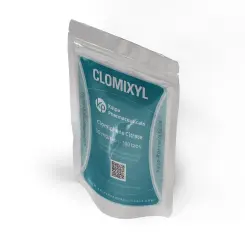
- Restores natural testosterone production post-cycle.
- Prevents estrogen-related side effects.
- Supports retention of cycle gains.
- Improves hormonal balance with minimal side effects.
- Stimulates natural testosterone production.
- Blocks estrogen to prevent gynecomastia.
- Prevents muscle loss during PCT.
- Supports hormonal balance and libido post-cycle.