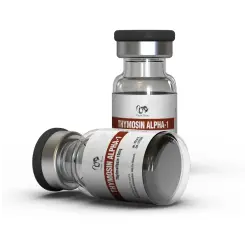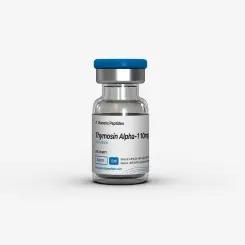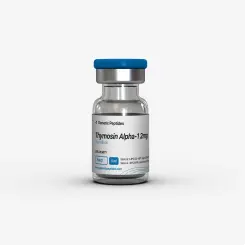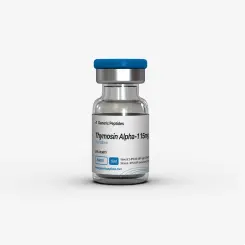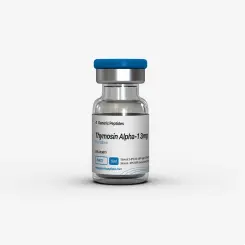
Thymosin Alpha-1 5 mg
What Is Thymosin Alpha-1 5 mg?
Thymosin Alpha-1 5 mg is a vial of a 28-residue peptide first isolated from thymus tissue and now made synthetically. It is an immunomodulator rather than a stimulant: it nudges T-cell maturation, natural killer activity and cytokine balance toward a more organised response, which is why it has a pharmaceutical history in several countries and a research history in many more.
Three doses per vial is the fact that shapes this card. The 5 mg size sits between the small vials that vanish in a week and the large ones that sit half-used in a fridge for a month, and it suits a short course where the calendar matters more than the cost per milligram. The serum half-life is about two hours; the immune changes it triggers are not measured in hours at all, which is why twice-weekly dosing is the published rhythm rather than a daily one.
Thymosin Alpha-1 5 mg Dosage
The published schedule is 1.6 mg subcutaneously twice a week. With 2.5 mg/mL in the vial, that is 0.64 mL, or 64 units on a U-100 insulin syringe, and a 5 mg vial gives exactly three such shots before it is empty.
| Level | Dose | Units | Cycle | Note |
|---|---|---|---|---|
| Low | 0.8 mg twice weekly | 32 units at 2.5 mg/mL | 4 weeks | gentle start, six shots per vial |
| Standard | 1.6 mg twice weekly | 64 units per shot | 3 weeks | three doses, the licensed pattern |
| Alternate | 1.5 mg every other day | 60 units per shot | 10 days | used in some hepatitis protocols |
Cycle Length
Three to six weeks is the practical range, which means two vials for a month at the standard dose. Courses are usually timed to a period of high load: a heavy training block, a run of night shifts, the winter months. Repeat blocks after a gap of at least a month work better than continuous use, because the point is a well-regulated response rather than a permanently switched-on one.
Thymosin Alpha-1 5 mg Stacks
Pairings here are supportive rather than synergistic. Nothing in this table is required, and the first two rows are simply other sizes of the same peptide when the plan changes length.
| Partner | Role | Effect |
|---|---|---|
| Thymosin Alpha-1 10 mg | Larger vial | six standard doses, better for a long course |
| Thymosin Alpha-1 2 mg | Smaller vial | one shot, a trial size |
| Septilin | Herbal immune blend | background support between blocks |
| Mucinac | NAC, antioxidant | covers oxidative load during a heavy phase |
Do not read the table as a requirement to buy four products. The peptide basics article is worth a read if the difference between an immunomodulator and a hormone is not obvious, because the two have nothing in common except an injection. For another immune-focused research peptide, see PNC-27 5 mg.
Thymosin Alpha-1 5 mg Side Effects
The most frequent complaint is at the injection site: a red, tender patch that fades in a day or two. Systemic reactions are usually mild and short.
- Redness, swelling or a hard patch at the injection site.
- Low grade fever in the first days of a course.
- Fatigue and a general heaviness after the shot.
- Joint ache or headache, usually transient.
- Rash or itching suggesting hypersensitivity.
Inject on the same two days each week so that a reaction is easy to date. Any fever above 38 C that lasts more than a day, or a spreading skin reaction, means stopping and getting medical advice rather than pushing through the block.
Support and Supplies
Six injections over three weeks is a small commitment, so buy the consumables in one order and keep the mixed vial cold for the whole course.
- Bacteriostatic water for a 2.5 mg/mL mix with 2 mL.
- Syringe with needle for the 64 unit draws.
- Ultra Fine III pen needles if a finer pin is easier on the site.
- Altonil for sleep on the nights after an injection, when some users run warm.
Keep the powder at room temperature until it is mixed, then refrigerate and use within three to four weeks. A peptide calculator removes the risk of a decimal error, which with a 5 mg vial costs a third of the course. The full peptide range lists the other sizes if the plan changes.
Other strengths in the line
- Thymosin Alpha-1 3 mg
- Thymosin Alpha-1 10 mg
- Thymosin Alpha-1 15 mg
- Thymosin Alpha-1 10 mg Dragon Pharma
Where to Buy Thymosin Alpha-1 5 mg
Thymosin Alpha-1 5 mg from Generic Peptides is listed in the peptide section of steroidwarehouse.com, with live stock and shipping details on the page. Check that the specification row reads Thymosin Alpha-1 and not a thymic extract, since those are different products with a similar name and a very different evidence base.
This information is for educational purposes. Anabolic steroids are prescription medicines in most countries and carry serious health risks. Speak to a physician before use.
What is thymosin alpha-1 used for?
It boosts immunity and fights infections; see What is Thymosin Alpha-1 Used For. It's effective; for safe use.
What does thymosin do to your body?
It enhances T-cell activity; see What Does Thymosin Do to Your Body. Monitor with care.
Is thymosin alpha 1 safe for everyone?
Not for those with autoimmune issues; see Is Thymosin Alpha 1 Safe for Everyone. Use with oversight.
What is Thymosin Alpha-1 5 mg?
It's a peptide for immune support; see What is Thymosin Alpha-1 5 mg. For research use.
How does Thymosin Alpha-1 5 mg work?
It activates T-cells and immunity; see How Does Thymosin Alpha-1 5 mg Work. Monitor with guidance.
How is Thymosin Alpha-1 5 mg typically administered?
Thymosin Alpha-1 is commonly.
- Supplied as a lyophilized (freeze-dried) peptide powder
- Reconstituted before use
- Administered through subcutaneous injection in many protocols
Protocols vary depending on intended goals and usage structure.
How long does it take to notice effects?
The timing of biological effects varies depending on the research setting, study design, and individual factors. Changes in immune-related biomarkers are generally investigated over several weeks.
What are the possible side effects?
Published human safety data suggest Thymosin Alpha-1 is generally well tolerated. Potential side effects reported in clinical and research settings may include:.
- Injection-site irritation
- Mild fatigue
- Headache
- Temporary flu-like symptoms
Individual responses may vary.
Related Products