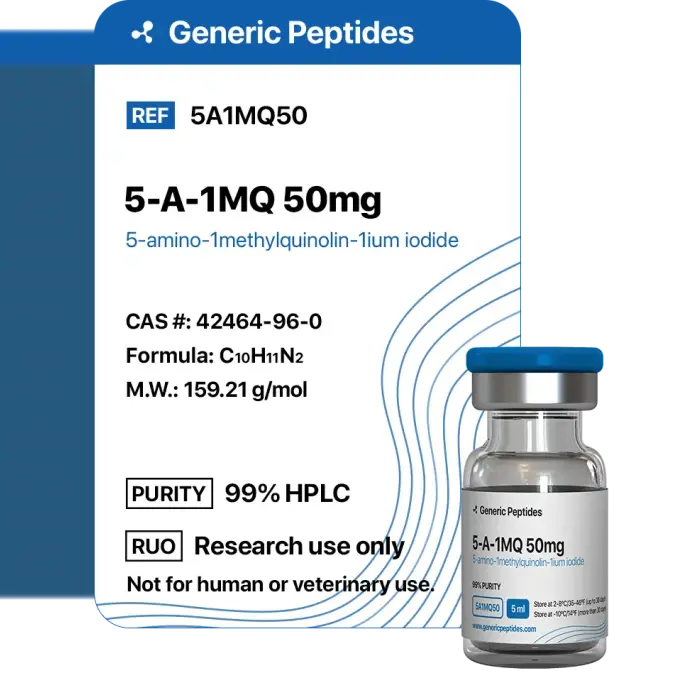
5-A-1MQ 50 mg
What Is 5-A-1MQ 50 mg?
5-A-1MQ 50 mg is a vial of 5-amino-1-methylquinolinium, a small synthetic molecule that inhibits the enzyme nicotinamide N-methyltransferase. It sits on the peptide shelf because of how it is sold and shipped, but it is not a peptide: it is a quinolinium salt, and the mechanism is enzymatic rather than receptor-based.
NNMT consumes methyl groups and NAD+ precursors, and it is expressed heavily in fat tissue. Block it and two things follow in cell and animal work: adipocytes mobilise fat more readily, and more of the NAD+ pool stays available for energy metabolism. Human data is close to absent, which is worth saying plainly before any of the dosing numbers below. The molecule is also unrelated to GLP-1 drugs: it does not slow the stomach or cut appetite, it acts inside the fat cell.
5-A-1MQ 50 mg Dosage
Five millilitres of bacteriostatic water gives 10 mg/mL, so a 5 mg dose is 50 units on a U-100 insulin syringe and 10 mg is a full 1 mL. Mixing with 10 mL instead would halve that concentration and make small doses easier to read at the cost of a larger injection volume.
| Level | Dose | Units | Cycle | Note |
|---|---|---|---|---|
| Low | 5 mg daily | 50 units at 10 mg/mL | 4 weeks | tolerance pass, ten days per vial |
| Standard | 10 mg daily | 100 units at 10 mg/mL | 4-6 weeks | five days per vial |
| Split | 10 mg in two doses | 50 units twice daily | 4 weeks | smoother cover with a short half-life |
Cycle Length
Four to six weeks is the range people use, largely because a longer run needs several vials and there is nothing in the literature to suggest the effect keeps growing. The half-life of two to four hours means daily or twice-daily dosing, and the compound is not something to load with. A break of at least a month between blocks keeps the comparison honest.
5-A-1MQ 50 mg Stacks
The pairs below are the metabolic shelf, not a fat-burner pile: NAD+ support for the same pathway, lipolysis peptides for a different one, and glucose control because that is what changes when fat metabolism changes.
| Partner | Role | Effect |
|---|---|---|
| NAD+ 100 mg | Coenzyme | same pathway from the supply side |
| AOD 9604 2 mg | Lipolysis fragment | fat mobilisation, no NNMT involvement |
| Glucophage | Insulin sensitiser | prescription drug, different target entirely |
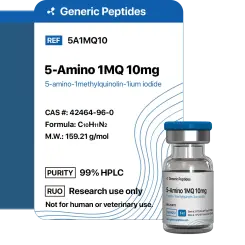
| 5-Amino-1MQ 10 mg | Smaller vial | cheaper first trial at low doses |
Do not treat this as a replacement for a calorie deficit or for a GLP-1 if appetite is the actual problem: it does nothing for hunger. The peptides versus steroids overview explains why shelf placement is a poor guide to mechanism.
5-A-1MQ 50 mg Side Effects
Reported effects are mild, mostly gastrointestinal, and short lived in the first week. There is no long-term human safety file at all.
- Nausea or loose stools in the first days.
- Headache and mild fatigue after dosing.
- Reduced appetite in some users, unrelated to GLP-1 action.
- Injection site redness or a small lump.
- Unclear changes in liver enzymes on bloodwork.
Get a baseline panel including ALT, AST and homocysteine before starting and repeat it at the end of the block. Any unexplained fatigue combined with dark urine is a reason to stop and get tested rather than to add another supplement.
Support and Supplies
The practical issue with a 50 mg vial is concentration: too strong a mix makes a 5 mg dose a tiny, hard-to-read draw. Water volume, not hardware, is the thing to get right.
- Bacteriostatic water for a 10 mg/mL mix with 5 mL.
- Syringe with needle for 50-100 unit draws.
- Liv.52 as background cover while liver enzymes are being watched.
- Nurofen for the occasional sore site.
Keep the powder dry and the mixed vial refrigerated for no more than three weeks. A peptide calculator helps if the water volume changes, and the peptide category lists the smaller vials, and the semaglutide 5 mg vial is the appetite-side alternative if hunger rather than metabolism is the target.
Other strengths in the line
Where to Buy 5-A-1MQ 50 mg
5-A-1MQ 50 mg from Generic Peptides is listed in the peptide section of steroidwarehouse.com, with stock status and shipping routes on the page. Check the specification row for 5-Amino-1-methylquinolinium and the 50 mg vial size, and note that this is a research compound without a human dosing standard, so the pack size is the only thing the listing can tell you with confidence.
This information is for educational purposes. Anabolic steroids are prescription medicines in most countries and carry serious health risks. Speak to a physician before use.
What does 5-Amino-1MQ 50 mg do?
It boosts metabolism and aids weight loss; see What Does 5-Amino-1MQ 50 mg Do. It's effective; for safe use.
What is 5-Amino-1MQ supplements?
It's a peptide for metabolism research; see What is 5-Amino-1MQ Supplements. For experimental use.
What is the difference between 5-Amino-1MQ and GLP1?
It differs in mechanism; see What is the Difference Between 5-Amino-1MQ and GLP1. Understand with guidance.
Does 5-Amino 1MQ need to be refrigerated?
Yes, post-reconstitution; see Does 5-Amino 1MQ Need to Be Refrigerated. Store properly.
Is 5-Amino 1MQ 50 mg safe?
It can be safe with oversight; see Is 5-Amino 1MQ 50 mg Safe for monitoring.
How is 5-Amino-1MQ typically administered?
5-Amino-1MQ is commonly available as.
- Oral capsules or liquid formulations
- Experimental research compounds
Usage protocols vary depending on the intended research or wellness approach.
What makes 5-Amino-1MQ different from GLP-1 receptor agonists?
Unlike GLP-1 receptor agonists, which primarily influence appetite, gastric emptying, and glucose regulation, 5-Amino-1MQ is investigated for its potential effects on cellular metabolism through inhibition of the NNMT enzyme. These are distinct biological pathways.
What are the possible side effects?
Human safety data remain limited. Because 5-Amino-1MQ is an investigational compound, its complete safety profile has not been established. Potential risks and adverse effects in humans remain under investigation.
Related Products