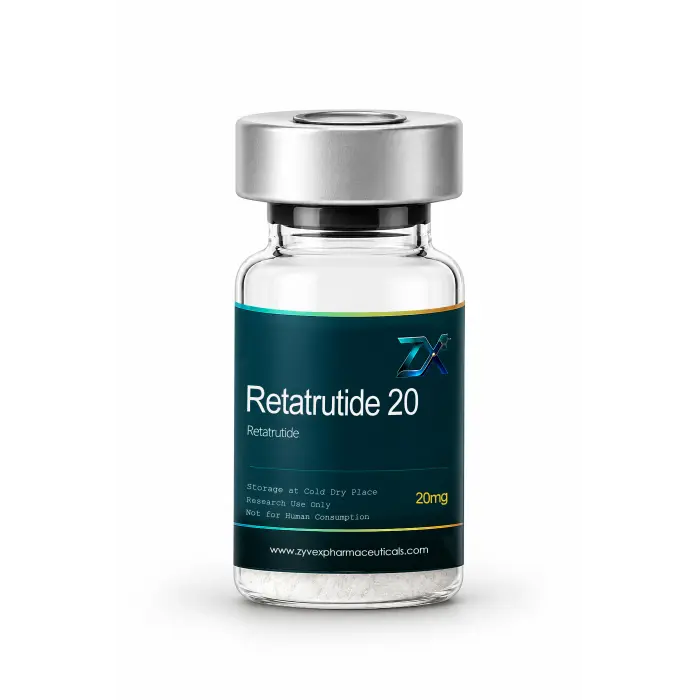
Retatrutide 20 - Zyvex Pharmaceuticals
Retatrutide 20 - The Triple Agonist with the Strongest Weight Loss Data Ever Recorded
Retatrutide is a next-generation weight loss peptide that simultaneously activates three distinct receptors: GIP (glucose-dependent insulinotropic polypeptide), GLP-1 (glucagon-like peptide-1), and the glucagon receptor. This triple mechanism sets it apart from every other approved or investigational weight loss agent. Where semaglutide (Ozempic, Wegovy) is a single GLP-1 agonist and tirzepatide (Mounjaro, Zepbound) is a dual GIP/GLP-1 agonist, retatrutide adds glucagon receptor activation as a third pathway - one that drives energy expenditure independently of appetite suppression.
The clinical data behind retatrutide is unprecedented for a weight loss drug. In Phase 3 TRIUMPH-1 trial data released by Eli Lilly, participants achieved up to 30.3% average body weight reduction - approximately 71 lbs on average. This exceeds the roughly 15% weight loss seen with semaglutide and the approximately 22% seen with tirzepatide in their respective landmark trials. The 20 mg vial format provides a multi-dose supply for the weekly subcutaneous injection protocol used across retatrutide research.
About the Compound
Retatrutide (LY3437943) is an investigational peptide developed by Eli Lilly. It belongs to the GLP-1 receptor agonist class but extends beyond it by also targeting the GIP and glucagon receptors simultaneously. The compound is administered as a once-weekly subcutaneous injection, with a half-life of approximately 6 days that supports stable weekly dosing. Retatrutide is currently in Phase 3 clinical trials under the TRIUMPH program, which has produced weight loss data surpassing any previously tested pharmaceutical agent. It is not yet FDA-approved and is available as a research peptide.
The addition of glucagon receptor agonism is the key structural innovation. Glucagon is primarily known for raising blood glucose, but glucagon receptor activation in fat tissue and the liver increases energy expenditure and fatty acid oxidation. Combined with the appetite suppression and insulin sensitization from GLP-1 and GIP receptor activation, this creates a three-pathway attack on body fat that is mechanistically more comprehensive than any dual agonist. The result in clinical trials has been weight loss well beyond the 20-25% ceiling that dual agonists like tirzepatide appear to approach.
Triple Mechanism of Action
Understanding why retatrutide outperforms other weight loss peptides requires understanding what each of the three receptor pathways contributes:
- GLP-1 receptor agonism: Slows gastric emptying, reduces appetite via hypothalamic signaling, stimulates glucose-dependent insulin release, and reduces glucagon secretion after meals. This is the mechanism semaglutide relies on entirely.
- GIP receptor agonism: Enhances the insulin response to meals (additive to GLP-1), improves insulin sensitivity in fat and muscle tissue, and has direct effects on fat cells that promote lipid storage at lower doses but may enhance fat mobilization in combination with GLP-1 agonism. This is the second pathway tirzepatide adds.
- Glucagon receptor agonism: The critical third pathway. Glucagon activates lipolysis in fat tissue and promotes fatty acid oxidation in the liver. Glucagon receptor agonism increases resting energy expenditure - the body burns more calories at rest. This mechanism is unique to retatrutide and explains why its weight loss ceiling appears to be meaningfully higher than dual agonists. The concern with isolated glucagon agonism (hyperglycemia) is neutralized by the simultaneous GLP-1 and GIP effects on insulin.
Dosing and Dose Escalation
Dose escalation is the most important aspect of retatrutide use. GI side effects (nausea, vomiting, diarrhea) are the primary tolerability challenge, and they are directly related to how quickly the dose is increased. The Phase 2 trial used a structured multi-step escalation over approximately 24 weeks to reach the 8-12 mg maintenance doses where maximum weight loss was seen. Skipping escalation steps or increasing the dose too quickly dramatically increases GI side effects and raises the likelihood of discontinuing. Slow and steady escalation is essential.
Standard Dose Escalation Protocol
| Phase | Weekly Dose | Duration | Purpose |
|---|---|---|---|
| Initiation | 1 mg/week | 4 weeks | GI tolerance establishment |
| Low dose | 2 mg/week | 4 weeks | Receptor sensitization |
| Low-mid dose | 4 mg/week | 4-8 weeks | Significant appetite reduction begins |
| Mid dose | 6 mg/week | 4-8 weeks | Strong fat loss phase |
| Maintenance | 8 mg/week | Ongoing | Maximum sustainable effect |
| High dose (trials) | 12 mg/week | Trial use only | Maximum efficacy, highest GI burden |
Injection Technique
Retatrutide is administered subcutaneously (under the skin) rather than intramuscularly. Preferred injection sites are the abdomen (2 inches from the navel), outer thigh, or upper arm. Rotate sites with each injection. Inject once per week on the same day each week for consistent blood levels. Reconstituted vials should be stored refrigerated and used within the manufacturer's recommended window.
Use Cases
| Goal | Protocol | Notes |
|---|---|---|
| Aggressive fat loss | Escalate to 6-8 mg/week over 16-20 weeks | Strongest weight loss data of any agent |
| Competition prep (off-season to stage) | Begin 24+ weeks out, escalate to 4-6 mg/week | Preserve muscle with adequate protein and resistance training |
| Insulin-resistant users | 4-6 mg/week maintenance | GIP and GLP-1 components improve insulin sensitivity significantly |
| Post-blast body recomposition | 2-4 mg/week alongside calorie deficit | Lower dose reduces GI burden while still providing meaningful fat loss |
| Metabolic health optimization | 2-4 mg/week long-term | Improved glycemic control, lipid profiles, reduced visceral fat |
Side Effects
| Side Effect | Frequency / Background | Management |
|---|---|---|
| Nausea | Most common; ~42% incidence in Phase 2 at higher doses | Slow dose escalation; eat smaller, lower-fat meals; do not rush to maintenance dose |
| Vomiting | Less common than nausea; typically accompanies rapid escalation | Pause at current dose rather than escalating; allow 4-8 weeks before stepping up |
| Diarrhea / loose stools | Common early in protocol; typically resolves with time | Reduce dietary fat; avoid high-fiber foods around injection day |
| Reduced appetite / early satiety | Intended effect; can become excessive at high doses | Ensure adequate protein intake (1.6-2.2 g/kg) despite reduced hunger |
| Injection site reactions | Mild; redness, slight swelling at site | Rotate injection sites; allow skin to reach room temperature before injecting |
| Muscle loss risk | Rapid weight loss carries lean mass loss risk if protein and training are inadequate | Resistance training + high protein diet is essential throughout the protocol |
Retatrutide is currently available as a research peptide and is not FDA-approved. The dose escalation protocol is not optional - GI side effects at higher doses are directly related to how fast the dose is increased. Users who skip steps or escalate too quickly will experience severe nausea and vomiting that often forces discontinuation. Start at 1-2 mg/week and hold each step for a minimum of 4 weeks before advancing. Protein intake must remain high (minimum 1.6 g/kg body weight) throughout the entire protocol to preserve lean muscle mass during aggressive fat loss.
Retatrutide vs Tirzepatide vs Semaglutide
| Feature | Retatrutide | Tirzepatide | Semaglutide |
|---|---|---|---|
| Receptor targets | GIP + GLP-1 + Glucagon | GIP + GLP-1 | GLP-1 only |
| Mechanism advantage | Increases energy expenditure (glucagon) + appetite suppression | Enhanced appetite suppression + insulin sensitization | Appetite suppression + insulin stimulation |
| Phase 3 weight loss | Up to 30.3% body weight | ~22.5% body weight | ~15% body weight |
| Dosing frequency | Once weekly | Once weekly | Once weekly |
| GI side effect burden | Higher (triple mechanism) | Moderate | Moderate |
| Approval status | Phase 3 / research peptide | FDA approved (Mounjaro/Zepbound) | FDA approved (Ozempic/Wegovy) |
| Best for | Maximum fat loss where results matter most | Proven efficacy with approval status | Entry-level GLP-1 therapy |
Frequently Asked Questions
What is Retatrutide and how does it differ from semaglutide and tirzepatide?
Retatrutide (LY3437943) is a triple agonist peptide developed by Eli Lilly that simultaneously activates three receptors: GIP (glucose-dependent insulinotropic polypeptide), GLP-1 (glucagon-like peptide-1), and the glucagon receptor. Semaglutide (Ozempic, Wegovy) is a single GLP-1 agonist. Tirzepatide (Mounjaro, Zepbound) is a dual GIP/GLP-1 agonist. Retatrutide adds glucagon receptor activation as a third pathway - one that increases energy expenditure independently of the appetite-suppressing effects of GLP-1 and GIP. This mechanistic difference translates directly into superior clinical results: Phase 3 TRIUMPH-1 data showed up to 30.3% average body weight reduction with retatrutide, compared to approximately 22.5% for tirzepatide and 15% for semaglutide in their respective trials. Retatrutide is administered as a once-weekly subcutaneous injection and is currently available as a research peptide (not yet FDA-approved).
What does the glucagon receptor component of Retatrutide actually do?
This is the defining question for understanding why retatrutide outperforms dual agonists. Glucagon is best known for raising blood glucose by signaling the liver to release stored sugar - the opposite of insulin. Activating glucagon receptors in isolation would be counterproductive in a weight loss context because it would raise blood sugar. However, when glucagon receptor agonism is combined with simultaneous GLP-1 and GIP receptor activation, the blood glucose-raising effect of glucagon is neutralized by the insulin-stimulating effects of GLP-1 and GIP. What remains is the glucagon receptor's other set of actions: lipolysis activation in fat tissue (releasing stored fat for fuel), increased fatty acid oxidation in the liver, and - critically - an increase in resting energy expenditure. The body burns more calories at rest because of glucagon receptor activation. This is an energy-expenditure mechanism, not just an appetite-suppression mechanism, and it explains why retatrutide's weight loss ceiling appears meaningfully higher than any dual agonist can achieve.
How much weight can I expect to lose on Retatrutide?
The Phase 3 TRIUMPH-1 trial published by Eli Lilly showed participants achieving up to 30.3% average body weight reduction over approximately 48 weeks. This translated to roughly 71 lbs of average weight loss in the highest-dose group - unprecedented for any pharmaceutical weight loss agent. For context: semaglutide (Wegovy) produces approximately 15% weight loss in clinical trials, and tirzepatide (Zepbound) approximately 22.5%. At lower maintenance doses (4-6 mg/week), expect results proportionally less than the 8-12 mg high-dose trial groups, but still substantially above what semaglutide or tirzepatide produce. Individual results depend on starting body weight, diet quality, calorie deficit, resistance training, and dose achieved during escalation. Users who cannot escalate past 4 mg due to GI side effects will see meaningful but not maximum results. Protein intake (minimum 1.6 g/kg body weight) and resistance training are essential to prevent muscle loss during aggressive weight reduction.
What is the correct Retatrutide dosing protocol and why is dose escalation mandatory?
The standard protocol begins at 1-2 mg per week and escalates incrementally over months. A typical schedule: 1 mg for 4 weeks, 2 mg for 4 weeks, 4 mg for 4-8 weeks, 6 mg for 4-8 weeks, then 8 mg as maintenance. Some users in clinical trials reached 12 mg per week, but this is the highest dose studied and carries the greatest GI burden. Dose escalation is not optional - it is the difference between completing the protocol and being forced to stop due to severe nausea and vomiting. The GI side effects of GLP-1 and glucagon receptor agonism (nausea, vomiting, diarrhea) are directly proportional to how fast the dose increases. Starting at a therapeutic dose (4-8 mg immediately) would produce severe, possibly unmanageable GI distress in most users. Each dose step allows the GI tract and the central nervous system to adapt to the receptor activity before the dose increases again. Hold each step for a minimum of 4 weeks before advancing, and do not advance if GI symptoms are still significant.
What are the main side effects of Retatrutide and how are they managed?
GI symptoms dominate the side effect profile. Nausea was reported in approximately 42% of participants at higher doses in Phase 2 trials (vs roughly 15% on placebo). Vomiting and diarrhea occur at lower frequencies but increase with faster dose escalation. These effects are mechanism-driven - GLP-1 receptor activation slows gastric emptying and activates nausea centers in the brain, and glucagon receptor activation adds its own GI effects at higher doses. Management: eat smaller meals, avoid high-fat or high-calorie single meals, reduce dietary fat on injection days, and stay strictly within the escalation schedule. Muscle loss is a secondary concern - aggressive weight loss at 0.5-1% of body weight per week depletes both fat and lean mass. Resistance training 3-4 times per week and a high-protein diet (1.6-2.2 g/kg of body weight) are the countermeasures. Injection site reactions (redness, swelling) are mild and managed by rotating sites. There are no androgenic, hepatotoxic, or cardiovascular side effects specific to retatrutide beyond those associated with any GLP-1 class drug.
Can Retatrutide be used alongside anabolic steroids or SARMs?
Yes, and this is a legitimate use case in the bodybuilding context. Retatrutide is used as a cutting agent alongside anabolic compounds during a deficit phase. The combination that makes logical sense: a testosterone base or other muscle-sparing anabolic compound (Primobolan, Masteron, Anavar) used at moderate doses to preserve lean mass, while retatrutide drives aggressive fat loss through appetite suppression and energy expenditure increase. The anabolic environment created by testosterone or other compounds significantly reduces the lean mass loss that aggressive calorie restriction would otherwise cause - this counters one of the primary concerns with GLP-1 class drugs (muscle depletion during rapid weight loss). SARMs in a similar role (Ostarine for muscle preservation, Cardarine for enhanced fat oxidation and endurance) are also combined with retatrutide in research contexts. There are no known pharmacological interactions between retatrutide and anabolic steroids or SARMs, though users should monitor blood glucose and insulin sensitivity markers since both categories of compounds affect metabolic parameters.
Is Retatrutide better than tirzepatide for bodybuilders?
For pure fat loss results, retatrutide is ahead by a meaningful margin. The additional 8-10 percentage points of body weight loss (30% vs 22%) represent a substantial difference in absolute terms for someone starting at 220 lbs - that is an additional 17-22 lbs of fat loss. The glucagon receptor component's energy expenditure increase is also specifically relevant for bodybuilders who are already training hard and eating high protein - the additional calorie burn from elevated resting metabolism compounds over weeks and months. However, retatrutide comes with a higher GI side effect burden, a slower and more demanding escalation protocol, and is not yet FDA-approved (making it a research peptide use). Tirzepatide is approved, well-characterized, and has an established track record in physique athletes. The choice between them depends on the user's tolerance for side effects, their target weight loss percentage, and their comfort with research peptide protocols. For athletes targeting 30%+ total fat reduction, retatrutide's superior ceiling makes it the clear choice.
How is the 20 mg vial of Retatrutide used - how many doses does it contain?
The 20 mg vial contains lyophilized (freeze-dried) retatrutide powder that must be reconstituted with bacteriostatic water before use. The number of doses depends on the dose being injected. At 2 mg per injection, the 20 mg vial contains 10 doses (10 weeks of weekly injections). At 4 mg per injection, it contains 5 doses (5 weeks). At 8 mg per injection (maintenance), it contains 2-3 doses. For a complete escalation protocol from 1 mg to 8 mg maintenance over 20+ weeks, multiple vials are required. Reconstitution: add bacteriostatic water slowly to the powder, swirl gently (do not shake), and allow to dissolve. Use insulin syringes (0.5 ml or 1 ml) to measure doses accurately. Store reconstituted vials refrigerated at 2-8 degrees Celsius and use within 30 days. Bring to room temperature before injecting (15-20 minutes out of refrigeration). Discard if the solution is cloudy or contains particles.
Related Products
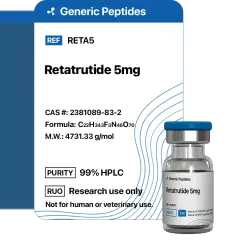
- Drives weight loss through multiple hormone pathways.
- Improves blood sugar control and insulin sensitivity.
- Enhances fat metabolism and energy expenditure.
- Supports overall cardiovascular and metabolic wellness.
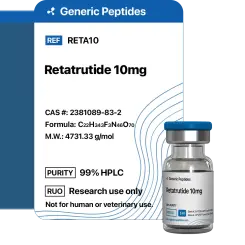
- Drives significant weight loss through multiple hormone pathways.
- Improves blood sugar control and insulin sensitivity.
- Enhances fat metabolism and energy expenditure.
- Supports overall cardiovascular and metabolic wellness.
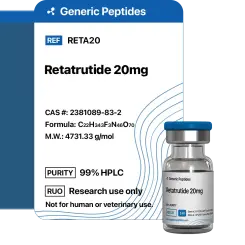
- Drives significant weight loss through multiple hormone pathways.
- Improves blood sugar control and insulin sensitivity.
- Enhances fat metabolism and energy expenditure.
- Supports overall cardiovascular and metabolic wellness.