Adipotide
What Is Adipotide 10 mg?
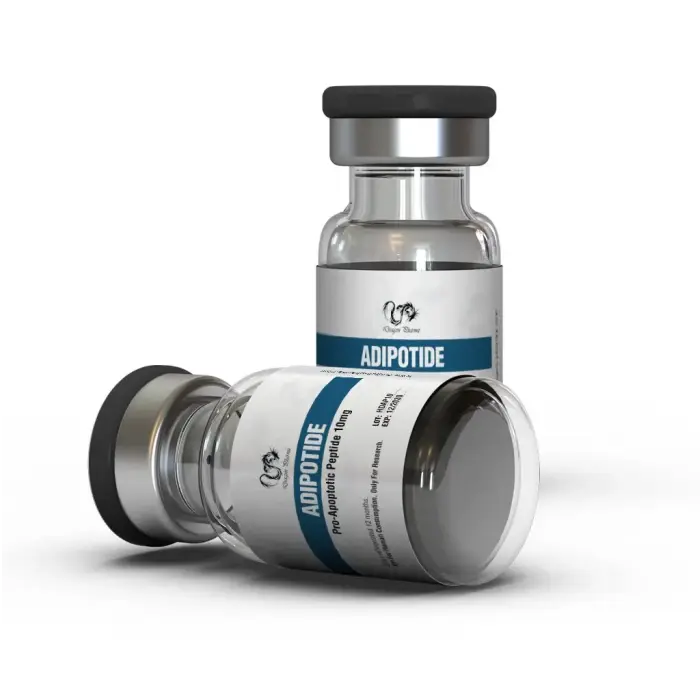
Adipotide 10 mg is a vial of the prohibitin-targeting peptide known as FTPP, supplied by Dragon Pharma. It does not burn fat or suppress appetite: it homes in on a protein expressed on the blood vessels feeding white adipose tissue and delivers a signal that makes those cells die, which starves the fat cell behind them.
This is the most speculative product on the peptide shelf and the one with the clearest documented harm. In primate work the weight loss was real and so was the kidney damage, with tubular injury and measurable renal function loss at effective doses. The peptide's vascular effect is described as irreversible, which cuts both ways: the fat does not come back quickly, and neither does a vessel that was destroyed in the wrong place. Everything below is written with that in mind.
Adipotide 10 mg Dosage
Research protocols scaled the dose to body weight, roughly 0.25-1 mg per kilogram per day, which for an eighty kilogram subject is 20-80 mg a day and far more than one vial. The doses people actually use are far lower and unvalidated, usually 0.5-1 mg a day.
| Level | Dose | Units | Cycle | Note |
|---|---|---|---|---|
| Low | 0.5 mg daily | 25 units at 2 mg/mL | 20 days | one vial, most cautious schedule |
| Standard | 1 mg daily | 50 units at 2 mg/mL | 10 days | the common forum dose, no trial support |
| Research | 0.25-1 mg/kg | 0.5-2 mL at 2 mg/mL | 4 weeks | primate studies, kidney injury reported |
Cycle Length
Ten to twenty days is as long as one vial allows at practical doses, and repeating a block is a decision for someone who has had renal function tested afterwards. The vascular change does not reset on a calendar, so back-to-back cycles stack risk without stacking benefit. Any plan longer than a single block belongs with a physician who is ordering the bloodwork.
Adipotide 10 mg Stacks
Nothing here is a performance stack. The pairings below are either a different mechanism for fat loss or a way to protect the organ this peptide puts at risk.
| Partner | Role | Effect |
|---|---|---|
| Cystone | Herbal kidney support | traditional use, not a substitute for monitoring |
| AOD 9604 2 mg | Lipolysis fragment | fat mobilisation without vascular action |
| HGH Frag 176-191 | Lipolytic peptide | same goal, far better tolerated |
| Adipotide FTPP 5 mg | Smaller vial | halves the financial exposure to a trial |
Those last two rows exist because the mechanism of adipotide is the problem, not the dosing. The peptides versus steroids comparison is the place to start if the fat-loss shelf looks interchangeable, because it is not.
Adipotide 10 mg Side Effects
The safety signal is renal and it is not subtle. In published primate work, animals lost weight and developed dose-dependent kidney injury, with tubular damage visible on histology and rising creatinine in blood.
- Reduced urine output or foamy urine.
- Swelling in the ankles and lower legs.
- Fatigue, nausea and poor appetite.
- Flank or lower back ache.
- Injection site irritation and, rarely, a widespread rash.
Stop immediately if any of those appear and get renal function tested rather than waiting for the block to finish. Dehydration concentrates whatever is in the blood, so drink more than usual and skip a dose on hot training days.
Support and Supplies
Because the kidney is the organ at risk, the shopping list leans on hydration and monitoring rather than on accessories for the injection itself.
- Bacteriostatic water for a 2 mg/mL mix with 5 mL.
- Syringe with needle for 25-50 unit draws.
- Glucophage if glucose control is part of the wider picture, as a prescription decision.
- Nurofen only sparingly, since anti-inflammatories add their own load to the kidney.
A peptide calculator is the least important item on this list; a lab request for creatinine and eGFR is the most important one. Keep the vial cold, keep a symptom log, and treat the first sign of reduced urine output as the end of the experiment. The peptide category lists the rest of the shelf if a different mechanism is wanted.
Other strengths in the line
Where to Buy Adipotide 10 mg
Adipotide 10 mg from Dragon Pharma is listed in the peptide section of steroidwarehouse.com, with stock and shipping details on the product page. Confirm the specification row reads Prohibitin-targeting peptide and the vial is 10 mg, and read the size options carefully: this is the one product in the range where buying less is the more rational first purchase.
This information is for educational purposes. Anabolic steroids are prescription medicines in most countries and carry serious health risks. Speak to a physician before use.
All products from this manufacturer are listed together in the Dragon Pharma range.
How long does it take for adipotide to work?
Visible fat loss in 7-14 days; see How Long Does It Take for Adipotide to Work.
What peptide kills fat cells?
Adipotide (FTPP); only one that causes apoptosis; see What Peptide Kills Fat Cells.
What is another name for Adipotide?
FTPP or Prohibitin-TP01; see What Is Another Name for Adipotide.
What is FTPP Adipotide?
Fat-Targeted Proapoptotic Peptide; Adipotide's research name; see What Is FTPP Adipotide.
Advanced research compound. Use only under strict medical supervision with regular bloodwork and hydration monitoring.
Is Adipotide the same as GLP-1 medications?
No. Tirzepatide and other GLP-1 related compounds mainly influence appetite and blood sugar pathways, while Adipotide is researched for its effects on fat tissue-related vascular pathways.
They work through different biological mechanisms.
How is Adipotide typically administered?
Adipotide is commonly.
- Supplied as a peptide formulation or lyophilized powder
- Reconstituted before use when applicable
- Administered through injection in many research protocols
Usage methods vary depending on protocol design and intended application.
What is Adipotide used for?
Adipotide is commonly associated with research involving:.
- Body fat reduction
- Weight management
- Adipose tissue biology
- Metabolic health
- Obesity research
What are the main areas of research involving Adipotide?
Adipotide is commonly studied for its potential role in:.
- Fat tissue reduction
- Weight management
- Metabolic function
- Obesity research
- Adipose tissue biology
Related Products